Salt Bread
Salt Bread

Ingredients
- 3 cups all-purpose flour
- 1 1/4 cups cold water
- 1/2 cup cold unsalted butter, plus 2 tablespoons, divided
- 1 teaspoon salt, plus more for sprinkling
Instructions
- 1
In a large mixing bowl, combine the all-purpose flour and 1 teaspoon of salt. Pour in the cold water. Using your fingers, mix the ingredients until a shaggy dough forms and no dry flour remains.
⏱️ 5 min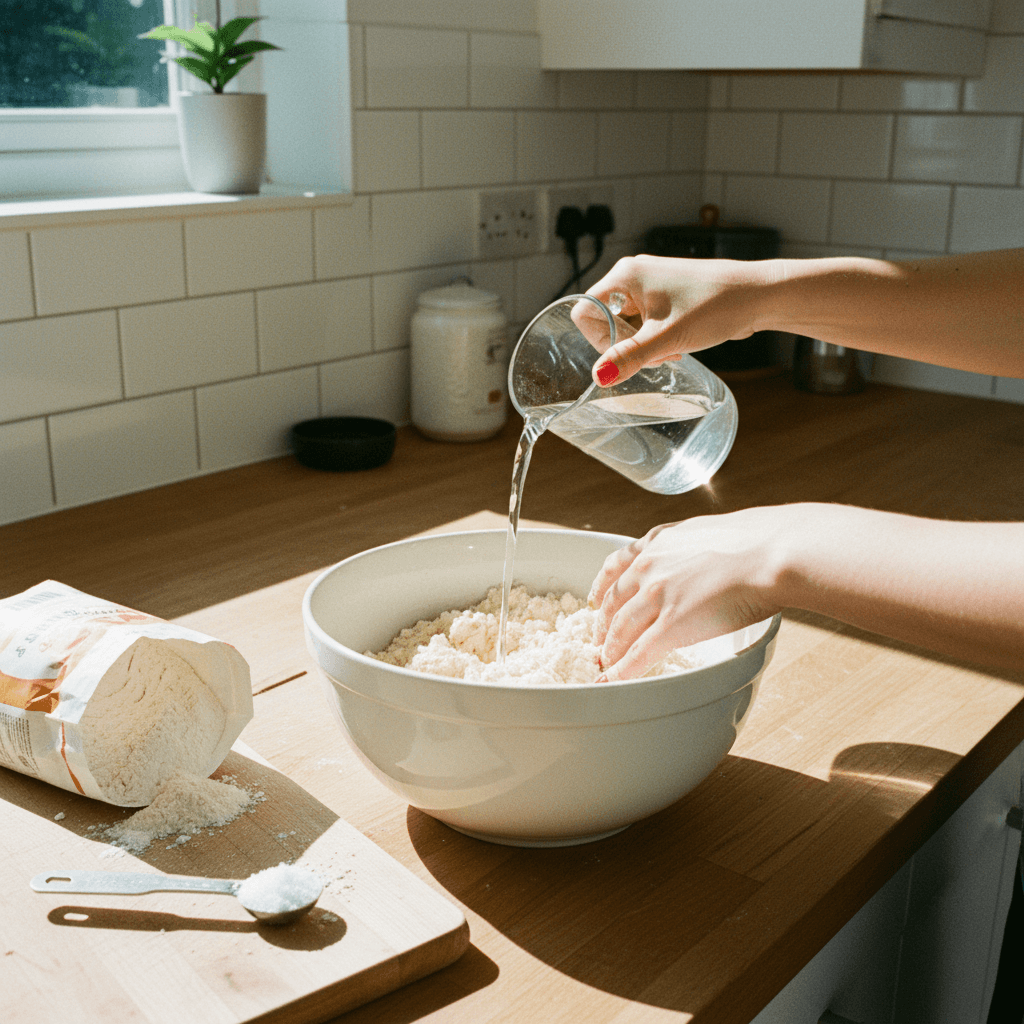
- 2
Cut 1/4 cup of the cold unsalted butter into small pieces and add them to the shaggy dough. Begin kneading the dough by hand, first in the bowl to incorporate the butter, then transfer to a clean counter. Continue kneading vigorously until the dough reaches the "windowpane" stage. This means you can stretch a small piece of dough thin enough to see light through it without it tearing. This process may take 15-20 minutes.
⏱️ 20 min
- 3
Place the kneaded dough back into the large bowl. Cover the bowl with plastic wrap or a clean kitchen towel. Place the dough in an oven with the light on and the door cracked open to create a warm environment. Let the dough rest and rise for 60 minutes, or until it has visibly increased in size.
⏱️ 60 min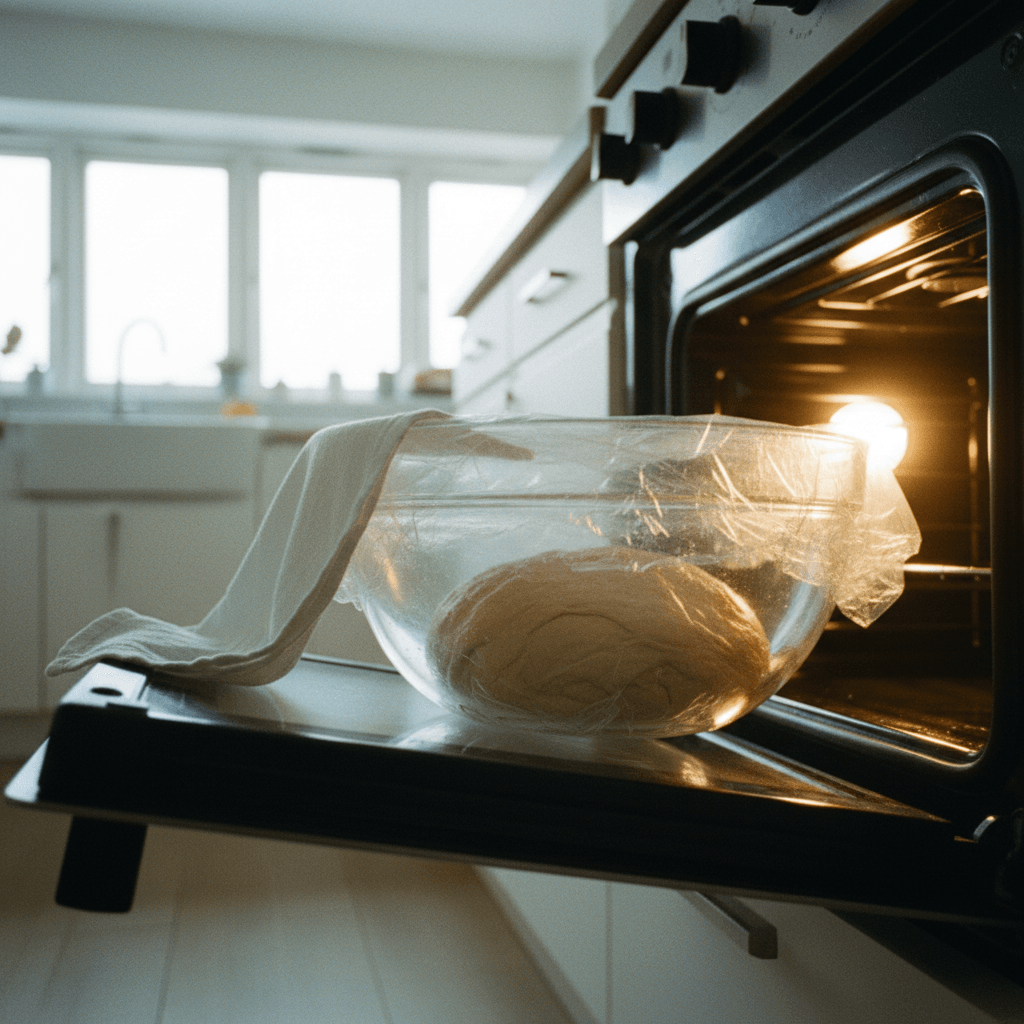
- 4
While the dough is resting, prepare the remaining 1/4 cup plus 2 tablespoons of cold unsalted butter. Cut the butter into approximately 12 small, rectangular blocks (roughly 1-inch by 1/2-inch). Arrange these butter blocks on a plate, cover them with plastic wrap, and place them in the refrigerator to keep them very cold.
⏱️ 10 min
- 5
Once the dough has rested, remove it from the oven. Gently punch down the dough to release the air. Divide the dough into 12 equal pieces. On a clean counter, roll each piece of dough into an elongated, oval-like shape by hand. Cover the preshaped dough pieces with a clean towel and let them rest for 10 minutes.
⏱️ 15 min
- 6
Preheat your oven to 400°F (200°C). Line a baking sheet with parchment paper.
⏱️ 10 min•🌡️ 400
- 7
Take one preshaped piece of dough. Without using a rolling pin, flatten and stretch the dough into a long, thin strip (about 6-8 inches long and 2-3 inches wide) by alternately pounding and pulling it with your hands. Place one block of cold butter (from step 4) at one end of the dough strip. Tightly roll the dough around the butter, tugging and pulling as you roll to ensure a tight spiral and to prevent gaps. Continue until all dough pieces are shaped with butter inside. Place the shaped dough pieces onto the prepared baking sheet, leaving about 2 inches of space between them.
⏱️ 20 min
- 8
Cover the baking sheet loosely with plastic wrap or a clean towel. Place the baking sheet back into the warm oven (with the light on and door cracked) for a second proof/rise for 30 minutes, or until the bread pieces look visibly puffy.
⏱️ 30 min
- 9
Once risen, remove the baking sheet from the oven. Gently wet the surface of each bread piece using your fingers (dip your fingers in water and lightly moisten the top). Generously sprinkle coarse salt over the wet surface of each bread. Give the bread one last heavy spray with water (using a spray bottle) to help create a crispy crust.
⏱️ 5 min
- 10
Place the baking sheet into the preheated 400°F (200°C) oven. Bake for 18-22 minutes, or until the bread is golden brown. Rotate the tray halfway through baking if your oven has hotspots to ensure even browning.
⏱️ 20 min•🌡️ 400
- 11
Remove the baked bread from the oven. While still hot, brush the surface of the bread with a small amount of melted butter (about 1 tablespoon, melted). Transfer the bread to a wire rack to cool slightly before serving.
⏱️ 5 min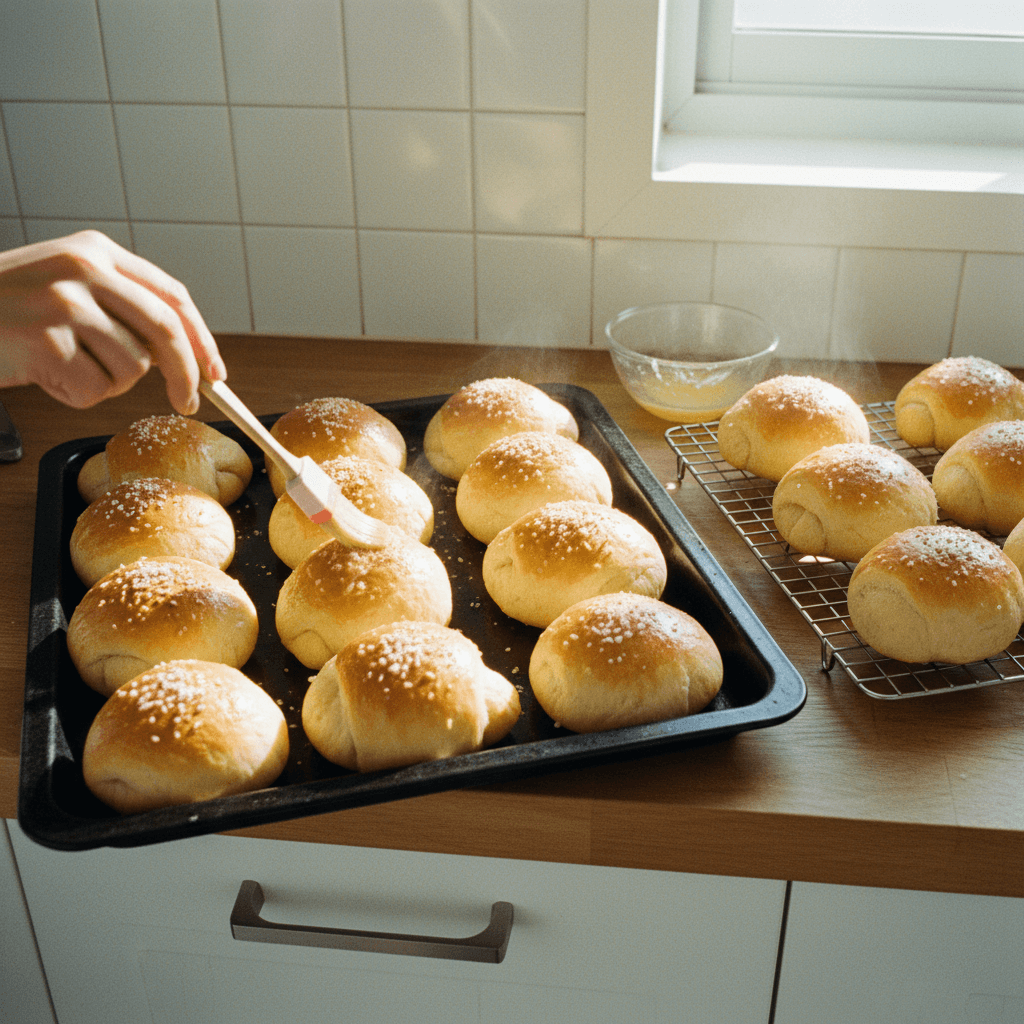
Kitchen Tools
Nutrition Facts (per serving)
Salt Bread
- 3 cups all-purpose flour
- 1 1/4 cups cold water
- 1/2 cup cold unsalted butter, plus 2 tablespoons, divided
- 1 teaspoon salt, plus more for sprinkling
Instructions
- 1
In a large mixing bowl, combine the all-purpose flour and 1 teaspoon of salt. Pour in the cold water. Using your fingers, mix the ingredients until a shaggy dough forms and no dry flour remains.
⏱️ 5 min - 2
Cut 1/4 cup of the cold unsalted butter into small pieces and add them to the shaggy dough. Begin kneading the dough by hand, first in the bowl to incorporate the butter, then transfer to a clean counter. Continue kneading vigorously until the dough reaches the "windowpane" stage. This means you can stretch a small piece of dough thin enough to see light through it without it tearing. This process may take 15-20 minutes.
⏱️ 20 min - 3
Place the kneaded dough back into the large bowl. Cover the bowl with plastic wrap or a clean kitchen towel. Place the dough in an oven with the light on and the door cracked open to create a warm environment. Let the dough rest and rise for 60 minutes, or until it has visibly increased in size.
⏱️ 60 min - 4
While the dough is resting, prepare the remaining 1/4 cup plus 2 tablespoons of cold unsalted butter. Cut the butter into approximately 12 small, rectangular blocks (roughly 1-inch by 1/2-inch). Arrange these butter blocks on a plate, cover them with plastic wrap, and place them in the refrigerator to keep them very cold.
⏱️ 10 min - 5
Once the dough has rested, remove it from the oven. Gently punch down the dough to release the air. Divide the dough into 12 equal pieces. On a clean counter, roll each piece of dough into an elongated, oval-like shape by hand. Cover the preshaped dough pieces with a clean towel and let them rest for 10 minutes.
⏱️ 15 min - 6
Preheat your oven to 400°F (200°C). Line a baking sheet with parchment paper.
⏱️ 10 min•🌡️ 400 - 7
Take one preshaped piece of dough. Without using a rolling pin, flatten and stretch the dough into a long, thin strip (about 6-8 inches long and 2-3 inches wide) by alternately pounding and pulling it with your hands. Place one block of cold butter (from step 4) at one end of the dough strip. Tightly roll the dough around the butter, tugging and pulling as you roll to ensure a tight spiral and to prevent gaps. Continue until all dough pieces are shaped with butter inside. Place the shaped dough pieces onto the prepared baking sheet, leaving about 2 inches of space between them.
⏱️ 20 min - 8
Cover the baking sheet loosely with plastic wrap or a clean towel. Place the baking sheet back into the warm oven (with the light on and door cracked) for a second proof/rise for 30 minutes, or until the bread pieces look visibly puffy.
⏱️ 30 min - 9
Once risen, remove the baking sheet from the oven. Gently wet the surface of each bread piece using your fingers (dip your fingers in water and lightly moisten the top). Generously sprinkle coarse salt over the wet surface of each bread. Give the bread one last heavy spray with water (using a spray bottle) to help create a crispy crust.
⏱️ 5 min - 10
Place the baking sheet into the preheated 400°F (200°C) oven. Bake for 18-22 minutes, or until the bread is golden brown. Rotate the tray halfway through baking if your oven has hotspots to ensure even browning.
⏱️ 20 min•🌡️ 400 - 11
Remove the baked bread from the oven. While still hot, brush the surface of the bread with a small amount of melted butter (about 1 tablespoon, melted). Transfer the bread to a wire rack to cool slightly before serving.
⏱️ 5 min