Homemade Fresh Rice Noodles
Homemade Fresh Rice Noodles
Ingredients
- 1 cup rice flour
- 1/2 cup tapioca starch
- 1 1/2 cups water, use 1 1/4 cups for thicker noodles
- 1 teaspoon vegetable oil
- 1 teaspoon salt
- as needed neutral oil, for brushing the pan
Instructions
- 1
In a large mixing bowl, combine the rice flour and tapioca starch.
⏱️ 1 min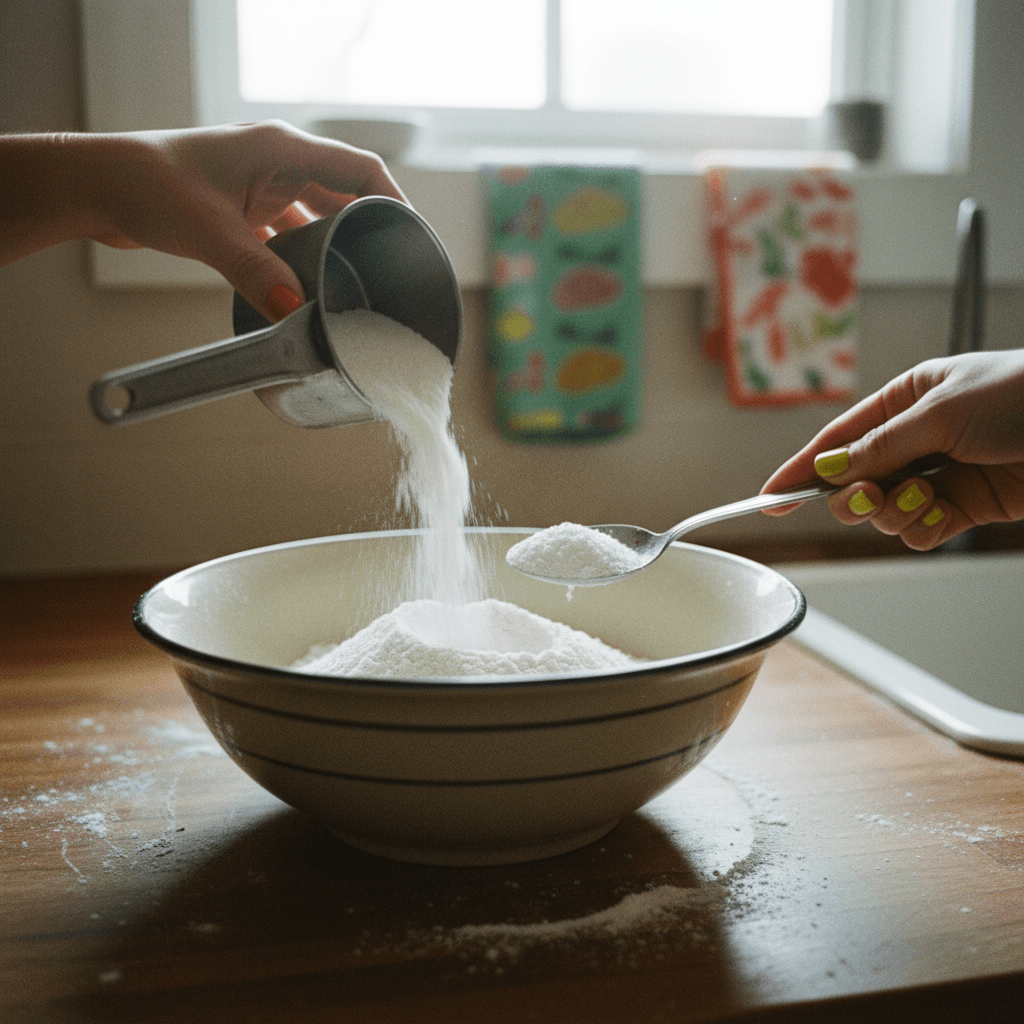
- 2
Pour the water, vegetable oil, and salt into the bowl with the dry ingredients.
⏱️ 1 min
- 3
Whisk all the ingredients together thoroughly until a smooth, lump-free batter is formed. Ensure there are no dry pockets of flour.
⏱️ 3 min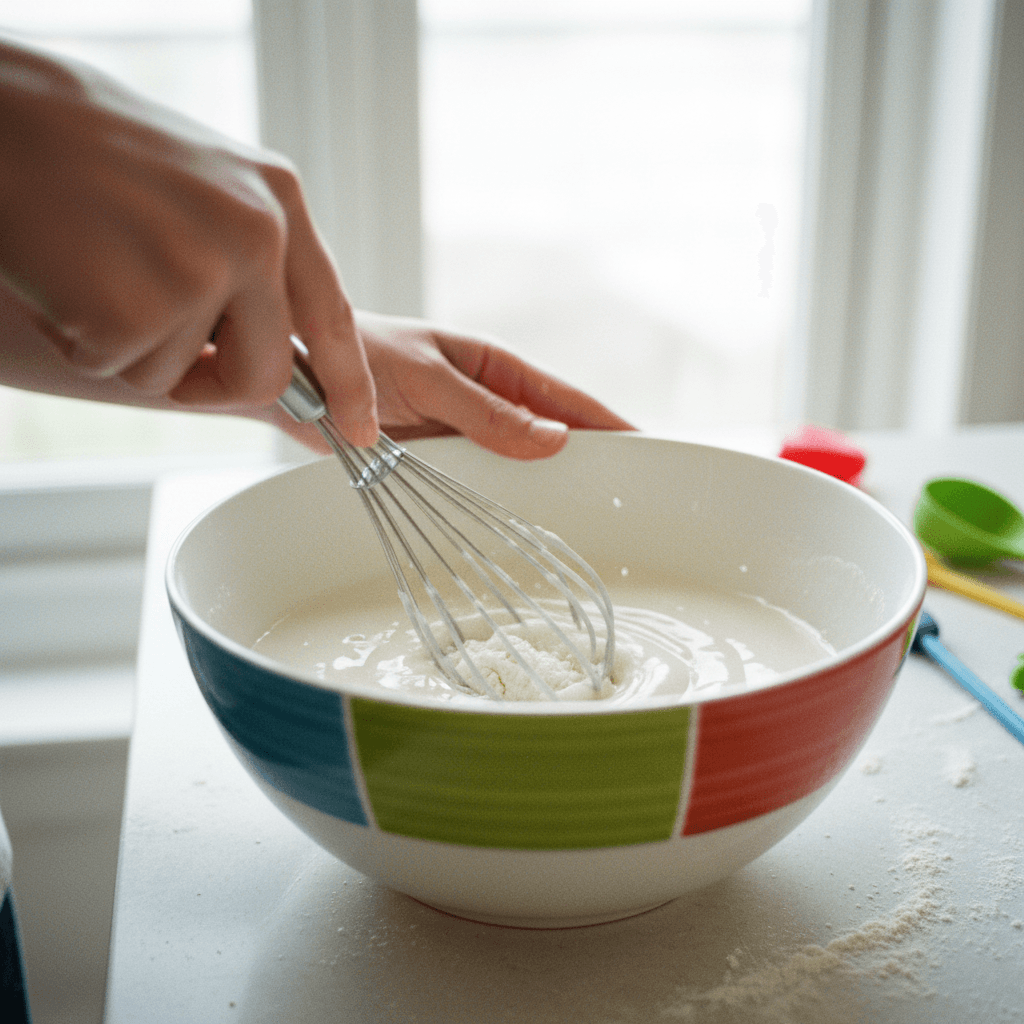
- 4
Cover the bowl and let the batter rest at room temperature for at least 15 to 30 minutes. This crucial step allows the flours to fully hydrate, which significantly improves the texture of the noodles. After resting, give the batter another good whisk.
⏱️ 30 min
- 5
While the batter rests, prepare your steaming setup. Fill a large pot or wok with water and bring it to a boil. Place a bamboo steamer or a steaming rack over the boiling water. Lightly brush a metal pan (such as a small rectangular baking pan or a metal tray that fits inside your steamer) with a neutral oil to prevent the noodles from sticking.
⏱️ 5 min
- 6
Once the water is boiling and the steamer is ready, ladle a thin layer of the prepared batter into the oiled metal pan. Swirl the pan to ensure the batter evenly coats the bottom. It's important not to use too much batter, as this will result in overly thick noodles.
⏱️ 1 min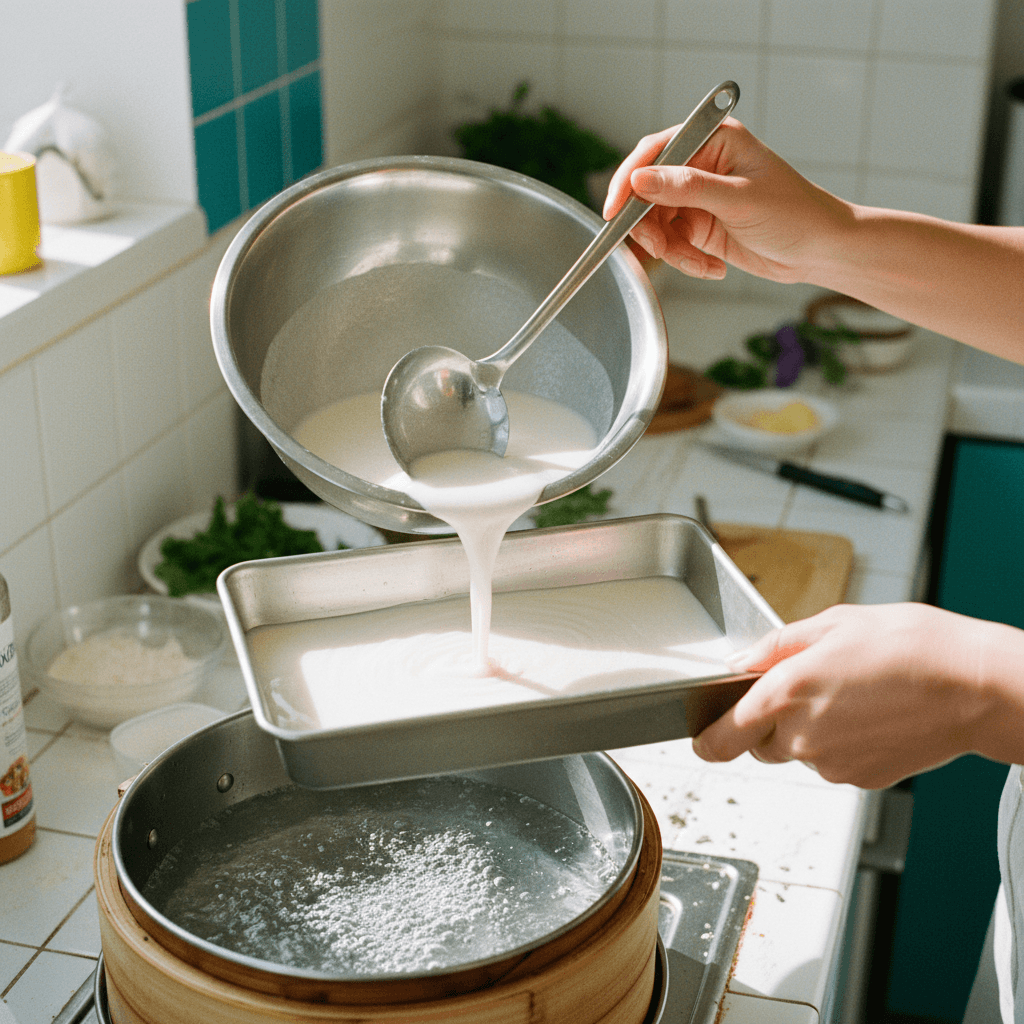
- 7
Carefully place the pan containing the batter inside the bamboo steamer or on the steaming rack. Cover the steamer with its lid.
⏱️ 1 min
- 8
Steam the noodle sheet for approximately 1 to 4 minutes, or until it becomes translucent, glossy, and firm to the touch. The cooking time will vary depending on the thickness of the batter and the heat of your steamer.
⏱️ 4 min
- 9
Once cooked, carefully remove the pan from the steamer. Allow the noodle sheet to cool slightly for about 30 seconds to 1 minute, which makes it easier to handle.
⏱️ 1 min
- 10
Gently peel the noodle sheet from the pan. You can use a spatula or your fingers. Place the noodle sheet on a clean cutting board.
⏱️ 1 min
- 11
Using a sharp knife, cut the noodle sheet into strips of your desired thickness. Repeat the process with the remaining batter, re-oiling the pan as needed for each new sheet.
⏱️ 4 min - 12
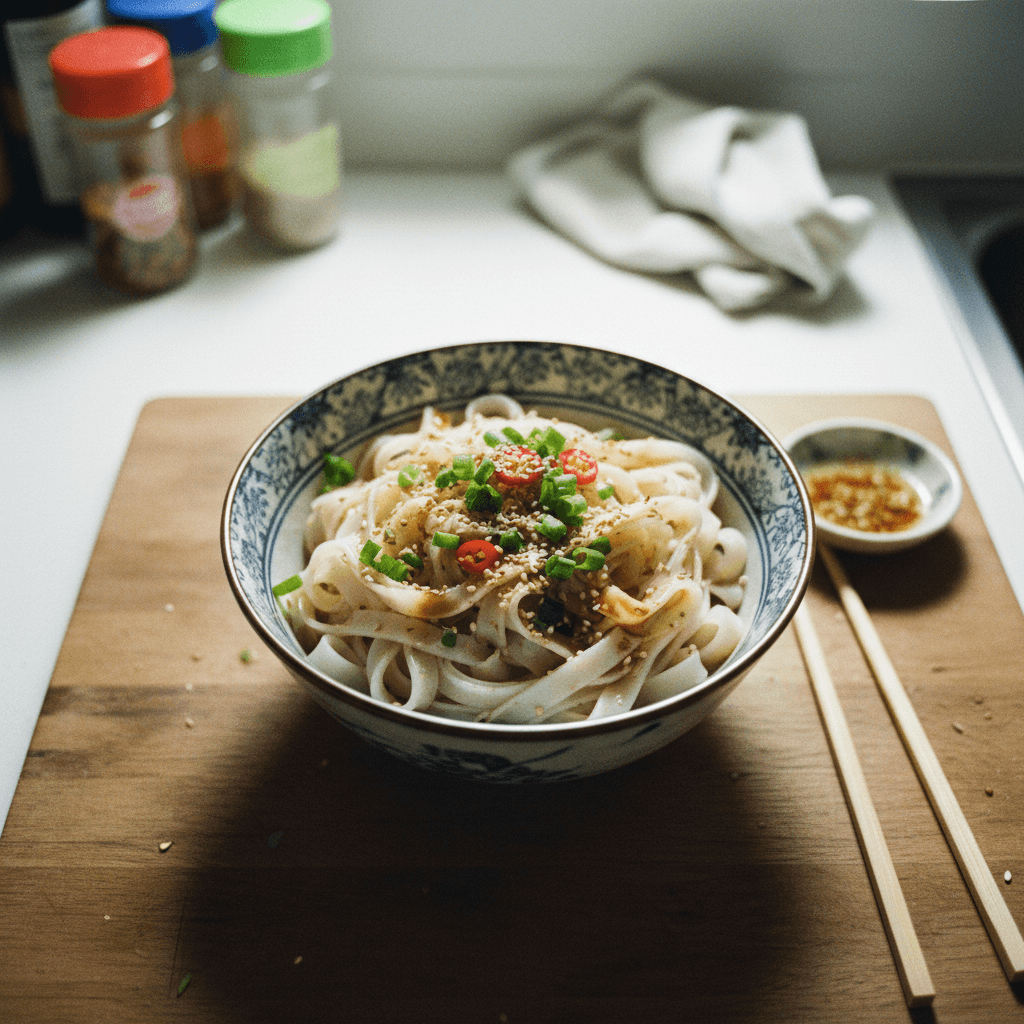
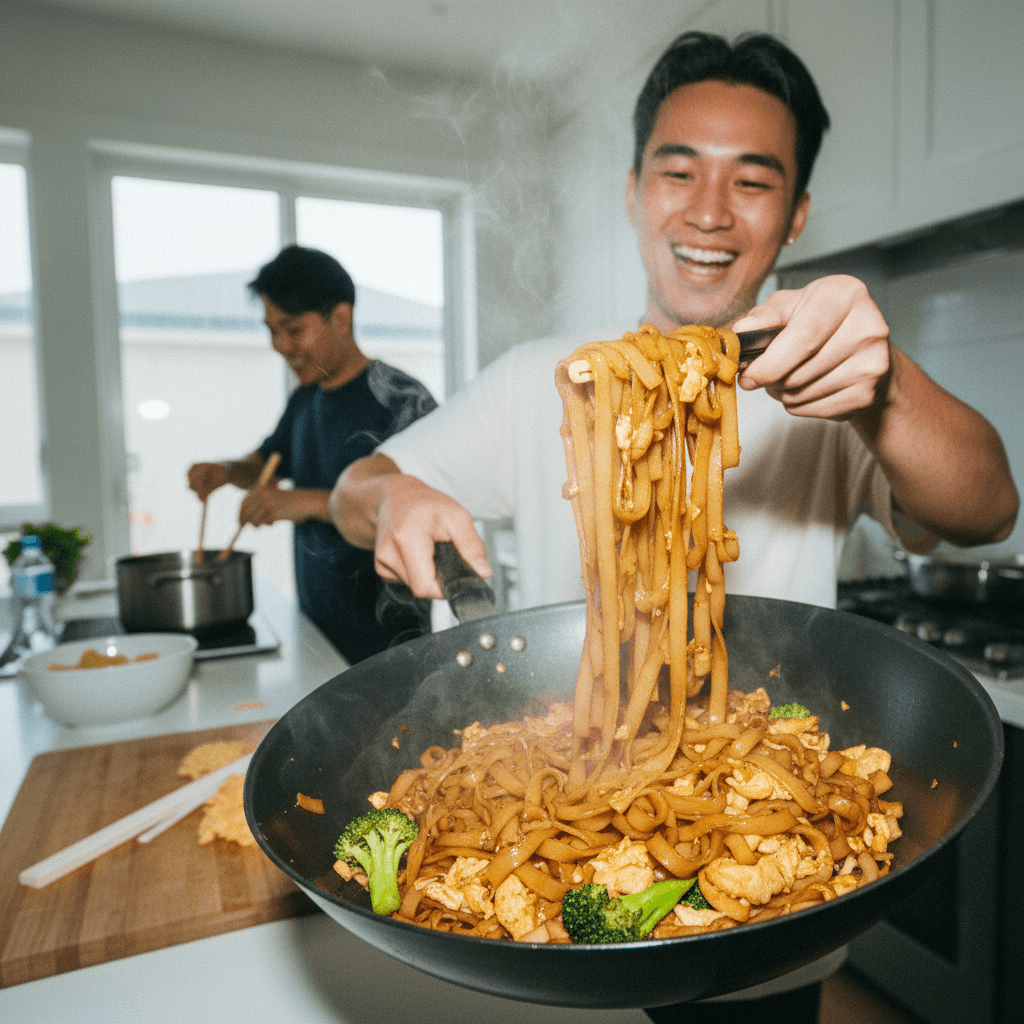
The fresh rice noodles are now ready to be used immediately in your favorite dishes, such as Pad See Ew, stir-fries, or soups.
Kitchen Tools
Nutrition Facts (per serving)
Homemade Fresh Rice Noodles
- 1 cup rice flour
- 1/2 cup tapioca starch
- 1 1/2 cups water, use 1 1/4 cups for thicker noodles
- 1 teaspoon vegetable oil
- 1 teaspoon salt
- as needed neutral oil, for brushing the pan
Instructions
- 1
In a large mixing bowl, combine the rice flour and tapioca starch.
⏱️ 1 min - 2
Pour the water, vegetable oil, and salt into the bowl with the dry ingredients.
⏱️ 1 min - 3
Whisk all the ingredients together thoroughly until a smooth, lump-free batter is formed. Ensure there are no dry pockets of flour.
⏱️ 3 min - 4
Cover the bowl and let the batter rest at room temperature for at least 15 to 30 minutes. This crucial step allows the flours to fully hydrate, which significantly improves the texture of the noodles. After resting, give the batter another good whisk.
⏱️ 30 min - 5
While the batter rests, prepare your steaming setup. Fill a large pot or wok with water and bring it to a boil. Place a bamboo steamer or a steaming rack over the boiling water. Lightly brush a metal pan (such as a small rectangular baking pan or a metal tray that fits inside your steamer) with a neutral oil to prevent the noodles from sticking.
⏱️ 5 min - 6
Once the water is boiling and the steamer is ready, ladle a thin layer of the prepared batter into the oiled metal pan. Swirl the pan to ensure the batter evenly coats the bottom. It's important not to use too much batter, as this will result in overly thick noodles.
⏱️ 1 min - 7
Carefully place the pan containing the batter inside the bamboo steamer or on the steaming rack. Cover the steamer with its lid.
⏱️ 1 min - 8
Steam the noodle sheet for approximately 1 to 4 minutes, or until it becomes translucent, glossy, and firm to the touch. The cooking time will vary depending on the thickness of the batter and the heat of your steamer.
⏱️ 4 min - 9
Once cooked, carefully remove the pan from the steamer. Allow the noodle sheet to cool slightly for about 30 seconds to 1 minute, which makes it easier to handle.
⏱️ 1 min - 10
Gently peel the noodle sheet from the pan. You can use a spatula or your fingers. Place the noodle sheet on a clean cutting board.
⏱️ 1 min - 11
Using a sharp knife, cut the noodle sheet into strips of your desired thickness. Repeat the process with the remaining batter, re-oiling the pan as needed for each new sheet.
⏱️ 4 min - 12
The fresh rice noodles are now ready to be used immediately in your favorite dishes, such as Pad See Ew, stir-fries, or soups.