The Only Caramel Recipe You'll Ever Need
The Only Caramel Recipe You'll Ever Need

Ingredients
- 50 g caster sugar
- 30 g glucose syrup
- 20 g whole milk
- 110 g heavy cream, minimum 35% fat
- 60 g glucose syrup
- 1/4 teaspoon sea salt
- 45 g butter, room temperature
- 1.5 vanilla pods, large, optional, for vanilla caramel
Instructions
- 1
Add the whole milk, heavy cream, 60 grams glucose syrup, and sea salt to a saucepan. Heat to a boil, then remove from the heat. Cover with a clean tea towel to keep the mixture warm while you caramelize the sugar.
⏱️ 5 min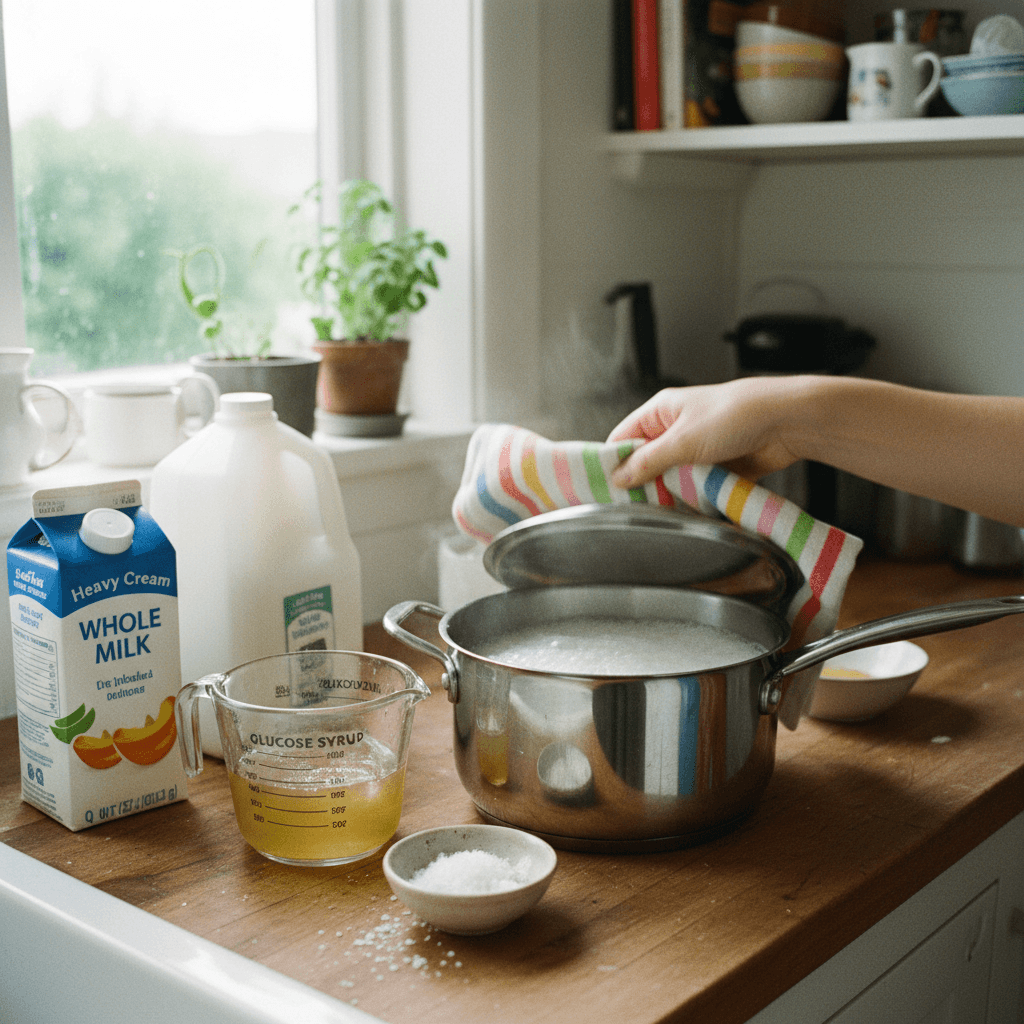
- 2
In a separate saucepan, heat the caster sugar with 30 grams glucose syrup to 180–185°C / 356–365°F, until it turns into a golden amber caramel.
⏱️ 10 min•🌡️ 185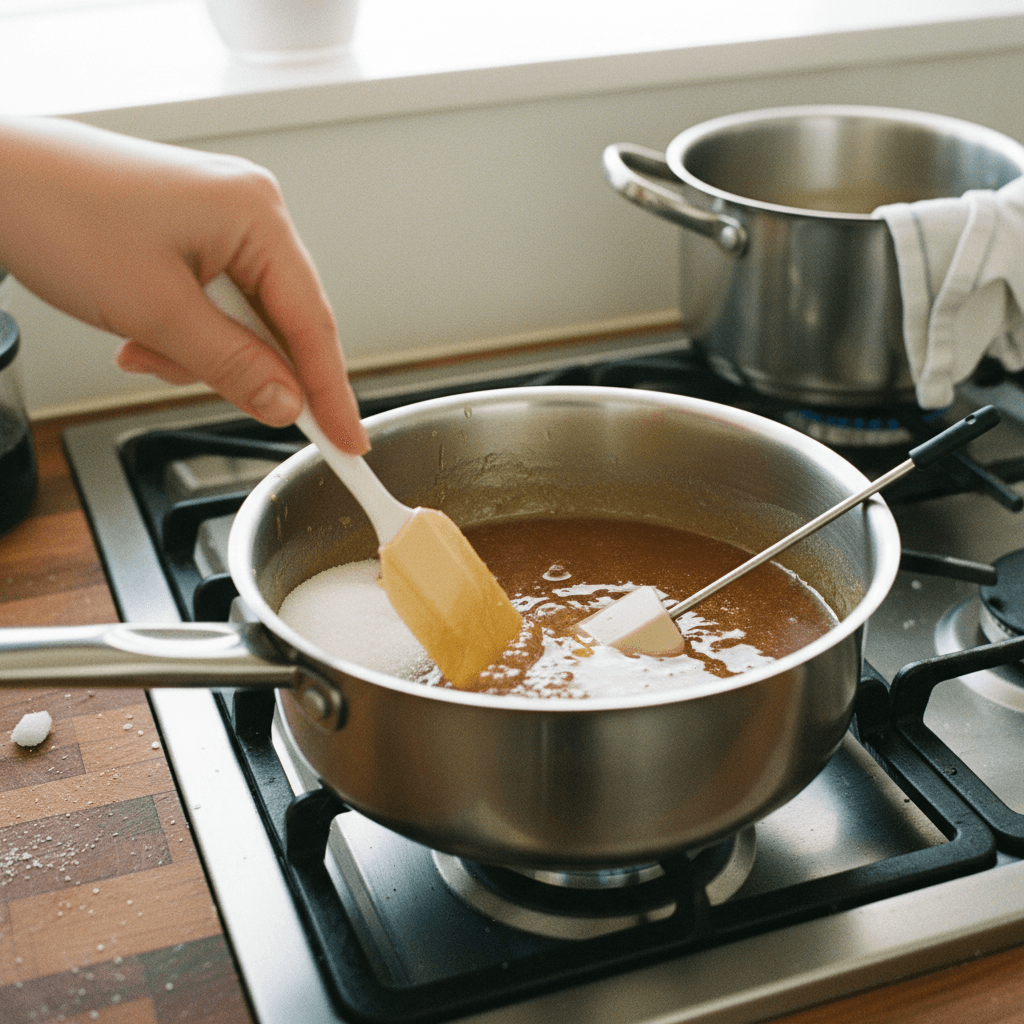
- 3
Gradually deglaze the caramel with the warm milk and cream mixture while whisking. This is done gradually to avoid seizing.
⏱️ 3 min
- 4
Cook the caramel to 110°C / 230°F. Strain the caramel into a jug and let it cool to around 60°C / 140°F.
⏱️ 10 min•🌡️ 110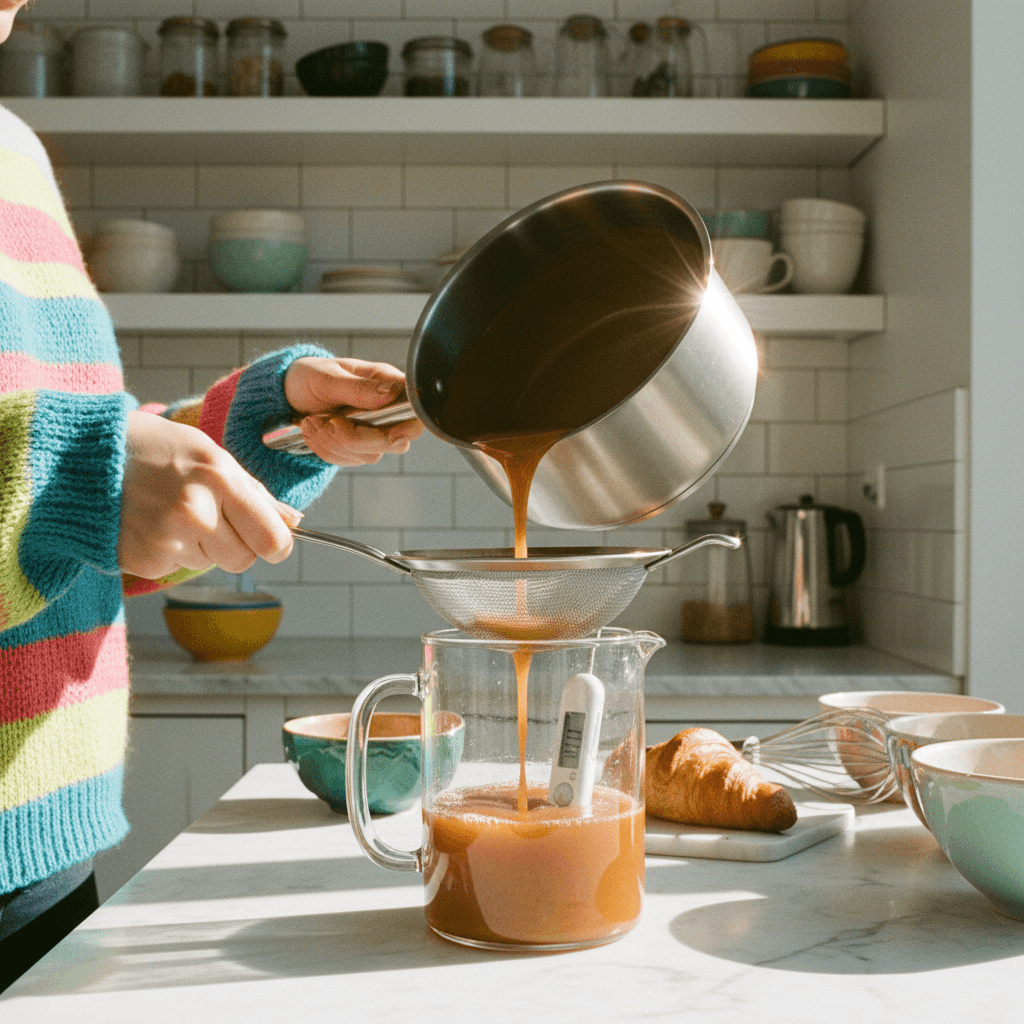
- 5
When the caramel reaches around 60°C / 140°F, blend in the room-temperature butter with a hand blender.
⏱️ 2 min•🌡️ 60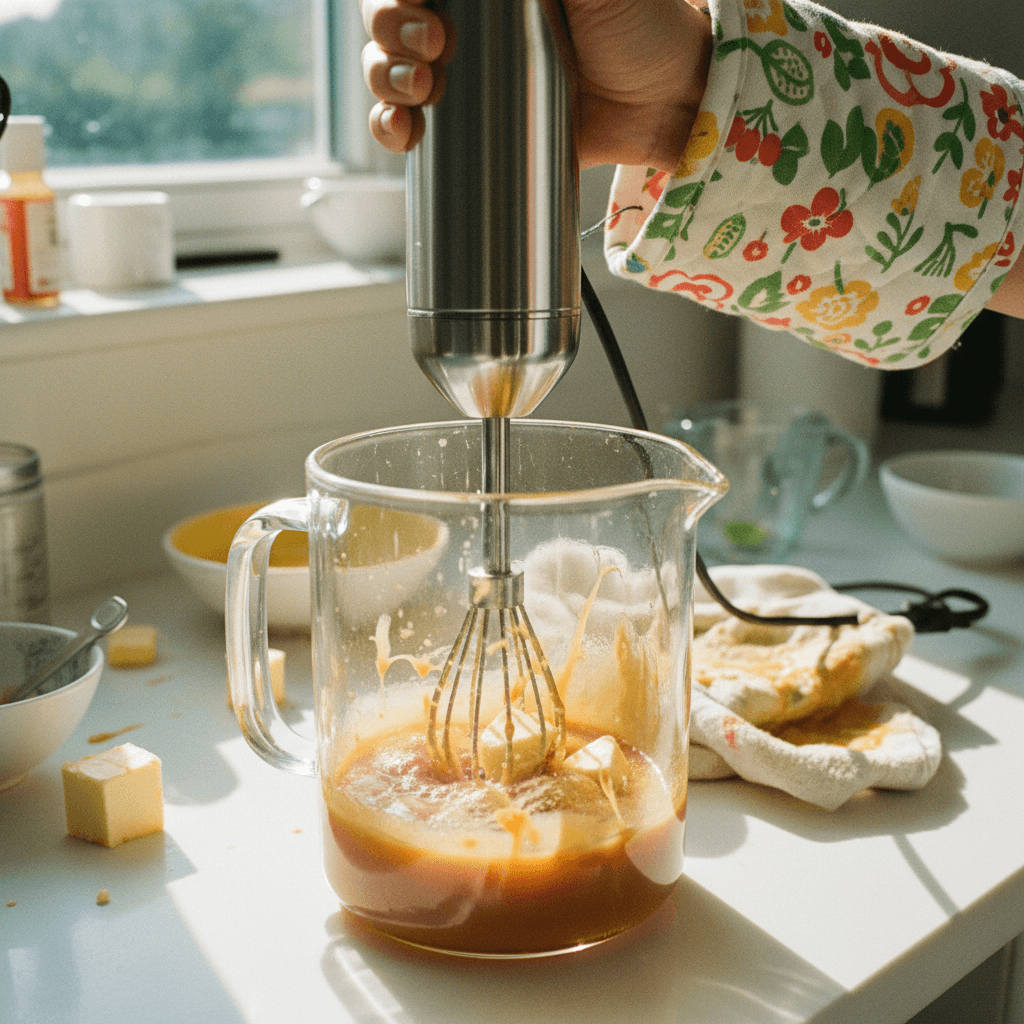
- 6
Pour the caramel into a container and cover it with cling film directly on the surface.
⏱️ 1 min
- 7
Let the caramel cool to room temperature until it reaches a pipeable texture.
⏱️ 120 min
- 8
Pipe or spread the caramel onto your cake or use as a filling.
⏱️ 2 min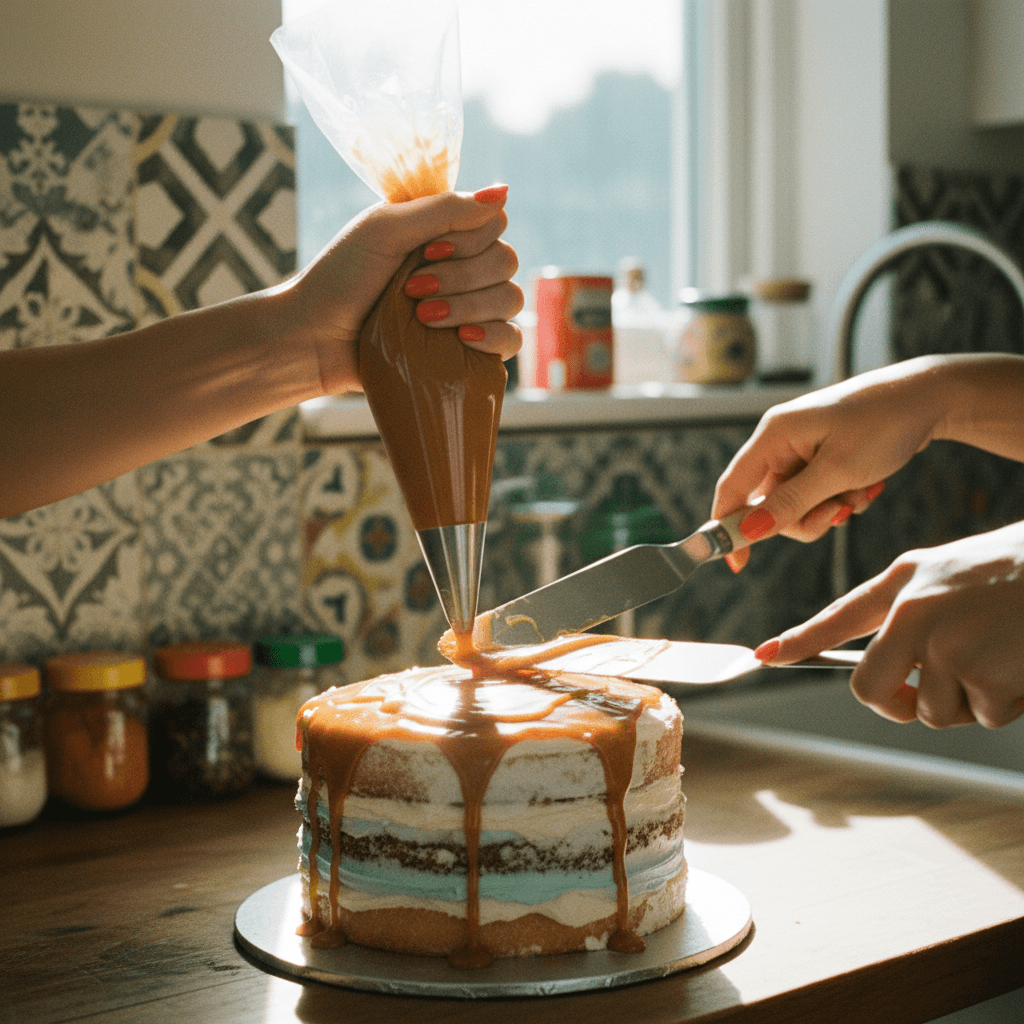
Kitchen Tools
Nutrition Facts (per serving)
The Only Caramel Recipe You'll Ever Need
- 50 g caster sugar
- 30 g glucose syrup
- 20 g whole milk
- 110 g heavy cream, minimum 35% fat
- 60 g glucose syrup
- 1/4 teaspoon sea salt
- 45 g butter, room temperature
- 1.5 vanilla pods, large, optional, for vanilla caramel
Instructions
- 1
Add the whole milk, heavy cream, 60 grams glucose syrup, and sea salt to a saucepan. Heat to a boil, then remove from the heat. Cover with a clean tea towel to keep the mixture warm while you caramelize the sugar.
⏱️ 5 min - 2
In a separate saucepan, heat the caster sugar with 30 grams glucose syrup to 180–185°C / 356–365°F, until it turns into a golden amber caramel.
⏱️ 10 min•🌡️ 185 - 3
Gradually deglaze the caramel with the warm milk and cream mixture while whisking. This is done gradually to avoid seizing.
⏱️ 3 min - 4
Cook the caramel to 110°C / 230°F. Strain the caramel into a jug and let it cool to around 60°C / 140°F.
⏱️ 10 min•🌡️ 110 - 5
When the caramel reaches around 60°C / 140°F, blend in the room-temperature butter with a hand blender.
⏱️ 2 min•🌡️ 60 - 6
Pour the caramel into a container and cover it with cling film directly on the surface.
⏱️ 1 min - 7
Let the caramel cool to room temperature until it reaches a pipeable texture.
⏱️ 120 min - 8
Pipe or spread the caramel onto your cake or use as a filling.
⏱️ 2 min