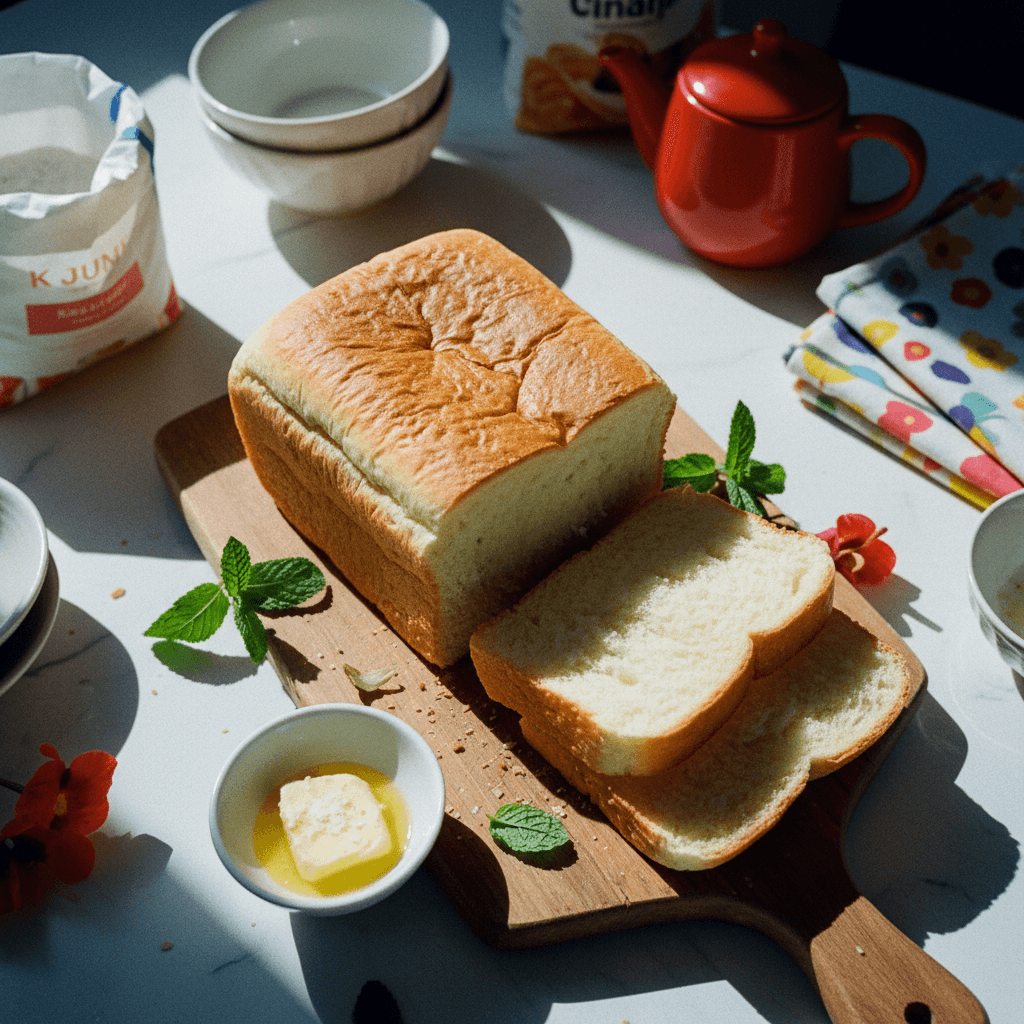
Shokupan (Japanese Milk Bread)
Shokupan (Japanese Milk Bread)
Ingredients
For the Yudane
- 50 grams bread flour
- 50 ml boiling water
For the Main Dough
- 250 grams bread flour
- 30 grams granulated sugar
- 15 grams milk powder
- 4 grams instant dry yeast
- 4 grams fine sea salt
- 150 ml cold water
- 25 grams unsalted butter, softened
- 100 grams yudane starter, all of the prepared yudane
Instructions
- 1
To prepare the yudane, in a medium bowl, combine 50 grams of bread flour and 50 ml of boiling water. Stir vigorously with a spatula until a thick, shaggy dough forms and all the flour is hydrated. Cover the bowl tightly with plastic wrap to prevent a skin from forming and refrigerate overnight (at least 8 hours, up to 24 hours).
⏱️ 5 min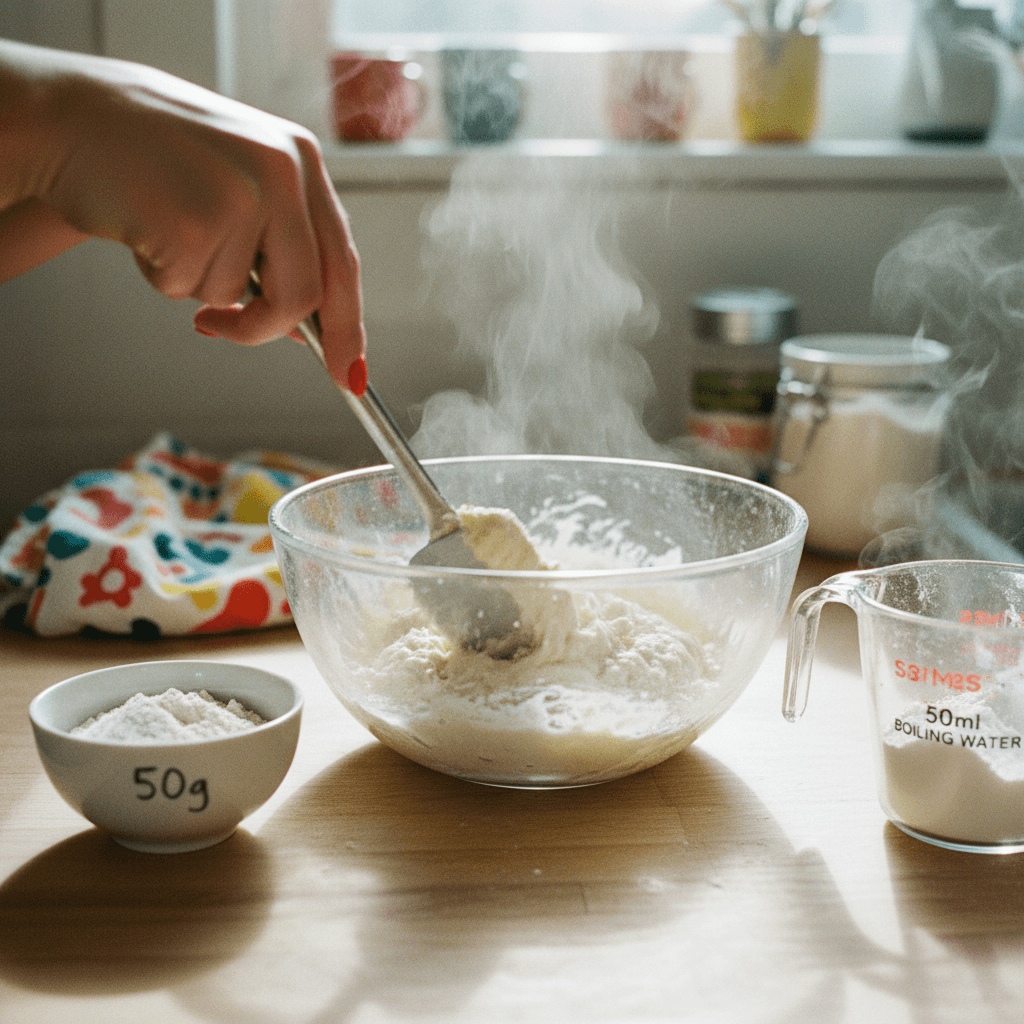
- 2
The next day, remove the yudane from the refrigerator 30 minutes before you plan to mix the main dough to allow it to come closer to room temperature.

- 3
In the bowl of a stand mixer fitted with the dough hook attachment, combine 250 grams of bread flour, 30 grams of granulated sugar, 15 grams of milk powder, 4 grams of instant dry yeast, and 4 grams of fine sea salt. Mix briefly on low speed to combine the dry ingredients.
⏱️ 2 min
- 4
Add 150 ml of cold water, the softened 25 grams of unsalted butter, and the entire 100 grams of prepared yudane starter to the dry ingredients in the stand mixer bowl. Mix on low speed for 2-3 minutes until a shaggy dough forms and no dry flour remains.
⏱️ 3 min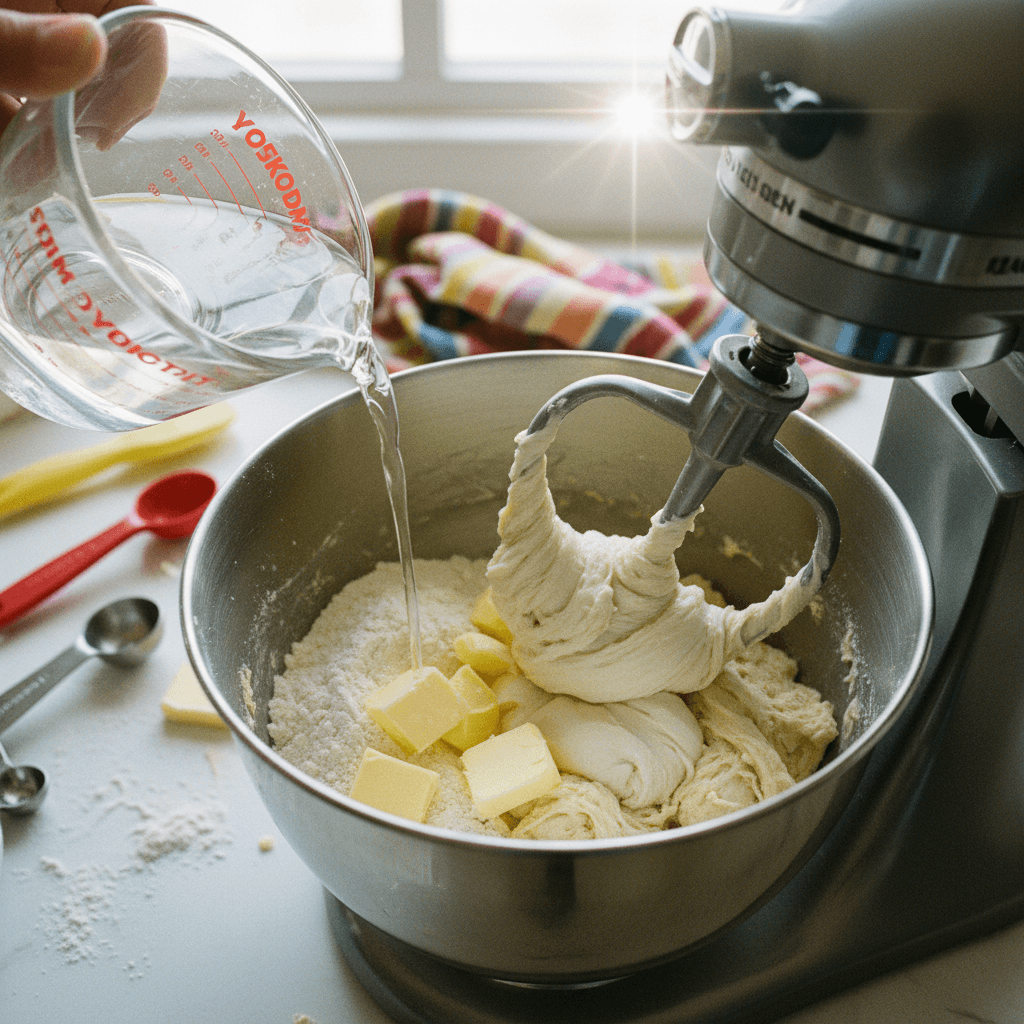
- 5
Increase the mixer speed to medium-low and knead the dough for 15-20 minutes, or until it reaches the windowpane stage. To test, pull a small piece of dough and gently stretch it; it should become thin and translucent enough to see light through without tearing. If it tears easily, continue kneading for a few more minutes.
⏱️ 20 min
- 6
Lightly grease a large bowl. Transfer the kneaded dough to the greased bowl, turning it once to coat. Cover the bowl with plastic wrap or a damp cloth and let it rise in a warm place for 1 to 1 1/2 hours, or until doubled in size.
⏱️ 90 min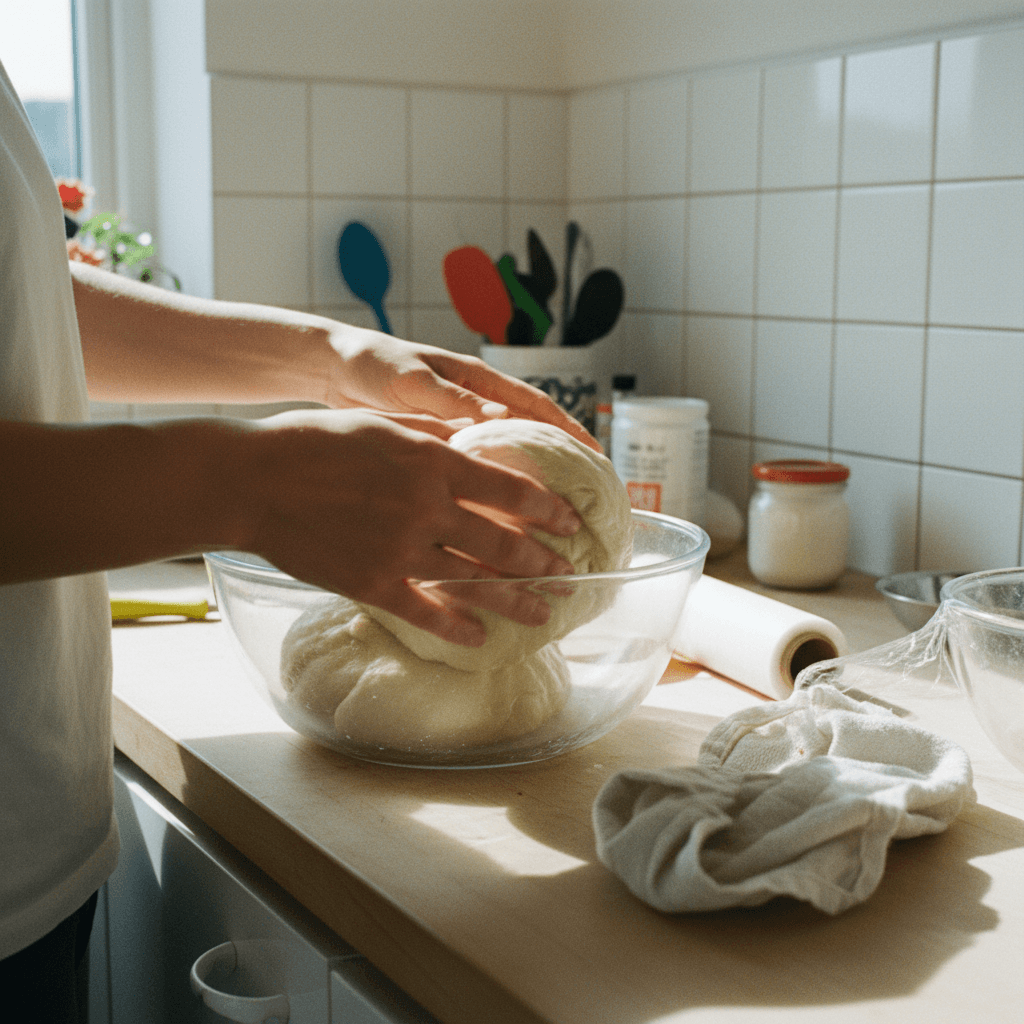
- 7
Once the dough has doubled, gently punch it down to deflate. Turn the dough out onto a lightly floured surface and divide it into three equal pieces using a dough cutter or knife.
⏱️ 5 min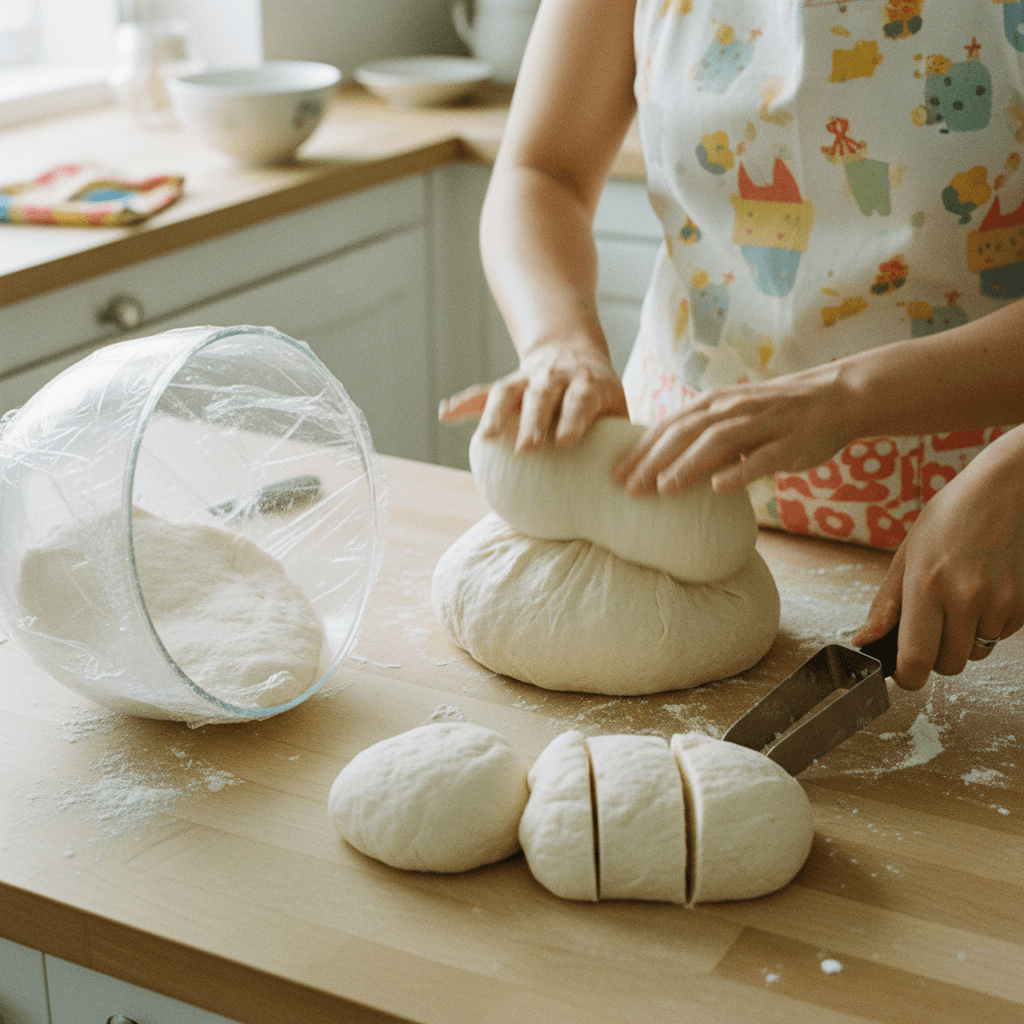
- 8
Take one piece of dough and gently flatten it into a rough rectangle. Fold the top third down to the center, then the bottom third up to overlap, creating a smaller rectangle. Turn the dough 90 degrees and then roll it up tightly from one end to the other into a log. Repeat this process for the remaining two pieces of dough.
⏱️ 10 min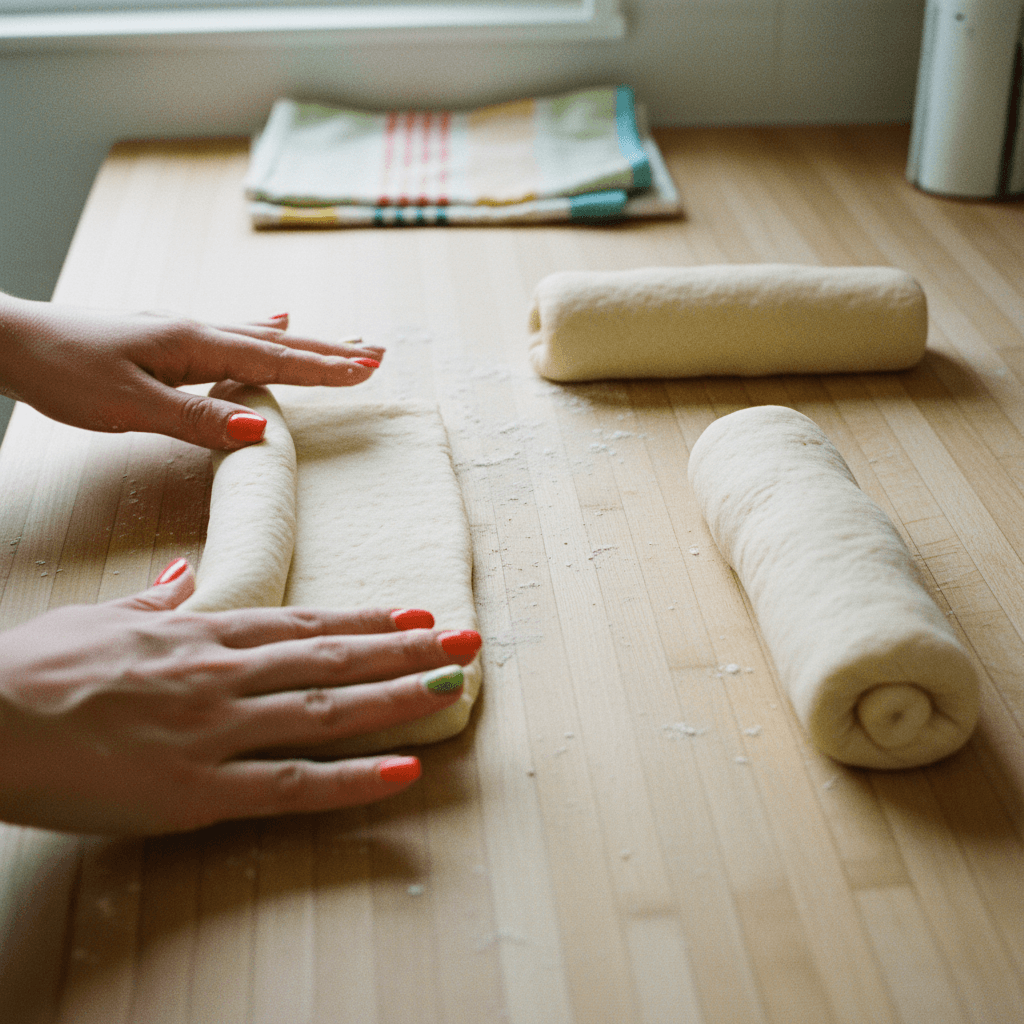
- 9
Place the three rolled dough logs side-by-side into a 1.5-pound shokupan baking tin (approximately 20x10x10 cm). Cover the tin loosely with plastic wrap or a damp cloth and let the dough rise for a second proof in a warm place for 45-60 minutes, or until the dough has risen almost to the top edge of the tin.
⏱️ 60 min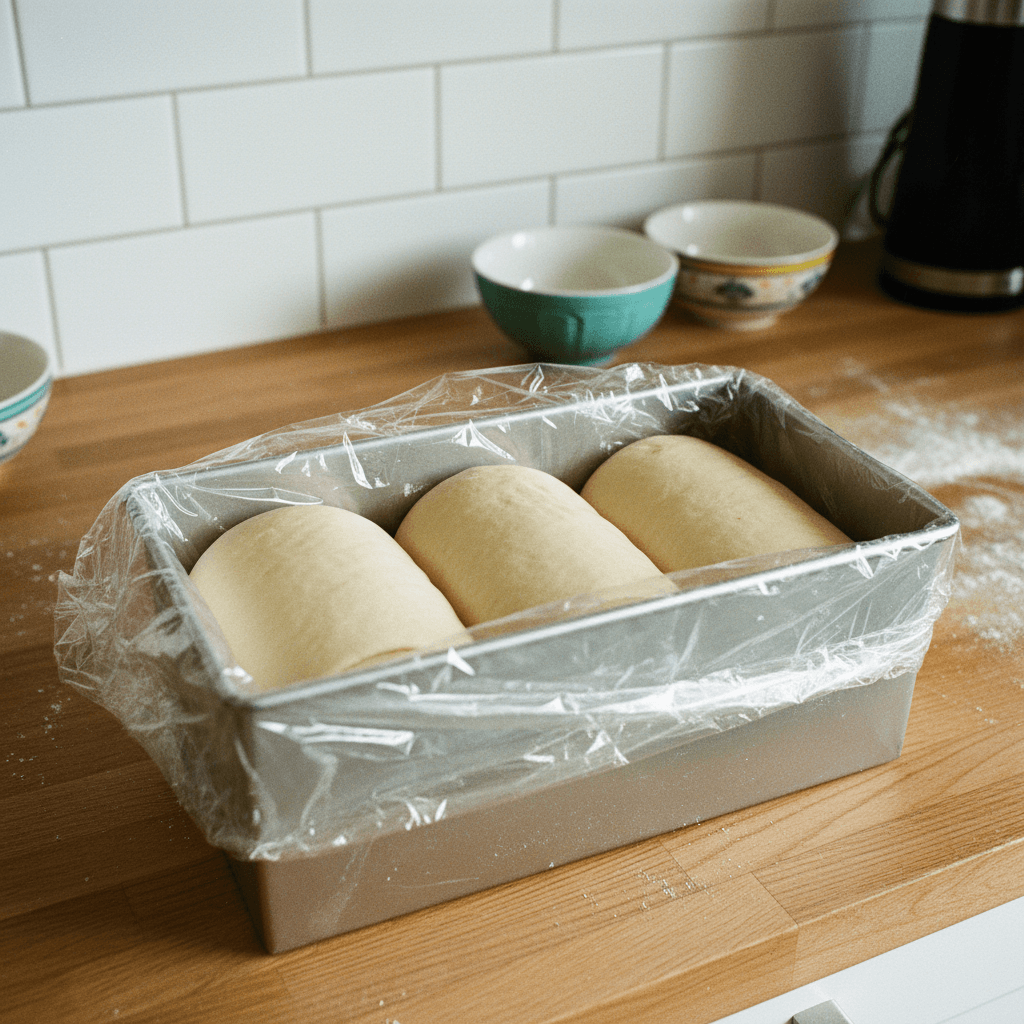
- 10
Preheat your oven to 180°C (350°F) during the last 15 minutes of the second rise.
⏱️ 15 min•🌡️ 180
- 11
Bake the shokupan for 25-30 minutes, or until the top is golden brown and the internal temperature reaches 90-93°C (195-200°F).
⏱️ 30 min•🌡️ 180
- 12
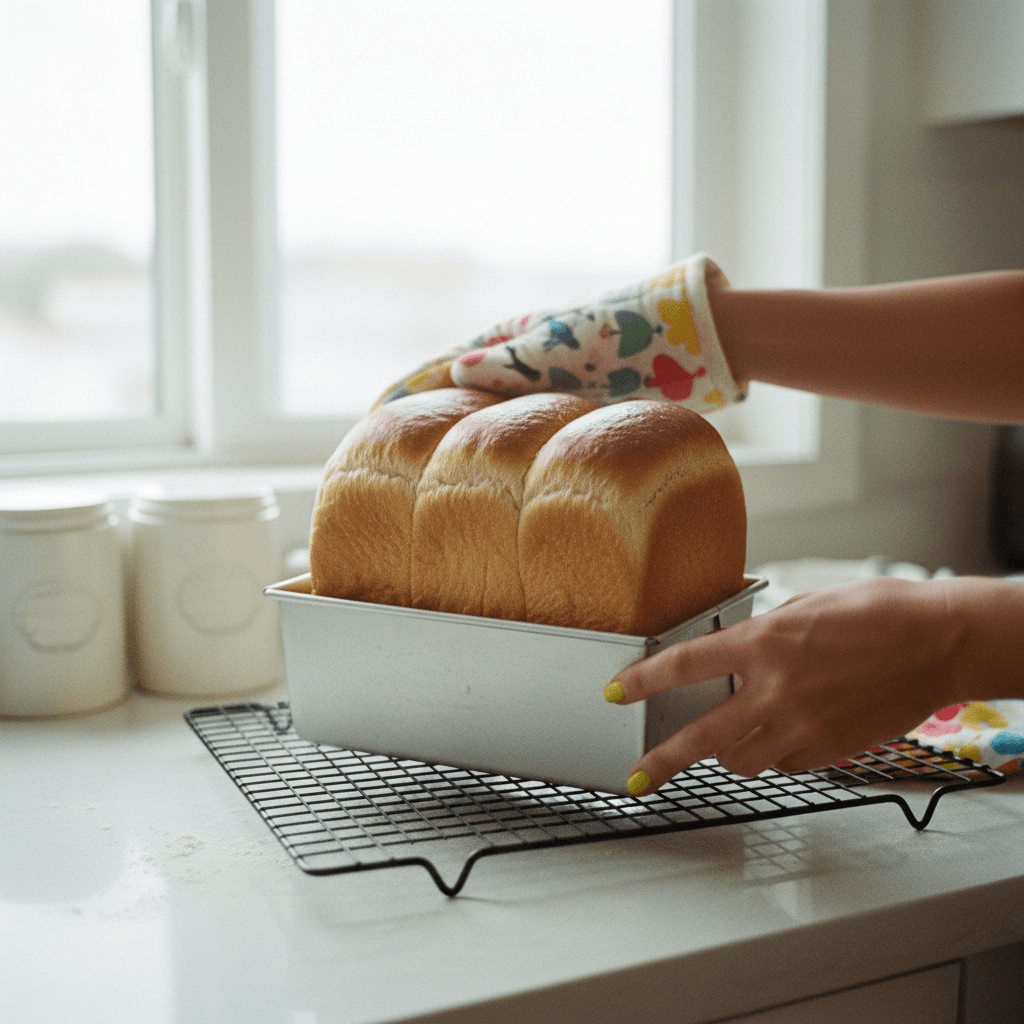
Once baked, immediately remove the shokupan from the tin and transfer it to a wire rack to cool completely before slicing. This helps prevent the bottom from becoming soggy and maintains its fluffy texture.
Kitchen Tools
Nutrition Facts (per serving)
Shokupan (Japanese Milk Bread)
For the Yudane
- 50 grams bread flour
- 50 ml boiling water
For the Main Dough
- 250 grams bread flour
- 30 grams granulated sugar
- 15 grams milk powder
- 4 grams instant dry yeast
- 4 grams fine sea salt
- 150 ml cold water
- 25 grams unsalted butter, softened
- 100 grams yudane starter, all of the prepared yudane
Instructions
- 1
To prepare the yudane, in a medium bowl, combine 50 grams of bread flour and 50 ml of boiling water. Stir vigorously with a spatula until a thick, shaggy dough forms and all the flour is hydrated. Cover the bowl tightly with plastic wrap to prevent a skin from forming and refrigerate overnight (at least 8 hours, up to 24 hours).
⏱️ 5 min - 2
The next day, remove the yudane from the refrigerator 30 minutes before you plan to mix the main dough to allow it to come closer to room temperature.
- 3
In the bowl of a stand mixer fitted with the dough hook attachment, combine 250 grams of bread flour, 30 grams of granulated sugar, 15 grams of milk powder, 4 grams of instant dry yeast, and 4 grams of fine sea salt. Mix briefly on low speed to combine the dry ingredients.
⏱️ 2 min - 4
Add 150 ml of cold water, the softened 25 grams of unsalted butter, and the entire 100 grams of prepared yudane starter to the dry ingredients in the stand mixer bowl. Mix on low speed for 2-3 minutes until a shaggy dough forms and no dry flour remains.
⏱️ 3 min - 5
Increase the mixer speed to medium-low and knead the dough for 15-20 minutes, or until it reaches the windowpane stage. To test, pull a small piece of dough and gently stretch it; it should become thin and translucent enough to see light through without tearing. If it tears easily, continue kneading for a few more minutes.
⏱️ 20 min - 6
Lightly grease a large bowl. Transfer the kneaded dough to the greased bowl, turning it once to coat. Cover the bowl with plastic wrap or a damp cloth and let it rise in a warm place for 1 to 1 1/2 hours, or until doubled in size.
⏱️ 90 min - 7
Once the dough has doubled, gently punch it down to deflate. Turn the dough out onto a lightly floured surface and divide it into three equal pieces using a dough cutter or knife.
⏱️ 5 min - 8
Take one piece of dough and gently flatten it into a rough rectangle. Fold the top third down to the center, then the bottom third up to overlap, creating a smaller rectangle. Turn the dough 90 degrees and then roll it up tightly from one end to the other into a log. Repeat this process for the remaining two pieces of dough.
⏱️ 10 min - 9
Place the three rolled dough logs side-by-side into a 1.5-pound shokupan baking tin (approximately 20x10x10 cm). Cover the tin loosely with plastic wrap or a damp cloth and let the dough rise for a second proof in a warm place for 45-60 minutes, or until the dough has risen almost to the top edge of the tin.
⏱️ 60 min - 10
Preheat your oven to 180°C (350°F) during the last 15 minutes of the second rise.
⏱️ 15 min•🌡️ 180 - 11
Bake the shokupan for 25-30 minutes, or until the top is golden brown and the internal temperature reaches 90-93°C (195-200°F).
⏱️ 30 min•🌡️ 180 - 12
Once baked, immediately remove the shokupan from the tin and transfer it to a wire rack to cool completely before slicing. This helps prevent the bottom from becoming soggy and maintains its fluffy texture.