Mediterranean Style Baguette
Mediterranean Style Baguette

Ingredients
For the Dough
- 500 g bread flour, (about 4 cups)
- 7 g dry yeast, (2¼ teaspoons)
- 1 teaspoon sugar, optional
- 1 1/2 teaspoons fine salt
- 250 g plain yogurt, (about 1 cup)
- 120–150 ml lukewarm water, (½–⅔ cup)
For the Filling
- 80 g olives, pitted and chopped (½ cup)
- 60 g sun-dried tomatoes, drained and chopped (⅓ cup)
- 1–2 tablespoons capers, rinsed and thoroughly dried
- 1 teaspoon dried oregano, optional
- 1 tablespoon fresh rosemary, optional, or use dried oregano
- 1 tablespoon flour, only if filling is moist
For Baking
- as needed olive oil, for brushing (optional)
Instructions
- 1
Activate the yeast: In a small bowl, mix the 7 g dry yeast, 1 teaspoon sugar (if using), and about 50 ml (3 tablespoons) warm water. Let this mixture sit for 5–10 minutes until it becomes foamy, indicating the yeast is active.
⏱️ 10 min
- 2
Make the dough: In a large bowl, combine the 500 g bread flour and 1 1/2 teaspoons fine salt. Add the 250 g plain yogurt and the activated yeast mixture to the flour mixture. Mix these ingredients together. Gradually add the remaining 70-100 ml lukewarm water (from the total 120-150 ml) until a soft, slightly sticky dough forms. Transfer the dough to a lightly floured surface and knead it for 8–10 minutes until it is smooth and elastic. The dough should be soft but not wet.
⏱️ 20 min
- 3
First rise: Lightly oil a clean bowl. Place the kneaded dough into the oiled bowl. Cover the bowl and let the dough rise in a warm place for 1 to 1 1/2 hours, or until it has doubled in size.
⏱️ 90 min
- 4
Prepare the filling: Chop the 80 g pitted olives, 60 g drained sun-dried tomatoes, and 1–2 tablespoons capers. Pat all the chopped ingredients very dry with a paper towel to remove excess moisture. If the mixture still feels moist after patting dry, lightly toss it with 1 tablespoon flour to prevent the dough from becoming soggy. If using, add the 1 teaspoon dried oregano or 1 tablespoon fresh rosemary to the filling.
⏱️ 10 min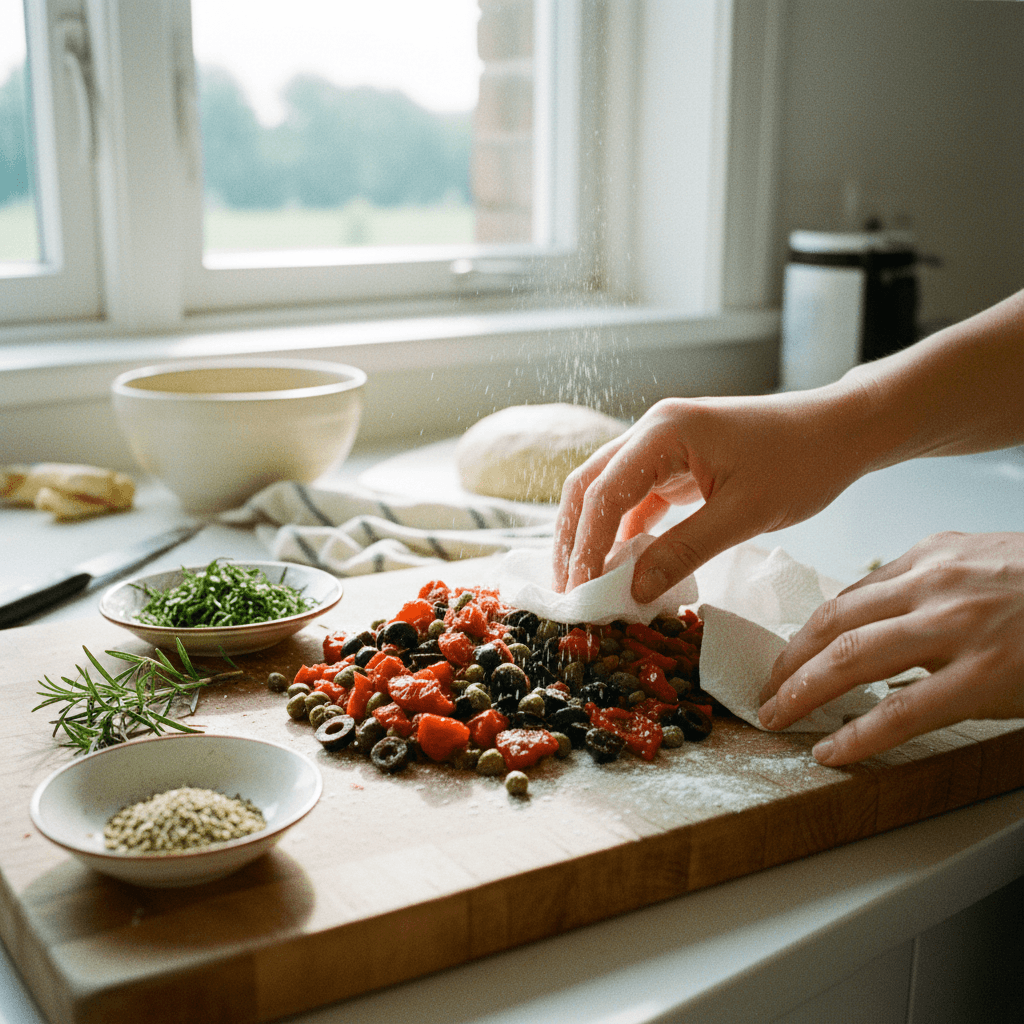
- 5
Fill and roll: Turn the risen dough onto a lightly floured surface. Gently stretch the dough into a rectangular shape, approximately 30 x 20 cm (12 x 8 inches). Spread the prepared filling evenly over the entire surface of the stretched dough, leaving a small border around the edges. Starting from one of the long sides, tightly roll the dough up into a log, similar to a jelly roll. Ensure the roll is snug but avoid pressing too hard, which could cause the filling to spill out. Pinch the seam of the dough closed firmly to seal the filling inside.
⏱️ 10 min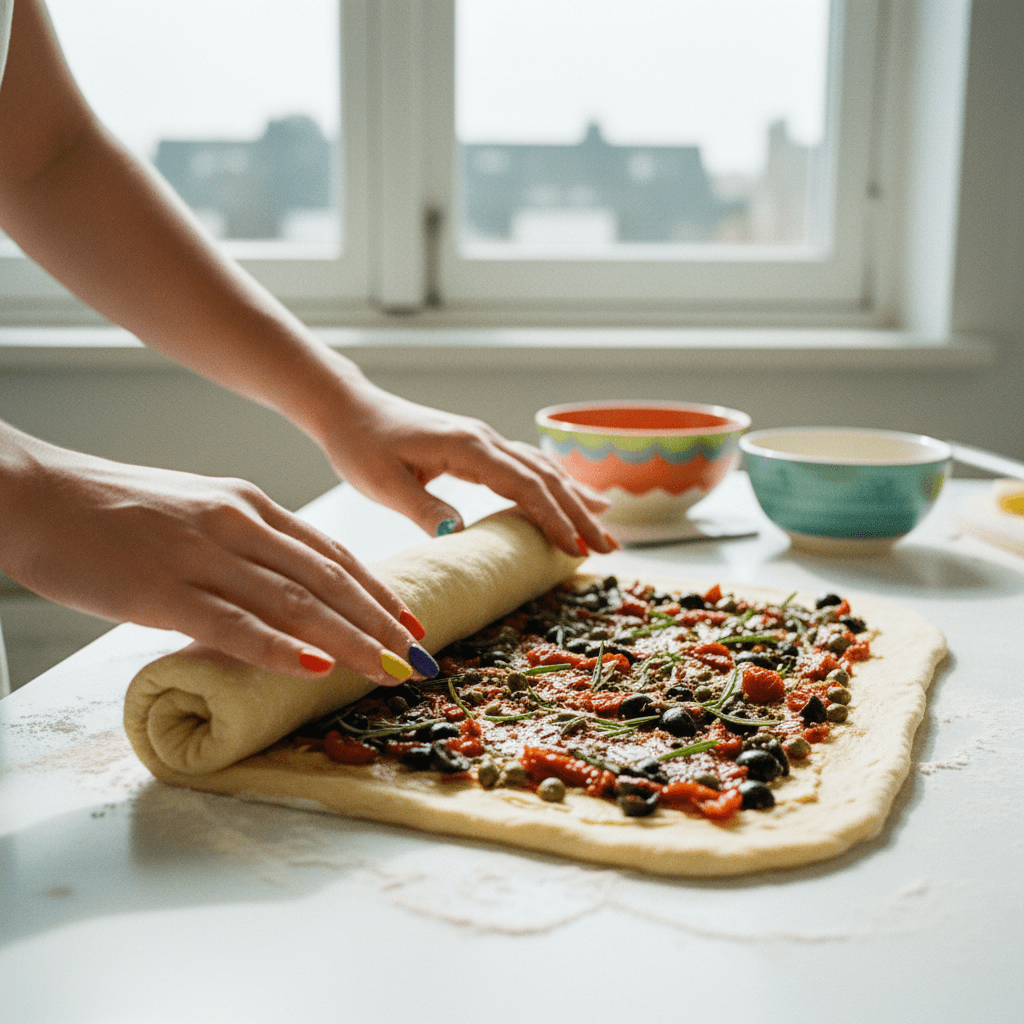
- 6
Shape into baguette: Place the rolled log seam-side down on the work surface. Gently shape the log to achieve a traditional baguette form, elongating it and slightly tapering the ends.
⏱️ 5 min
- 7
Second rise: Transfer the shaped baguette to a baking tray lined with parchment paper. Cover the baguette loosely. Let it rise again for 30–60 minutes, or until it looks visibly puffy.
⏱️ 60 min
- 8
Bake: Preheat the oven to 220°C / 425°F. Using a sharp knife, score the top of the baguette with 2–4 diagonal cuts. Optionally, lightly brush the top of the baguette with olive oil for extra crispiness and flavor. Bake for 20–25 minutes, or until the baguette turns a deep golden brown and feels crisp to the touch.
⏱️ 25 min•🌡️ 220 - 9
Cool: Transfer the baked baguette to a wire rack. Allow it to cool for at least 20 minutes before slicing and serving.
⏱️ 20 min
Kitchen Tools
Nutrition Facts (per serving)
Mediterranean Style Baguette
For the Dough
- 500 g bread flour, (about 4 cups)
- 7 g dry yeast, (2¼ teaspoons)
- 1 teaspoon sugar, optional
- 1 1/2 teaspoons fine salt
- 250 g plain yogurt, (about 1 cup)
- 120–150 ml lukewarm water, (½–⅔ cup)
For the Filling
- 80 g olives, pitted and chopped (½ cup)
- 60 g sun-dried tomatoes, drained and chopped (⅓ cup)
- 1–2 tablespoons capers, rinsed and thoroughly dried
- 1 teaspoon dried oregano, optional
- 1 tablespoon fresh rosemary, optional, or use dried oregano
- 1 tablespoon flour, only if filling is moist
For Baking
- as needed olive oil, for brushing (optional)
Instructions
- 1
Activate the yeast: In a small bowl, mix the 7 g dry yeast, 1 teaspoon sugar (if using), and about 50 ml (3 tablespoons) warm water. Let this mixture sit for 5–10 minutes until it becomes foamy, indicating the yeast is active.
⏱️ 10 min - 2
Make the dough: In a large bowl, combine the 500 g bread flour and 1 1/2 teaspoons fine salt. Add the 250 g plain yogurt and the activated yeast mixture to the flour mixture. Mix these ingredients together. Gradually add the remaining 70-100 ml lukewarm water (from the total 120-150 ml) until a soft, slightly sticky dough forms. Transfer the dough to a lightly floured surface and knead it for 8–10 minutes until it is smooth and elastic. The dough should be soft but not wet.
⏱️ 20 min - 3
First rise: Lightly oil a clean bowl. Place the kneaded dough into the oiled bowl. Cover the bowl and let the dough rise in a warm place for 1 to 1 1/2 hours, or until it has doubled in size.
⏱️ 90 min - 4
Prepare the filling: Chop the 80 g pitted olives, 60 g drained sun-dried tomatoes, and 1–2 tablespoons capers. Pat all the chopped ingredients very dry with a paper towel to remove excess moisture. If the mixture still feels moist after patting dry, lightly toss it with 1 tablespoon flour to prevent the dough from becoming soggy. If using, add the 1 teaspoon dried oregano or 1 tablespoon fresh rosemary to the filling.
⏱️ 10 min - 5
Fill and roll: Turn the risen dough onto a lightly floured surface. Gently stretch the dough into a rectangular shape, approximately 30 x 20 cm (12 x 8 inches). Spread the prepared filling evenly over the entire surface of the stretched dough, leaving a small border around the edges. Starting from one of the long sides, tightly roll the dough up into a log, similar to a jelly roll. Ensure the roll is snug but avoid pressing too hard, which could cause the filling to spill out. Pinch the seam of the dough closed firmly to seal the filling inside.
⏱️ 10 min - 6
Shape into baguette: Place the rolled log seam-side down on the work surface. Gently shape the log to achieve a traditional baguette form, elongating it and slightly tapering the ends.
⏱️ 5 min - 7
Second rise: Transfer the shaped baguette to a baking tray lined with parchment paper. Cover the baguette loosely. Let it rise again for 30–60 minutes, or until it looks visibly puffy.
⏱️ 60 min - 8
Bake: Preheat the oven to 220°C / 425°F. Using a sharp knife, score the top of the baguette with 2–4 diagonal cuts. Optionally, lightly brush the top of the baguette with olive oil for extra crispiness and flavor. Bake for 20–25 minutes, or until the baguette turns a deep golden brown and feels crisp to the touch.
⏱️ 25 min•🌡️ 220 - 9
Cool: Transfer the baked baguette to a wire rack. Allow it to cool for at least 20 minutes before slicing and serving.
⏱️ 20 min