Herb-Roasted Pork Loin
Herb-Roasted Pork Loin

Ingredients
For the Pork Loin
- 2 pounds pork loin, boneless, center-cut
- 2 tablespoons olive oil
- 1 tablespoon fresh rosemary, finely chopped
- 1 tablespoon fresh thyme, finely chopped
- 3 garlic, cloves, minced
- 1 1/2 teaspoons kosher salt
- 1 teaspoon black pepper, freshly ground
- 1 tablespoon Dijon mustard, optional, for extra flavor
For the Pan Sauce
- 1/2 cup chicken broth, low-sodium
- 1/4 cup dry white wine, such as Sauvignon Blanc or Pinot Grigio (or more broth)
- 1 tablespoon unsalted butter, cold
Instructions
- 1
Preheat your oven to 400°F. If using an oven-safe skillet for searing, place it on the stovetop over medium-high heat.
⏱️ 10 min•🌡️ 400
- 2
Pat the pork loin dry thoroughly with paper towels. This helps create a nice crust. In a small bowl, combine the olive oil, chopped fresh rosemary, chopped fresh thyme, minced garlic, kosher salt, black pepper, and Dijon mustard (if using). Mix well to form a paste.
⏱️ 5 min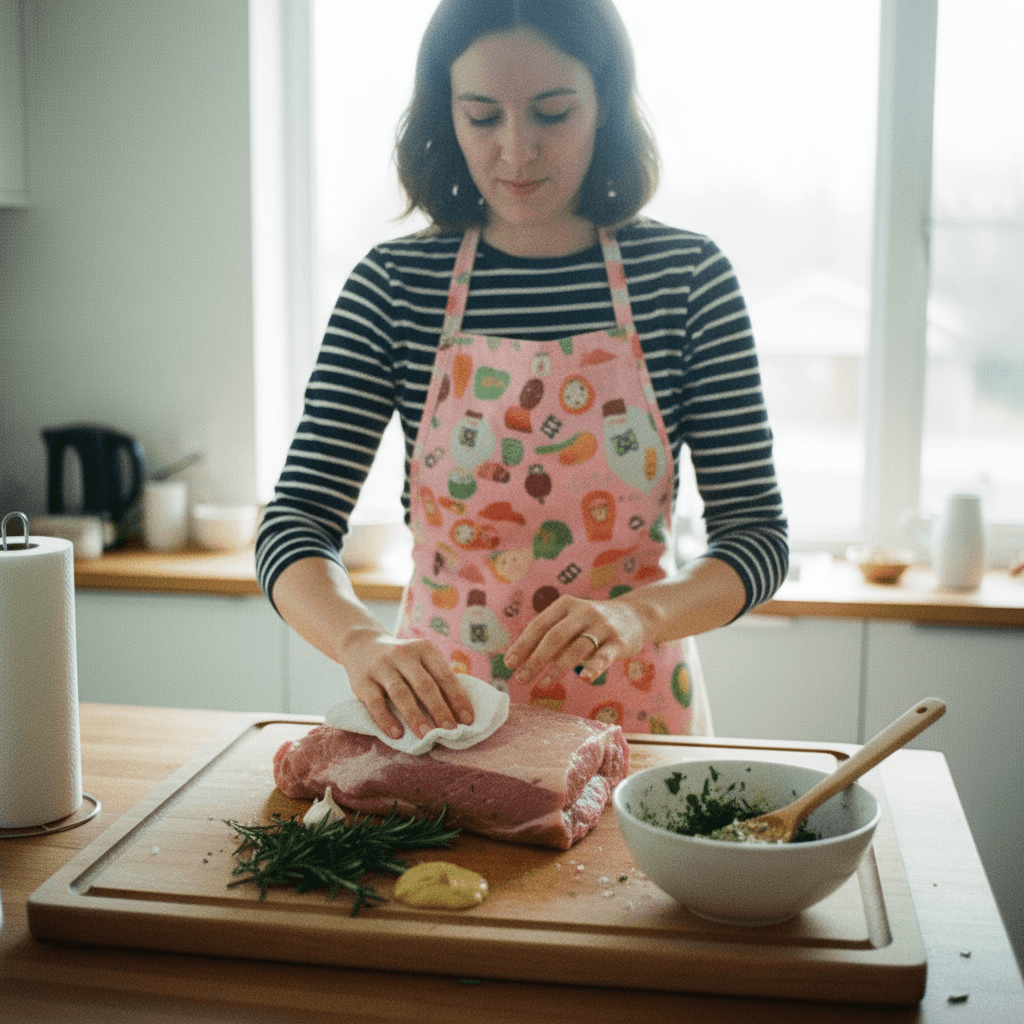
- 3
Rub the herb mixture evenly all over the pork loin, ensuring it's well coated on all sides.
⏱️ 3 min
- 4
If searing, add 1 tablespoon of olive oil to the hot oven-safe skillet. Once shimmering, carefully place the pork loin in the skillet. Sear for 2-3 minutes per side until a golden-brown crust forms. If not searing, proceed directly to roasting in a roasting pan.
⏱️ 10 min
- 5
Transfer the skillet (or roasting pan) with the pork loin to the preheated oven. Roast for 35-45 minutes, or until an internal meat thermometer inserted into the thickest part of the loin registers 140-145°F for medium-rare to medium doneness. The temperature will rise slightly as it rests.
⏱️ 40 min•🌡️ 400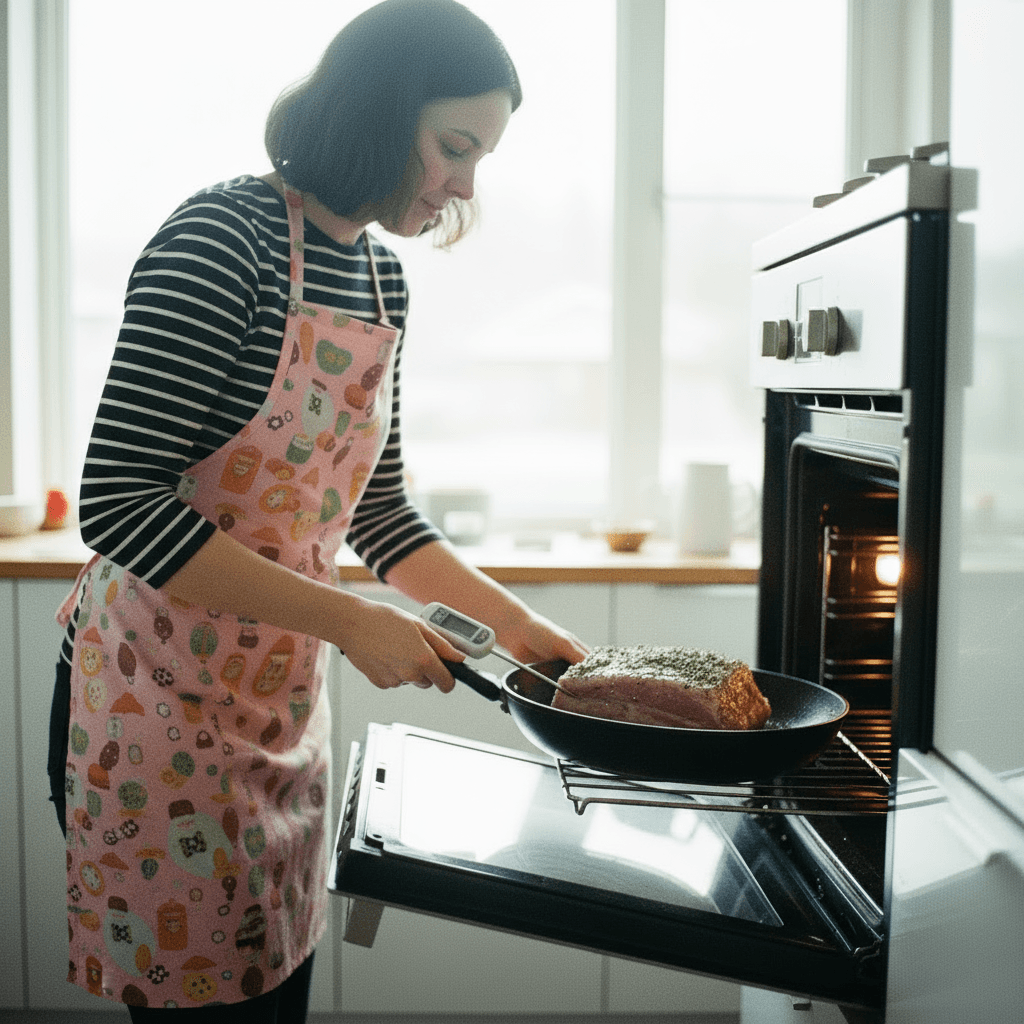
- 6
Remove the pork loin from the oven and transfer it to a cutting board. Tent loosely with aluminum foil and let it rest for at least 10-15 minutes. This allows the juices to redistribute, ensuring a tender and moist roast.
⏱️ 15 min
- 7
While the pork rests, make the pan sauce. Place the skillet (if used for roasting and searing) back on the stovetop over medium heat. Add the chicken broth and dry white wine to deglaze the pan, scraping up any browned bits from the bottom with a wooden spoon. Bring to a simmer and reduce by about half, about 5-7 minutes.
⏱️ 7 min
- 8
Remove the skillet from the heat. Whisk in the cold unsalted butter until it's melted and the sauce is slightly thickened and glossy. Season with salt and pepper to taste.
⏱️ 2 min
- 9
Slice the rested pork loin into 1/2-inch thick medallions. Serve immediately with the warm pan sauce drizzled over the top.
⏱️ 3 min
Kitchen Tools
Nutrition Facts (per serving)
Herb-Roasted Pork Loin
Ingredients
For the Pork Loin
- 2 pounds pork loin, boneless, center-cut
- 2 tablespoons olive oil
- 1 tablespoon fresh rosemary, finely chopped
- 1 tablespoon fresh thyme, finely chopped
- 3 garlic, cloves, minced
- 1 1/2 teaspoons kosher salt
- 1 teaspoon black pepper, freshly ground
- 1 tablespoon Dijon mustard, optional, for extra flavor
For the Pan Sauce
- 1/2 cup chicken broth, low-sodium
- 1/4 cup dry white wine, such as Sauvignon Blanc or Pinot Grigio (or more broth)
- 1 tablespoon unsalted butter, cold
Instructions
- 1
Preheat your oven to 400°F. If using an oven-safe skillet for searing, place it on the stovetop over medium-high heat.
⏱️ 10 min•🌡️ 400 - 2
Pat the pork loin dry thoroughly with paper towels. This helps create a nice crust. In a small bowl, combine the olive oil, chopped fresh rosemary, chopped fresh thyme, minced garlic, kosher salt, black pepper, and Dijon mustard (if using). Mix well to form a paste.
⏱️ 5 min - 3
Rub the herb mixture evenly all over the pork loin, ensuring it's well coated on all sides.
⏱️ 3 min - 4
If searing, add 1 tablespoon of olive oil to the hot oven-safe skillet. Once shimmering, carefully place the pork loin in the skillet. Sear for 2-3 minutes per side until a golden-brown crust forms. If not searing, proceed directly to roasting in a roasting pan.
⏱️ 10 min - 5
Transfer the skillet (or roasting pan) with the pork loin to the preheated oven. Roast for 35-45 minutes, or until an internal meat thermometer inserted into the thickest part of the loin registers 140-145°F for medium-rare to medium doneness. The temperature will rise slightly as it rests.
⏱️ 40 min•🌡️ 400 - 6
Remove the pork loin from the oven and transfer it to a cutting board. Tent loosely with aluminum foil and let it rest for at least 10-15 minutes. This allows the juices to redistribute, ensuring a tender and moist roast.
⏱️ 15 min - 7
While the pork rests, make the pan sauce. Place the skillet (if used for roasting and searing) back on the stovetop over medium heat. Add the chicken broth and dry white wine to deglaze the pan, scraping up any browned bits from the bottom with a wooden spoon. Bring to a simmer and reduce by about half, about 5-7 minutes.
⏱️ 7 min - 8
Remove the skillet from the heat. Whisk in the cold unsalted butter until it's melted and the sauce is slightly thickened and glossy. Season with salt and pepper to taste.
⏱️ 2 min - 9
Slice the rested pork loin into 1/2-inch thick medallions. Serve immediately with the warm pan sauce drizzled over the top.
⏱️ 3 min