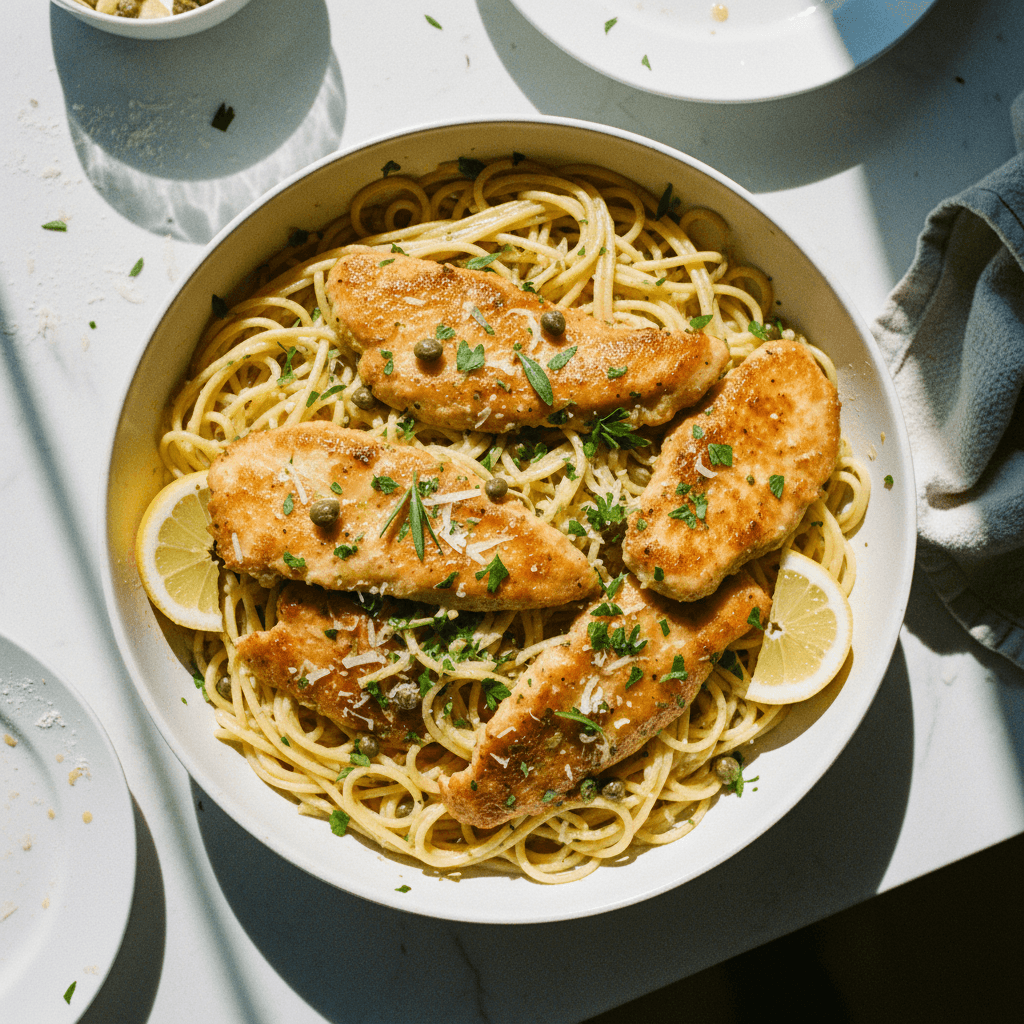
Chicken Piccata with Lemon Caper Sauce and Spaghetti
Chicken Piccata with Lemon Caper Sauce and Spaghetti
Ingredients
For the Chicken
- 2 chicken breasts, large, butterflied
- 1 cup all-purpose flour
- 1 teaspoon garlic powder
- to taste salt
- to taste black pepper
- 1/4 cup olive oil
For the Sauce
- 1 shallot, minced
- 5 cloves garlic, minced
- 1/2 cup dry white wine
- 1/2 cup chicken stock
- from 1/2 lemon lemon juice
- 2 tablespoons capers
- 2 tablespoons fresh parsley, minced
- 1 teaspoon fresh tarragon, diced
- 3 tablespoons unsalted butter, cold, cubed
For Serving
- 1 pound spaghetti, cooked according to package directions
- as needed Parmigiano Reggiano, for finishing, grated
- as needed chicken stock, for loosening sauce
Instructions
- 1
Place butterflied chicken breasts between two sheets of parchment paper. Using a meat mallet or a heavy pot, pound the chicken until it is evenly thin, about 1/4 inch thick. Season both sides of the pounded chicken with salt and black pepper to taste.
⏱️ 5 min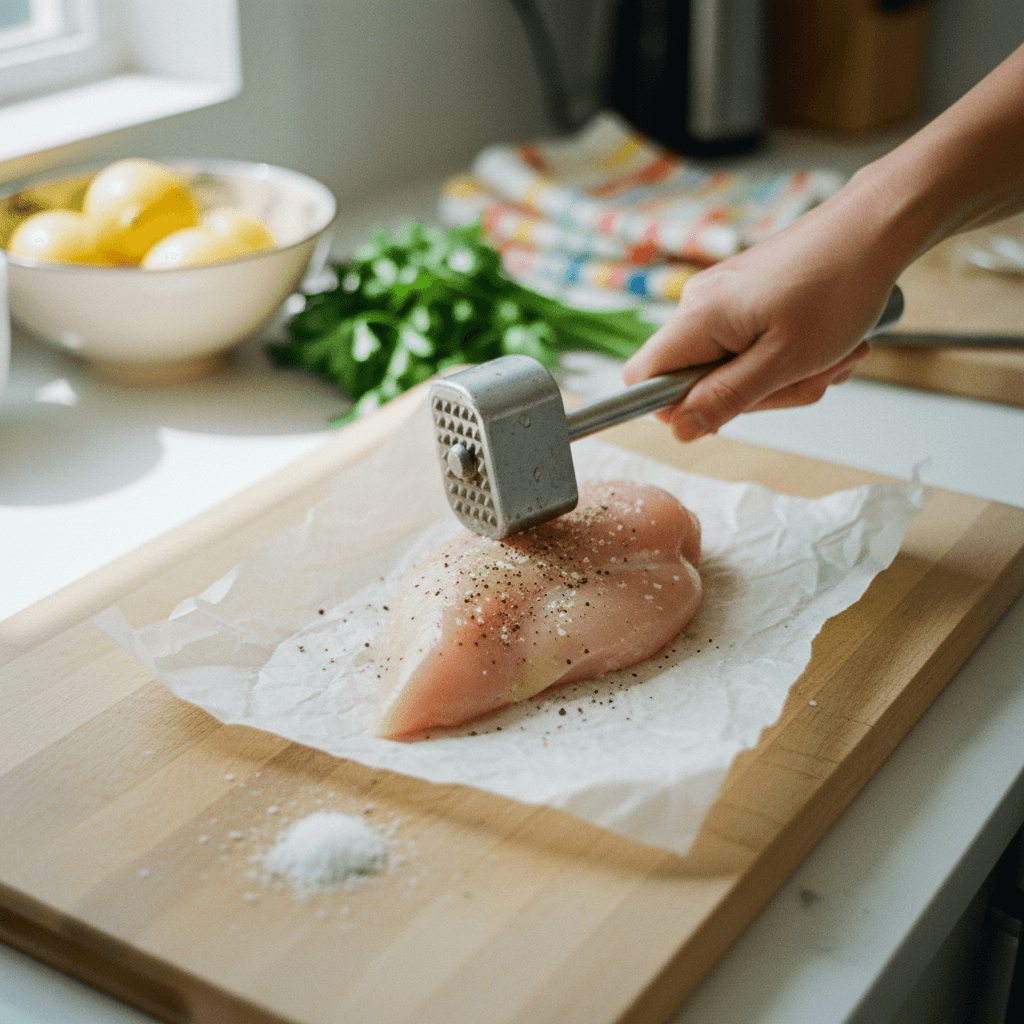
- 2
In a shallow dish or tray, combine the all-purpose flour, 1 teaspoon of garlic powder, a pinch of salt, and a pinch of black pepper. Mix well. Lightly dredge each seasoned chicken breast in the seasoned flour, ensuring it is fully coated, shaking off any excess.
⏱️ 3 min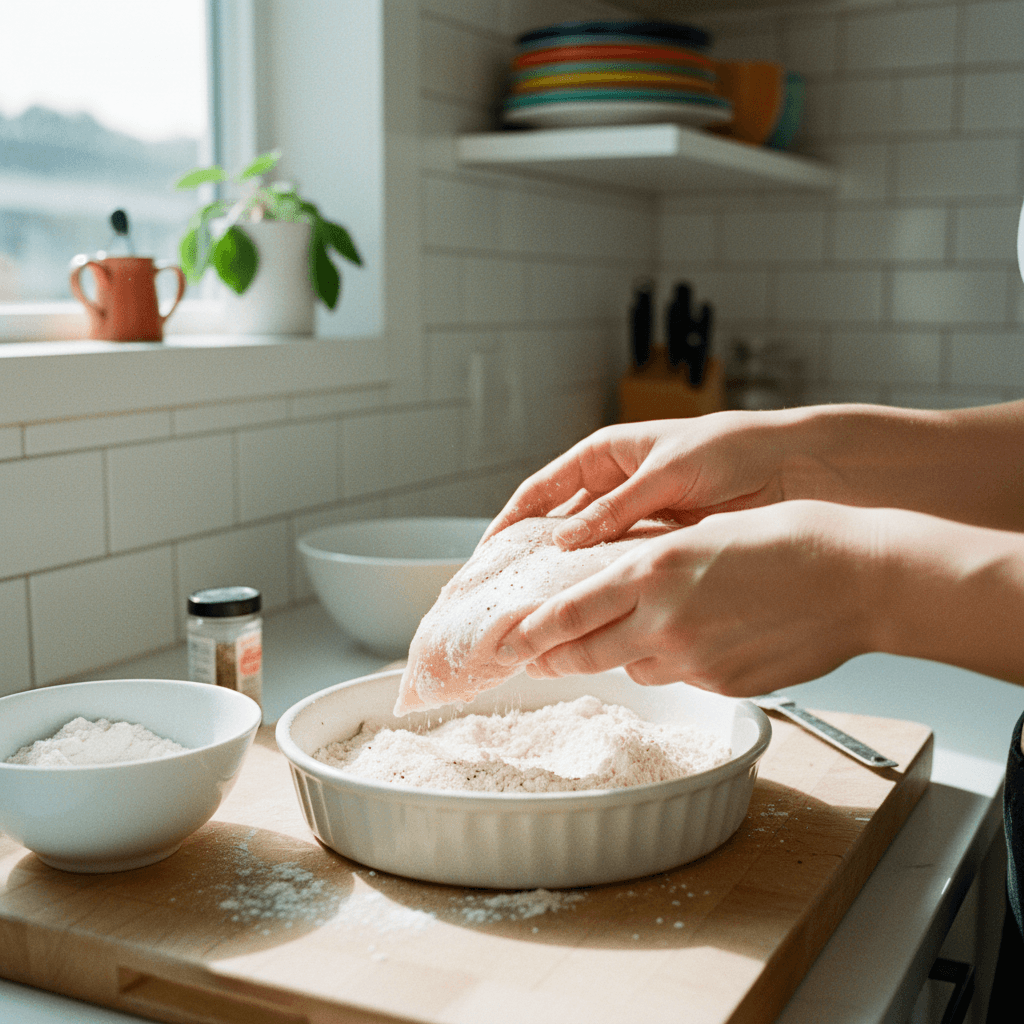
- 3
Heat 1/4 cup of olive oil in a large skillet over medium-high heat. Once the oil is shimmering, carefully place the dredged chicken into the hot skillet. Cook for 3-5 minutes per side, or until golden brown and cooked through (internal temperature reaches 165°F). Remove the cooked chicken from the skillet and set aside on a plate.
⏱️ 10 min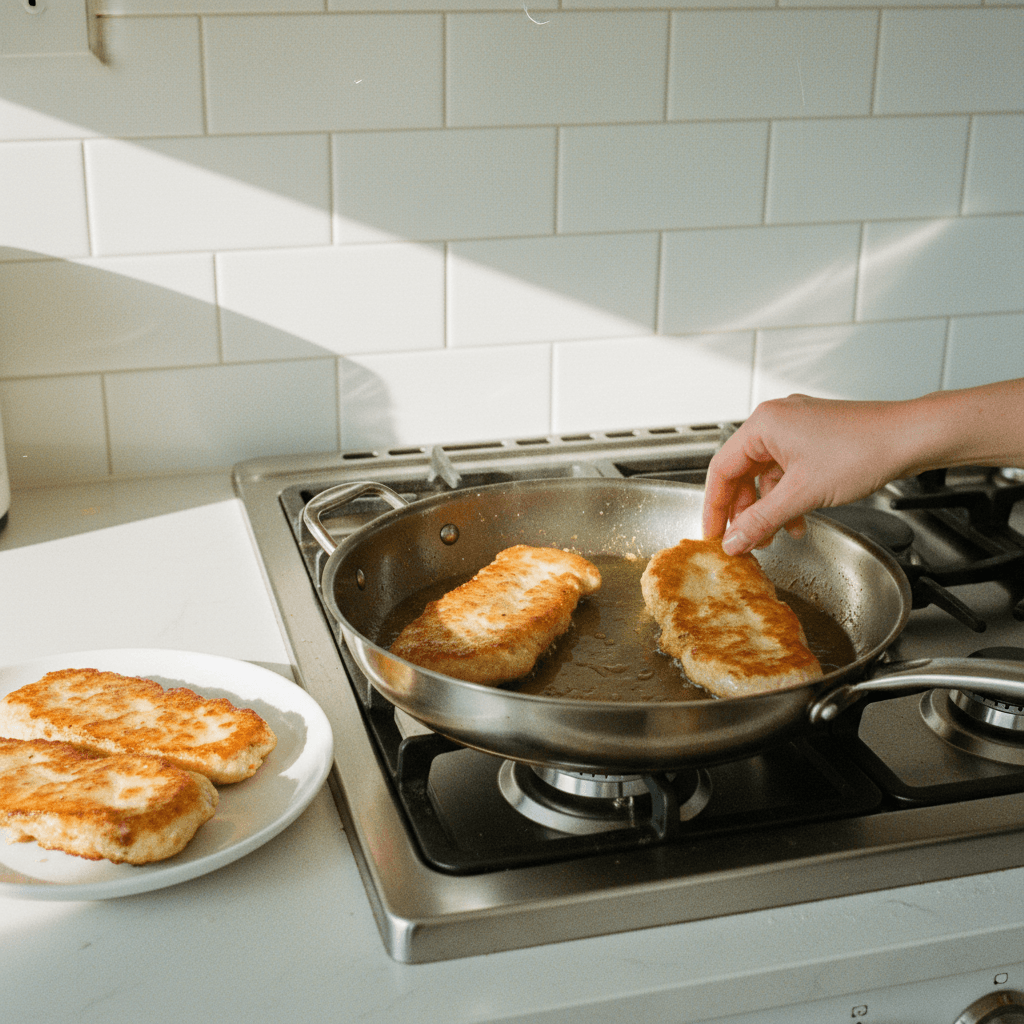
- 4
In the same skillet with the residual oil and browned bits, add the minced shallot and minced garlic. Sauté for 1-2 minutes until fragrant, being careful not to burn the garlic.
⏱️ 2 min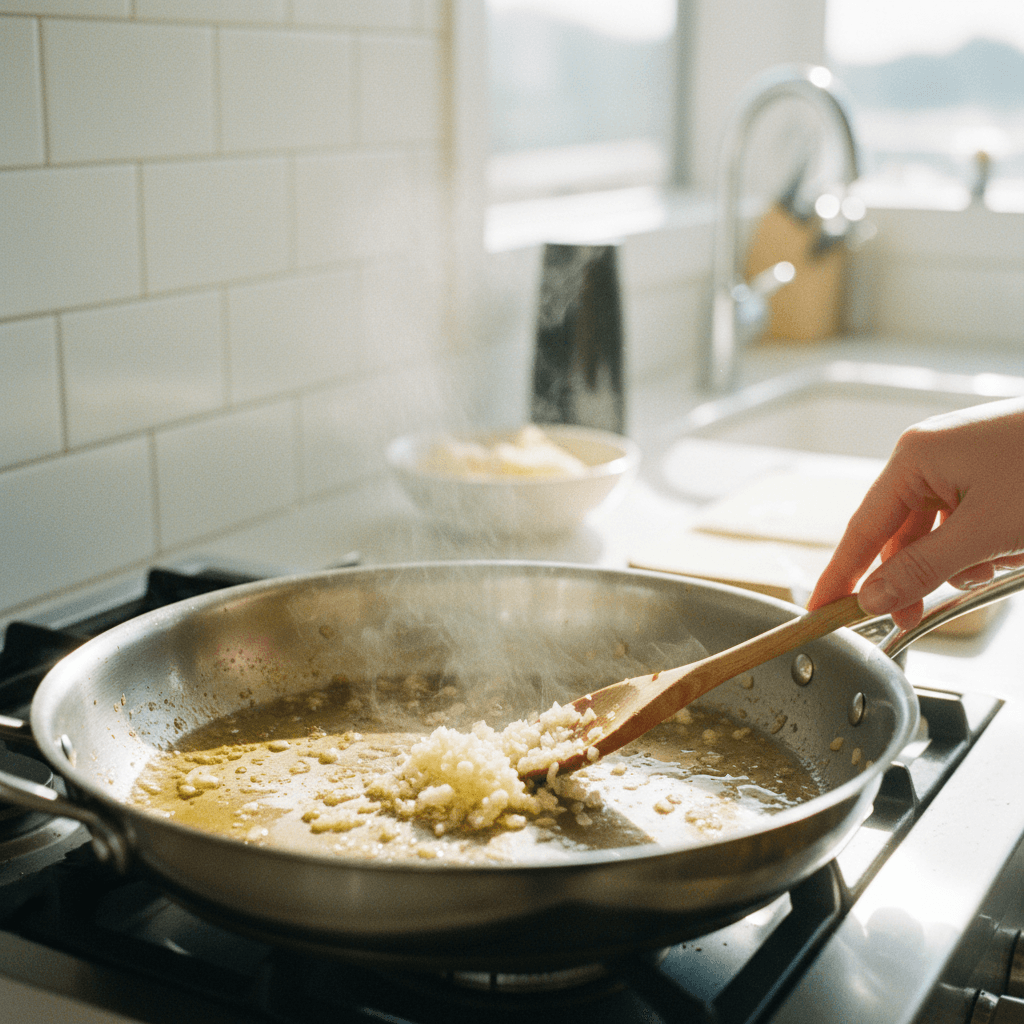
- 5
Deglaze the pan by pouring in the 1/2 cup of dry white wine. Use a wooden spoon to scrape up any browned bits from the bottom of the pan. Allow the wine to reduce slightly, about 1-2 minutes.
⏱️ 2 min
- 6
Add 1/2 cup of chicken stock, the juice of 1/2 lemon, and 2 tablespoons of capers to the pan. Bring the sauce to a gentle simmer and let it cook for 2-3 minutes to allow the flavors to meld.
⏱️ 3 min
- 7
Stir in 2 tablespoons of minced fresh parsley and 1 teaspoon of diced fresh tarragon. Add the 3 tablespoons of cold, cubed unsalted butter to the sauce, stirring constantly until the butter melts and emulsifies, creating a silky, glossy sauce.
⏱️ 2 min
- 8
Return the cooked chicken breasts to the pan, nestling them into the sauce. Spoon the sauce generously over the chicken to coat thoroughly and finish cooking for about 1 minute. Remove about half of the pan sauce into a separate bowl; this will be used for the spaghetti.
⏱️ 2 min
- 9
In a separate large skillet (or the same pan after removing the chicken), add the cooked spaghetti. Pour the reserved pan sauce over the spaghetti. Add a generous amount of grated Parmigiano Reggiano cheese.
⏱️ 3 min
- 10
Toss the spaghetti until it is glossy and evenly coated with the sauce. If the sauce appears too thick, add a splash of chicken stock, as needed, to loosen it to your desired consistency.
⏱️ 2 min
- 11
Serve the chicken piccata immediately over the sauced spaghetti. Spoon any extra sauce from the pan over the chicken and pasta. Garnish with additional fresh parsley or Parmigiano Reggiano, if desired.
⏱️ 1 min
Kitchen Tools
Nutrition Facts (per serving)
Chicken Piccata with Lemon Caper Sauce and Spaghetti
For the Chicken
- 2 chicken breasts, large, butterflied
- 1 cup all-purpose flour
- 1 teaspoon garlic powder
- to taste salt
- to taste black pepper
- 1/4 cup olive oil
For the Sauce
- 1 shallot, minced
- 5 cloves garlic, minced
- 1/2 cup dry white wine
- 1/2 cup chicken stock
- from 1/2 lemon lemon juice
- 2 tablespoons capers
- 2 tablespoons fresh parsley, minced
- 1 teaspoon fresh tarragon, diced
- 3 tablespoons unsalted butter, cold, cubed
For Serving
- 1 pound spaghetti, cooked according to package directions
- as needed Parmigiano Reggiano, for finishing, grated
- as needed chicken stock, for loosening sauce
Instructions
- 1
Place butterflied chicken breasts between two sheets of parchment paper. Using a meat mallet or a heavy pot, pound the chicken until it is evenly thin, about 1/4 inch thick. Season both sides of the pounded chicken with salt and black pepper to taste.
⏱️ 5 min - 2
In a shallow dish or tray, combine the all-purpose flour, 1 teaspoon of garlic powder, a pinch of salt, and a pinch of black pepper. Mix well. Lightly dredge each seasoned chicken breast in the seasoned flour, ensuring it is fully coated, shaking off any excess.
⏱️ 3 min - 3
Heat 1/4 cup of olive oil in a large skillet over medium-high heat. Once the oil is shimmering, carefully place the dredged chicken into the hot skillet. Cook for 3-5 minutes per side, or until golden brown and cooked through (internal temperature reaches 165°F). Remove the cooked chicken from the skillet and set aside on a plate.
⏱️ 10 min - 4
In the same skillet with the residual oil and browned bits, add the minced shallot and minced garlic. Sauté for 1-2 minutes until fragrant, being careful not to burn the garlic.
⏱️ 2 min - 5
Deglaze the pan by pouring in the 1/2 cup of dry white wine. Use a wooden spoon to scrape up any browned bits from the bottom of the pan. Allow the wine to reduce slightly, about 1-2 minutes.
⏱️ 2 min - 6
Add 1/2 cup of chicken stock, the juice of 1/2 lemon, and 2 tablespoons of capers to the pan. Bring the sauce to a gentle simmer and let it cook for 2-3 minutes to allow the flavors to meld.
⏱️ 3 min - 7
Stir in 2 tablespoons of minced fresh parsley and 1 teaspoon of diced fresh tarragon. Add the 3 tablespoons of cold, cubed unsalted butter to the sauce, stirring constantly until the butter melts and emulsifies, creating a silky, glossy sauce.
⏱️ 2 min - 8
Return the cooked chicken breasts to the pan, nestling them into the sauce. Spoon the sauce generously over the chicken to coat thoroughly and finish cooking for about 1 minute. Remove about half of the pan sauce into a separate bowl; this will be used for the spaghetti.
⏱️ 2 min - 9
In a separate large skillet (or the same pan after removing the chicken), add the cooked spaghetti. Pour the reserved pan sauce over the spaghetti. Add a generous amount of grated Parmigiano Reggiano cheese.
⏱️ 3 min - 10
Toss the spaghetti until it is glossy and evenly coated with the sauce. If the sauce appears too thick, add a splash of chicken stock, as needed, to loosen it to your desired consistency.
⏱️ 2 min - 11
Serve the chicken piccata immediately over the sauced spaghetti. Spoon any extra sauce from the pan over the chicken and pasta. Garnish with additional fresh parsley or Parmigiano Reggiano, if desired.
⏱️ 1 min