Thanksgiving Pernil (Puerto Rican Roasted Pork Shoulder)
Thanksgiving Pernil (Puerto Rican Roasted Pork Shoulder)

Ingredients
For the Pork and Cleaning
- 8 pounds bone-in pork shoulder, with skin on (pernil)
- 1/2 cup white vinegar
- 3 limes, halved
- 2 tablespoons kosher salt, for rubbing skin
For the Seasoning Paste
- 1 head garlic cloves, peeled
- 1/2 cup sofrito
- 2 packets sazón seasoning
- 2 tablespoons adobo seasoning
- 1 tablespoon garlic powder
- 1 tablespoon chicken bouillon powder
- 1 teaspoon ground cumin
- 1 tablespoon sazón completa seasoning
Instructions
- 1
Place the pork shoulder in a large bowl or clean sink. Fill with enough cold water to submerge the pork. Add the white vinegar and the halved limes. Using your hands, scrub the pork thoroughly in the mixture to clean it. Drain the water and pat the pork completely dry with paper towels.
⏱️ 10 min
- 2
In a mortar and pestle, crush the peeled garlic cloves into a fine paste. Transfer the crushed garlic to a small mixing bowl.
⏱️ 5 min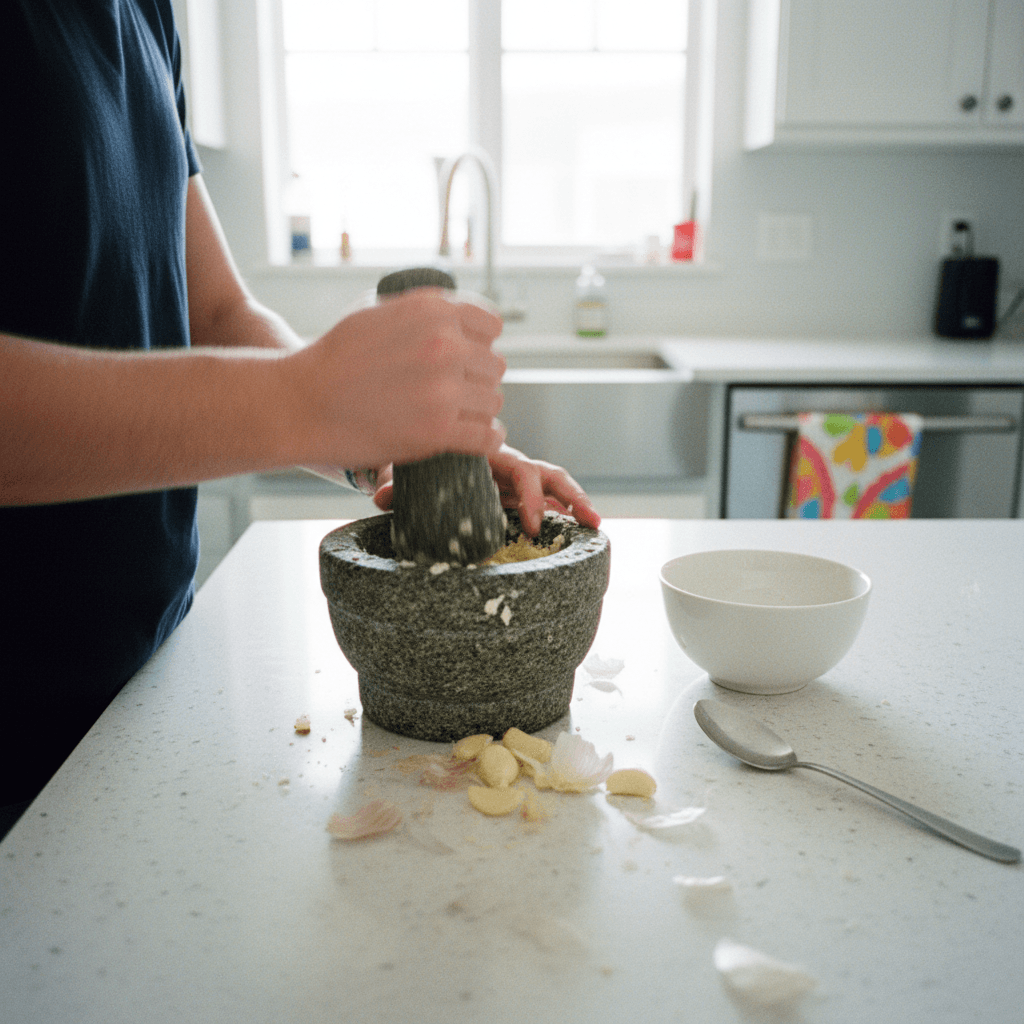
- 3
Add the sofrito, sazón seasoning, adobo seasoning, garlic powder, chicken bouillon powder, ground cumin, and sazón completa to the bowl with the crushed garlic. Mix all ingredients thoroughly with a spoon until a thick, uniform brown-orange paste is formed.
⏱️ 5 min
- 4
Place the dried pork shoulder in a large glass baking dish. Using a sharp knife, make deep cuts (about 1 1/2 to 2 inches deep) all over the flesh of the pork, creating pockets for the seasoning. Be careful not to cut through the skin completely.
⏱️ 10 min
- 5
Spoon the prepared seasoning paste into the cuts and spread it generously over the entire surface of the pork flesh, using a spoon and your fingers to ensure it gets deep into all the crevices. Flip the pork and repeat the cutting and seasoning process on the other side.
⏱️ 10 min
- 6
Once the flesh is fully seasoned, generously rub the kosher salt onto the skin side of the pork. This will help achieve a crispy 'cuero' (skin) during cooking.
⏱️ 5 min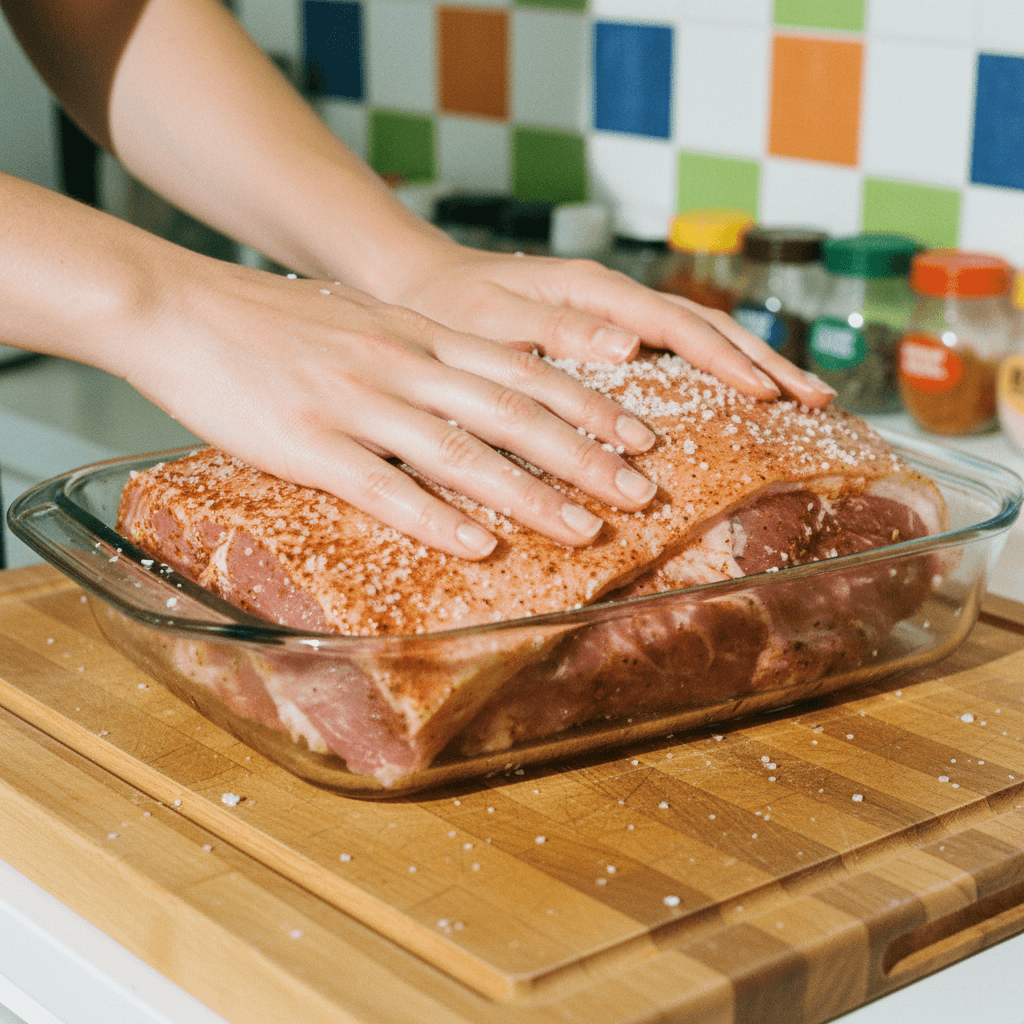
- 7
Carefully transfer the seasoned pork into a large plastic roasting bag. Scrape any remaining seasoning juices and paste from the baking dish into the bag with the pork. Seal the bag tightly, removing as much air as possible. Gently massage the pork through the bag to ensure even distribution of the marinade.
⏱️ 5 min
- 8
Place the bagged pork in the refrigerator to marinate for 1 to 2 days (24 to 48 hours). This passive time is crucial for the flavors to penetrate the meat.
⏱️ 2880 min
- 9
Preheat your oven to 300°F. Remove the pernil from the roasting bag and place it, skin-side up, in a large roasting pan. Add about 1 cup of water to the bottom of the roasting pan to prevent drying and help create steam.
⏱️ 5 min•🌡️ 300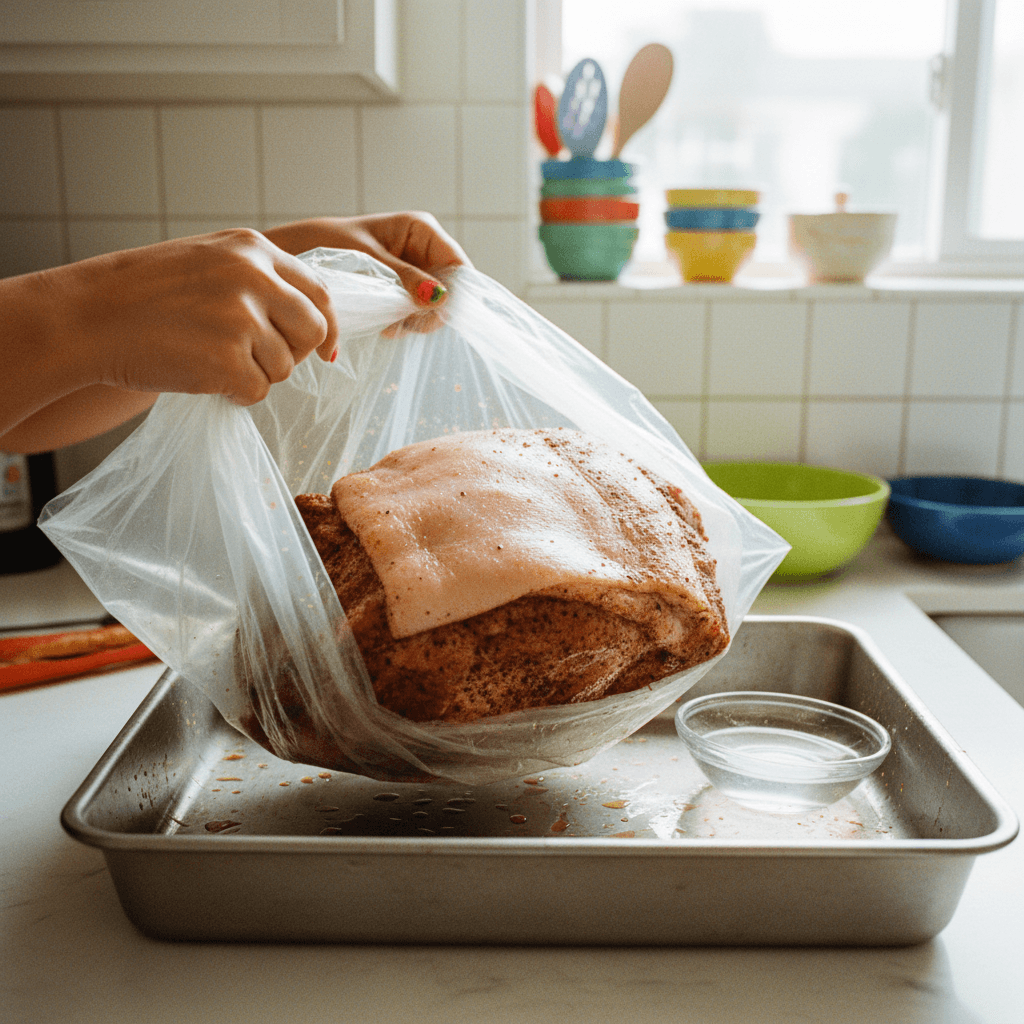
- 10
Roast the pernil for approximately 3 to 4 hours, or until the internal temperature reaches 185-190°F. The meat should be very tender. For the last 30-45 minutes, increase the oven temperature to 400-425°F to crisp up the skin, watching carefully to prevent burning. If the skin is not crisping, you can use the broiler for a few minutes, but be very vigilant as it can burn quickly.
⏱️ 235 min•🌡️ 300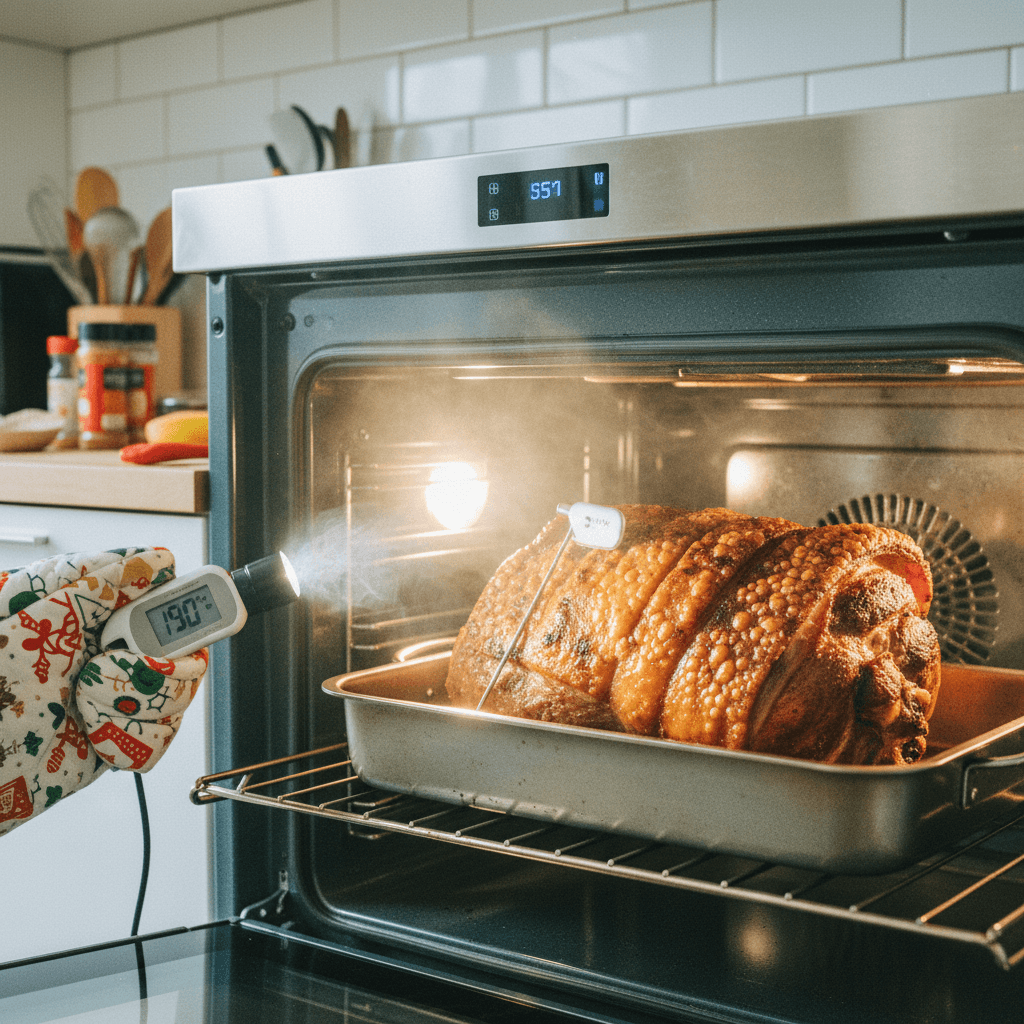
- 11
Once cooked and the skin is crispy, remove the pernil from the oven and let it rest for at least 15-20 minutes before carving. This allows the juices to redistribute, ensuring a moist and flavorful roast.
⏱️ 20 min
Kitchen Tools
Nutrition Facts (per serving)
Thanksgiving Pernil (Puerto Rican Roasted Pork Shoulder)
For the Pork and Cleaning
- 8 pounds bone-in pork shoulder, with skin on (pernil)
- 1/2 cup white vinegar
- 3 limes, halved
- 2 tablespoons kosher salt, for rubbing skin
For the Seasoning Paste
- 1 head garlic cloves, peeled
- 1/2 cup sofrito
- 2 packets sazón seasoning
- 2 tablespoons adobo seasoning
- 1 tablespoon garlic powder
- 1 tablespoon chicken bouillon powder
- 1 teaspoon ground cumin
- 1 tablespoon sazón completa seasoning
Instructions
- 1
Place the pork shoulder in a large bowl or clean sink. Fill with enough cold water to submerge the pork. Add the white vinegar and the halved limes. Using your hands, scrub the pork thoroughly in the mixture to clean it. Drain the water and pat the pork completely dry with paper towels.
⏱️ 10 min - 2
In a mortar and pestle, crush the peeled garlic cloves into a fine paste. Transfer the crushed garlic to a small mixing bowl.
⏱️ 5 min - 3
Add the sofrito, sazón seasoning, adobo seasoning, garlic powder, chicken bouillon powder, ground cumin, and sazón completa to the bowl with the crushed garlic. Mix all ingredients thoroughly with a spoon until a thick, uniform brown-orange paste is formed.
⏱️ 5 min - 4
Place the dried pork shoulder in a large glass baking dish. Using a sharp knife, make deep cuts (about 1 1/2 to 2 inches deep) all over the flesh of the pork, creating pockets for the seasoning. Be careful not to cut through the skin completely.
⏱️ 10 min - 5
Spoon the prepared seasoning paste into the cuts and spread it generously over the entire surface of the pork flesh, using a spoon and your fingers to ensure it gets deep into all the crevices. Flip the pork and repeat the cutting and seasoning process on the other side.
⏱️ 10 min - 6
Once the flesh is fully seasoned, generously rub the kosher salt onto the skin side of the pork. This will help achieve a crispy 'cuero' (skin) during cooking.
⏱️ 5 min - 7
Carefully transfer the seasoned pork into a large plastic roasting bag. Scrape any remaining seasoning juices and paste from the baking dish into the bag with the pork. Seal the bag tightly, removing as much air as possible. Gently massage the pork through the bag to ensure even distribution of the marinade.
⏱️ 5 min - 8
Place the bagged pork in the refrigerator to marinate for 1 to 2 days (24 to 48 hours). This passive time is crucial for the flavors to penetrate the meat.
⏱️ 2880 min - 9
Preheat your oven to 300°F. Remove the pernil from the roasting bag and place it, skin-side up, in a large roasting pan. Add about 1 cup of water to the bottom of the roasting pan to prevent drying and help create steam.
⏱️ 5 min•🌡️ 300 - 10
Roast the pernil for approximately 3 to 4 hours, or until the internal temperature reaches 185-190°F. The meat should be very tender. For the last 30-45 minutes, increase the oven temperature to 400-425°F to crisp up the skin, watching carefully to prevent burning. If the skin is not crisping, you can use the broiler for a few minutes, but be very vigilant as it can burn quickly.
⏱️ 235 min•🌡️ 300 - 11
Once cooked and the skin is crispy, remove the pernil from the oven and let it rest for at least 15-20 minutes before carving. This allows the juices to redistribute, ensuring a moist and flavorful roast.
⏱️ 20 min