Gilded Duck Confit with Saffron Pear Puree
Gilded Duck Confit with Saffron Pear Puree

Ingredients
For the Duck Confit
- 4 duck legs, bone-in, skin-on
- 2 tablespoons kosher salt
- 1 teaspoon freshly ground black pepper
- 4 garlic cloves, peeled and smashed
- 4 fresh thyme sprigs
- 2 bay leaves
- 4 cups duck fat, or as needed to cover duck legs
- 2 sheets edible gold leaf, for garnish
For the Saffron Pear Puree
- 3 Bosc or Anjou pears, peeled, cored, and diced
- 1 tablespoon unsalted butter
- 1/4 teaspoon saffron threads
- 1/2 cup vegetable broth
- 1 tablespoon honey, or maple syrup
- 1 teaspoon lemon juice
- 1/4 teaspoon kosher salt, or to taste
For Garnish (Optional)
- 2 tablespoons fresh chives, finely chopped
- 1/4 cup pomegranate seeds
Instructions
- 1
Prepare the duck legs for confit: Pat the duck legs very dry with paper towels. In a small bowl, combine the kosher salt, black pepper, smashed garlic, thyme sprigs, and bay leaves. Rub this mixture generously all over the duck legs, ensuring they are well coated. Place the seasoned duck legs in a shallow dish or baking pan, cover tightly with plastic wrap, and refrigerate for at least 12 hours, or preferably 24 hours, to cure.
⏱️ 15 min
- 2
After curing, remove the duck legs from the refrigerator. Rinse them thoroughly under cold running water to remove all the curing mixture. This step is crucial to prevent the duck from being too salty. Pat the duck legs completely dry again with paper towels. Any moisture will cause the fat to splatter.
⏱️ 10 min
- 3
Preheat your oven to 300°F. In a heavy-bottomed Dutch oven or oven-safe pot, arrange the dried duck legs snugly. Melt the duck fat in a separate saucepan over low heat, then pour the melted fat over the duck legs until they are completely submerged. If needed, add more duck fat to ensure full coverage.
⏱️ 10 min•🌡️ 300
- 4
Cover the Dutch oven with a lid and transfer it to the preheated oven. Cook for 2 1/2 to 3 hours, or until the duck meat is fork-tender and easily pulls away from the bone. The fat should be gently simmering, not boiling vigorously. Once cooked, carefully remove the Dutch oven from the oven.
⏱️ 180 min•🌡️ 300 - 5
While the duck confit is cooking, prepare the Saffron Pear Puree: In a medium saucepan, melt the unsalted butter over medium heat. Add the diced pears and sauté for 5-7 minutes until they begin to soften. Stir in the saffron threads, vegetable broth, honey, and kosher salt. Bring to a gentle simmer, then reduce heat to low, cover, and cook for 15-20 minutes, or until the pears are very tender.
⏱️ 25 min - 6
Remove the pear mixture from the heat. Stir in the lemon juice. Transfer the mixture to a blender or use an immersion blender to puree until completely smooth. If the puree is too thick, add a splash more vegetable broth. Taste and adjust seasoning as needed. Keep warm.
⏱️ 10 min
- 7
To finish the duck confit: Carefully remove the duck legs from the hot fat using tongs, allowing excess fat to drip off. Place the duck legs skin-side up on a baking sheet lined with parchment paper. You can also crisp them in a hot skillet. Preheat your oven broiler or a separate oven to 400°F.
⏱️ 5 min•🌡️ 400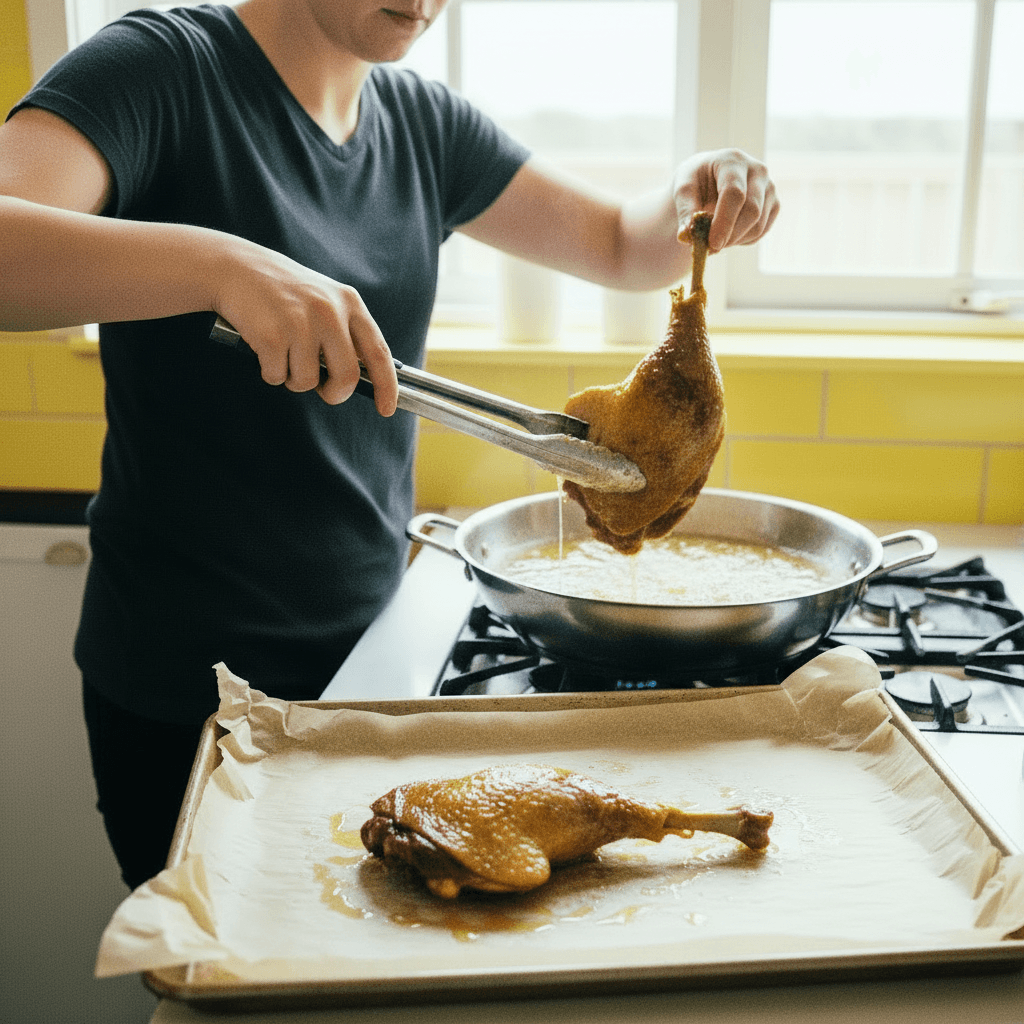
- 8
Broil or bake the duck legs for 10-15 minutes, or until the skin is deeply golden brown and wonderfully crispy. Watch carefully to prevent burning. Alternatively, heat a large skillet over medium-high heat and place the duck legs skin-side down. Cook for 5-8 minutes until crispy, then flip and cook for 2-3 minutes on the other side.
⏱️ 15 min•🌡️ 400 - 9
To plate: Spoon a generous dollop of the warm saffron pear puree onto each serving plate. Place a crispy duck confit leg on top of or alongside the puree. Carefully apply small pieces of edible gold leaf to the crispy duck skin for a 'gilded' effect. Garnish with chopped fresh chives and pomegranate seeds, if using. Serve immediately.
⏱️ 5 min
Kitchen Tools
Nutrition Facts (per serving)
Gilded Duck Confit with Saffron Pear Puree
For the Duck Confit
- 4 duck legs, bone-in, skin-on
- 2 tablespoons kosher salt
- 1 teaspoon freshly ground black pepper
- 4 garlic cloves, peeled and smashed
- 4 fresh thyme sprigs
- 2 bay leaves
- 4 cups duck fat, or as needed to cover duck legs
- 2 sheets edible gold leaf, for garnish
For the Saffron Pear Puree
- 3 Bosc or Anjou pears, peeled, cored, and diced
- 1 tablespoon unsalted butter
- 1/4 teaspoon saffron threads
- 1/2 cup vegetable broth
- 1 tablespoon honey, or maple syrup
- 1 teaspoon lemon juice
- 1/4 teaspoon kosher salt, or to taste
For Garnish (Optional)
- 2 tablespoons fresh chives, finely chopped
- 1/4 cup pomegranate seeds
Instructions
- 1
Prepare the duck legs for confit: Pat the duck legs very dry with paper towels. In a small bowl, combine the kosher salt, black pepper, smashed garlic, thyme sprigs, and bay leaves. Rub this mixture generously all over the duck legs, ensuring they are well coated. Place the seasoned duck legs in a shallow dish or baking pan, cover tightly with plastic wrap, and refrigerate for at least 12 hours, or preferably 24 hours, to cure.
⏱️ 15 min - 2
After curing, remove the duck legs from the refrigerator. Rinse them thoroughly under cold running water to remove all the curing mixture. This step is crucial to prevent the duck from being too salty. Pat the duck legs completely dry again with paper towels. Any moisture will cause the fat to splatter.
⏱️ 10 min - 3
Preheat your oven to 300°F. In a heavy-bottomed Dutch oven or oven-safe pot, arrange the dried duck legs snugly. Melt the duck fat in a separate saucepan over low heat, then pour the melted fat over the duck legs until they are completely submerged. If needed, add more duck fat to ensure full coverage.
⏱️ 10 min•🌡️ 300 - 4
Cover the Dutch oven with a lid and transfer it to the preheated oven. Cook for 2 1/2 to 3 hours, or until the duck meat is fork-tender and easily pulls away from the bone. The fat should be gently simmering, not boiling vigorously. Once cooked, carefully remove the Dutch oven from the oven.
⏱️ 180 min•🌡️ 300 - 5
While the duck confit is cooking, prepare the Saffron Pear Puree: In a medium saucepan, melt the unsalted butter over medium heat. Add the diced pears and sauté for 5-7 minutes until they begin to soften. Stir in the saffron threads, vegetable broth, honey, and kosher salt. Bring to a gentle simmer, then reduce heat to low, cover, and cook for 15-20 minutes, or until the pears are very tender.
⏱️ 25 min - 6
Remove the pear mixture from the heat. Stir in the lemon juice. Transfer the mixture to a blender or use an immersion blender to puree until completely smooth. If the puree is too thick, add a splash more vegetable broth. Taste and adjust seasoning as needed. Keep warm.
⏱️ 10 min - 7
To finish the duck confit: Carefully remove the duck legs from the hot fat using tongs, allowing excess fat to drip off. Place the duck legs skin-side up on a baking sheet lined with parchment paper. You can also crisp them in a hot skillet. Preheat your oven broiler or a separate oven to 400°F.
⏱️ 5 min•🌡️ 400 - 8
Broil or bake the duck legs for 10-15 minutes, or until the skin is deeply golden brown and wonderfully crispy. Watch carefully to prevent burning. Alternatively, heat a large skillet over medium-high heat and place the duck legs skin-side down. Cook for 5-8 minutes until crispy, then flip and cook for 2-3 minutes on the other side.
⏱️ 15 min•🌡️ 400 - 9
To plate: Spoon a generous dollop of the warm saffron pear puree onto each serving plate. Place a crispy duck confit leg on top of or alongside the puree. Carefully apply small pieces of edible gold leaf to the crispy duck skin for a 'gilded' effect. Garnish with chopped fresh chives and pomegranate seeds, if using. Serve immediately.
⏱️ 5 min