Raviolo al Uovo
Raviolo al Uovo

Ingredients
For the Pasta Dough
- 2 cups all-purpose flour
- 2 large eggs
For the Ricotta-Spinach Filling
- 1 cup whole milk ricotta cheese, drained
- 5 ounces fresh spinach, cooked, squeezed dry, and finely chopped
- 1/2 cup Parmesan cheese, grated
- 1/4 teaspoon nutmeg, freshly grated
- 1/2 teaspoon salt
- 1/4 teaspoon black pepper, freshly ground
For the Raviolo Assembly
- 4 large egg yolks
- 1 tablespoon water
For the Sauce and Garnish
- 4 tablespoons unsalted butter
- 8 fresh sage leaves
- 1/4 cup Parmesan cheese, grated, for garnish
- as needed salt, for pasta water
Instructions
- 1
On a large wooden board or clean work surface, pile the all-purpose flour. Create a deep well in the center of the flour. Crack the 2 large eggs into the well.
⏱️ 2 min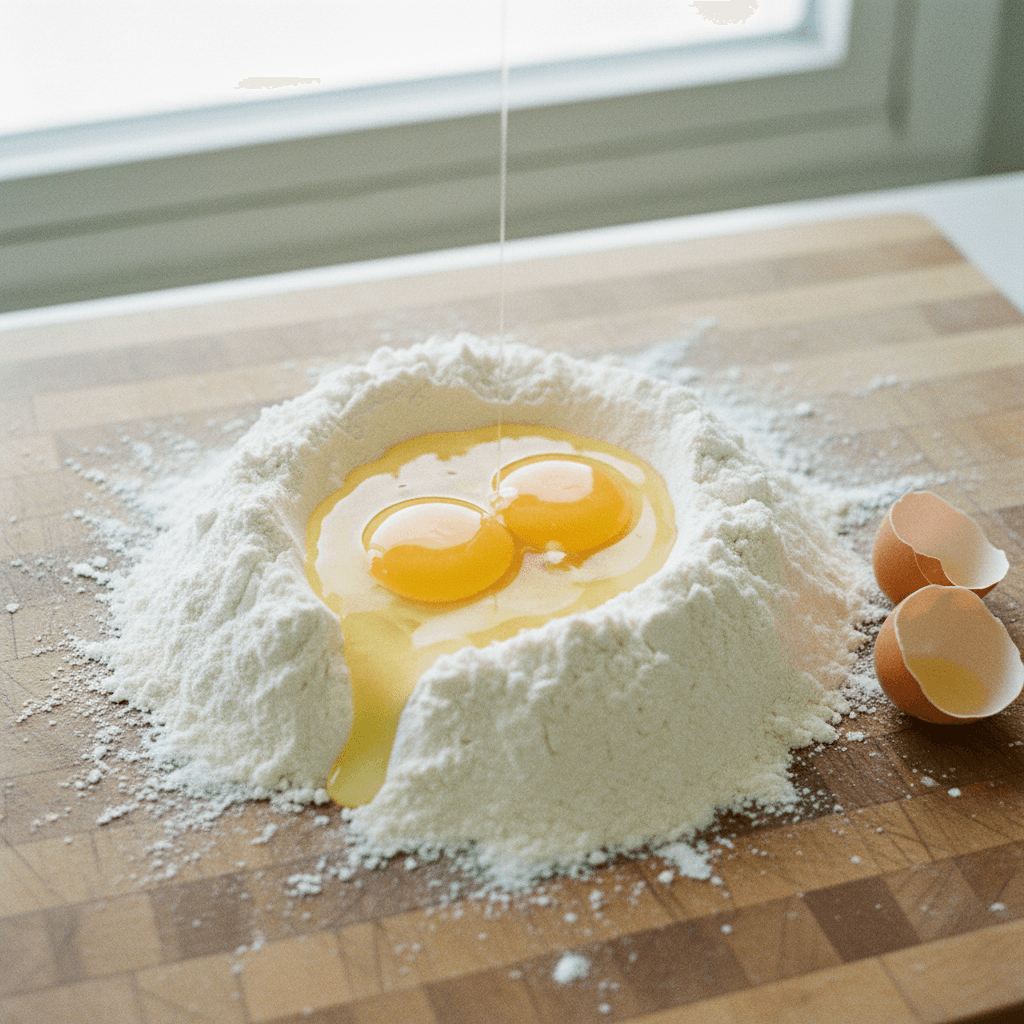
- 2
Using a fork, gently whisk the eggs, gradually incorporating flour from the inner edge of the well. Continue mixing until a shaggy dough forms.
⏱️ 5 min
- 3
Knead the dough by hand for 8-10 minutes until it becomes smooth and elastic. Wrap the dough tightly in plastic wrap and let it rest at room temperature for at least 30 minutes.
⏱️ 10 min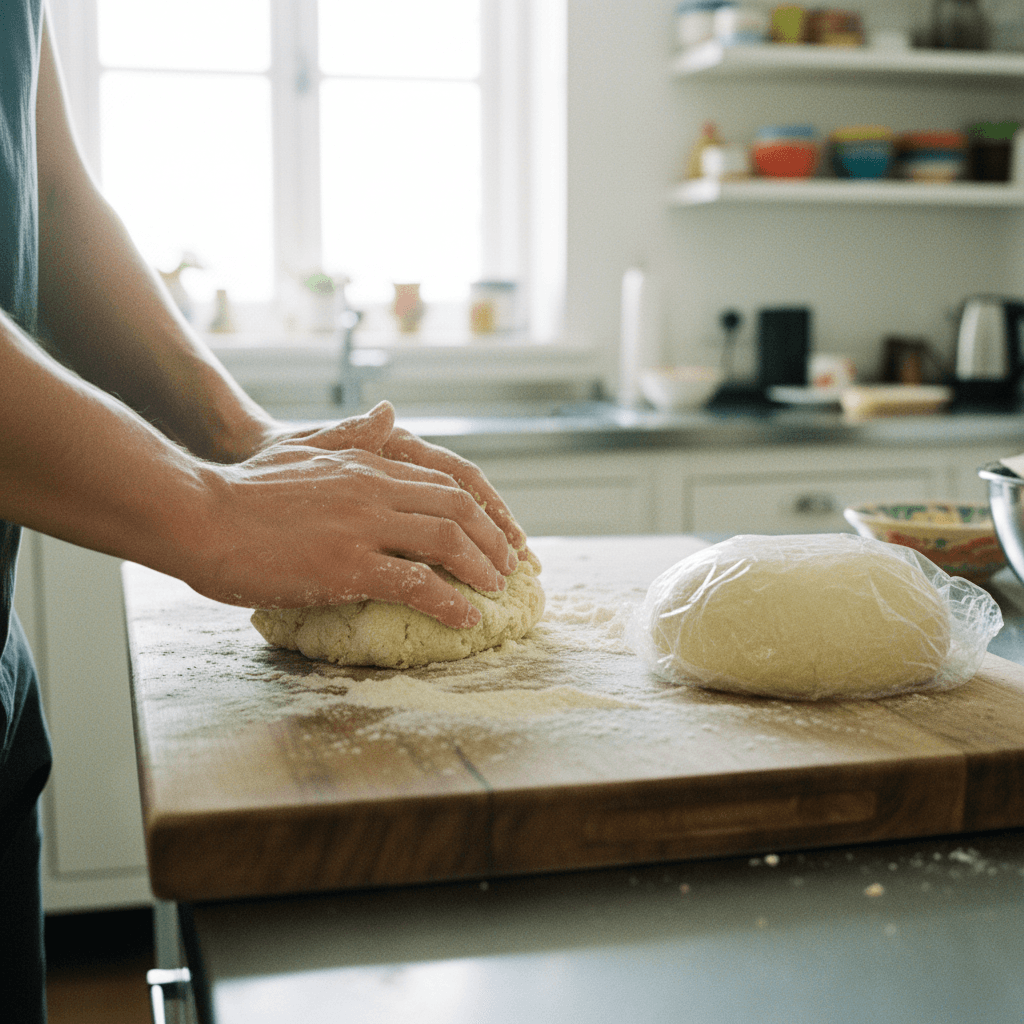
- 4
While the pasta dough rests, prepare the filling. In a medium bowl, combine the drained ricotta cheese, finely chopped cooked spinach, 1/2 cup grated Parmesan cheese, freshly grated nutmeg, 1/2 teaspoon salt, and freshly ground black pepper. Mix all ingredients thoroughly until well combined. Transfer the filling mixture into a piping bag fitted with a round tip.
⏱️ 15 min
- 5
Divide the rested pasta dough into 4 equal portions. Take one portion and flatten it slightly. Pass the dough through a pasta machine, starting with the widest setting. Fold the dough in thirds and pass it through again. Repeat this folding and passing 2-3 times on the widest setting to create a smooth, rectangular sheet.
⏱️ 5 min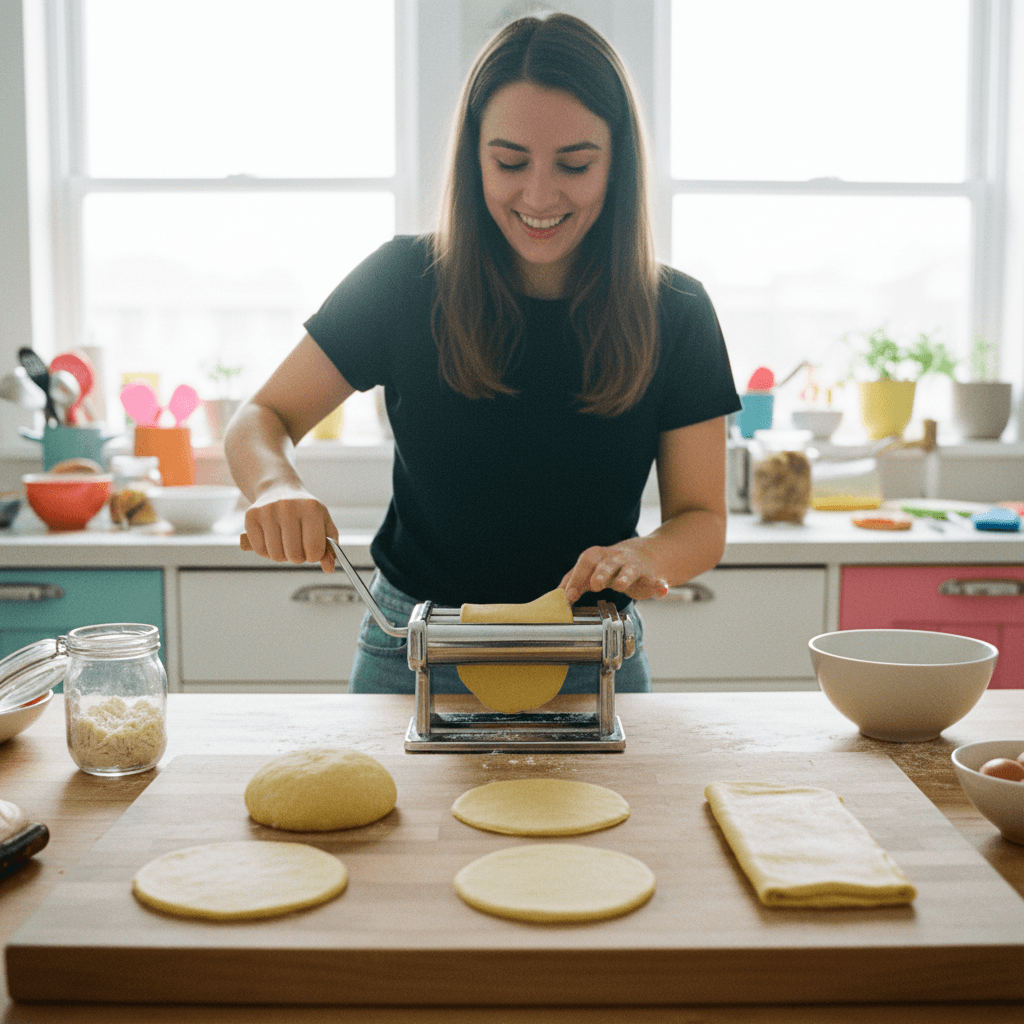
- 6
Progressively decrease the thickness setting on the pasta machine, passing the dough through each setting once, until a very thin sheet of pasta is achieved (usually setting 6 or 7 on most machines). The pasta should be thin enough to see your hand through it but still strong enough to handle.
⏱️ 10 min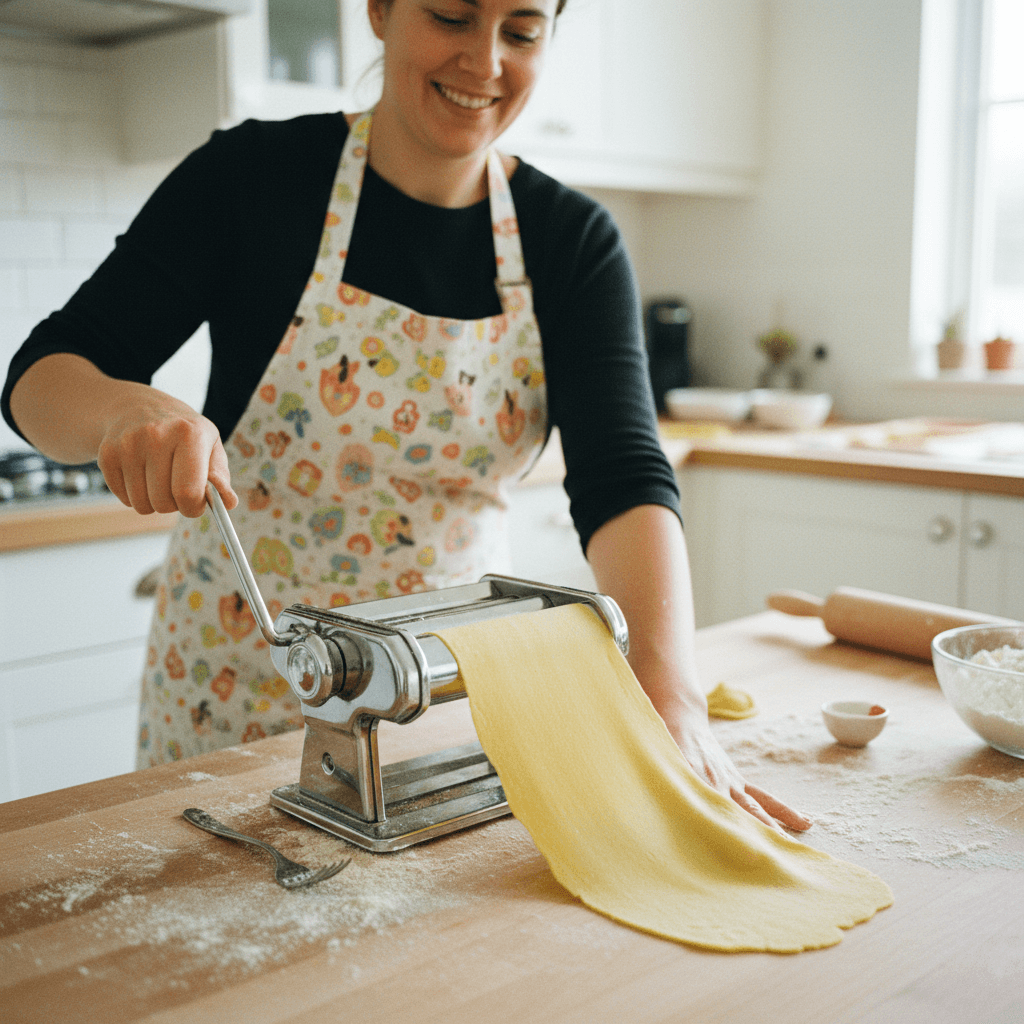
- 7
Lay one sheet of the thinly rolled pasta dough onto a lightly floured surface. Using the piping bag, pipe four evenly spaced mounds of the ricotta-spinach filling onto the pasta sheet, leaving adequate space (about 3-4 inches) between each mound.
⏱️ 5 min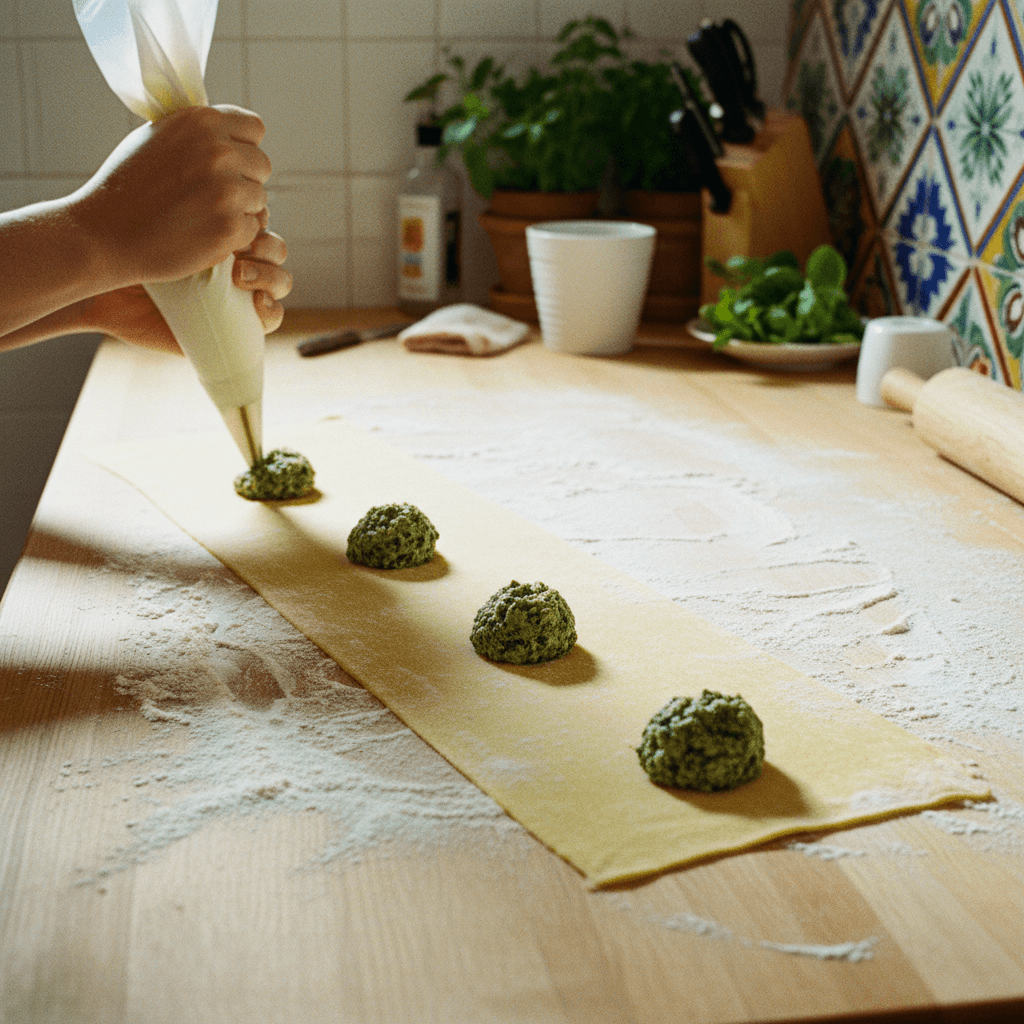
- 8
Gently create a small indentation in the center of each piped filling mound. Carefully separate an egg yolk from its white and place one egg yolk precisely into each indentation in the filling.
⏱️ 3 min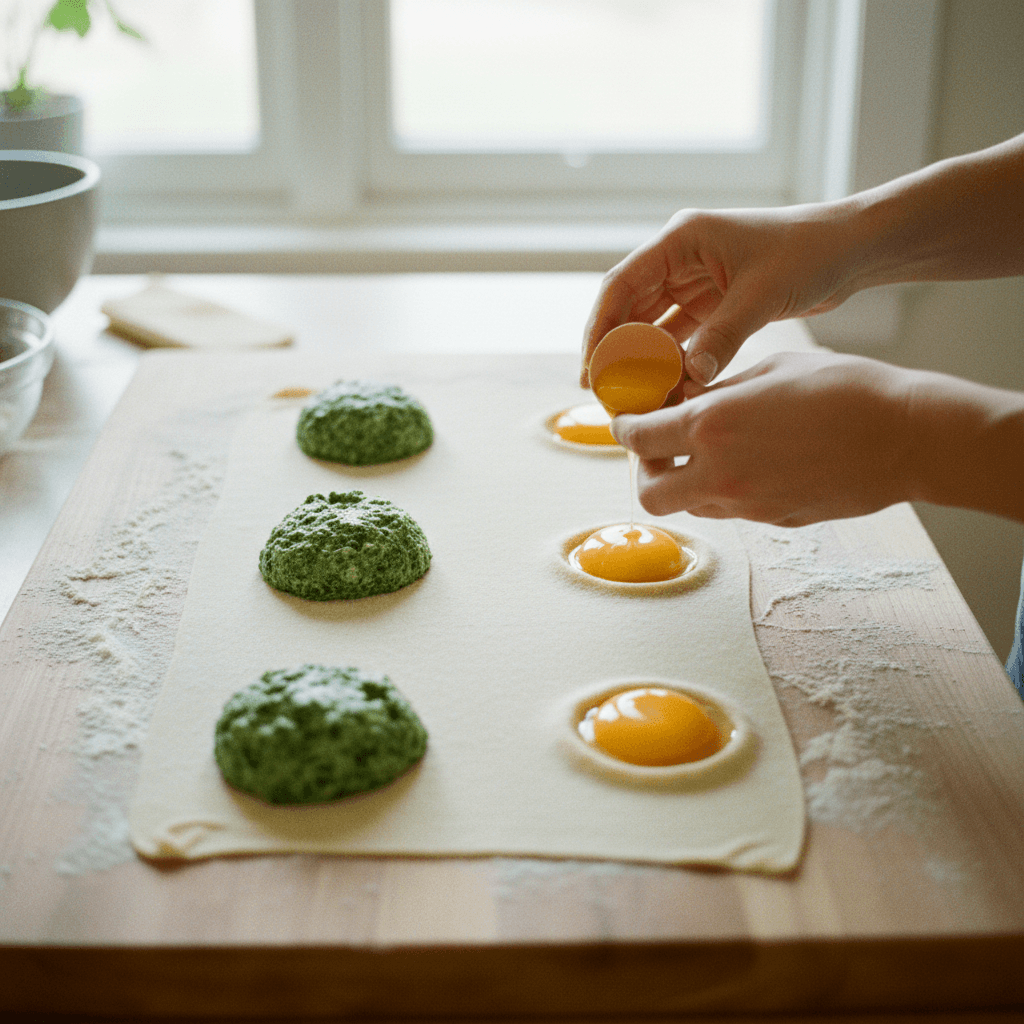
- 9
In a small bowl, whisk 1 tablespoon of water. Using a small brush, moisten the pasta dough around each filling mound. Carefully place a second sheet of pasta dough over the first, aligning it precisely.
⏱️ 3 min
- 10
Gently press around each filling mound to seal the two pasta sheets together, ensuring to remove any trapped air from around the filling and egg yolk. Use a 4-inch round pasta cutter to cut out each individual raviolo. Ensure the edges are well-sealed to prevent the filling from escaping during cooking. Repeat steps 5-10 with the remaining pasta dough and filling.
⏱️ 10 min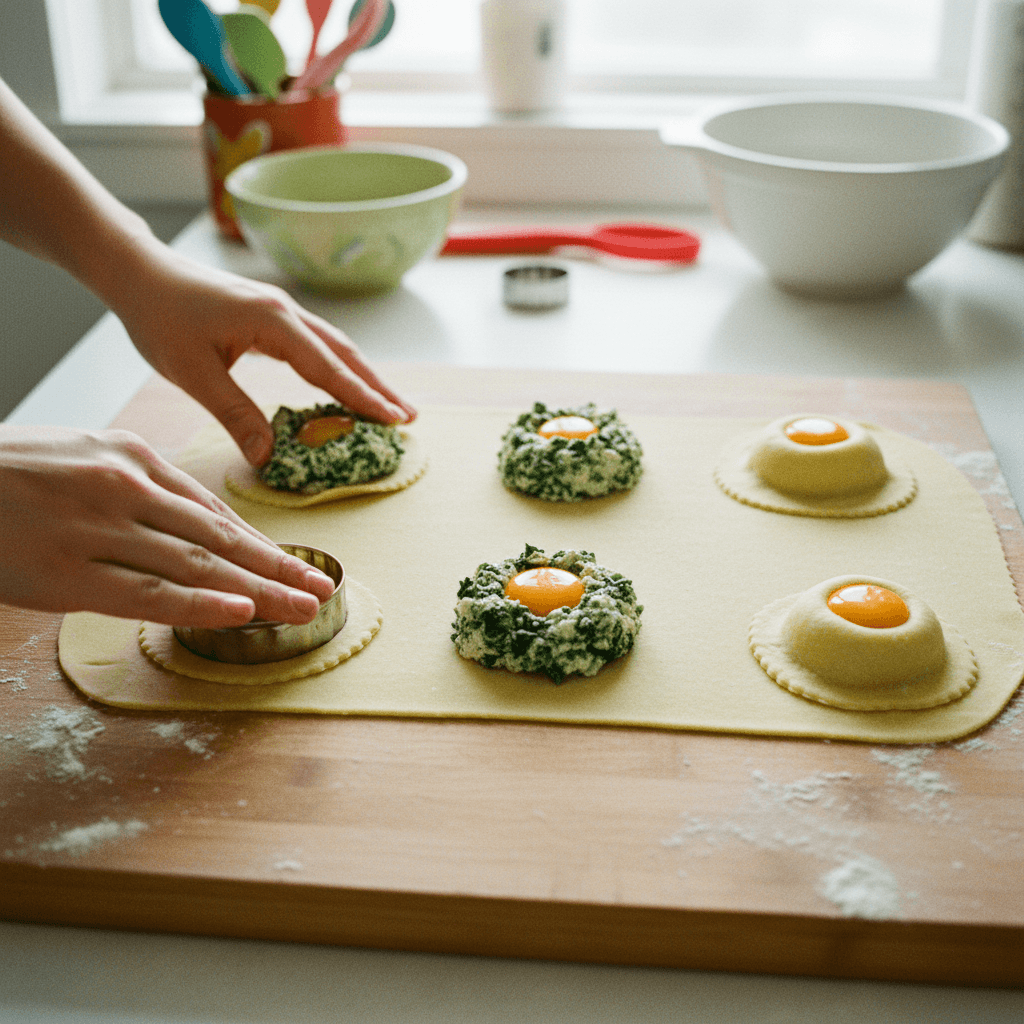
- 11
Bring a large pot of water to a gentle boil. Add a generous amount of salt to the boiling water.
⏱️ 5 min•🌡️ 212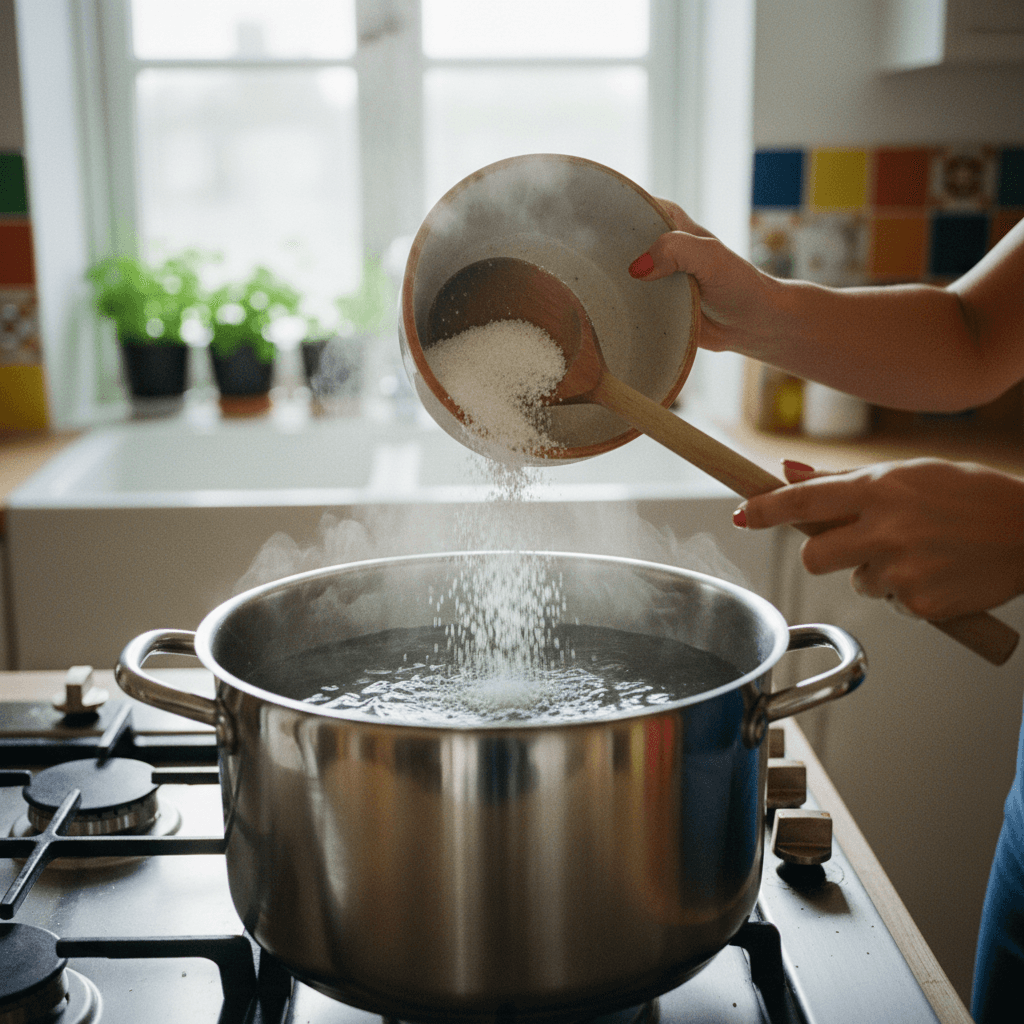
- 12
Carefully lower the prepared ravioli into the salted boiling water. Cook the ravioli for 2-3 minutes, or until the pasta is al dente and the yolk is still runny. Do not overcrowd the pot; cook in batches if necessary.
⏱️ 3 min•🌡️ 212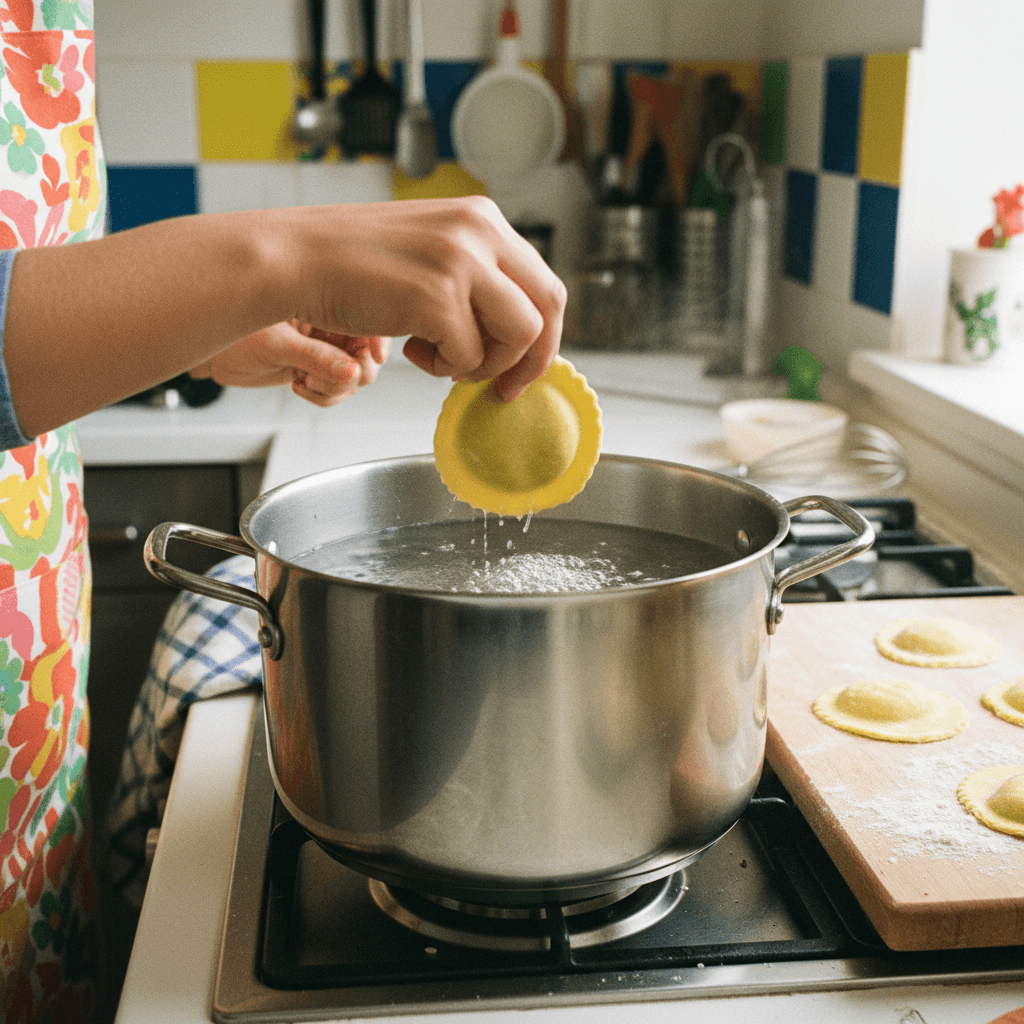
- 13
While the ravioli cooks, melt the unsalted butter in a large pan over medium heat. Add the fresh sage leaves and cook until the butter is lightly browned and the sage is crispy, about 2-3 minutes.
⏱️ 3 min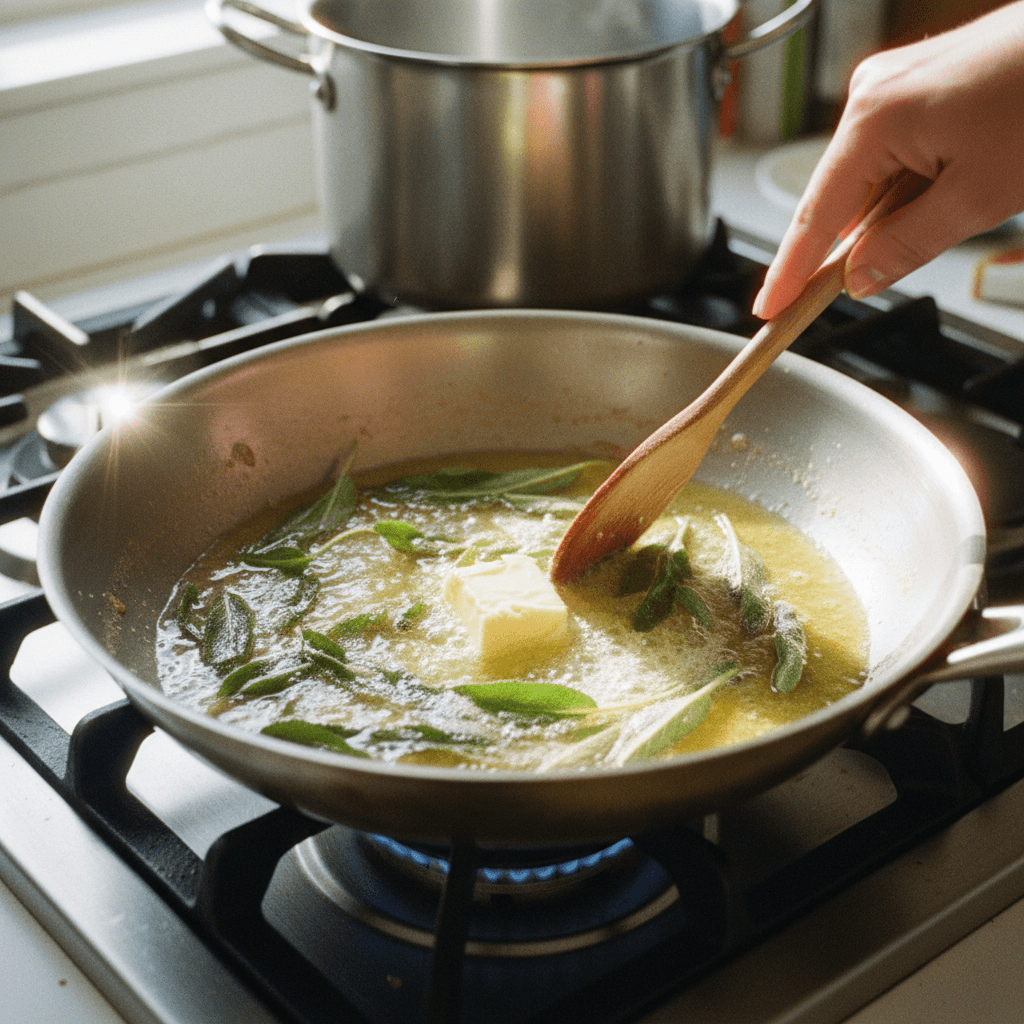
- 14
Using a slotted spoon, carefully remove the cooked ravioli from the water and transfer them directly into the pan with the sage butter. Gently toss to coat.
⏱️ 1 min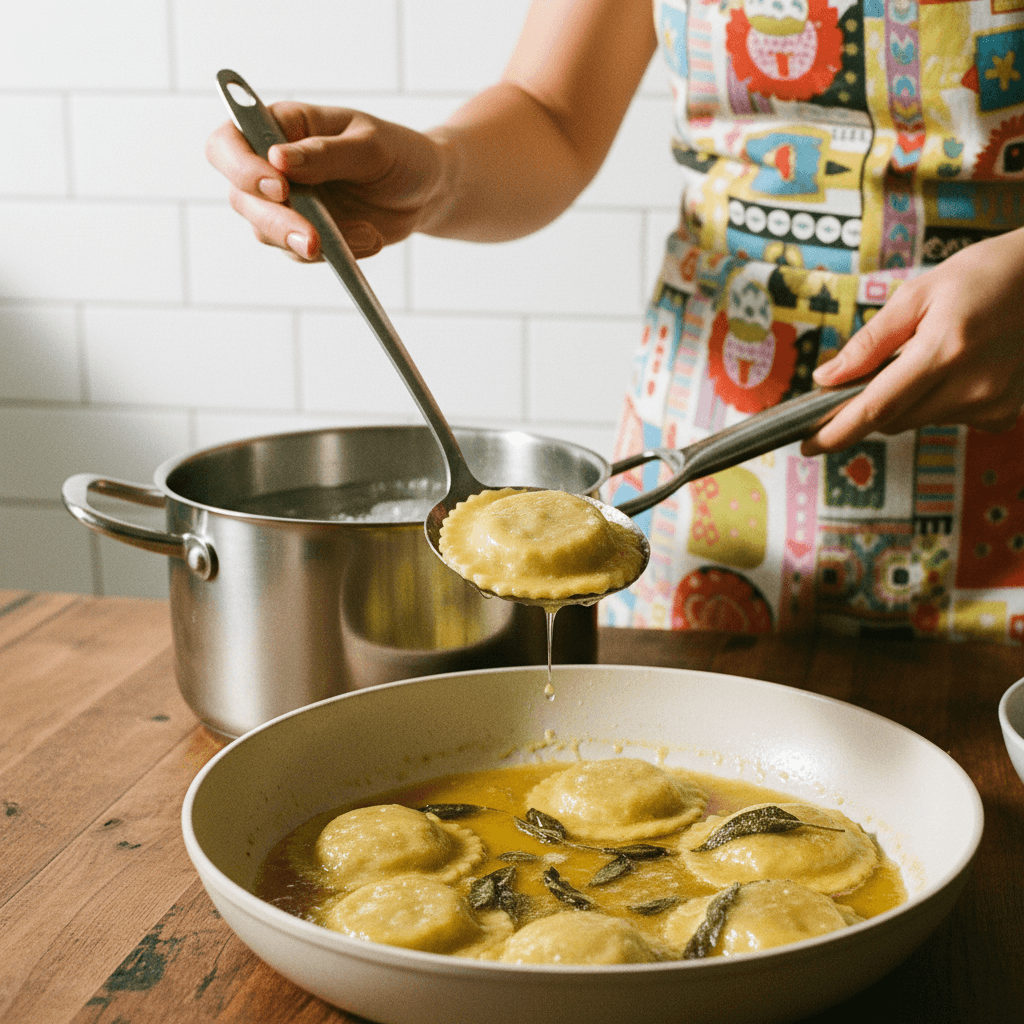
- 15
Serve immediately, garnished with additional grated Parmesan cheese and a sprinkle of black pepper.
⏱️ 1 min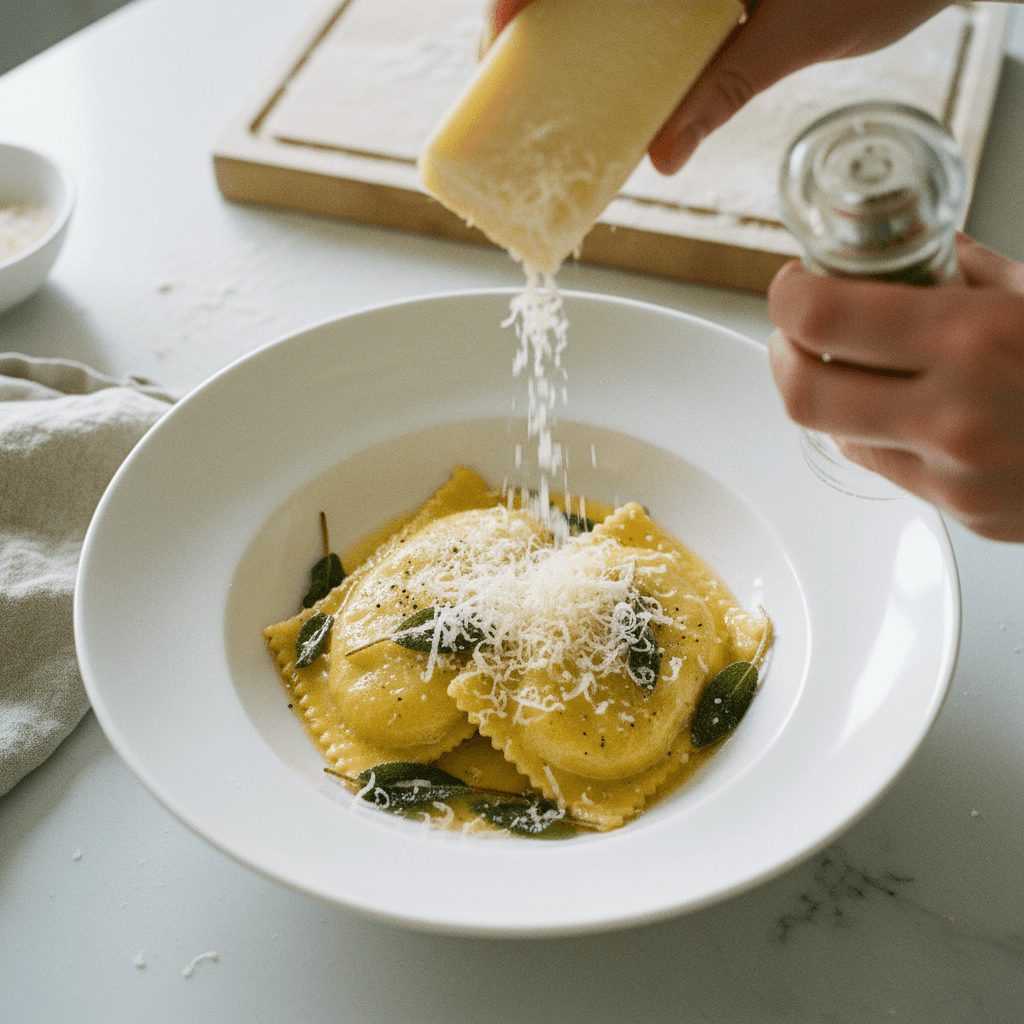
Kitchen Tools
Nutrition Facts (per serving)
Raviolo al Uovo
For the Pasta Dough
- 2 cups all-purpose flour
- 2 large eggs
For the Ricotta-Spinach Filling
- 1 cup whole milk ricotta cheese, drained
- 5 ounces fresh spinach, cooked, squeezed dry, and finely chopped
- 1/2 cup Parmesan cheese, grated
- 1/4 teaspoon nutmeg, freshly grated
- 1/2 teaspoon salt
- 1/4 teaspoon black pepper, freshly ground
For the Raviolo Assembly
- 4 large egg yolks
- 1 tablespoon water
For the Sauce and Garnish
- 4 tablespoons unsalted butter
- 8 fresh sage leaves
- 1/4 cup Parmesan cheese, grated, for garnish
- as needed salt, for pasta water
Instructions
- 1
On a large wooden board or clean work surface, pile the all-purpose flour. Create a deep well in the center of the flour. Crack the 2 large eggs into the well.
⏱️ 2 min - 2
Using a fork, gently whisk the eggs, gradually incorporating flour from the inner edge of the well. Continue mixing until a shaggy dough forms.
⏱️ 5 min - 3
Knead the dough by hand for 8-10 minutes until it becomes smooth and elastic. Wrap the dough tightly in plastic wrap and let it rest at room temperature for at least 30 minutes.
⏱️ 10 min - 4
While the pasta dough rests, prepare the filling. In a medium bowl, combine the drained ricotta cheese, finely chopped cooked spinach, 1/2 cup grated Parmesan cheese, freshly grated nutmeg, 1/2 teaspoon salt, and freshly ground black pepper. Mix all ingredients thoroughly until well combined. Transfer the filling mixture into a piping bag fitted with a round tip.
⏱️ 15 min - 5
Divide the rested pasta dough into 4 equal portions. Take one portion and flatten it slightly. Pass the dough through a pasta machine, starting with the widest setting. Fold the dough in thirds and pass it through again. Repeat this folding and passing 2-3 times on the widest setting to create a smooth, rectangular sheet.
⏱️ 5 min - 6
Progressively decrease the thickness setting on the pasta machine, passing the dough through each setting once, until a very thin sheet of pasta is achieved (usually setting 6 or 7 on most machines). The pasta should be thin enough to see your hand through it but still strong enough to handle.
⏱️ 10 min - 7
Lay one sheet of the thinly rolled pasta dough onto a lightly floured surface. Using the piping bag, pipe four evenly spaced mounds of the ricotta-spinach filling onto the pasta sheet, leaving adequate space (about 3-4 inches) between each mound.
⏱️ 5 min - 8
Gently create a small indentation in the center of each piped filling mound. Carefully separate an egg yolk from its white and place one egg yolk precisely into each indentation in the filling.
⏱️ 3 min - 9
In a small bowl, whisk 1 tablespoon of water. Using a small brush, moisten the pasta dough around each filling mound. Carefully place a second sheet of pasta dough over the first, aligning it precisely.
⏱️ 3 min - 10
Gently press around each filling mound to seal the two pasta sheets together, ensuring to remove any trapped air from around the filling and egg yolk. Use a 4-inch round pasta cutter to cut out each individual raviolo. Ensure the edges are well-sealed to prevent the filling from escaping during cooking. Repeat steps 5-10 with the remaining pasta dough and filling.
⏱️ 10 min - 11
Bring a large pot of water to a gentle boil. Add a generous amount of salt to the boiling water.
⏱️ 5 min•🌡️ 212 - 12
Carefully lower the prepared ravioli into the salted boiling water. Cook the ravioli for 2-3 minutes, or until the pasta is al dente and the yolk is still runny. Do not overcrowd the pot; cook in batches if necessary.
⏱️ 3 min•🌡️ 212 - 13
While the ravioli cooks, melt the unsalted butter in a large pan over medium heat. Add the fresh sage leaves and cook until the butter is lightly browned and the sage is crispy, about 2-3 minutes.
⏱️ 3 min - 14
Using a slotted spoon, carefully remove the cooked ravioli from the water and transfer them directly into the pan with the sage butter. Gently toss to coat.
⏱️ 1 min - 15
Serve immediately, garnished with additional grated Parmesan cheese and a sprinkle of black pepper.
⏱️ 1 min