Homemade Chapati
Homemade Chapati
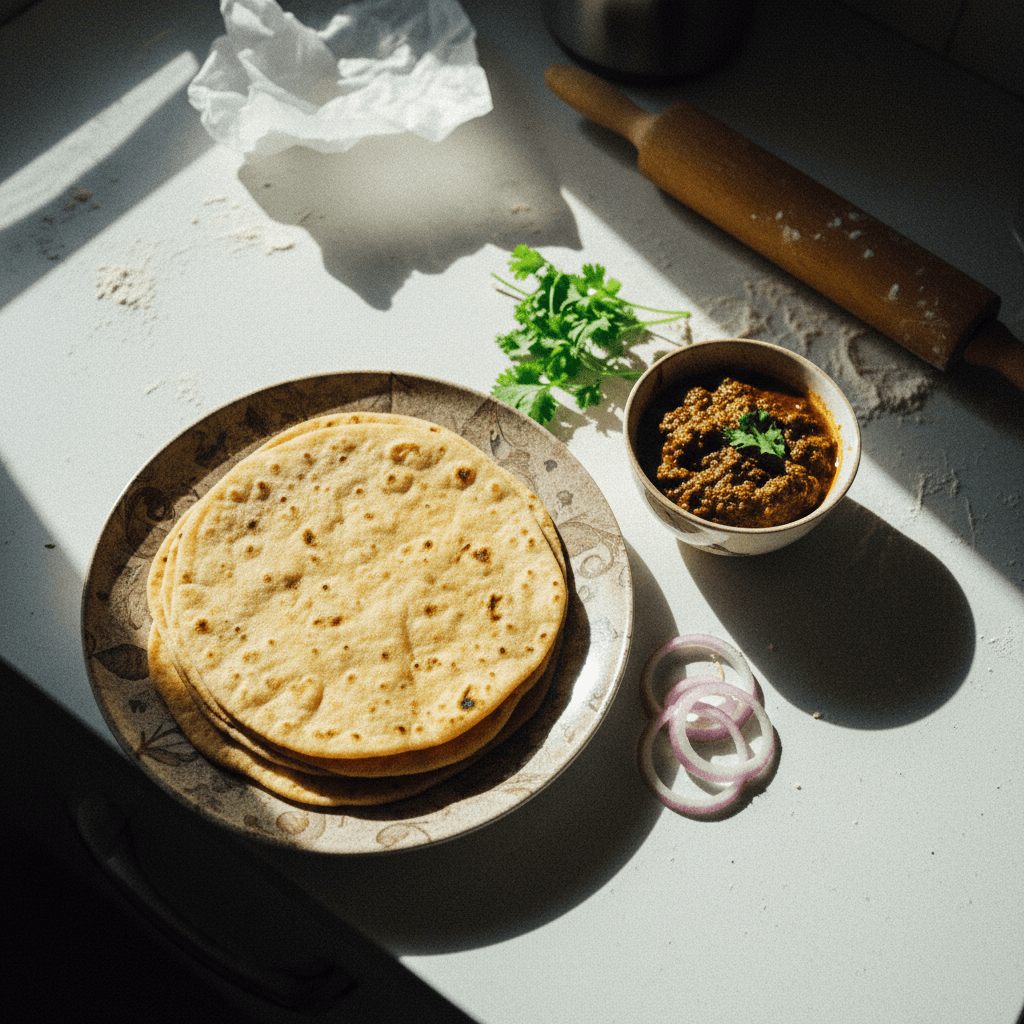
Ingredients
- 2 cups atta flour, (whole wheat flour, or plain flour/bread flour)
- 3/4 cup water, warm, plus more as needed
- 1/2 teaspoon salt
- 1 tablespoon vegetable oil, plus more for kneading
Instructions
- 1
In a large mixing bowl, combine the atta flour and salt. Gradually add the warm water, mixing with your hands until a shaggy dough forms. Add 1 tablespoon of vegetable oil and continue to knead the dough gently within the bowl for about 5-7 minutes, or until it comes together into a cohesive, soft ball. If the dough is too dry, add water 1 teaspoon at a time. If it's too sticky, add a sprinkle of flour.
⏱️ 7 min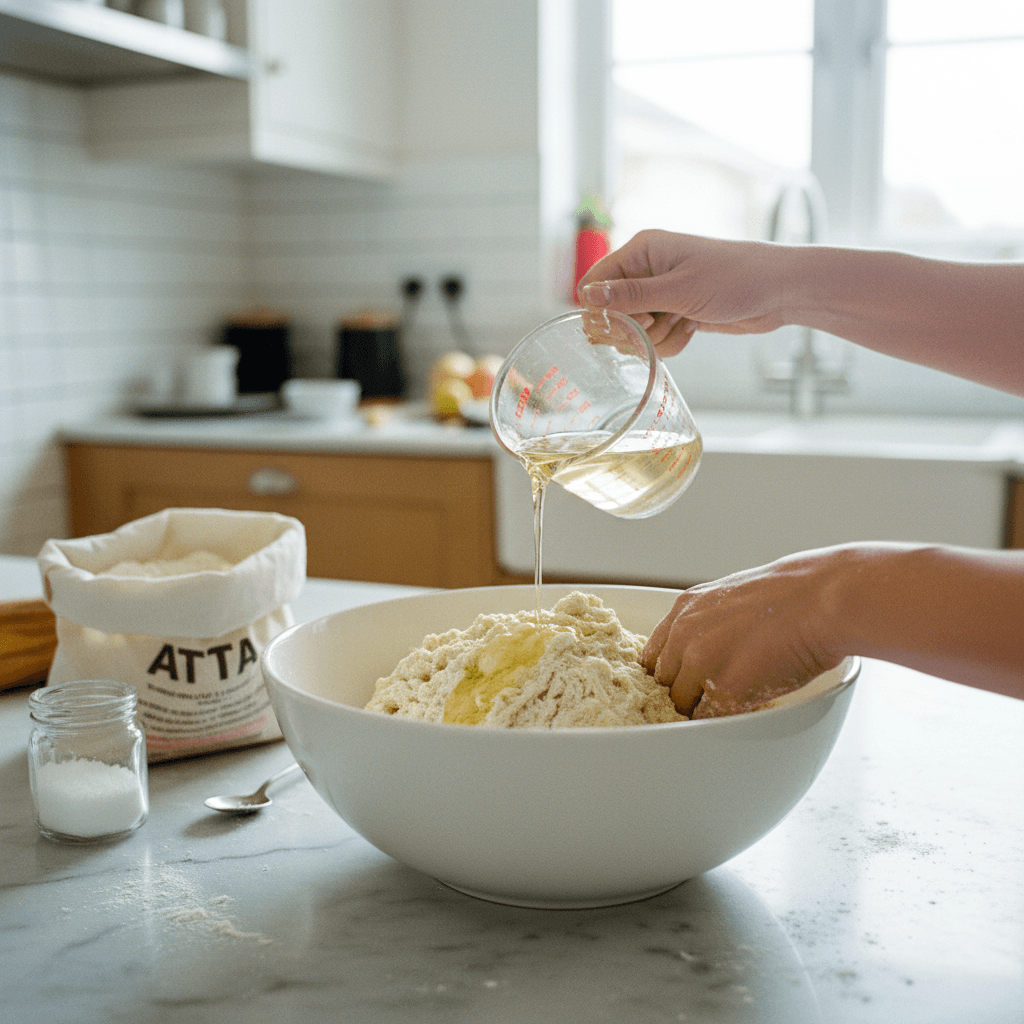
- 2
Lightly dust a clean countertop or work surface with flour. Transfer the dough to the floured surface and continue to knead for another 3-5 minutes until the dough is smooth and elastic. Cover the dough with a damp cloth and let it rest for 15-20 minutes. While the recipe does not explicitly state a resting time, this helps the gluten relax and makes the dough easier to roll.
⏱️ 5 min
- 3
Divide the dough into 8-10 equal portions. Roll each portion between your palms to form a smooth ball. Lightly dust the work surface and a rolling pin with flour. Take one dough ball and flatten it slightly with your palm. Using the rolling pin, roll the dough into a thin, round disc, about 6-7 inches in diameter. Don't worry if it's not perfectly round; homemade chapatis have character!
⏱️ 8 min
- 4
Heat a plain pan or griddle over medium-high heat until hot. Do not add any oil to the pan. Carefully place one rolled chapati onto the hot pan. Cook for about 30-60 seconds, or until small bubbles start to appear on the surface and the edges begin to dry.
⏱️ 1 min
- 5
Flip the chapati over using a spatula. Cook on the second side for another 30-60 seconds. You should see it start to puff up. If it doesn't puff much, gently press the edges with the spatula to encourage it. Flip it one more time and cook for a final 15-30 seconds, until it's fully puffed and has light brown spots on both sides.
⏱️ 1 min
- 6
Remove the cooked chapati from the pan and place it in a clean kitchen towel or a chapati warmer to keep it warm and soft. Repeat the process with the remaining dough balls. Serve the warm chapatis immediately with your favorite curries or stews.
⏱️ 8 min
Kitchen Tools
Nutrition Facts (per serving)
Homemade Chapati
- 2 cups atta flour, (whole wheat flour, or plain flour/bread flour)
- 3/4 cup water, warm, plus more as needed
- 1/2 teaspoon salt
- 1 tablespoon vegetable oil, plus more for kneading
Instructions
- 1
In a large mixing bowl, combine the atta flour and salt. Gradually add the warm water, mixing with your hands until a shaggy dough forms. Add 1 tablespoon of vegetable oil and continue to knead the dough gently within the bowl for about 5-7 minutes, or until it comes together into a cohesive, soft ball. If the dough is too dry, add water 1 teaspoon at a time. If it's too sticky, add a sprinkle of flour.
⏱️ 7 min - 2
Lightly dust a clean countertop or work surface with flour. Transfer the dough to the floured surface and continue to knead for another 3-5 minutes until the dough is smooth and elastic. Cover the dough with a damp cloth and let it rest for 15-20 minutes. While the recipe does not explicitly state a resting time, this helps the gluten relax and makes the dough easier to roll.
⏱️ 5 min - 3
Divide the dough into 8-10 equal portions. Roll each portion between your palms to form a smooth ball. Lightly dust the work surface and a rolling pin with flour. Take one dough ball and flatten it slightly with your palm. Using the rolling pin, roll the dough into a thin, round disc, about 6-7 inches in diameter. Don't worry if it's not perfectly round; homemade chapatis have character!
⏱️ 8 min - 4
Heat a plain pan or griddle over medium-high heat until hot. Do not add any oil to the pan. Carefully place one rolled chapati onto the hot pan. Cook for about 30-60 seconds, or until small bubbles start to appear on the surface and the edges begin to dry.
⏱️ 1 min - 5
Flip the chapati over using a spatula. Cook on the second side for another 30-60 seconds. You should see it start to puff up. If it doesn't puff much, gently press the edges with the spatula to encourage it. Flip it one more time and cook for a final 15-30 seconds, until it's fully puffed and has light brown spots on both sides.
⏱️ 1 min - 6
Remove the cooked chapati from the pan and place it in a clean kitchen towel or a chapati warmer to keep it warm and soft. Repeat the process with the remaining dough balls. Serve the warm chapatis immediately with your favorite curries or stews.
⏱️ 8 min