Khaleh Pacheh (Persian Lamb's Head and Trotters)
Khaleh Pacheh (Persian Lamb's Head and Trotters)

Ingredients
For the Lamb's Head and Trotters
- 1 lamb's head, whole, thoroughly cleaned and singed
- 4 lamb trotters, thoroughly cleaned and singed
- 2 yellow onions, large, quartered
- 8 garlic cloves, peeled, smashed
- 2 teaspoons turmeric powder
- 1 teaspoon black peppercorns
- 3 bay leaves
- 2 teaspoons salt, or to taste
- 16 cups water, or enough to cover
For Serving
- 2 fresh lemon, cut into wedges
- 1/2 cup pickled cucumbers, sliced
- 1 bunch radishes, cleaned, trimmed
- 1 bunch fresh herbs, such as mint, basil, tarragon, parsley
- 1 loaf lavash bread, or other flatbread
Instructions
- 1
Thoroughly clean the lamb's head and trotters. This often involves scraping, singeing any remaining hair, and rinsing under cold water. If possible, soak in cold water for 30 minutes to an hour, changing water once to help remove impurities.
⏱️ 15 min
- 2
Place the cleaned lamb's head and trotters in a very large, heavy-bottomed pot. Cover with cold water. Bring to a rolling boil over high heat. Boil for 10 to 15 minutes, carefully skimming off any foam or impurities that rise to the surface. This step is crucial for a clean-tasting broth.
⏱️ 20 min
- 3
Carefully drain all the water from the pot. Rinse the lamb parts and the pot thoroughly under cold running water. Return the lamb's head and trotters to the clean pot.
⏱️ 5 min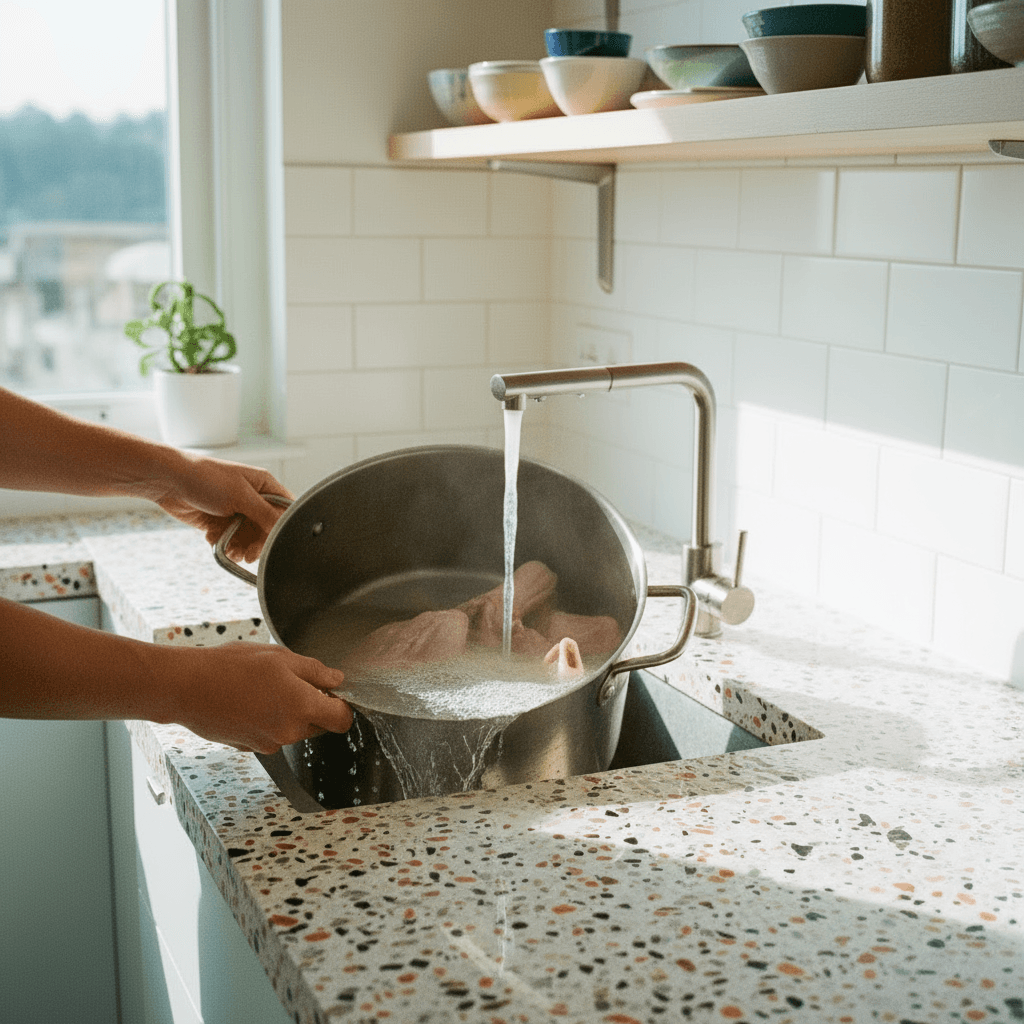
- 4
Add the quartered yellow onions, smashed garlic cloves, turmeric powder, black peppercorns, bay leaves, and salt to the pot with the lamb.
⏱️ 5 min
- 5
Pour enough fresh cold water into the pot to completely submerge the lamb parts, approximately 16 cups.
⏱️ 2 min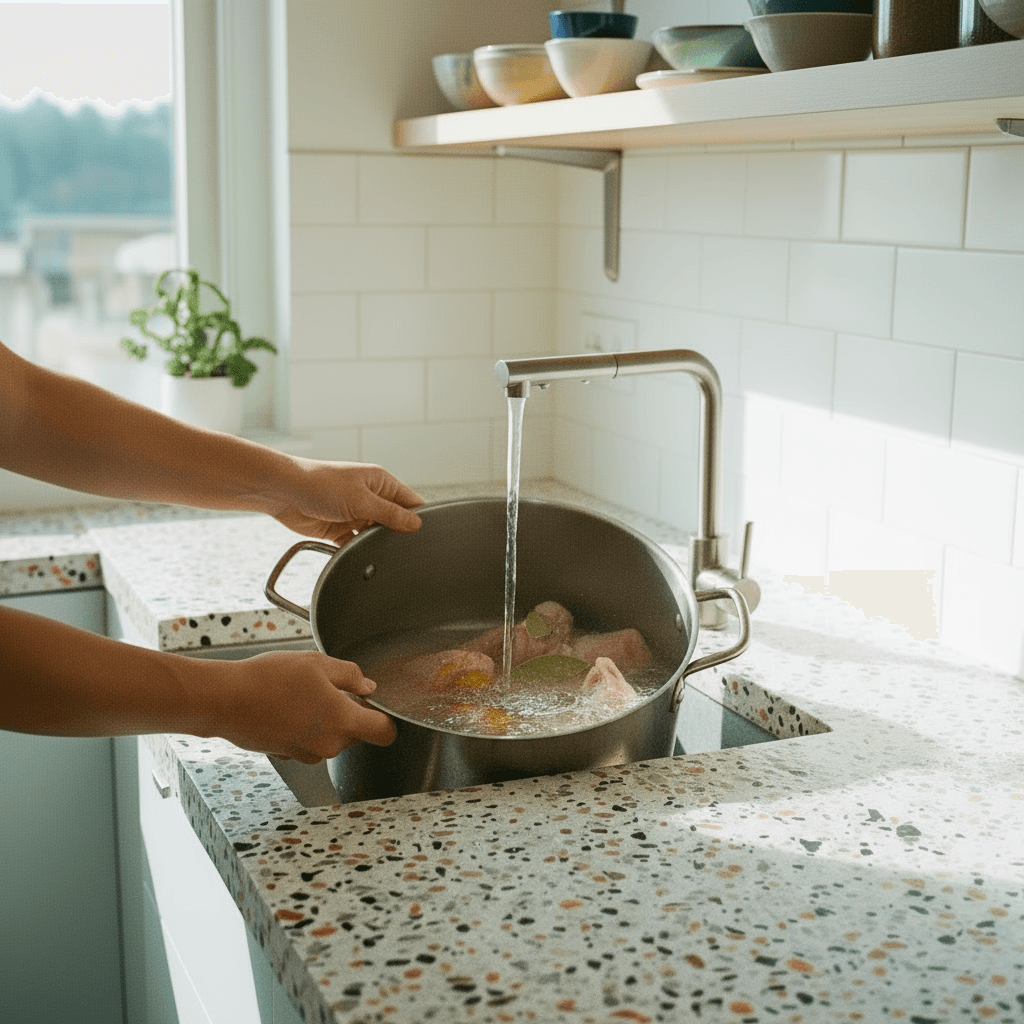
- 6
Bring the water to a boil over high heat, then immediately reduce the heat to very low. Cover the pot tightly and let it simmer gently for 6 to 8 hours, or until the meat is extremely tender and easily falls off the bone. The broth should be rich and flavorful. Check occasionally to ensure there's enough liquid; add more hot water if necessary to keep the lamb submerged.
⏱️ 420 min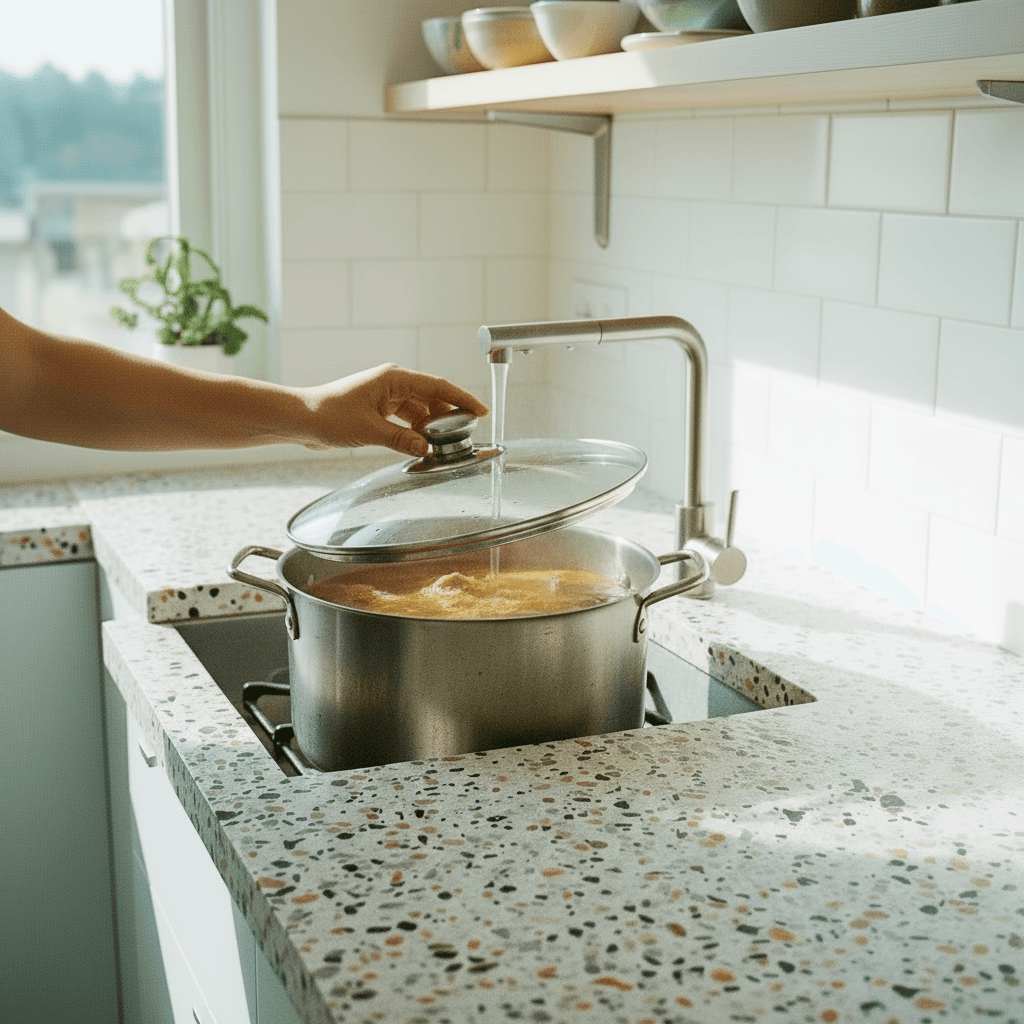
- 7
Once cooked, carefully remove the lamb's head and trotters from the pot using tongs or a slotted spoon. Let them cool slightly until they are comfortable to handle. Carefully debone the head, separating the meat, tongue, brain, and eyes (if desired) from the bones. Shred the meat from the trotters. Discard all bones.
⏱️ 30 min
- 8
Strain the cooking liquid through a fine-mesh sieve into a clean bowl, discarding the cooked onions, garlic, peppercorns, and bay leaves. Skim off any excess fat from the broth if desired, though some fat is traditional and adds to the richness.
⏱️ 10 min
- 9
Return the deboned and shredded lamb meat to the strained broth. Reheat gently if needed, ensuring it is piping hot before serving.
⏱️ 5 min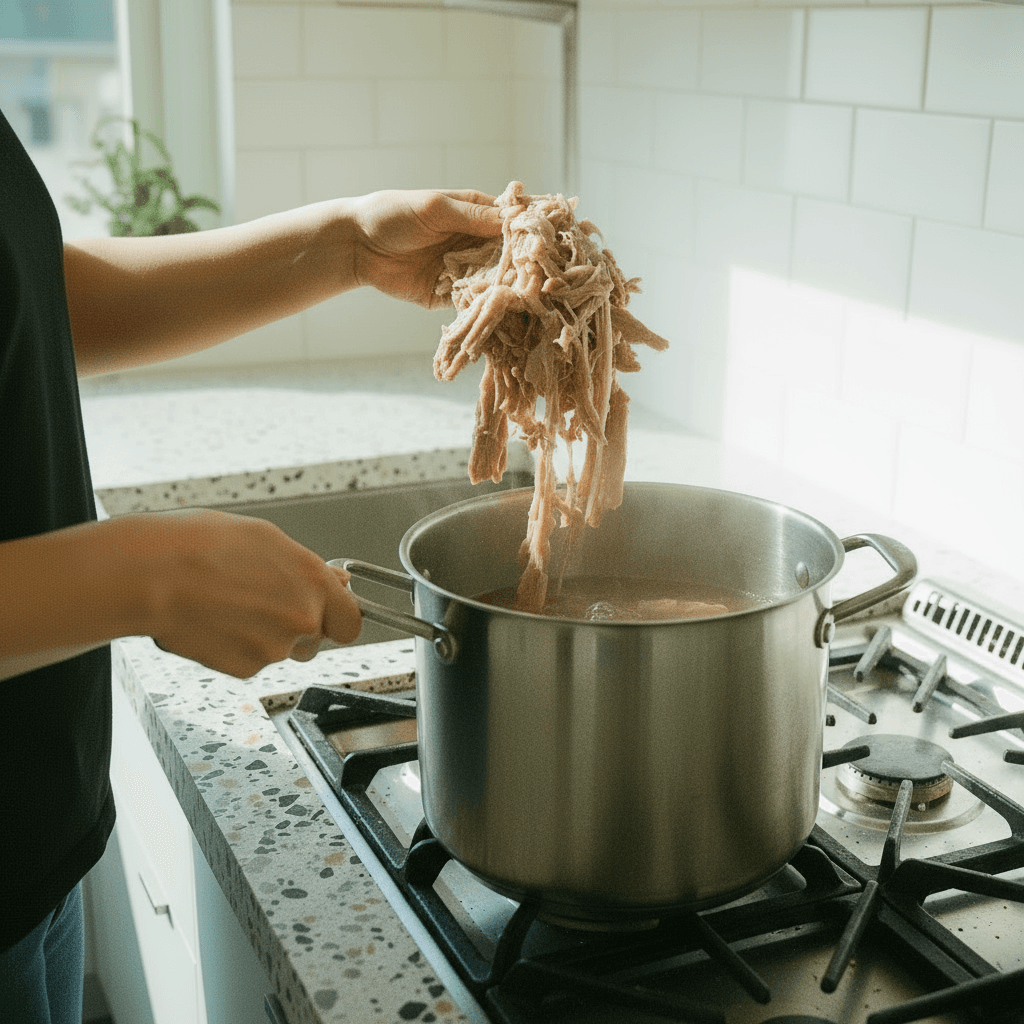
- 10
Serve the Khaleh Pacheh hot in individual bowls. Provide fresh lemon wedges, sliced pickled cucumbers, radishes, fresh herbs (such as mint, basil, tarragon, and parsley), and lavash bread on the side. Diners can add lemon juice, salt, and pepper to taste, and use the bread for dipping.
⏱️ 2 min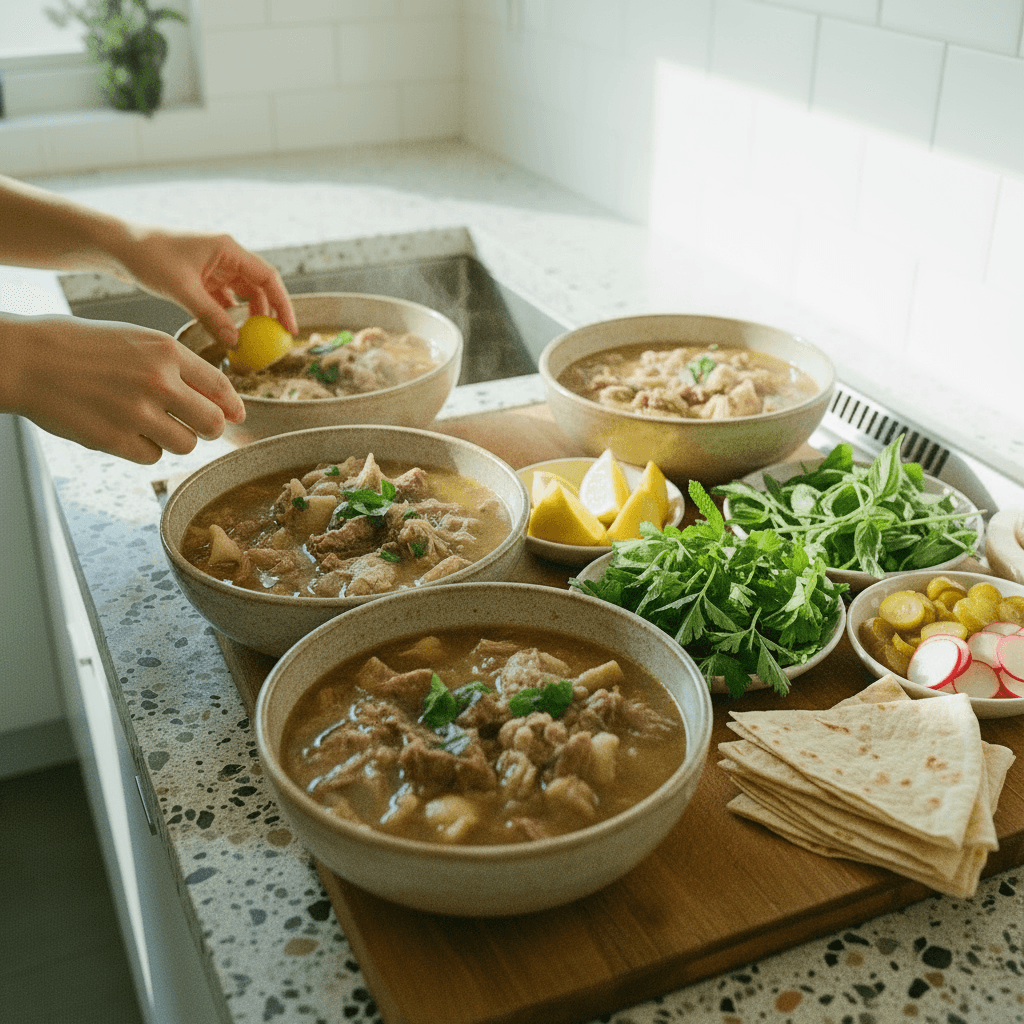
Kitchen Tools
Nutrition Facts (per serving)
Khaleh Pacheh (Persian Lamb's Head and Trotters)
Ingredients
For the Lamb's Head and Trotters
- 1 lamb's head, whole, thoroughly cleaned and singed
- 4 lamb trotters, thoroughly cleaned and singed
- 2 yellow onions, large, quartered
- 8 garlic cloves, peeled, smashed
- 2 teaspoons turmeric powder
- 1 teaspoon black peppercorns
- 3 bay leaves
- 2 teaspoons salt, or to taste
- 16 cups water, or enough to cover
For Serving
- 2 fresh lemon, cut into wedges
- 1/2 cup pickled cucumbers, sliced
- 1 bunch radishes, cleaned, trimmed
- 1 bunch fresh herbs, such as mint, basil, tarragon, parsley
- 1 loaf lavash bread, or other flatbread
Instructions
- 1
Thoroughly clean the lamb's head and trotters. This often involves scraping, singeing any remaining hair, and rinsing under cold water. If possible, soak in cold water for 30 minutes to an hour, changing water once to help remove impurities.
⏱️ 15 min - 2
Place the cleaned lamb's head and trotters in a very large, heavy-bottomed pot. Cover with cold water. Bring to a rolling boil over high heat. Boil for 10 to 15 minutes, carefully skimming off any foam or impurities that rise to the surface. This step is crucial for a clean-tasting broth.
⏱️ 20 min - 3
Carefully drain all the water from the pot. Rinse the lamb parts and the pot thoroughly under cold running water. Return the lamb's head and trotters to the clean pot.
⏱️ 5 min - 4
Add the quartered yellow onions, smashed garlic cloves, turmeric powder, black peppercorns, bay leaves, and salt to the pot with the lamb.
⏱️ 5 min - 5
Pour enough fresh cold water into the pot to completely submerge the lamb parts, approximately 16 cups.
⏱️ 2 min - 6
Bring the water to a boil over high heat, then immediately reduce the heat to very low. Cover the pot tightly and let it simmer gently for 6 to 8 hours, or until the meat is extremely tender and easily falls off the bone. The broth should be rich and flavorful. Check occasionally to ensure there's enough liquid; add more hot water if necessary to keep the lamb submerged.
⏱️ 420 min - 7
Once cooked, carefully remove the lamb's head and trotters from the pot using tongs or a slotted spoon. Let them cool slightly until they are comfortable to handle. Carefully debone the head, separating the meat, tongue, brain, and eyes (if desired) from the bones. Shred the meat from the trotters. Discard all bones.
⏱️ 30 min - 8
Strain the cooking liquid through a fine-mesh sieve into a clean bowl, discarding the cooked onions, garlic, peppercorns, and bay leaves. Skim off any excess fat from the broth if desired, though some fat is traditional and adds to the richness.
⏱️ 10 min - 9
Return the deboned and shredded lamb meat to the strained broth. Reheat gently if needed, ensuring it is piping hot before serving.
⏱️ 5 min - 10
Serve the Khaleh Pacheh hot in individual bowls. Provide fresh lemon wedges, sliced pickled cucumbers, radishes, fresh herbs (such as mint, basil, tarragon, and parsley), and lavash bread on the side. Diners can add lemon juice, salt, and pepper to taste, and use the bread for dipping.
⏱️ 2 min