French Onion Beef Stew
French Onion Beef Stew
Ingredients
For the Beef Stew
- 2 pounds beef chuck roast, cut into 1 1/2-inch cubes
- 1 teaspoon kosher salt
- 1/2 teaspoon black pepper
- 1/4 cup all-purpose flour
- 2 tablespoons olive oil
- 3 yellow onions, thinly sliced
- 4 garlic, cloves, minced
- 1 1/2 cups dry red wine, such as Cabernet Sauvignon or Merlot
- 4 cups beef broth
- 4 fresh thyme sprigs
- 1 bay leaf
- 1 tablespoon Dijon mustard
- 1 teaspoon Worcestershire sauce
For the Cheesy Croutons
- 1/2 baguette, cut into 1/2-inch slices
- 2 tablespoons unsalted butter, melted
- 1 cup Gruyère cheese, shredded
- 1 tablespoon fresh parsley, chopped, for garnish (optional)
Instructions
- 1
Pat the beef chuck roast cubes dry with paper towels. Season generously with the kosher salt and black pepper. In a shallow dish, dredge the beef cubes in the all-purpose flour, ensuring they are evenly coated, then shake off any excess flour.
⏱️ 10 min
- 2
Heat 1 tablespoon of olive oil in a large Dutch oven or heavy-bottomed pot over medium-high heat. Working in batches to avoid overcrowding, brown the beef cubes on all sides until deeply colored, about 3-4 minutes per batch. Transfer the browned beef to a plate and set aside.
⏱️ 15 min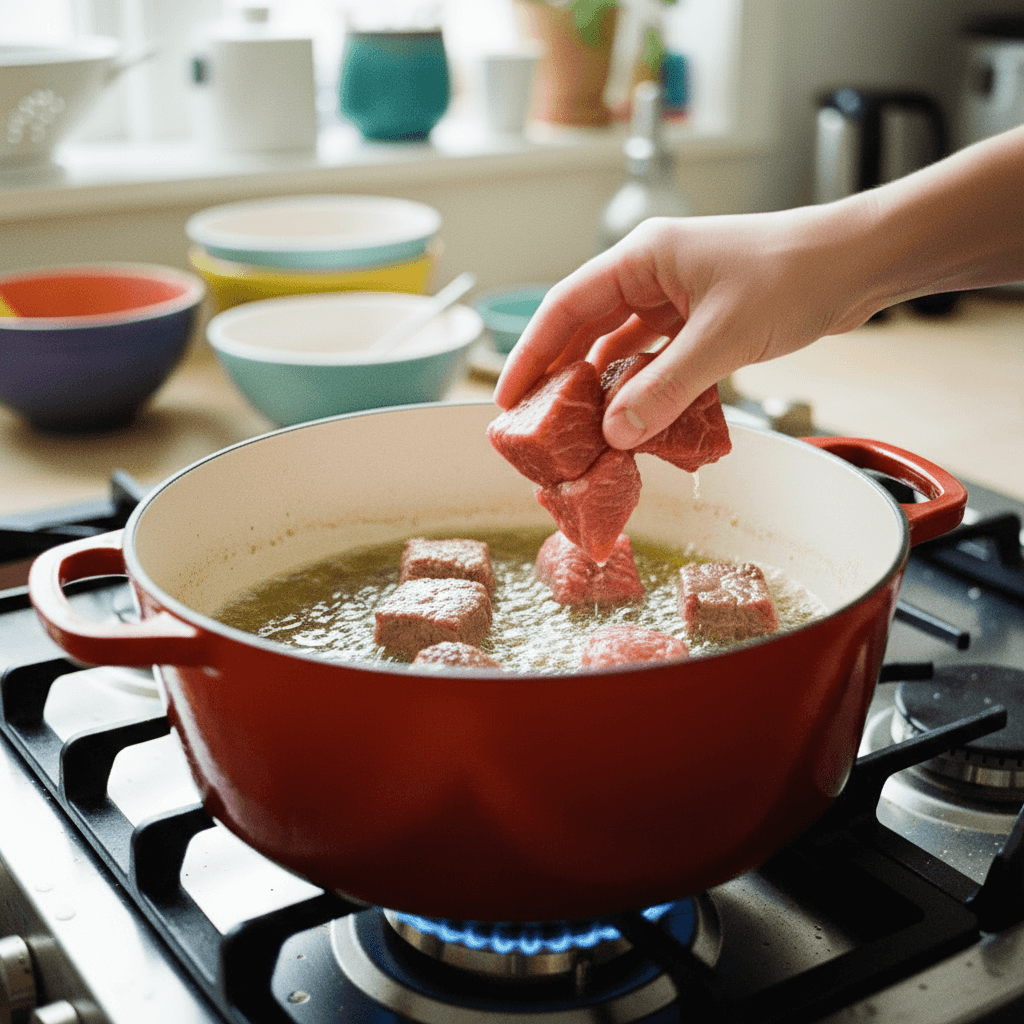
- 3
Reduce the heat to medium. Add the remaining 1 tablespoon of olive oil to the Dutch oven. Add the thinly sliced yellow onions and cook slowly, stirring occasionally, until deeply golden brown and caramelized, about 20-25 minutes. This slow caramelization is key for flavor.
⏱️ 25 min
- 4
Add the minced garlic to the caramelized onions and cook for 1 minute until fragrant.
⏱️ 1 min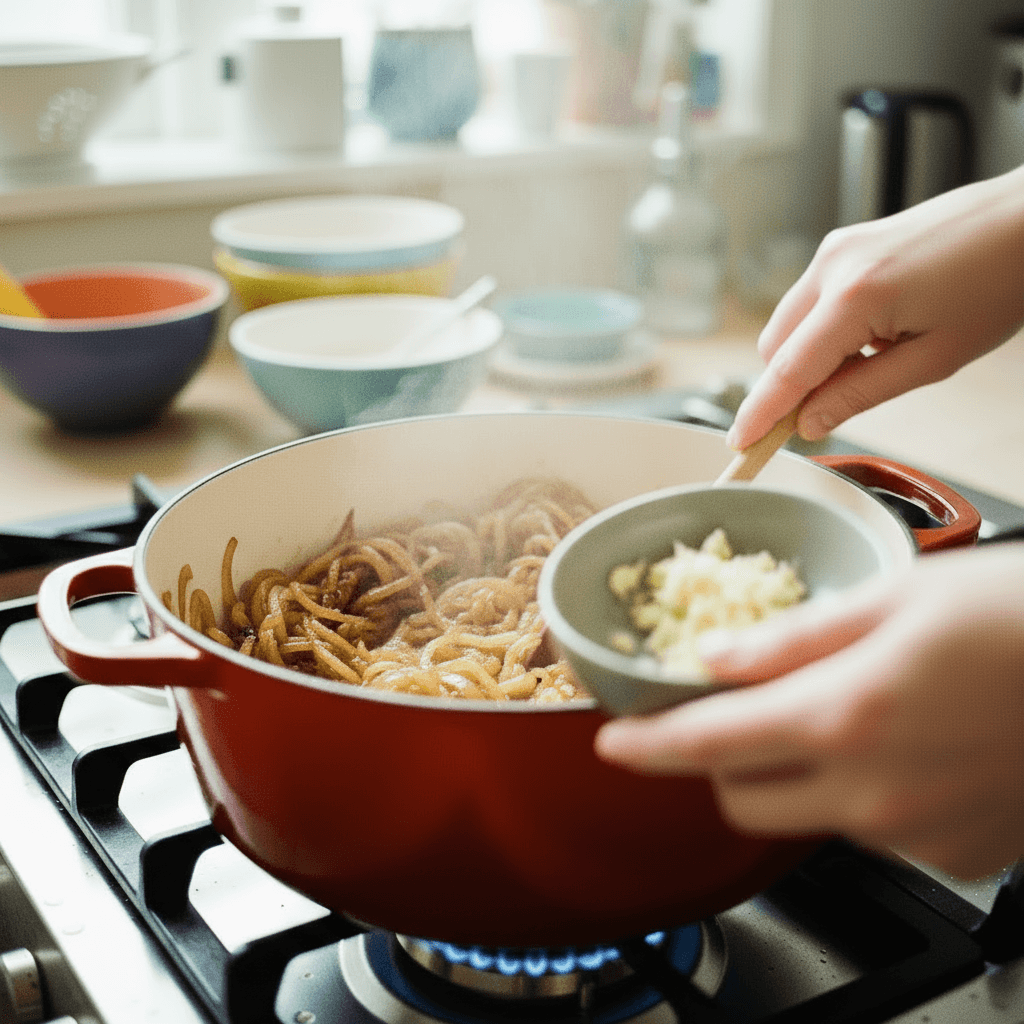
- 5
Pour in the dry red wine, scraping the bottom of the pot with a wooden spoon to loosen any browned bits. Bring to a simmer and cook for 2-3 minutes, allowing the alcohol to cook off slightly.
⏱️ 3 min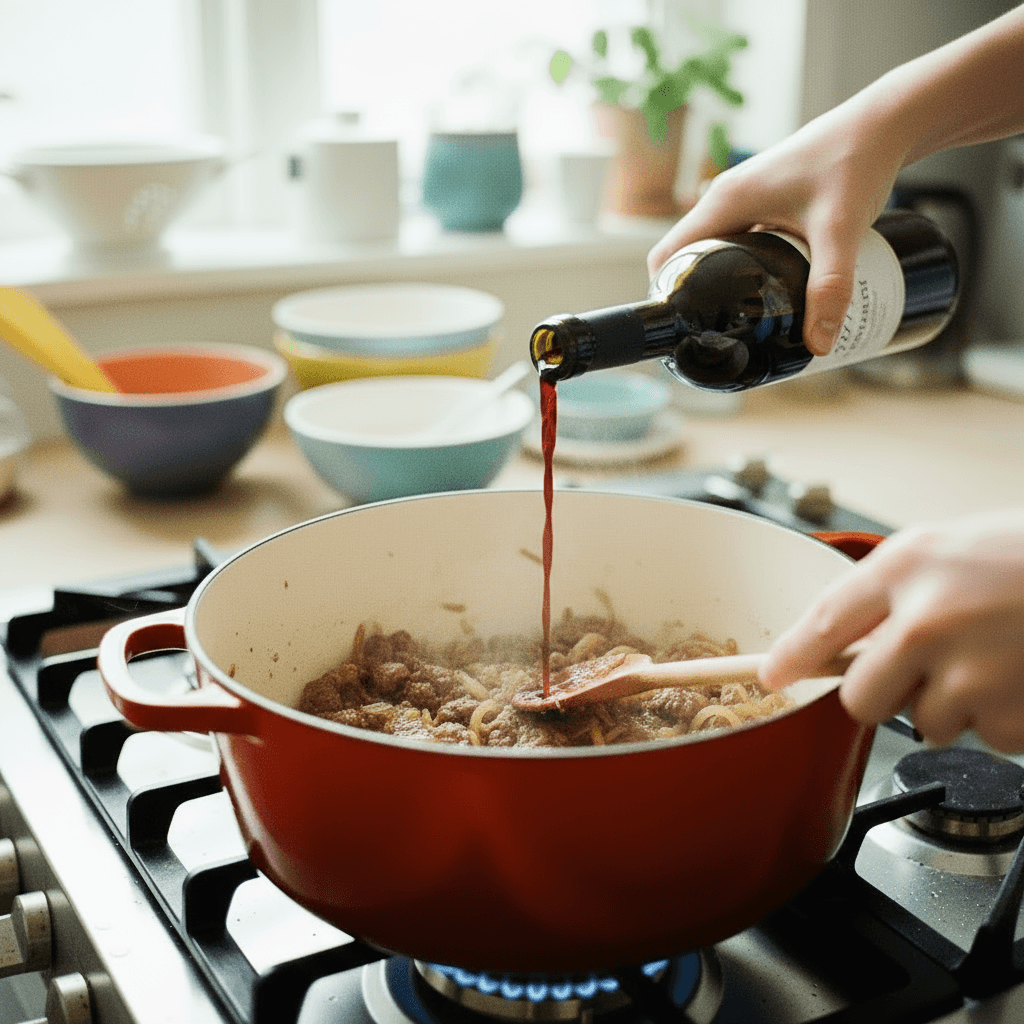
- 6
Return the browned beef to the Dutch oven. Stir in the beef broth, fresh thyme sprigs, bay leaf, Dijon mustard, and Worcestershire sauce. Bring the stew to a gentle simmer, then reduce heat to low, cover, and cook for 2 hours, or until the beef is fork-tender. Stir occasionally to prevent sticking.
⏱️ 120 min
- 7
While the stew simmers, preheat your oven to 375°F. Arrange the baguette slices on a baking sheet. Brush both sides with the melted unsalted butter. Bake for 8-10 minutes, or until lightly golden and crisp. Set aside.
⏱️ 10 min•🌡️ 375
- 8
Once the stew is cooked, remove the bay leaf and fresh thyme sprigs before serving. Taste and adjust seasoning if necessary.
⏱️ 2 min
- 9
Ladle the hot stew into individual oven-safe bowls or a rustic serving pot. Top each serving with 2-3 toasted baguette slices, then sprinkle generously with the shredded Gruyère cheese.
⏱️ 3 min
- 10
Place the bowls under a preheated broiler for 2-3 minutes, or until the cheese is melted, bubbly, and lightly golden. Watch carefully to prevent burning.
⏱️ 3 min•🌡️ 400
- 11
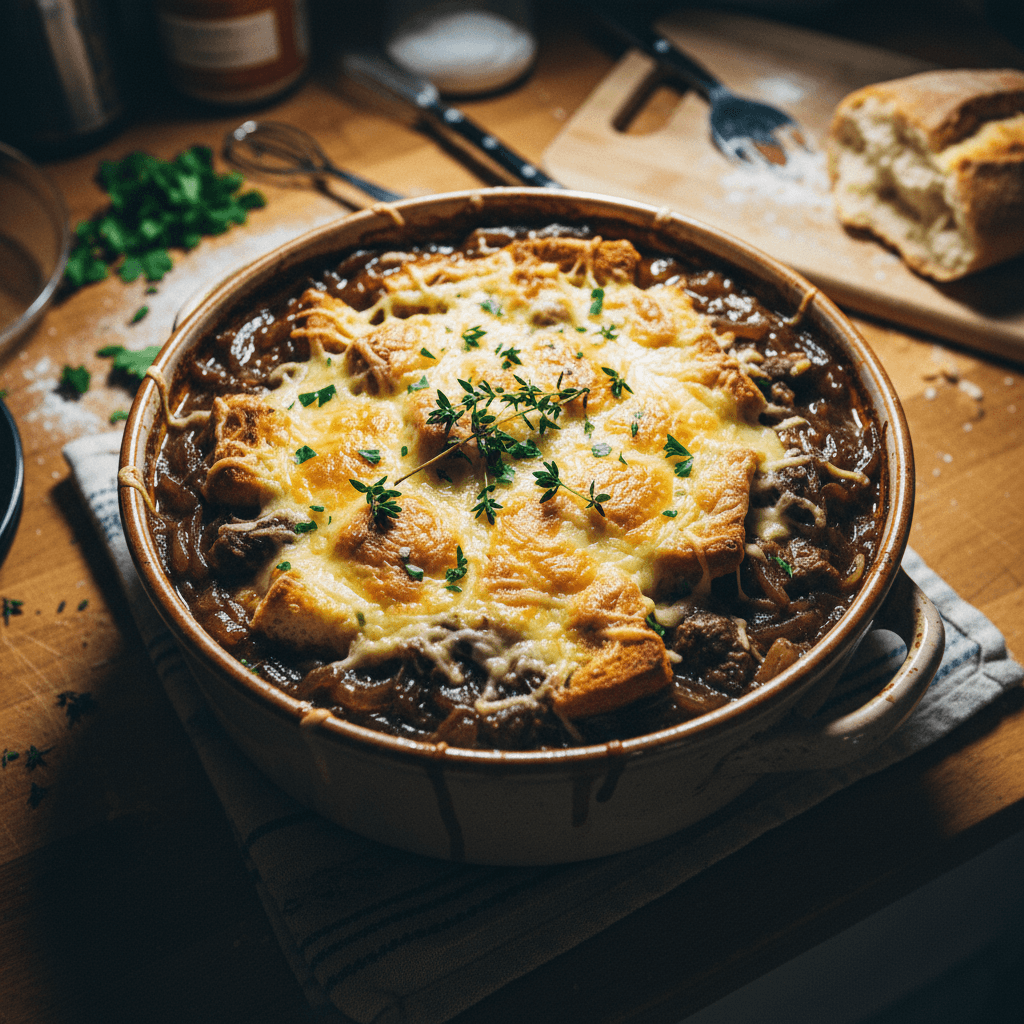
Garnish with fresh chopped parsley or a small sprig of fresh thyme, if desired, and serve immediately.
⏱️ 1 min
Kitchen Tools
Nutrition Facts (per serving)
French Onion Beef Stew
Ingredients
For the Beef Stew
- 2 pounds beef chuck roast, cut into 1 1/2-inch cubes
- 1 teaspoon kosher salt
- 1/2 teaspoon black pepper
- 1/4 cup all-purpose flour
- 2 tablespoons olive oil
- 3 yellow onions, thinly sliced
- 4 garlic, cloves, minced
- 1 1/2 cups dry red wine, such as Cabernet Sauvignon or Merlot
- 4 cups beef broth
- 4 fresh thyme sprigs
- 1 bay leaf
- 1 tablespoon Dijon mustard
- 1 teaspoon Worcestershire sauce
For the Cheesy Croutons
- 1/2 baguette, cut into 1/2-inch slices
- 2 tablespoons unsalted butter, melted
- 1 cup Gruyère cheese, shredded
- 1 tablespoon fresh parsley, chopped, for garnish (optional)
Instructions
- 1
Pat the beef chuck roast cubes dry with paper towels. Season generously with the kosher salt and black pepper. In a shallow dish, dredge the beef cubes in the all-purpose flour, ensuring they are evenly coated, then shake off any excess flour.
⏱️ 10 min - 2
Heat 1 tablespoon of olive oil in a large Dutch oven or heavy-bottomed pot over medium-high heat. Working in batches to avoid overcrowding, brown the beef cubes on all sides until deeply colored, about 3-4 minutes per batch. Transfer the browned beef to a plate and set aside.
⏱️ 15 min - 3
Reduce the heat to medium. Add the remaining 1 tablespoon of olive oil to the Dutch oven. Add the thinly sliced yellow onions and cook slowly, stirring occasionally, until deeply golden brown and caramelized, about 20-25 minutes. This slow caramelization is key for flavor.
⏱️ 25 min - 4
Add the minced garlic to the caramelized onions and cook for 1 minute until fragrant.
⏱️ 1 min - 5
Pour in the dry red wine, scraping the bottom of the pot with a wooden spoon to loosen any browned bits. Bring to a simmer and cook for 2-3 minutes, allowing the alcohol to cook off slightly.
⏱️ 3 min - 6
Return the browned beef to the Dutch oven. Stir in the beef broth, fresh thyme sprigs, bay leaf, Dijon mustard, and Worcestershire sauce. Bring the stew to a gentle simmer, then reduce heat to low, cover, and cook for 2 hours, or until the beef is fork-tender. Stir occasionally to prevent sticking.
⏱️ 120 min - 7
While the stew simmers, preheat your oven to 375°F. Arrange the baguette slices on a baking sheet. Brush both sides with the melted unsalted butter. Bake for 8-10 minutes, or until lightly golden and crisp. Set aside.
⏱️ 10 min•🌡️ 375 - 8
Once the stew is cooked, remove the bay leaf and fresh thyme sprigs before serving. Taste and adjust seasoning if necessary.
⏱️ 2 min - 9
Ladle the hot stew into individual oven-safe bowls or a rustic serving pot. Top each serving with 2-3 toasted baguette slices, then sprinkle generously with the shredded Gruyère cheese.
⏱️ 3 min - 10
Place the bowls under a preheated broiler for 2-3 minutes, or until the cheese is melted, bubbly, and lightly golden. Watch carefully to prevent burning.
⏱️ 3 min•🌡️ 400 - 11
Garnish with fresh chopped parsley or a small sprig of fresh thyme, if desired, and serve immediately.
⏱️ 1 min