Granny’s Tomato Onion Chutney
Granny’s Tomato Onion Chutney
Ingredients
- 1500 g ripe tomatoes
- 500 g white onion
- 375 g sugar
- 17 g salt
- 10 g mustard powder
- 7 g curry powder, or garam masala
- 500 ml vinegar, malt/brown or apple cider
Instructions
- 1
Using a sharp knife, score a small cross in the base of each tomato.
⏱️ 5 min
- 2
Boil some water in a large pot and carefully cover the scored tomatoes with the boiling water. Let them sit for a few minutes until the skins begin to loosen and slip off easily.
⏱️ 5 min
- 3
Once cooled enough to handle, skin the tomatoes and roughly chop them. Sprinkle a little salt over the chopped tomatoes. Place them into a colander and leave to drain out their liquid for 1 1/2 hours.
⏱️ 90 min
- 4
While the tomatoes are draining, finely chop the white onions. Sprinkle salt over the chopped onions and place them into a separate colander. Leave them to drain out their liquid for 1 1/2 hours.
⏱️ 90 min
- 5
Add the drained tomatoes and onions to a large pan along with the sugar and the remaining salt. Pour in the vinegar, ensuring the ingredients are just barely covered. You might not need all 500 ml of vinegar; reserve about 1 tablespoon for the next step.
⏱️ 10 min
- 6
Bring the mixture of tomatoes, onion, vinegar, and sugar to a gentle simmer over medium heat, stirring occasionally.
⏱️ 10 min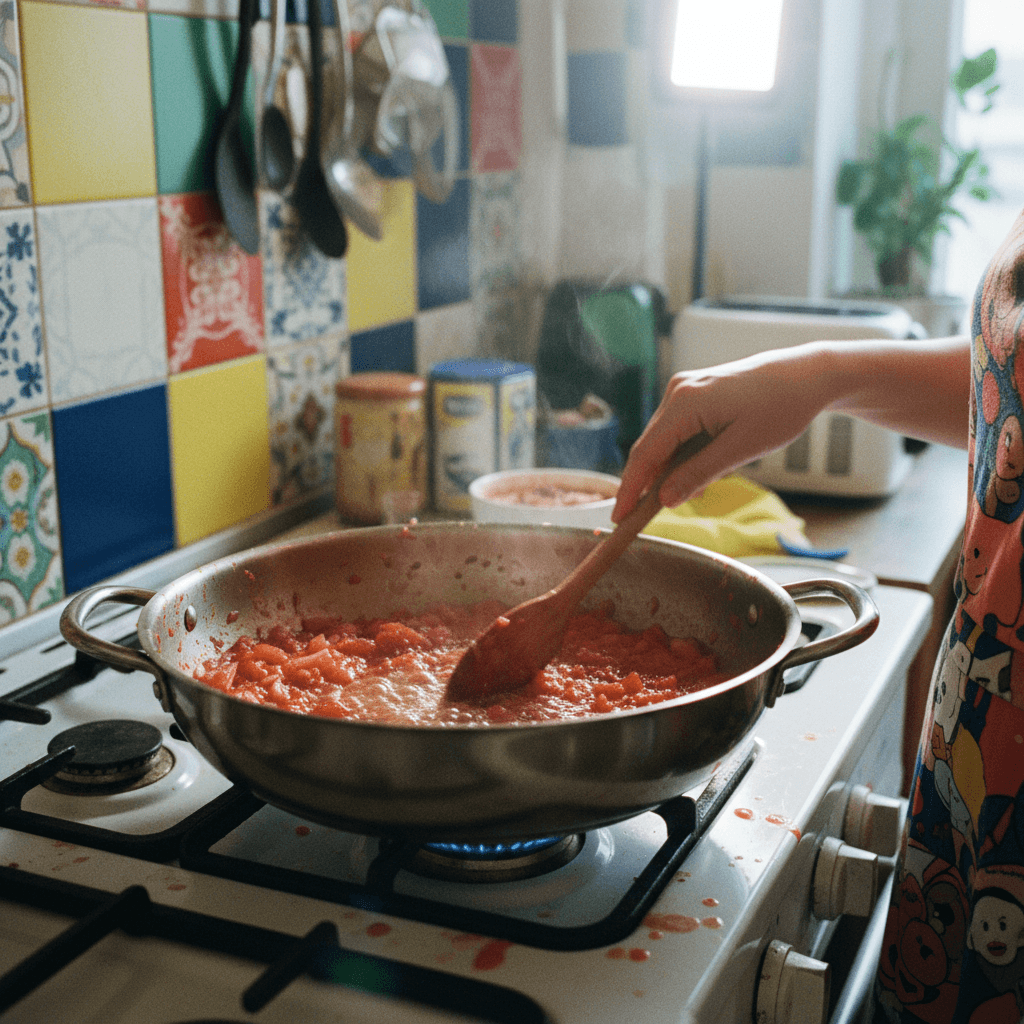
- 7
In a small bowl, combine the curry powder and mustard powder with the tablespoon of cold vinegar you saved.
⏱️ 2 min
- 8
Add the curry and mustard mixture to the simmering chutney in the pan, stirring well to combine.
⏱️ 1 min
- 9
Simmer the chutney for 1 1/2 hours or longer, stirring occasionally, until it is reduced and slightly sticky. To speed up the reduction process towards the end of cooking, you can simmer with the lid off.
⏱️ 90 min
- 10
While the chutney is simmering, sterilize your jars. Wash them thoroughly in hot, soapy water and then either place them in a low oven (around 100°C / 210°F) to dry out completely, or run them through a hot dishwasher cycle.
⏱️ 15 min•🌡️ 100
- 11
Once the chutney has reached the desired reduced and sticky consistency, it is ready to be jarred. Have your sterilized jars ready and laid out on a clean surface.
⏱️ 1 min
- 12
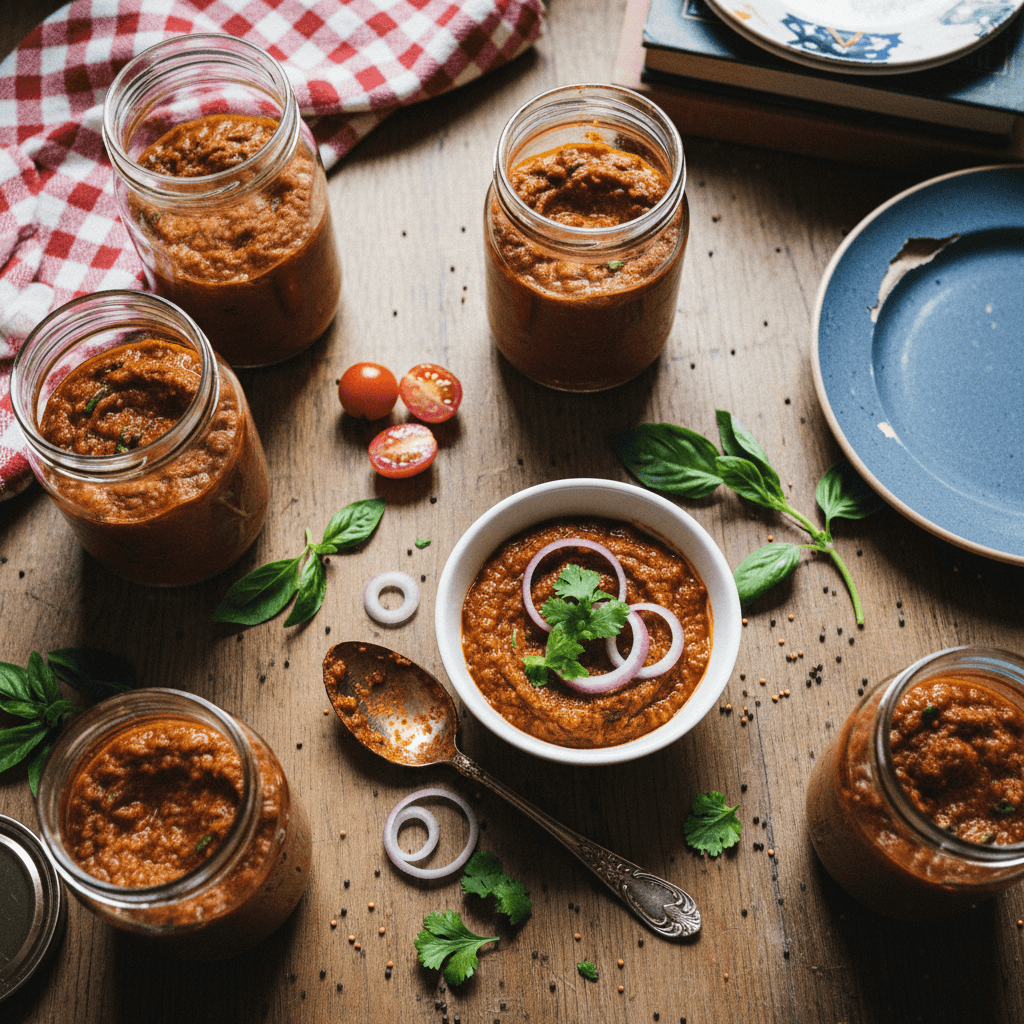
Carefully spoon the hot chutney into the sterilized jars, filling them to the brim. Screw the lids on tightly. Label the jars with the date. For best flavor, allow the chutney to mature for a few weeks before opening (this step is optional but highly recommended for enhanced taste).
⏱️ 5 min
Kitchen Tools
Nutrition Facts (per serving)
Granny’s Tomato Onion Chutney
- 1500 g ripe tomatoes
- 500 g white onion
- 375 g sugar
- 17 g salt
- 10 g mustard powder
- 7 g curry powder, or garam masala
- 500 ml vinegar, malt/brown or apple cider
Instructions
- 1
Using a sharp knife, score a small cross in the base of each tomato.
⏱️ 5 min - 2
Boil some water in a large pot and carefully cover the scored tomatoes with the boiling water. Let them sit for a few minutes until the skins begin to loosen and slip off easily.
⏱️ 5 min - 3
Once cooled enough to handle, skin the tomatoes and roughly chop them. Sprinkle a little salt over the chopped tomatoes. Place them into a colander and leave to drain out their liquid for 1 1/2 hours.
⏱️ 90 min - 4
While the tomatoes are draining, finely chop the white onions. Sprinkle salt over the chopped onions and place them into a separate colander. Leave them to drain out their liquid for 1 1/2 hours.
⏱️ 90 min - 5
Add the drained tomatoes and onions to a large pan along with the sugar and the remaining salt. Pour in the vinegar, ensuring the ingredients are just barely covered. You might not need all 500 ml of vinegar; reserve about 1 tablespoon for the next step.
⏱️ 10 min - 6
Bring the mixture of tomatoes, onion, vinegar, and sugar to a gentle simmer over medium heat, stirring occasionally.
⏱️ 10 min - 7
In a small bowl, combine the curry powder and mustard powder with the tablespoon of cold vinegar you saved.
⏱️ 2 min - 8
Add the curry and mustard mixture to the simmering chutney in the pan, stirring well to combine.
⏱️ 1 min - 9
Simmer the chutney for 1 1/2 hours or longer, stirring occasionally, until it is reduced and slightly sticky. To speed up the reduction process towards the end of cooking, you can simmer with the lid off.
⏱️ 90 min - 10
While the chutney is simmering, sterilize your jars. Wash them thoroughly in hot, soapy water and then either place them in a low oven (around 100°C / 210°F) to dry out completely, or run them through a hot dishwasher cycle.
⏱️ 15 min•🌡️ 100 - 11
Once the chutney has reached the desired reduced and sticky consistency, it is ready to be jarred. Have your sterilized jars ready and laid out on a clean surface.
⏱️ 1 min - 12
Carefully spoon the hot chutney into the sterilized jars, filling them to the brim. Screw the lids on tightly. Label the jars with the date. For best flavor, allow the chutney to mature for a few weeks before opening (this step is optional but highly recommended for enhanced taste).
⏱️ 5 min