Classic Scones
Classic Scones

Ingredients
- 555 g plain/all-purpose flour
- 28 g baking powder
- 140 g caster/white sugar
- 1 pinch fine sea salt
- 140 g unsalted butter, cold and cubed
- 250 g whole milk, or buttermilk
For Finishing
- 1 egg yolk, for brushing
Instructions
- 1
Preheat your oven to 200°C (400°F). Line a baking tray with parchment paper.
⏱️ 5 min•🌡️ 200
- 2
In a large bowl, combine the plain/all-purpose flour, baking powder, caster/white sugar, and a pinch of fine sea salt. Whisk these dry ingredients together until they are well combined.
⏱️ 2 min
- 3
Add the cold and cubed unsalted butter to the dry mixture. Using your fingertips, rub the butter into the flour mixture until it resembles fine breadcrumbs. Be careful not to overwork the butter, keeping it as cold as possible.
⏱️ 5 min
- 4
Pour the whole milk (or buttermilk) into the mixture. Mix with a spatula until a shaggy dough forms. Do not overmix.
⏱️ 2 min
- 5
Transfer the dough to a lightly floured surface. Knead it very lightly, just enough to bring it together into a cohesive ball. Avoid overmixing or overworking the dough, as this can make the scones tough.
⏱️ 2 min
- 6
Roll out the dough to an even thickness, approximately 2-3 cm (3/4 - 1 inch) thick.
⏱️ 3 min
- 7
Dip a round cutter (about 5-6 cm or 2-2.5 inches in diameter) in flour each time before cutting the scones. Press the cutter straight down without twisting to ensure a clean cut. This helps the scones rise evenly.
⏱️ 3 min
- 8
Gather any dough scraps, lightly re-knead them, and re-roll to cut out additional scones until all dough is used.
⏱️ 3 min
- 9
Place the cut scones onto the prepared baking tray, leaving a little space between each one. Brush the tops of the scones with egg yolk to give them a golden finish when baked.
⏱️ 3 min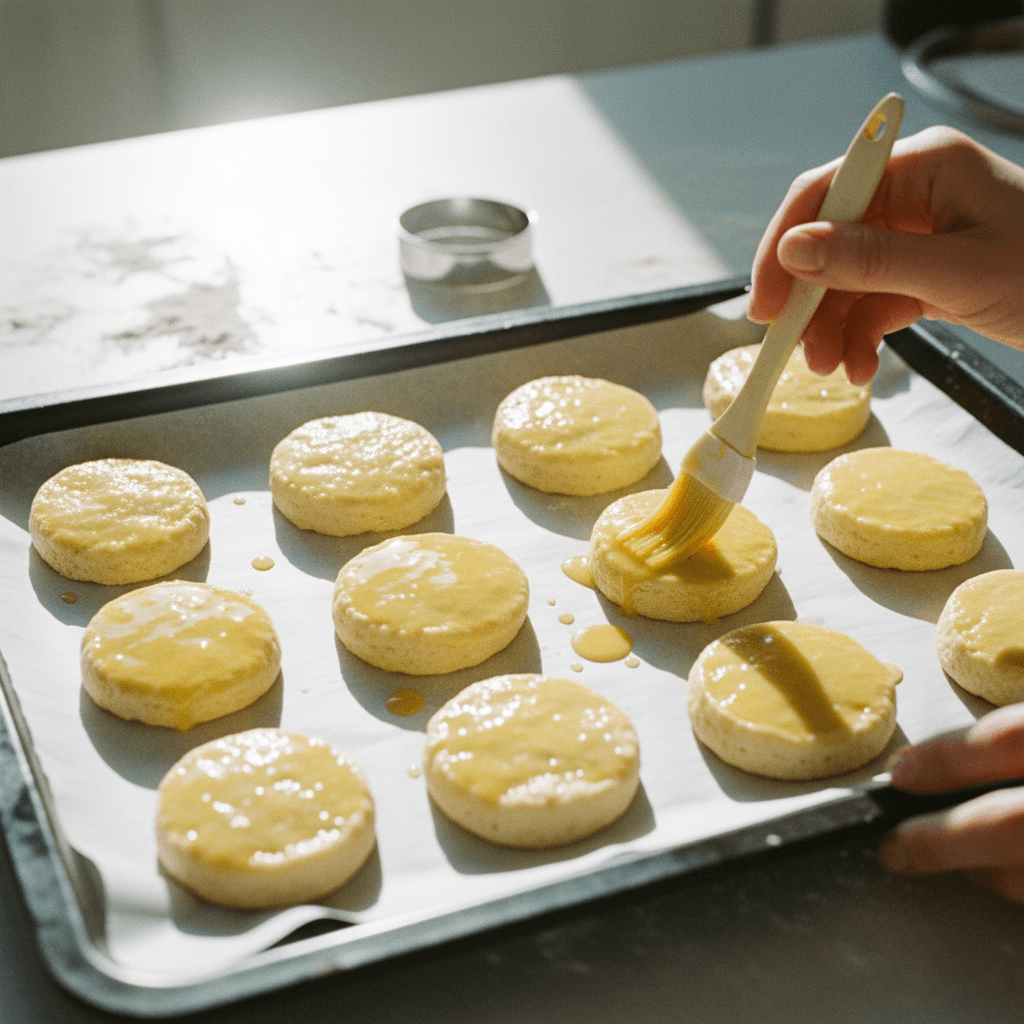
- 10
Bake in the preheated oven for 12-15 minutes, or until the scones are golden brown on top and have risen well.
⏱️ 15 min•🌡️ 200
- 11
Remove the scones from the oven and transfer them to a wire rack to cool slightly. Serve warm with your favorite jam and clotted cream.
⏱️ 3 min
Kitchen Tools
Nutrition Facts (per serving)
Classic Scones
- 555 g plain/all-purpose flour
- 28 g baking powder
- 140 g caster/white sugar
- 1 pinch fine sea salt
- 140 g unsalted butter, cold and cubed
- 250 g whole milk, or buttermilk
For Finishing
- 1 egg yolk, for brushing
Instructions
- 1
Preheat your oven to 200°C (400°F). Line a baking tray with parchment paper.
⏱️ 5 min•🌡️ 200 - 2
In a large bowl, combine the plain/all-purpose flour, baking powder, caster/white sugar, and a pinch of fine sea salt. Whisk these dry ingredients together until they are well combined.
⏱️ 2 min - 3
Add the cold and cubed unsalted butter to the dry mixture. Using your fingertips, rub the butter into the flour mixture until it resembles fine breadcrumbs. Be careful not to overwork the butter, keeping it as cold as possible.
⏱️ 5 min - 4
Pour the whole milk (or buttermilk) into the mixture. Mix with a spatula until a shaggy dough forms. Do not overmix.
⏱️ 2 min - 5
Transfer the dough to a lightly floured surface. Knead it very lightly, just enough to bring it together into a cohesive ball. Avoid overmixing or overworking the dough, as this can make the scones tough.
⏱️ 2 min - 6
Roll out the dough to an even thickness, approximately 2-3 cm (3/4 - 1 inch) thick.
⏱️ 3 min - 7
Dip a round cutter (about 5-6 cm or 2-2.5 inches in diameter) in flour each time before cutting the scones. Press the cutter straight down without twisting to ensure a clean cut. This helps the scones rise evenly.
⏱️ 3 min - 8
Gather any dough scraps, lightly re-knead them, and re-roll to cut out additional scones until all dough is used.
⏱️ 3 min - 9
Place the cut scones onto the prepared baking tray, leaving a little space between each one. Brush the tops of the scones with egg yolk to give them a golden finish when baked.
⏱️ 3 min - 10
Bake in the preheated oven for 12-15 minutes, or until the scones are golden brown on top and have risen well.
⏱️ 15 min•🌡️ 200 - 11
Remove the scones from the oven and transfer them to a wire rack to cool slightly. Serve warm with your favorite jam and clotted cream.
⏱️ 3 min