Homemade Flaky Pie Crust
Homemade Flaky Pie Crust

Ingredients
For the Pie Dough
- 2 3/4 cups all-purpose flour
- 1 tablespoon granulated sugar
- 1/4 teaspoon kosher salt
- 1 cup salted butter, cold, straight from the freezer, cut into 1/2-inch cubes
- 7 tablespoons cold water, plus more as needed
- 1/2 teaspoon vanilla bean paste, for flavor
- 1 teaspoon distilled white vinegar, to tenderize dough
Instructions
- 1
In a large bowl, combine the all-purpose flour, granulated sugar, and kosher salt. Whisk briefly to ensure even distribution.
⏱️ 2 min
- 2
Add the cold, cubed salted butter to the dry ingredients.
⏱️ 3 min - 3
Using your hands, squish and work the butter into the flour mixture. Continue until the mixture resembles coarse sand with small, visible chunks of butter remaining. Avoid fully incorporating the butter, as these chunks are crucial for flakiness.
⏱️ 5 min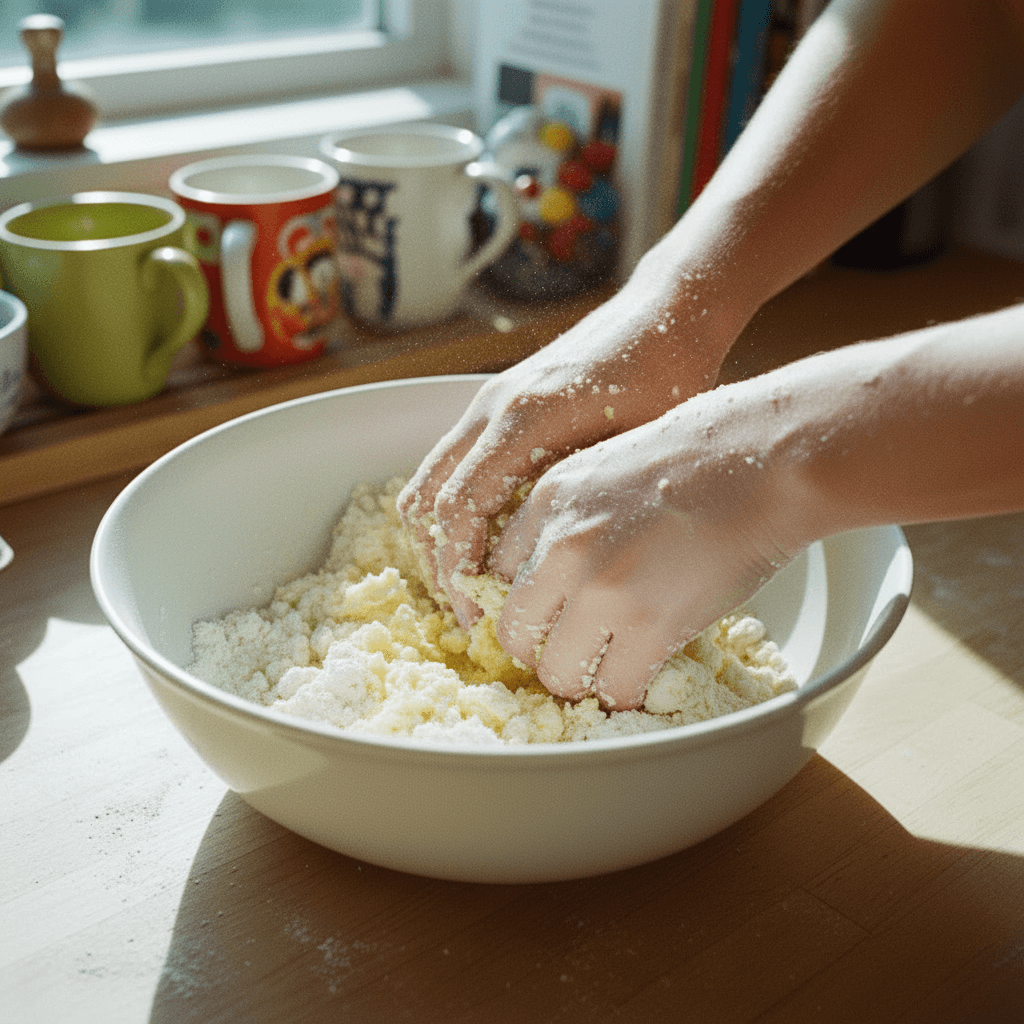
- 4
Gradually add the cold water, starting with 7 tablespoons. Also, add the vanilla bean paste and distilled white vinegar to the mixture.
⏱️ 2 min
- 5
Mix the ingredients until they just come together to form a shaggy dough. When squeezed, the dough should hold together without crumbling. Add a little more cold water, 1 teaspoon at a time, if the dough is too dry.
⏱️ 3 min
- 6
Transfer the shaggy dough onto a piece of parchment paper. Flatten the dough out slightly and then fold it in thirds, like a book. This layering technique helps create extra flakiness in the final crust.
⏱️ 2 min
- 7
Divide the dough into two equal portions. Wrap each portion tightly in parchment paper and then chill in the refrigerator for at least 1 hour. Chilling allows the butter to firm up and the flour to relax, making the dough easier to roll.
⏱️ 5 min
- 8
Once chilled, place one portion of dough between two fresh pieces of parchment paper. Using a rolling pin, roll out the dough, turning it frequently to maintain a circular shape and even thickness (about 1/8-inch thick).
⏱️ 5 min
- 9
Carefully peel off the top layer of parchment paper. Invert the rolled-out dough into a 9-inch pie plate. Remove the remaining parchment paper.
⏱️ 2 min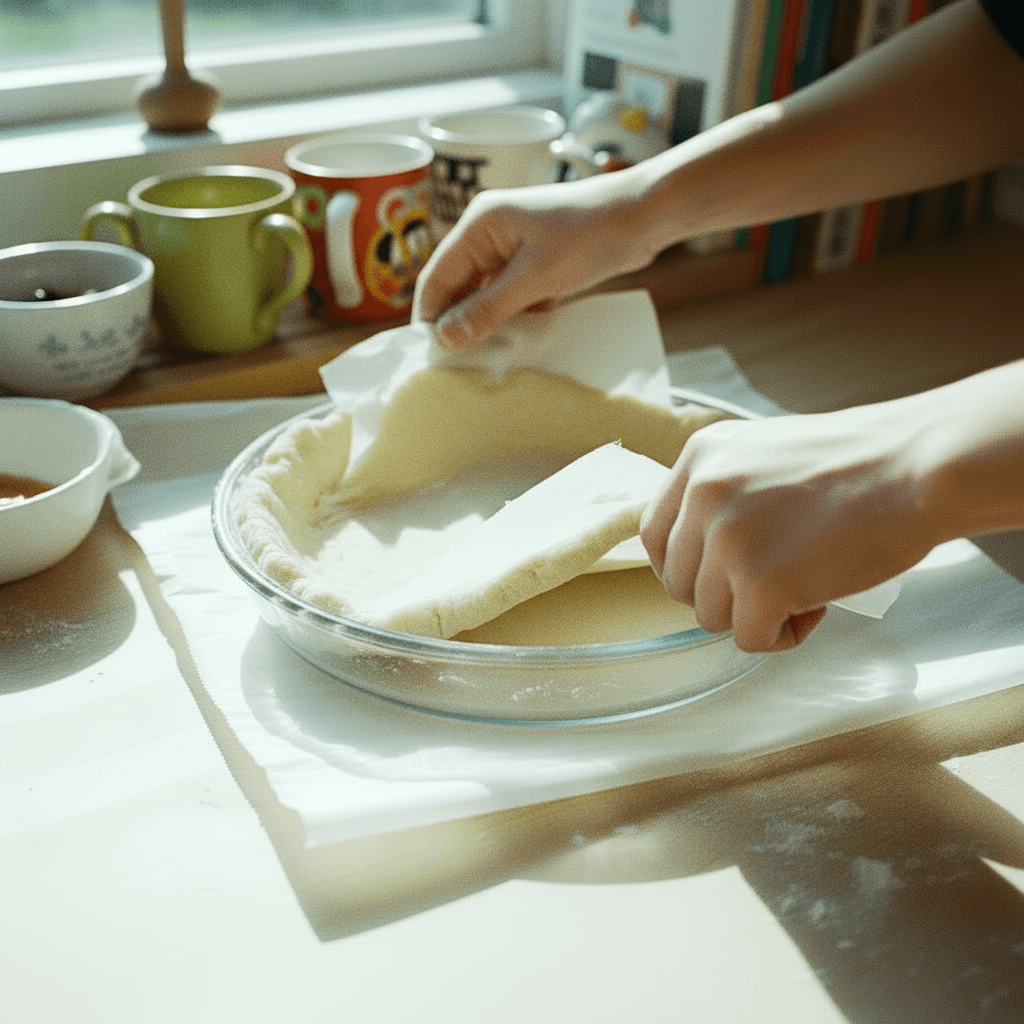
- 10
Trim any excess dough from the edges of the pie plate using kitchen scissors, leaving about a 1/2-inch overhang. Fold the trimmed excess dough underneath itself to create a thicker, more substantial edge. If any parts of the edge are too short, use small pieces of the trimmed dough to patch them.
⏱️ 3 min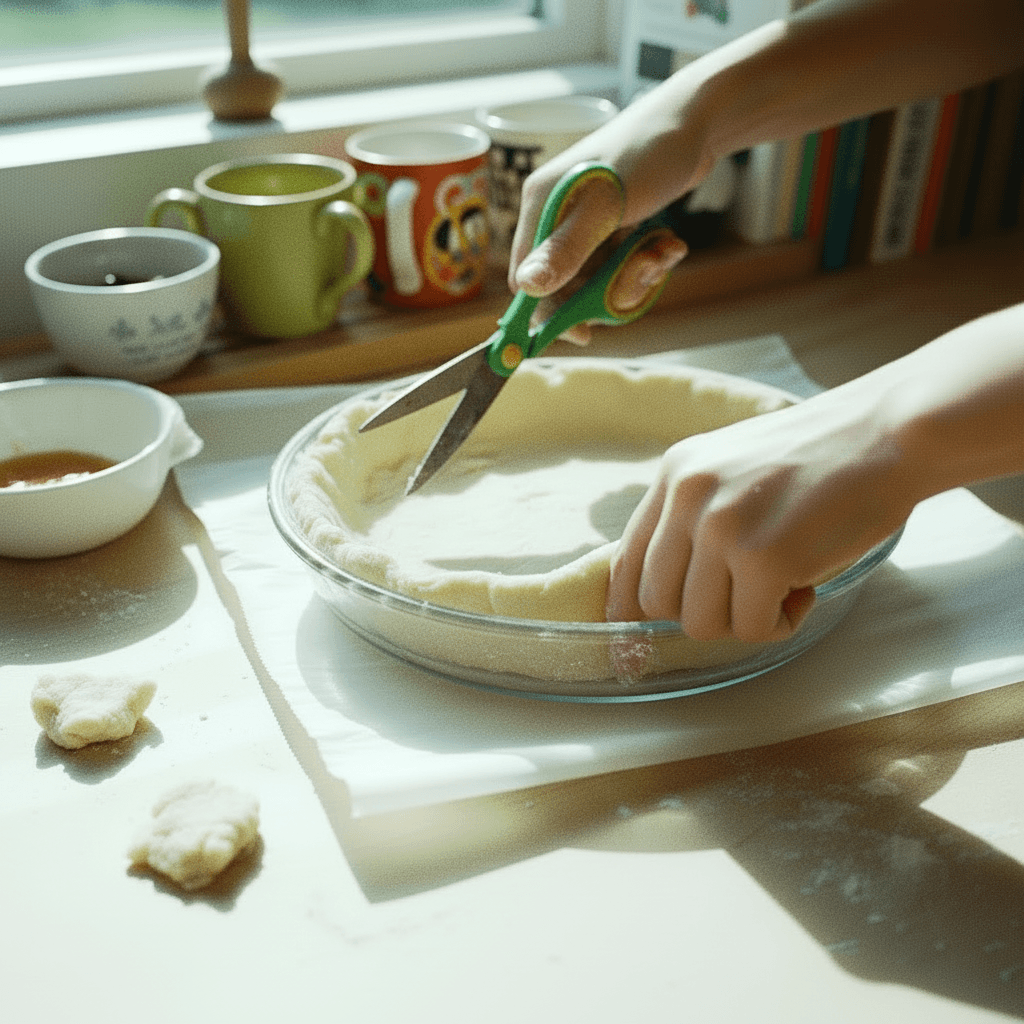
- 11
Crimp the edges of the pie crust using your fingers and knuckle or a fork to create a decorative pattern.
⏱️ 2 min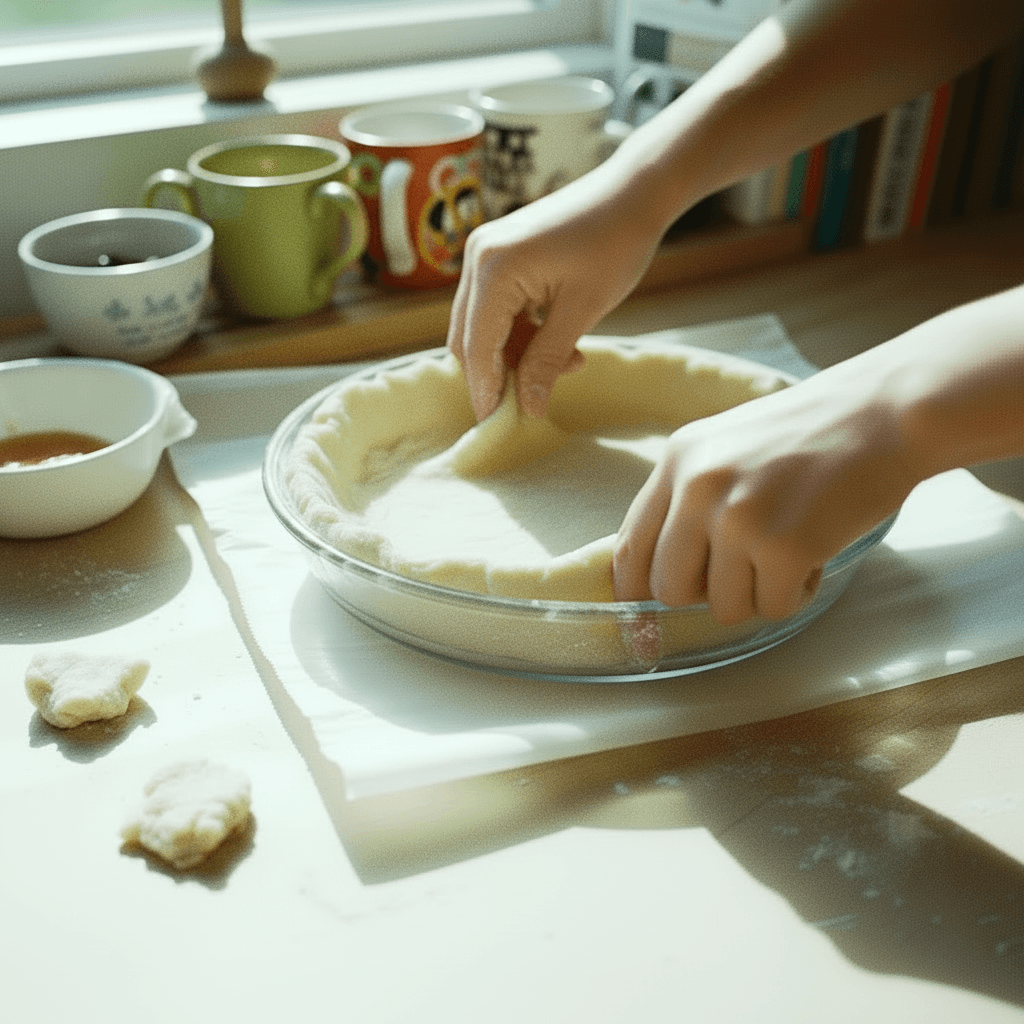
- 12
The pie crust is now ready to be filled and baked according to your pie recipe, or blind-baked if required.

Kitchen Tools
Nutrition Facts (per serving)
Homemade Flaky Pie Crust
For the Pie Dough
- 2 3/4 cups all-purpose flour
- 1 tablespoon granulated sugar
- 1/4 teaspoon kosher salt
- 1 cup salted butter, cold, straight from the freezer, cut into 1/2-inch cubes
- 7 tablespoons cold water, plus more as needed
- 1/2 teaspoon vanilla bean paste, for flavor
- 1 teaspoon distilled white vinegar, to tenderize dough
Instructions
- 1
In a large bowl, combine the all-purpose flour, granulated sugar, and kosher salt. Whisk briefly to ensure even distribution.
⏱️ 2 min - 2
Add the cold, cubed salted butter to the dry ingredients.
⏱️ 3 min - 3
Using your hands, squish and work the butter into the flour mixture. Continue until the mixture resembles coarse sand with small, visible chunks of butter remaining. Avoid fully incorporating the butter, as these chunks are crucial for flakiness.
⏱️ 5 min - 4
Gradually add the cold water, starting with 7 tablespoons. Also, add the vanilla bean paste and distilled white vinegar to the mixture.
⏱️ 2 min - 5
Mix the ingredients until they just come together to form a shaggy dough. When squeezed, the dough should hold together without crumbling. Add a little more cold water, 1 teaspoon at a time, if the dough is too dry.
⏱️ 3 min - 6
Transfer the shaggy dough onto a piece of parchment paper. Flatten the dough out slightly and then fold it in thirds, like a book. This layering technique helps create extra flakiness in the final crust.
⏱️ 2 min - 7
Divide the dough into two equal portions. Wrap each portion tightly in parchment paper and then chill in the refrigerator for at least 1 hour. Chilling allows the butter to firm up and the flour to relax, making the dough easier to roll.
⏱️ 5 min - 8
Once chilled, place one portion of dough between two fresh pieces of parchment paper. Using a rolling pin, roll out the dough, turning it frequently to maintain a circular shape and even thickness (about 1/8-inch thick).
⏱️ 5 min - 9
Carefully peel off the top layer of parchment paper. Invert the rolled-out dough into a 9-inch pie plate. Remove the remaining parchment paper.
⏱️ 2 min - 10
Trim any excess dough from the edges of the pie plate using kitchen scissors, leaving about a 1/2-inch overhang. Fold the trimmed excess dough underneath itself to create a thicker, more substantial edge. If any parts of the edge are too short, use small pieces of the trimmed dough to patch them.
⏱️ 3 min - 11
Crimp the edges of the pie crust using your fingers and knuckle or a fork to create a decorative pattern.
⏱️ 2 min - 12
The pie crust is now ready to be filled and baked according to your pie recipe, or blind-baked if required.