Crispy Potato Rosti
Crispy Potato Rosti

Ingredients
- 2 pounds Agria potatoes, grated on a coarse grater
- 1 white onion, finely sliced
- 1 1/2 teaspoons fine salt, or to taste
- 1/4 cup clarified butter
Instructions
- 1
Place the coarsely grated Agria potatoes onto a clean kitchen towel or cheesecloth. Gather the edges of the towel to form a ball and twist and squeeze firmly to remove as much excess water as possible from the potatoes. This step is crucial for a crispy rosti.
⏱️ 5 min
- 2
Finely slice the white onion and then gently separate the slices into individual strands.
⏱️ 3 min
- 3
In a large bowl, combine the squeezed grated potatoes and the separated onion strands. Season generously with fine salt, ensuring even distribution. Potatoes generally require more salt than you might initially think.
⏱️ 2 min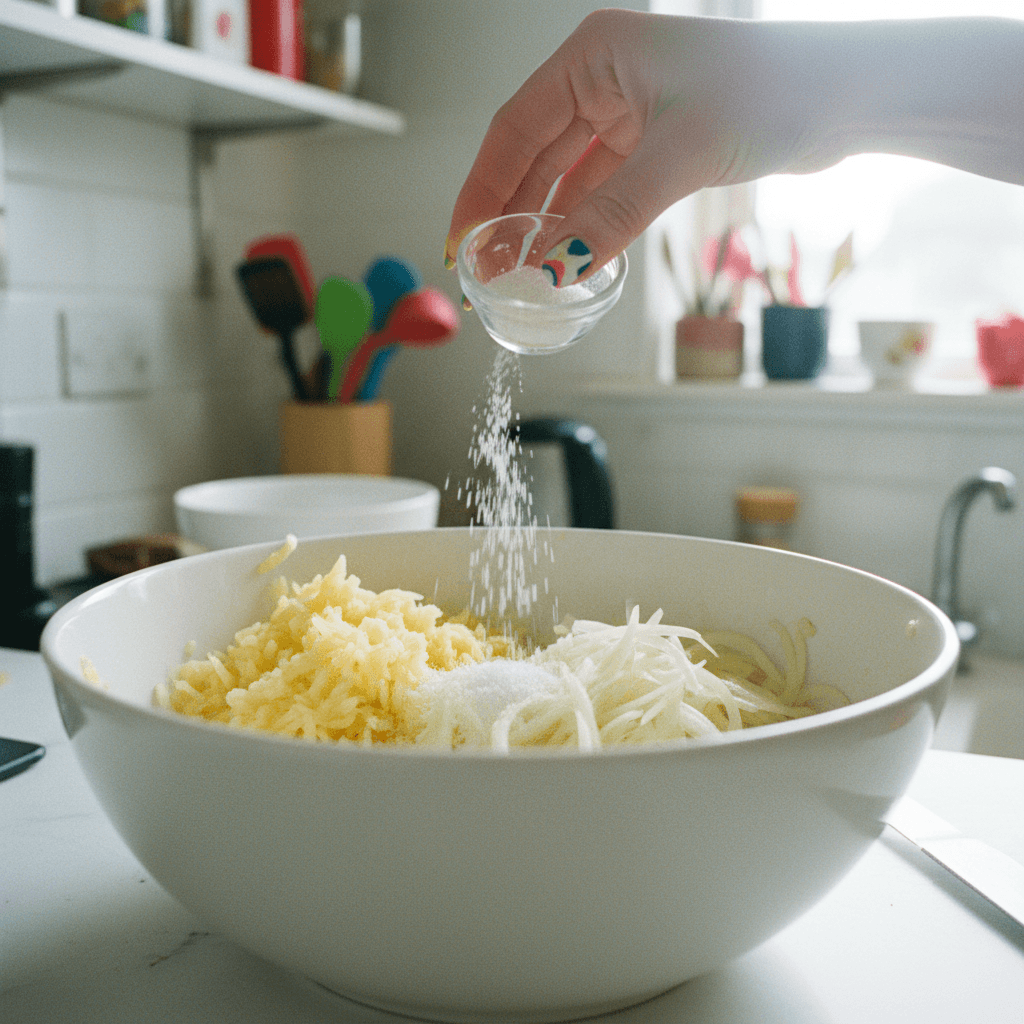
- 4
Heat a large, heavy-bottomed skillet (preferably cast iron) over low heat. Add the clarified butter, ensuring it melts and coats the bottom of the pan evenly.
⏱️ 2 min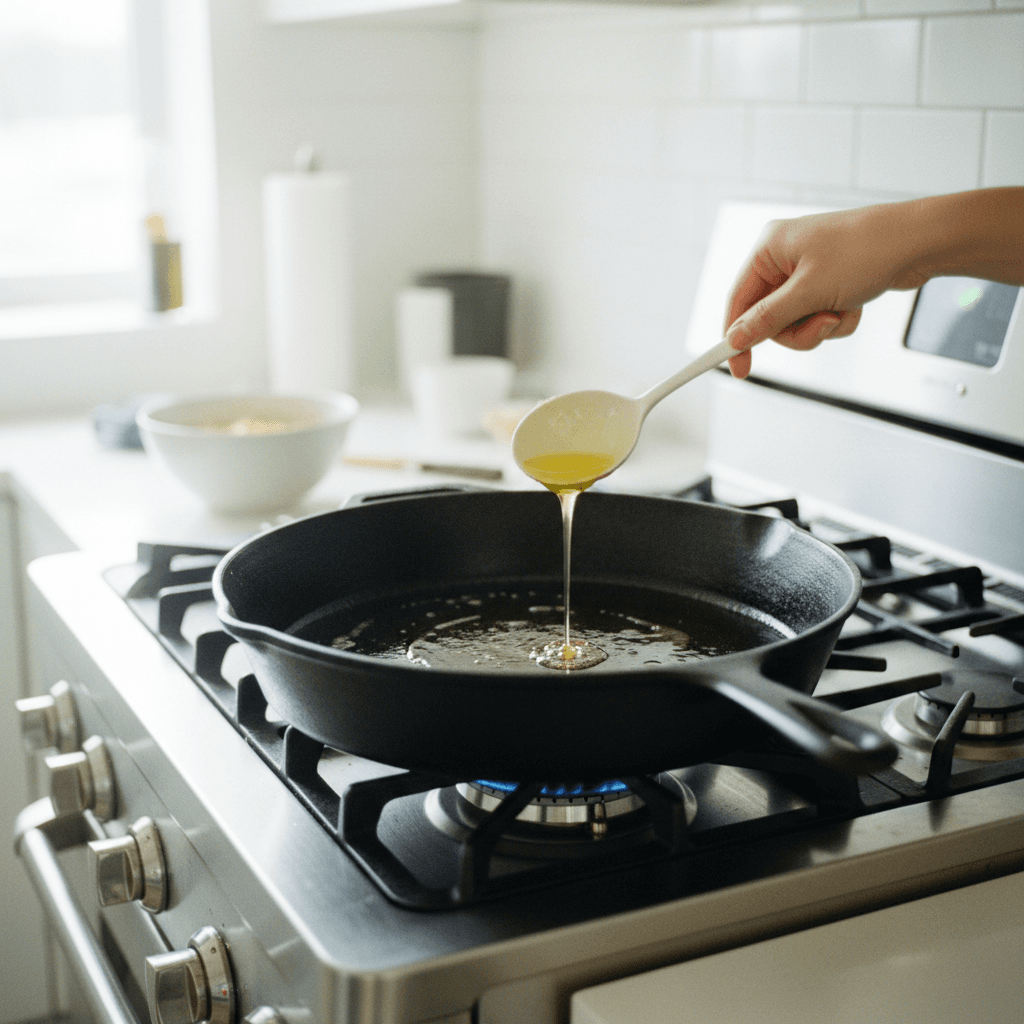
- 5
Place about two-thirds of the seasoned grated potato mixture into the hot pan, forming a solid base. Press the potato firmly into the corners of the pan, leaving a slight well in the center.
⏱️ 2 min
- 6
Add the finely sliced onion into the center well, spreading it out in a thin, even layer to the edges of the potato base.
⏱️ 1 min
- 7
Cover the onion layer completely with the remaining grated potato mixture, pressing down gently to form a compact rosti.
⏱️ 1 min
- 8
Allow the rosti to cook undisturbed for a couple of minutes to allow steam from underneath to slightly cook and soften the potatoes. Using a fish slice or spatula, continuously tuck in any potato trimmings around the sides, shaping the rosti into a perfect circle. Continue this process until you see caramelization developing at the sides of the potato in the pan, indicating a golden, crispy crust is forming.
⏱️ 10 min
- 9
Once the first side is golden brown and crispy, and the rosti can rotate freely in the pan, it's ready to be flipped. Carefully lift the rosti with a fish slice and invert it back into the pan to cook the second side.
⏱️ 1 min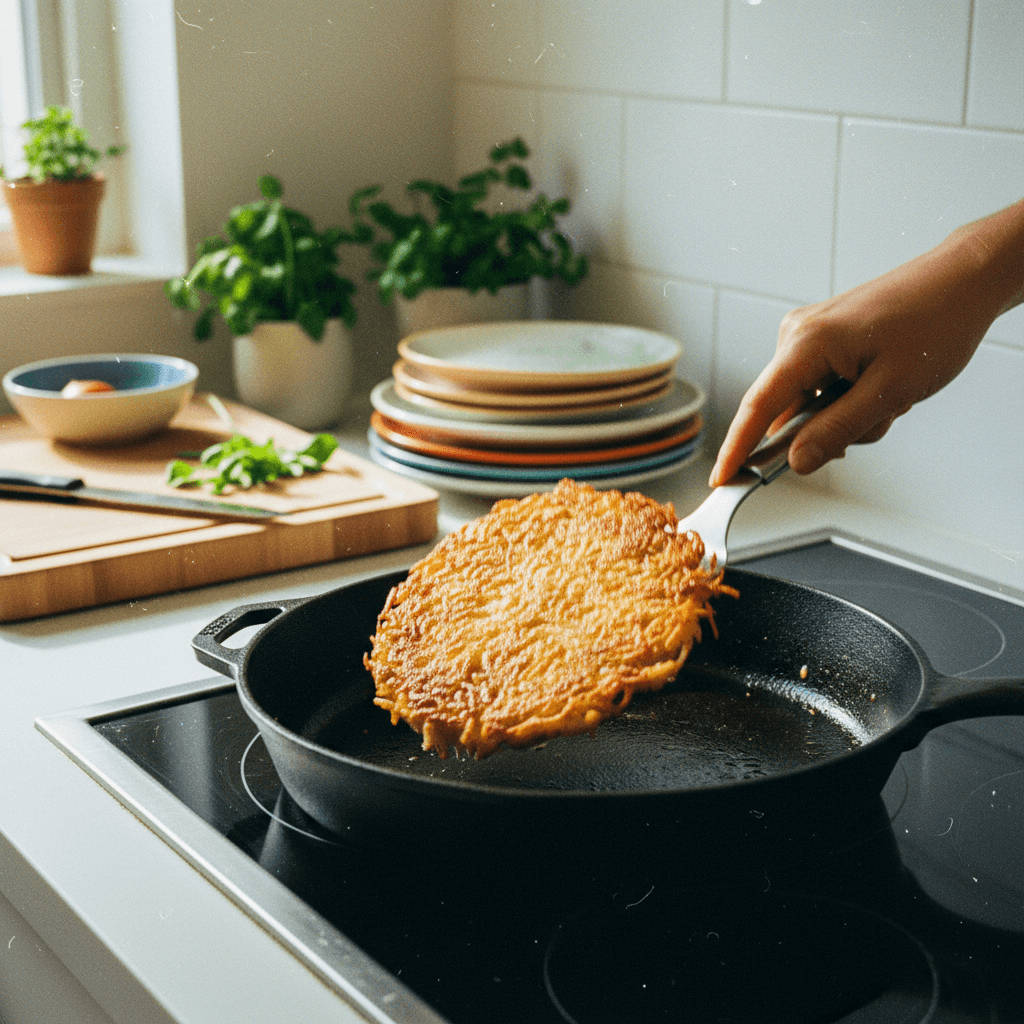
- 10
Repeat the process of tucking and shaping the edges until the second side is also beautifully golden and crispy.
⏱️ 8 min
- 11
Once cooked on both sides, carefully lift the rosti from the pan and transfer it onto a wire rack to cool slightly. This helps maintain its crispness. Cut into wedges and serve immediately.
⏱️ 5 min
Kitchen Tools
Nutrition Facts (per serving)
Crispy Potato Rosti
- 2 pounds Agria potatoes, grated on a coarse grater
- 1 white onion, finely sliced
- 1 1/2 teaspoons fine salt, or to taste
- 1/4 cup clarified butter
Instructions
- 1
Place the coarsely grated Agria potatoes onto a clean kitchen towel or cheesecloth. Gather the edges of the towel to form a ball and twist and squeeze firmly to remove as much excess water as possible from the potatoes. This step is crucial for a crispy rosti.
⏱️ 5 min - 2
Finely slice the white onion and then gently separate the slices into individual strands.
⏱️ 3 min - 3
In a large bowl, combine the squeezed grated potatoes and the separated onion strands. Season generously with fine salt, ensuring even distribution. Potatoes generally require more salt than you might initially think.
⏱️ 2 min - 4
Heat a large, heavy-bottomed skillet (preferably cast iron) over low heat. Add the clarified butter, ensuring it melts and coats the bottom of the pan evenly.
⏱️ 2 min - 5
Place about two-thirds of the seasoned grated potato mixture into the hot pan, forming a solid base. Press the potato firmly into the corners of the pan, leaving a slight well in the center.
⏱️ 2 min - 6
Add the finely sliced onion into the center well, spreading it out in a thin, even layer to the edges of the potato base.
⏱️ 1 min - 7
Cover the onion layer completely with the remaining grated potato mixture, pressing down gently to form a compact rosti.
⏱️ 1 min - 8
Allow the rosti to cook undisturbed for a couple of minutes to allow steam from underneath to slightly cook and soften the potatoes. Using a fish slice or spatula, continuously tuck in any potato trimmings around the sides, shaping the rosti into a perfect circle. Continue this process until you see caramelization developing at the sides of the potato in the pan, indicating a golden, crispy crust is forming.
⏱️ 10 min - 9
Once the first side is golden brown and crispy, and the rosti can rotate freely in the pan, it's ready to be flipped. Carefully lift the rosti with a fish slice and invert it back into the pan to cook the second side.
⏱️ 1 min - 10
Repeat the process of tucking and shaping the edges until the second side is also beautifully golden and crispy.
⏱️ 8 min - 11
Once cooked on both sides, carefully lift the rosti from the pan and transfer it onto a wire rack to cool slightly. This helps maintain its crispness. Cut into wedges and serve immediately.
⏱️ 5 min