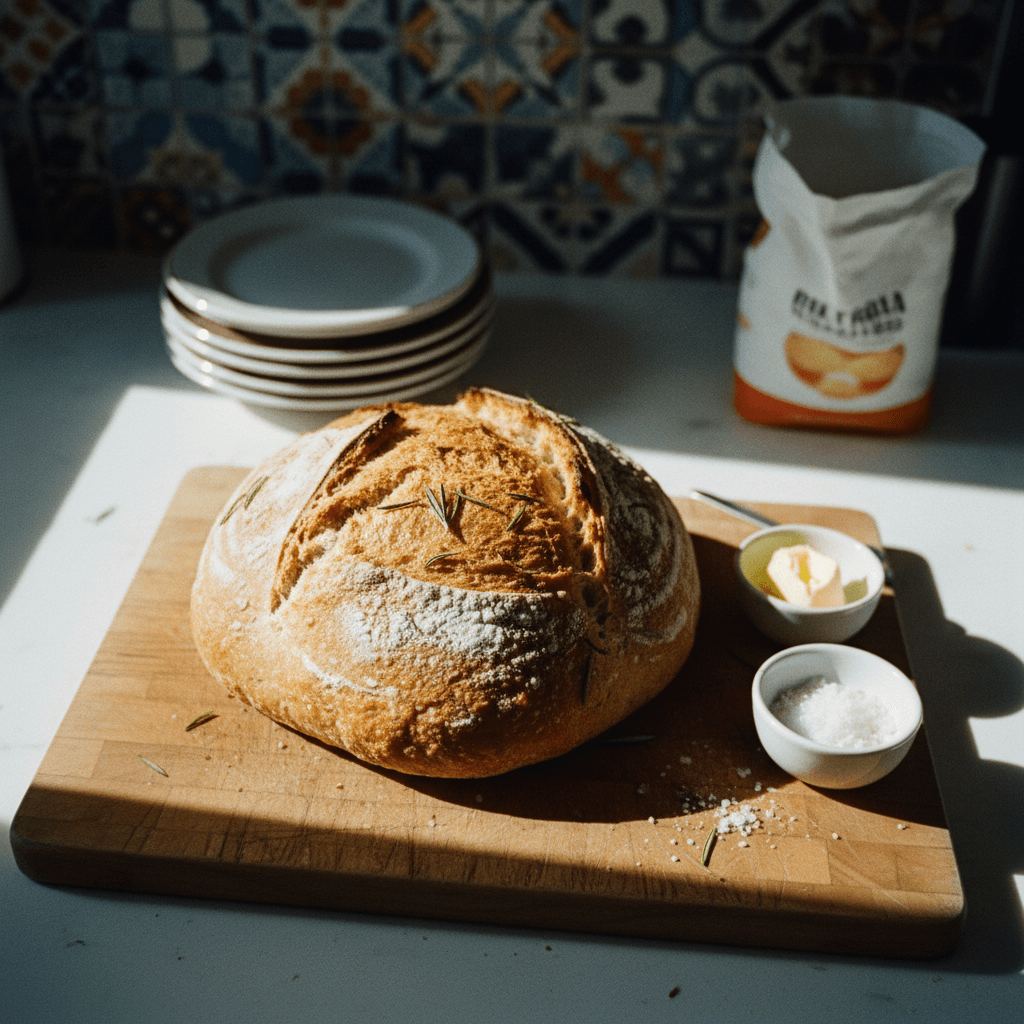
Easy No-Knead Bread
Easy No-Knead Bread
Ingredients
- 500 g strong flour
- 350 g water
- 7 g dry yeast
- 10 g salt
- 10 ml olive oil
Instructions
- 1
In a large bowl, combine the strong flour, water, dry yeast, salt, and olive oil. Mix all the ingredients together until they form a shaggy dough. Cover the bowl with a lid or plastic wrap. Let the dough rest for 30 minutes.
⏱️ 35 min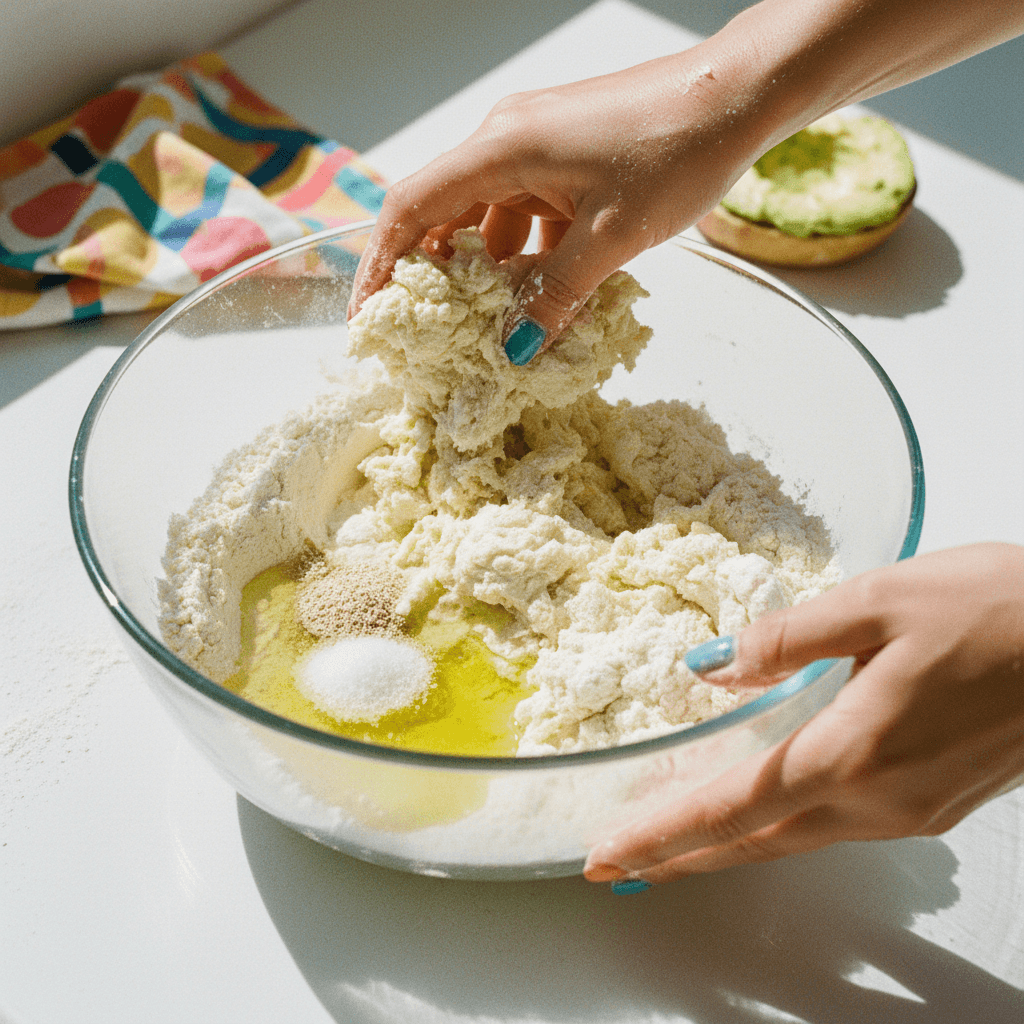
- 2
After 30 minutes, perform the first set of folds. Lightly wet your hands. Gently grab a portion of the dough from the edge of the bowl, stretch it upwards, and fold it over the center of the dough. Rotate the bowl and repeat this stretching and folding process several times until the dough feels more cohesive and has some tension. Cover the bowl again. Let the dough rest for another 20 minutes.
⏱️ 25 min
- 3
After 20 minutes, perform the second set of folds in the same manner as the first. Cover the bowl again. Let the dough rest for another 20 minutes.
⏱️ 25 min
- 4
After 20 minutes, perform the third set of folds. Cover the bowl again. Let the dough rest for another 20 minutes.
⏱️ 25 min
- 5
Lightly flour a clean work surface. Gently transfer the dough from the bowl onto the floured surface. Shape the dough into a round loaf by pulling and tucking the edges underneath to create a taut surface. Place the shaped dough into a floured proofing basket (banneton).
⏱️ 5 min
- 6
Cover the proofing basket. Place the covered basket in the refrigerator overnight for a long, slow proof (approximately 10-12 hours).
⏱️ 600 min
- 7
The next day, preheat your oven to 230°C (450°F). Place an empty Dutch oven (or any oven-safe pot with a lid) inside the oven while it preheats to get it very hot.
⏱️ 30 min•🌡️ 230
- 8
Carefully remove the hot Dutch oven from the oven. Gently invert the cold dough from the proofing basket directly into the hot Dutch oven. Using a sharp knife or razor blade, score the top of the dough to allow it to expand during baking. Cover the Dutch oven with its lid. Bake for 30 minutes at 230°C.
⏱️ 30 min•🌡️ 230
- 9
After 30 minutes, carefully remove the lid from the Dutch oven. Reduce the oven temperature to 200°C (390°F). Continue to bake for an additional 20 minutes, or until the crust is deeply golden brown and crispy.
⏱️ 20 min•🌡️ 200
- 10
Carefully remove the baked bread from the Dutch oven. Transfer the bread to a wire rack to cool completely before slicing and serving.
⏱️ 120 min
Kitchen Tools
Easy No-Knead Bread
- 500 g strong flour
- 350 g water
- 7 g dry yeast
- 10 g salt
- 10 ml olive oil
Instructions
- 1
In a large bowl, combine the strong flour, water, dry yeast, salt, and olive oil. Mix all the ingredients together until they form a shaggy dough. Cover the bowl with a lid or plastic wrap. Let the dough rest for 30 minutes.
⏱️ 35 min - 2
After 30 minutes, perform the first set of folds. Lightly wet your hands. Gently grab a portion of the dough from the edge of the bowl, stretch it upwards, and fold it over the center of the dough. Rotate the bowl and repeat this stretching and folding process several times until the dough feels more cohesive and has some tension. Cover the bowl again. Let the dough rest for another 20 minutes.
⏱️ 25 min - 3
After 20 minutes, perform the second set of folds in the same manner as the first. Cover the bowl again. Let the dough rest for another 20 minutes.
⏱️ 25 min - 4
After 20 minutes, perform the third set of folds. Cover the bowl again. Let the dough rest for another 20 minutes.
⏱️ 25 min - 5
Lightly flour a clean work surface. Gently transfer the dough from the bowl onto the floured surface. Shape the dough into a round loaf by pulling and tucking the edges underneath to create a taut surface. Place the shaped dough into a floured proofing basket (banneton).
⏱️ 5 min - 6
Cover the proofing basket. Place the covered basket in the refrigerator overnight for a long, slow proof (approximately 10-12 hours).
⏱️ 600 min - 7
The next day, preheat your oven to 230°C (450°F). Place an empty Dutch oven (or any oven-safe pot with a lid) inside the oven while it preheats to get it very hot.
⏱️ 30 min•🌡️ 230 - 8
Carefully remove the hot Dutch oven from the oven. Gently invert the cold dough from the proofing basket directly into the hot Dutch oven. Using a sharp knife or razor blade, score the top of the dough to allow it to expand during baking. Cover the Dutch oven with its lid. Bake for 30 minutes at 230°C.
⏱️ 30 min•🌡️ 230 - 9
After 30 minutes, carefully remove the lid from the Dutch oven. Reduce the oven temperature to 200°C (390°F). Continue to bake for an additional 20 minutes, or until the crust is deeply golden brown and crispy.
⏱️ 20 min•🌡️ 200 - 10
Carefully remove the baked bread from the Dutch oven. Transfer the bread to a wire rack to cool completely before slicing and serving.
⏱️ 120 min