Focaccia: 3-Hour vs. 30-Hour Proof Comparison
Focaccia: 3-Hour vs. 30-Hour Proof Comparison

Ingredients
For the Focaccia Dough
- 3 cups all-purpose flour
- 1 3/4 cups warm water, (105-115°F)
- 1 1/2 teaspoons fine sea salt
- 1/2 teaspoon instant dry yeast
For Topping and Pan Preparation
- 1/4 cup extra virgin olive oil, plus 1 tablespoon for bowls
Instructions
- 1
In a large bowl, combine the all-purpose flour, fine sea salt, and instant dry yeast. Whisk briefly to distribute the ingredients evenly.
⏱️ 2 min
- 2
Add the warm water to the dry ingredients. Mix with a wooden spoon or your hands until a shaggy, cohesive dough forms. Do not overmix; a few dry spots are acceptable. Cover the bowl with plastic wrap or a damp towel and let it rest for 10 minutes.
⏱️ 5 min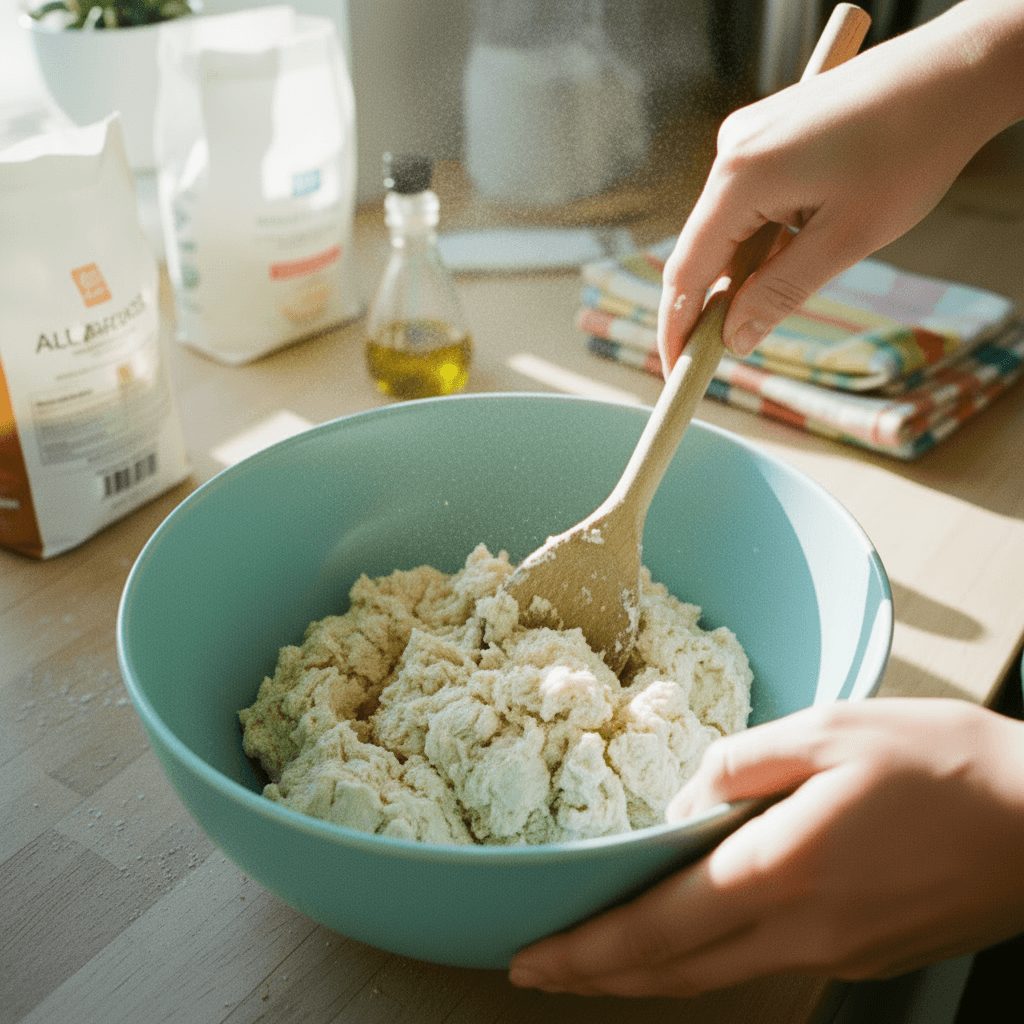
- 3
Lightly oil two separate large bowls with 1/2 tablespoon of extra virgin olive oil each. Divide the dough evenly into the two prepared bowls. Cover both bowls tightly with plastic wrap.
⏱️ 3 min
- 4
**For the 3-Hour Focaccia:** Place one bowl of dough at room temperature (around 70-75°F) for 3 hours. The dough should roughly double in size and become bubbly.
⏱️ 180 min
- 5
**For the 30-Hour Focaccia:** Place the second bowl of dough in the refrigerator for 30 hours. This cold fermentation will develop more complex flavors and a softer texture.
⏱️ 1800 min
- 6
After their respective proofing times, prepare two 9x13 inch baking pans by lining them with parchment paper and drizzling generously with extra virgin olive oil. Ensure the oil coats the entire bottom and sides of the parchment.
⏱️ 5 min
- 7
Carefully transfer each dough from its bowl into a prepared baking pan. Gently stretch the dough to fill the pan, being careful not to deflate it too much. The 30-hour dough will likely feel more 'wobbly' and 'bubbly' than the 3-hour dough.
⏱️ 5 min
- 8
Drizzle the remaining 1/4 cup of extra virgin olive oil generously over the surface of both focaccias. Using your fingertips, dimple the dough all over, pressing down to create characteristic indentations. This helps create pockets for the oil and a rustic texture.
⏱️ 5 min
- 9
Cover the pans loosely with plastic wrap or a clean kitchen towel and let them rest at room temperature for a final proof of 30 minutes. During this time, preheat your oven to 425°F.
⏱️ 30 min•🌡️ 425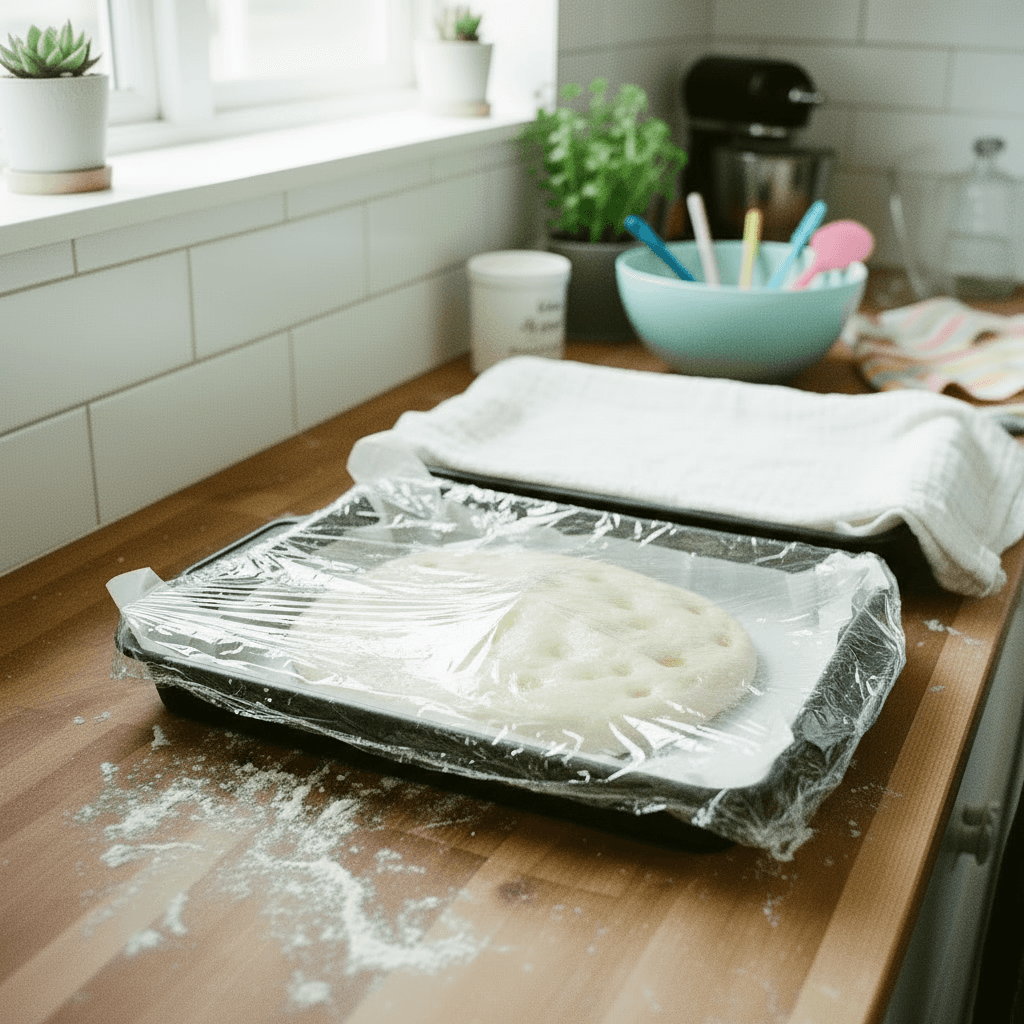
- 10
Uncover the focaccias and bake in the preheated oven for 20-25 minutes, or until golden brown on top and cooked through. The 3-hour focaccia may appear to rise more initially, but the 30-hour focaccia will develop a superior internal structure.
⏱️ 25 min•🌡️ 425
- 11
Remove from the oven and let cool in the pans for a few minutes before transferring to a wire rack to cool completely. Slice and compare the texture and flavor of the two focaccias. The 30-hour version should be noticeably softer and more flavorful.
⏱️ 10 min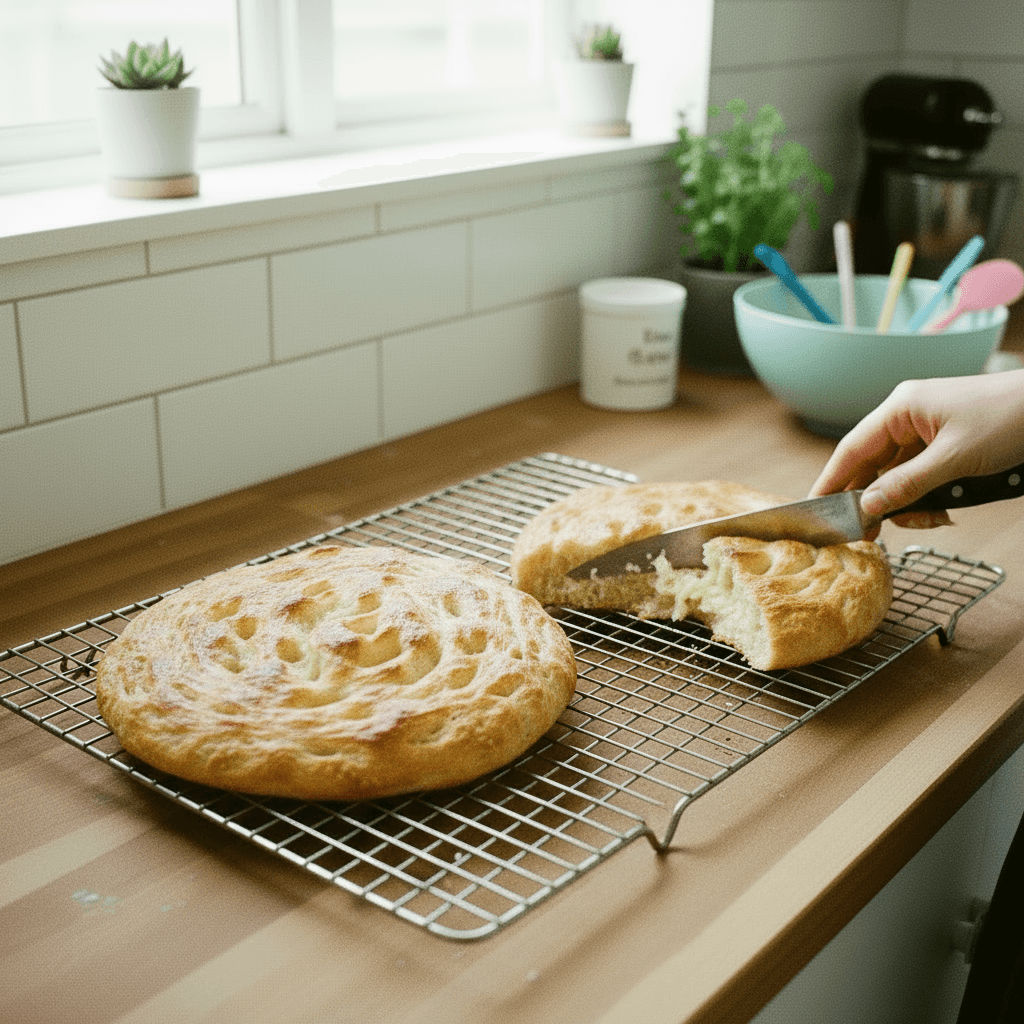
Kitchen Tools
Nutrition Facts (per serving)
Focaccia: 3-Hour vs. 30-Hour Proof Comparison
Ingredients
For the Focaccia Dough
- 3 cups all-purpose flour
- 1 3/4 cups warm water, (105-115°F)
- 1 1/2 teaspoons fine sea salt
- 1/2 teaspoon instant dry yeast
For Topping and Pan Preparation
- 1/4 cup extra virgin olive oil, plus 1 tablespoon for bowls
Instructions
- 1
In a large bowl, combine the all-purpose flour, fine sea salt, and instant dry yeast. Whisk briefly to distribute the ingredients evenly.
⏱️ 2 min - 2
Add the warm water to the dry ingredients. Mix with a wooden spoon or your hands until a shaggy, cohesive dough forms. Do not overmix; a few dry spots are acceptable. Cover the bowl with plastic wrap or a damp towel and let it rest for 10 minutes.
⏱️ 5 min - 3
Lightly oil two separate large bowls with 1/2 tablespoon of extra virgin olive oil each. Divide the dough evenly into the two prepared bowls. Cover both bowls tightly with plastic wrap.
⏱️ 3 min - 4
**For the 3-Hour Focaccia:** Place one bowl of dough at room temperature (around 70-75°F) for 3 hours. The dough should roughly double in size and become bubbly.
⏱️ 180 min - 5
**For the 30-Hour Focaccia:** Place the second bowl of dough in the refrigerator for 30 hours. This cold fermentation will develop more complex flavors and a softer texture.
⏱️ 1800 min - 6
After their respective proofing times, prepare two 9x13 inch baking pans by lining them with parchment paper and drizzling generously with extra virgin olive oil. Ensure the oil coats the entire bottom and sides of the parchment.
⏱️ 5 min - 7
Carefully transfer each dough from its bowl into a prepared baking pan. Gently stretch the dough to fill the pan, being careful not to deflate it too much. The 30-hour dough will likely feel more 'wobbly' and 'bubbly' than the 3-hour dough.
⏱️ 5 min - 8
Drizzle the remaining 1/4 cup of extra virgin olive oil generously over the surface of both focaccias. Using your fingertips, dimple the dough all over, pressing down to create characteristic indentations. This helps create pockets for the oil and a rustic texture.
⏱️ 5 min - 9
Cover the pans loosely with plastic wrap or a clean kitchen towel and let them rest at room temperature for a final proof of 30 minutes. During this time, preheat your oven to 425°F.
⏱️ 30 min•🌡️ 425 - 10
Uncover the focaccias and bake in the preheated oven for 20-25 minutes, or until golden brown on top and cooked through. The 3-hour focaccia may appear to rise more initially, but the 30-hour focaccia will develop a superior internal structure.
⏱️ 25 min•🌡️ 425 - 11
Remove from the oven and let cool in the pans for a few minutes before transferring to a wire rack to cool completely. Slice and compare the texture and flavor of the two focaccias. The 30-hour version should be noticeably softer and more flavorful.
⏱️ 10 min