Homemade Sauerkraut
Homemade Sauerkraut

Ingredients
For the Sauerkraut
- 2 cabbages, large
- 3 tablespoons Kosher salt
- 1 tablespoon juniper berries
- 1 1/2 tablespoons mustard seeds
- 1 tablespoon caraway seeds
Instructions
- 1
Start with two large cabbages. Cut them into manageable wedges, then use a mandoline slicer to finely shred the cabbage into a large mixing bowl.
⏱️ 15 min00
- 2
Set aside a few of the larger, intact cabbage leaves for later use.
⏱️ 2 min00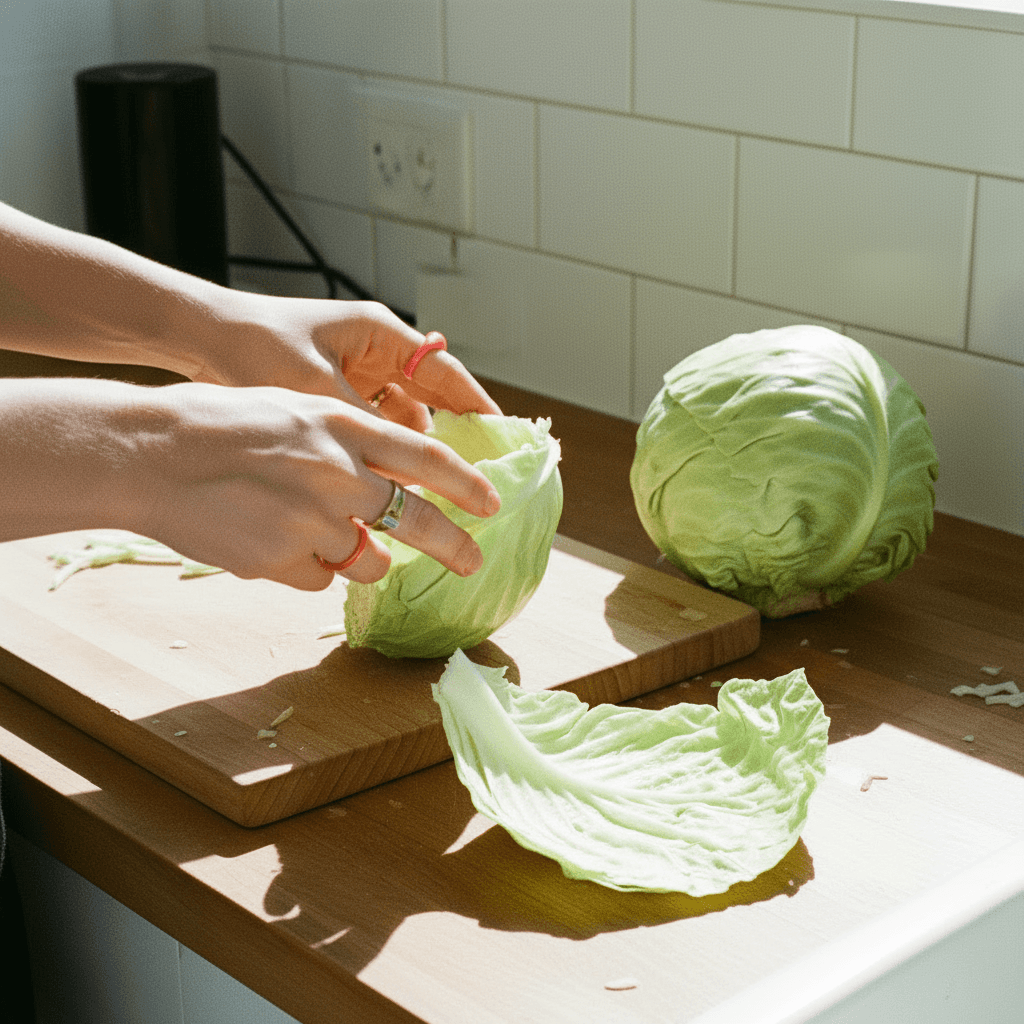
- 3
Add the Kosher salt, juniper berries, mustard seeds, and caraway seeds to the shredded cabbage in the bowl.
⏱️ 2 min00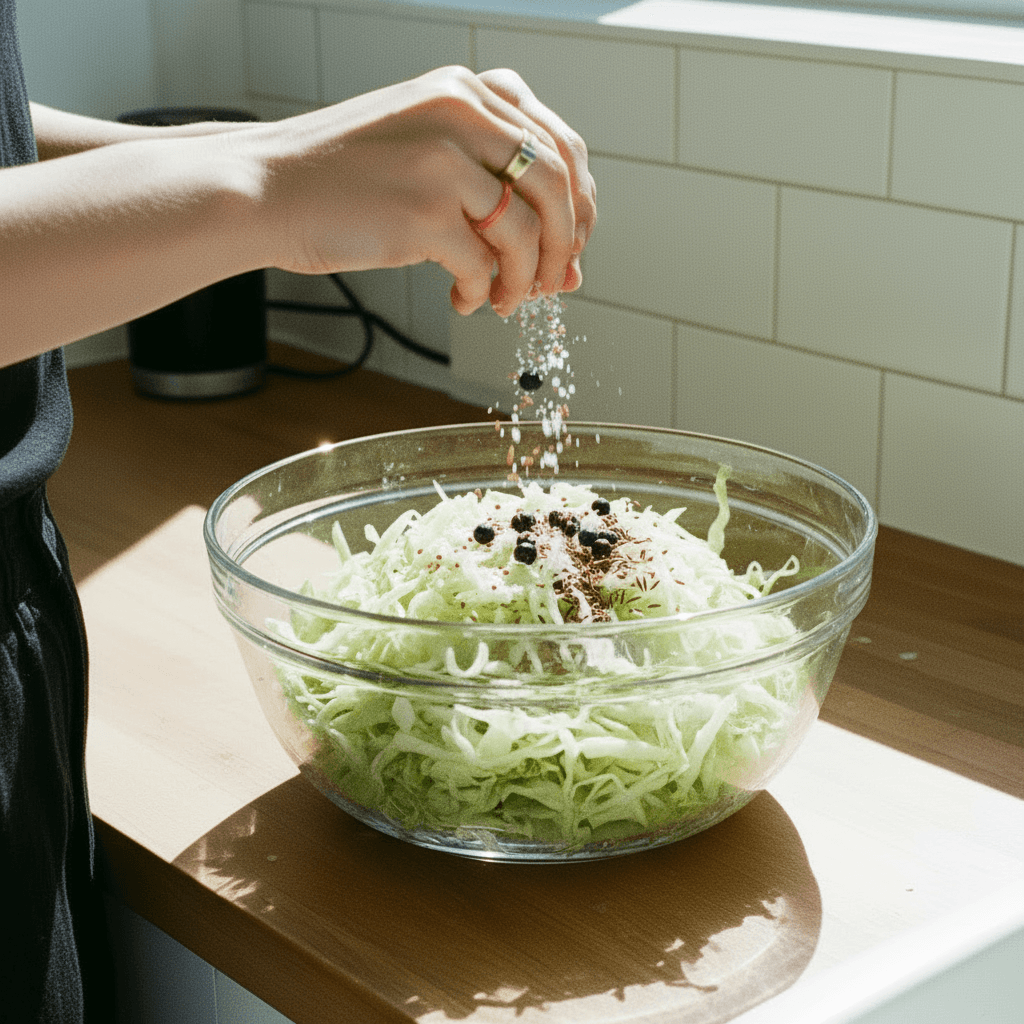
- 4
Use your hands to thoroughly mix the cabbage with the salt and spices. Ensure everything is well combined. Let the mixture sit for 30 minutes, allowing the salt to draw out moisture from the cabbage (a process known as 'sweating').
⏱️ 35 min00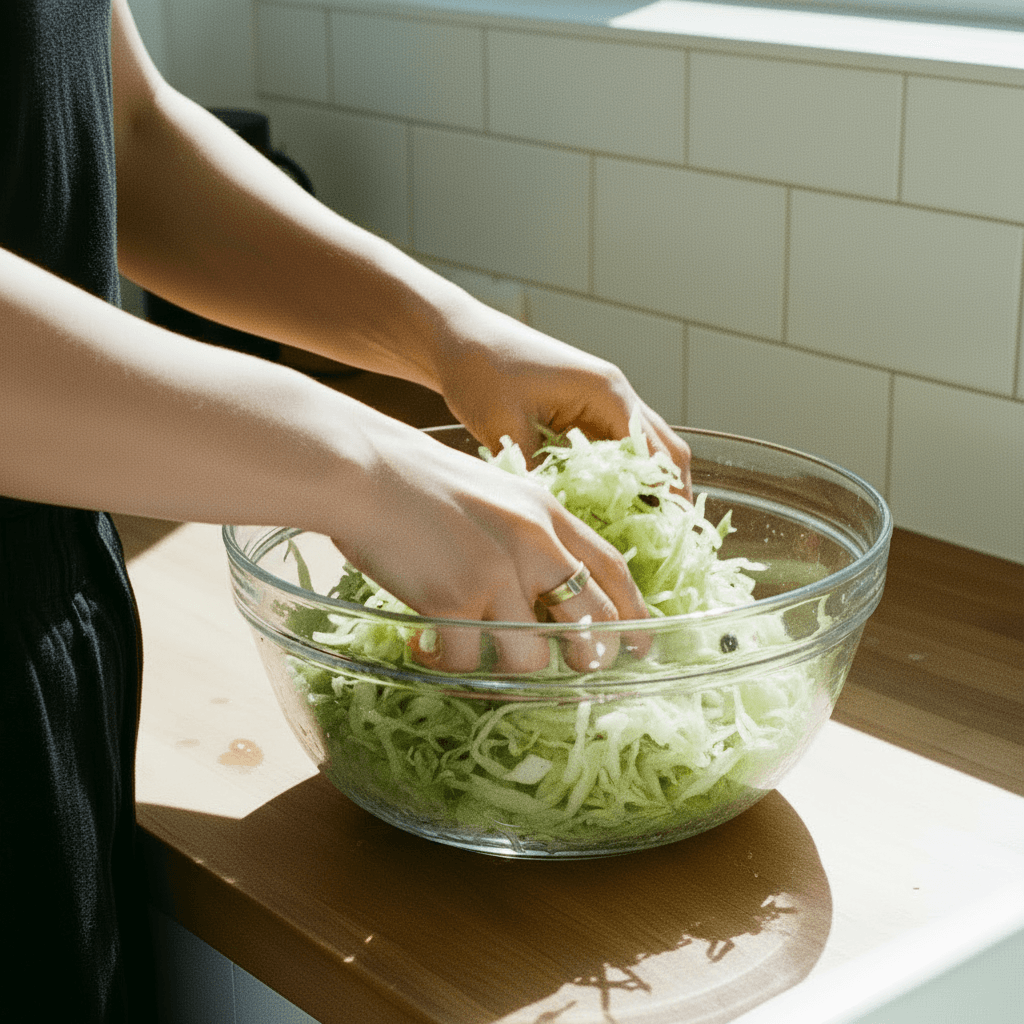
- 5
After 30 minutes, forcefully squeeze handfuls of the cabbage mixture to extract as much liquid (brine) as possible. This liquid is essential for the fermentation process.
⏱️ 10 min00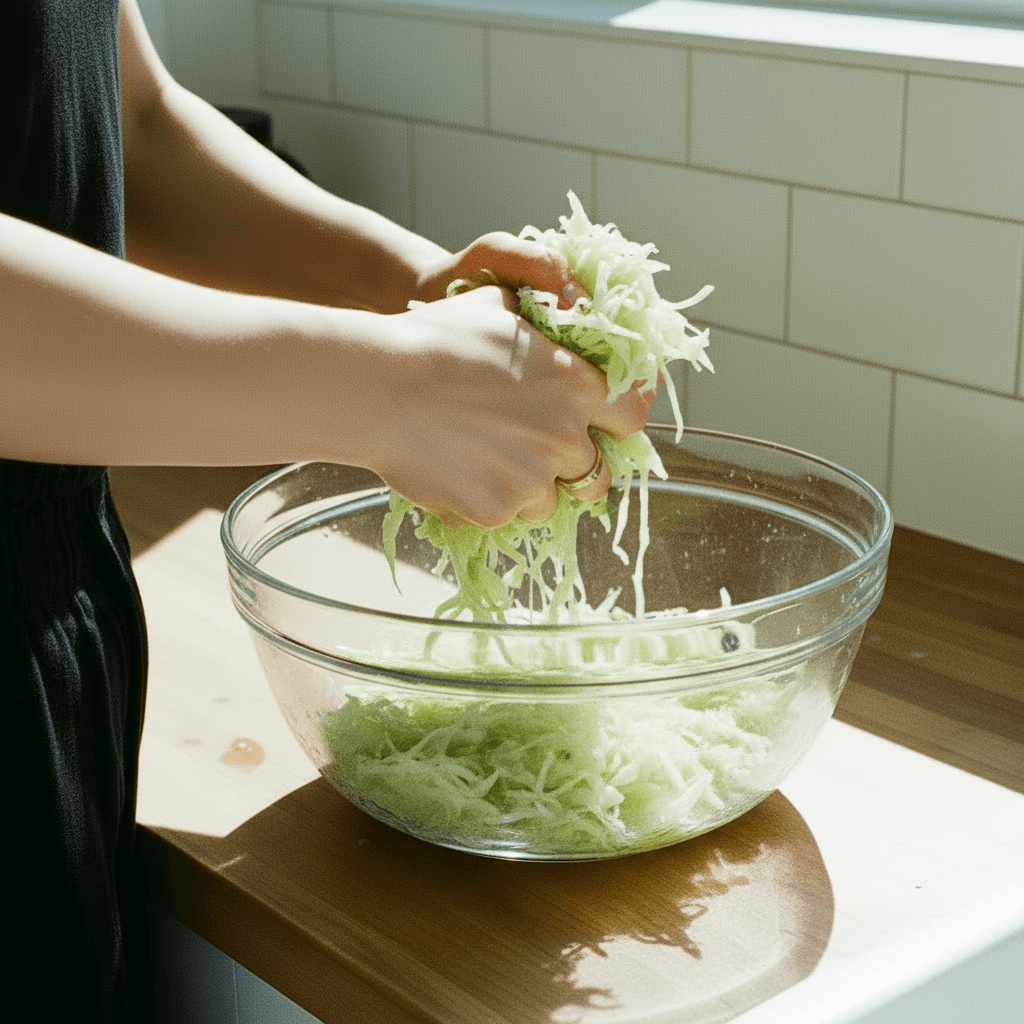
- 6
Transfer the squeezed cabbage into clean Mason jars. Pack the cabbage down very tightly into the jars, ensuring there are no air pockets and that the cabbage is submerged in its own liquid. If needed, pour any extra liquid collected from the squeezing process into the jars to cover the cabbage.
⏱️ 10 min00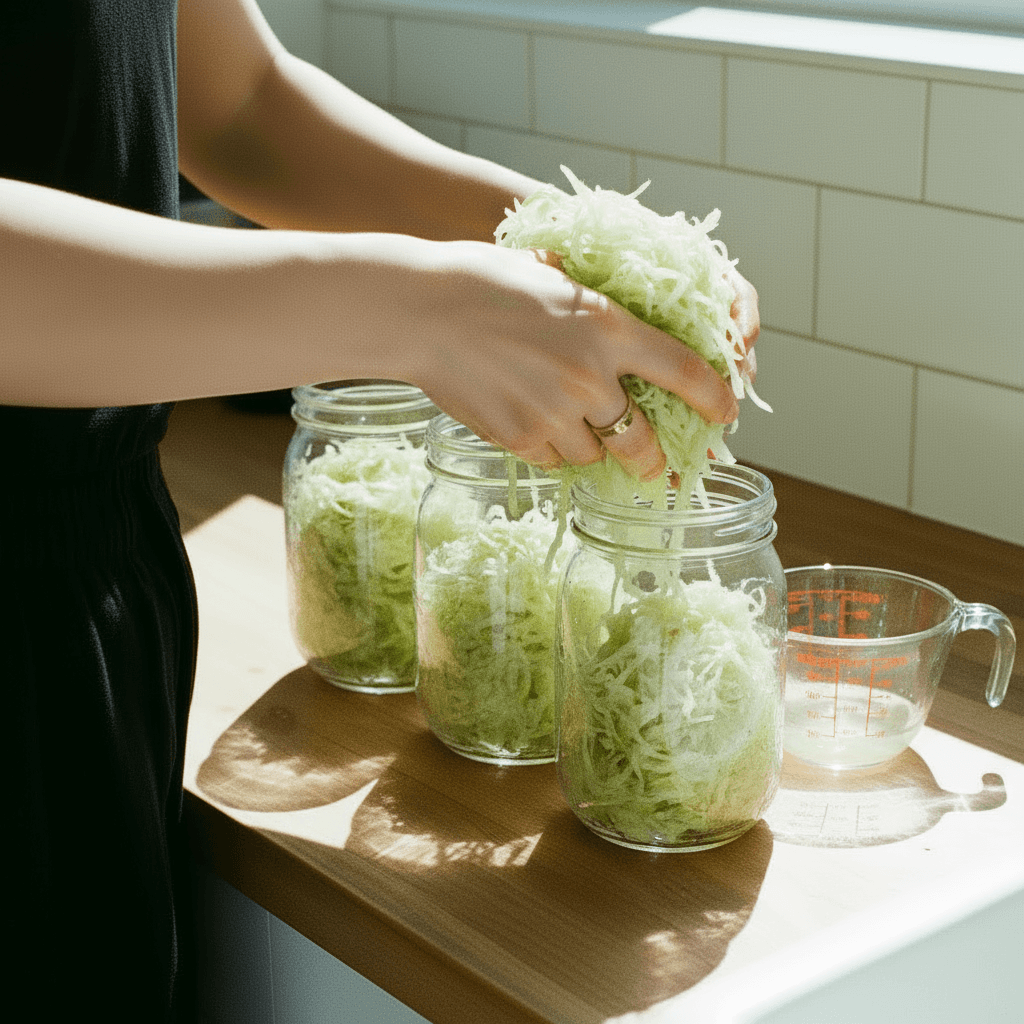
- 7
Place one of the reserved large cabbage leaves on top of the packed cabbage in each jar. This acts as a barrier to keep the shredded cabbage submerged under the brine. Securely seal the jars with lids.
⏱️ 2 min00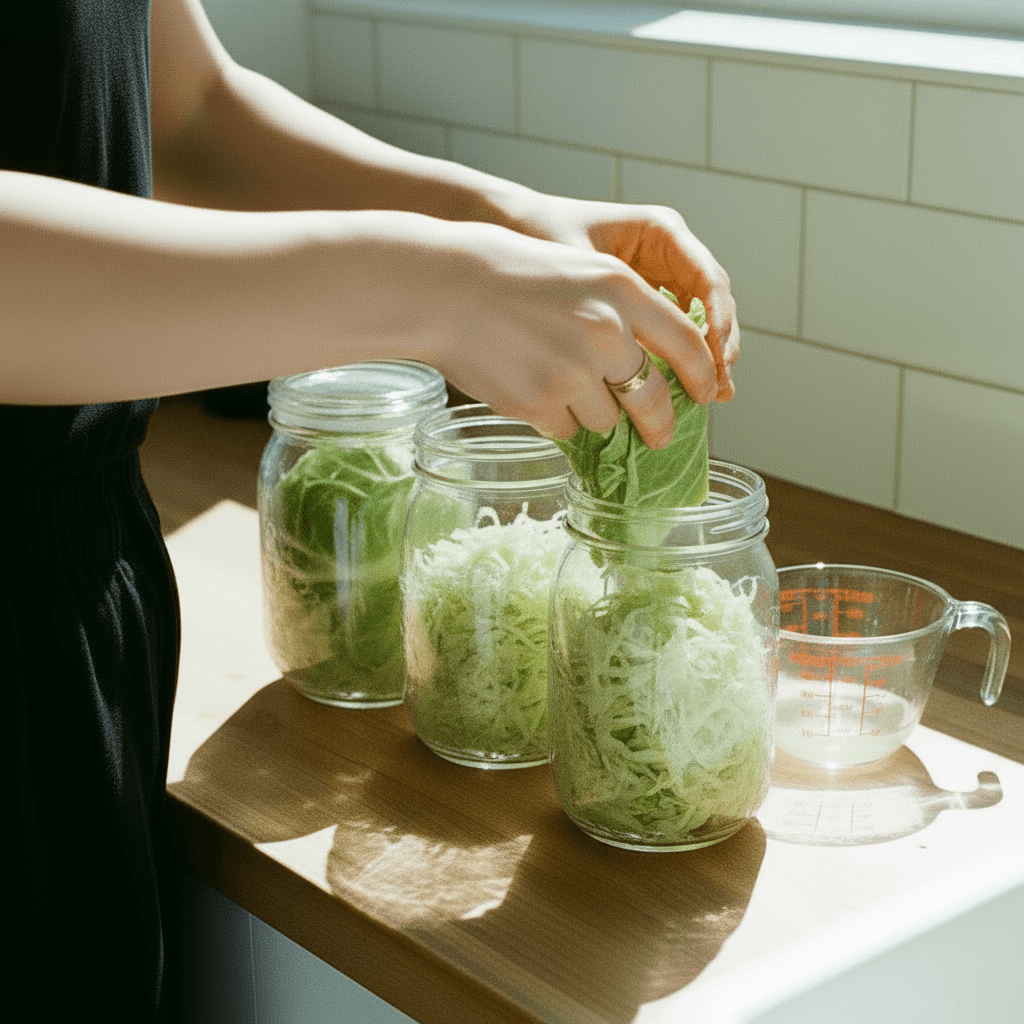
- 8
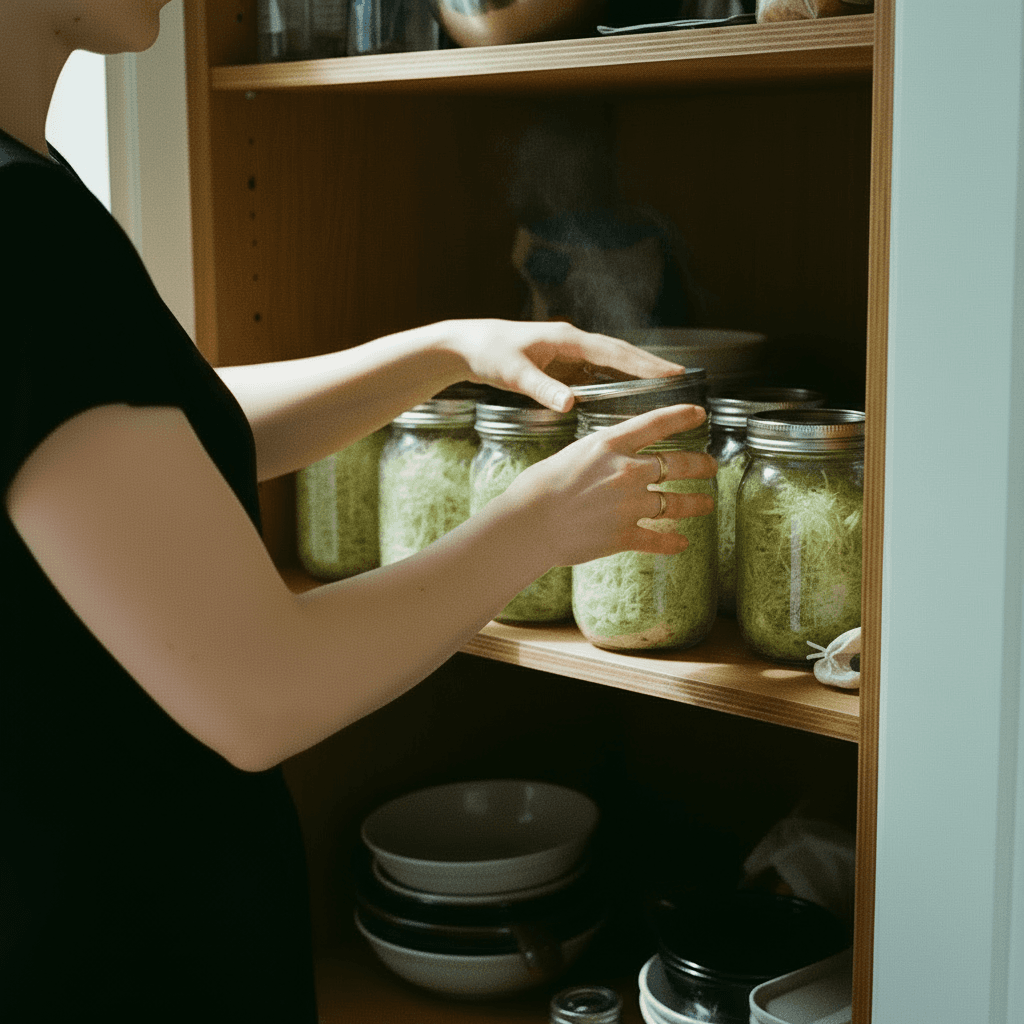
Store the sealed jars in a cool, dark place for two weeks to ferment.

- 9
Daily, 'burp' the jars by carefully releasing the lid to allow any built-up fermentation gases (pressure) to escape, then re-seal the lid.
- 10
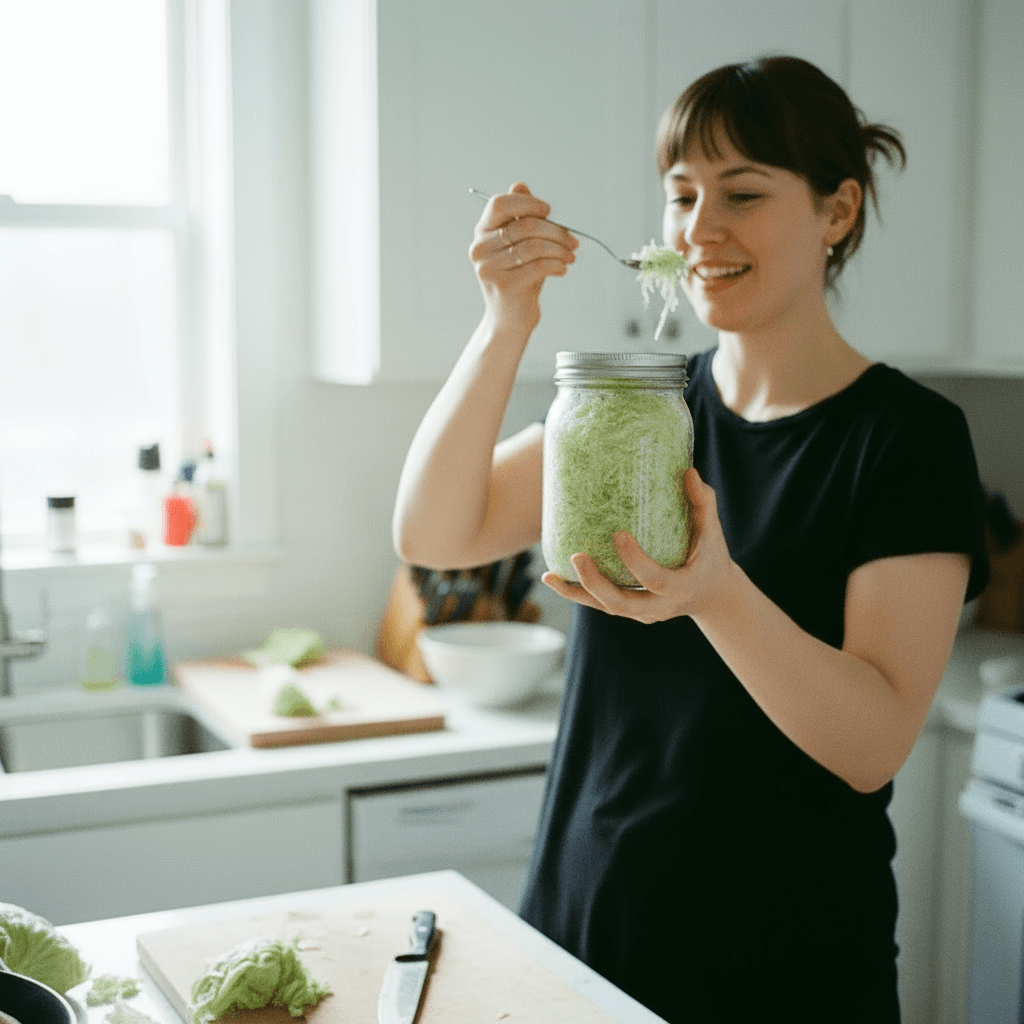
After two weeks, the homemade sauerkraut is ready to be enjoyed. The finished product will have a crunchy texture and a refreshing, bright flavor.
Kitchen Tools
Nutrition Facts (per serving)
Homemade Sauerkraut
For the Sauerkraut
- 2 cabbages, large
- 3 tablespoons Kosher salt
- 1 tablespoon juniper berries
- 1 1/2 tablespoons mustard seeds
- 1 tablespoon caraway seeds
Instructions
- 1
Start with two large cabbages. Cut them into manageable wedges, then use a mandoline slicer to finely shred the cabbage into a large mixing bowl.
⏱️ 15 min00 - 2
Set aside a few of the larger, intact cabbage leaves for later use.
⏱️ 2 min00 - 3
Add the Kosher salt, juniper berries, mustard seeds, and caraway seeds to the shredded cabbage in the bowl.
⏱️ 2 min00 - 4
Use your hands to thoroughly mix the cabbage with the salt and spices. Ensure everything is well combined. Let the mixture sit for 30 minutes, allowing the salt to draw out moisture from the cabbage (a process known as 'sweating').
⏱️ 35 min00 - 5
After 30 minutes, forcefully squeeze handfuls of the cabbage mixture to extract as much liquid (brine) as possible. This liquid is essential for the fermentation process.
⏱️ 10 min00 - 6
Transfer the squeezed cabbage into clean Mason jars. Pack the cabbage down very tightly into the jars, ensuring there are no air pockets and that the cabbage is submerged in its own liquid. If needed, pour any extra liquid collected from the squeezing process into the jars to cover the cabbage.
⏱️ 10 min00 - 7
Place one of the reserved large cabbage leaves on top of the packed cabbage in each jar. This acts as a barrier to keep the shredded cabbage submerged under the brine. Securely seal the jars with lids.
⏱️ 2 min00 - 8
Store the sealed jars in a cool, dark place for two weeks to ferment.
- 9
Daily, 'burp' the jars by carefully releasing the lid to allow any built-up fermentation gases (pressure) to escape, then re-seal the lid.
- 10
After two weeks, the homemade sauerkraut is ready to be enjoyed. The finished product will have a crunchy texture and a refreshing, bright flavor.