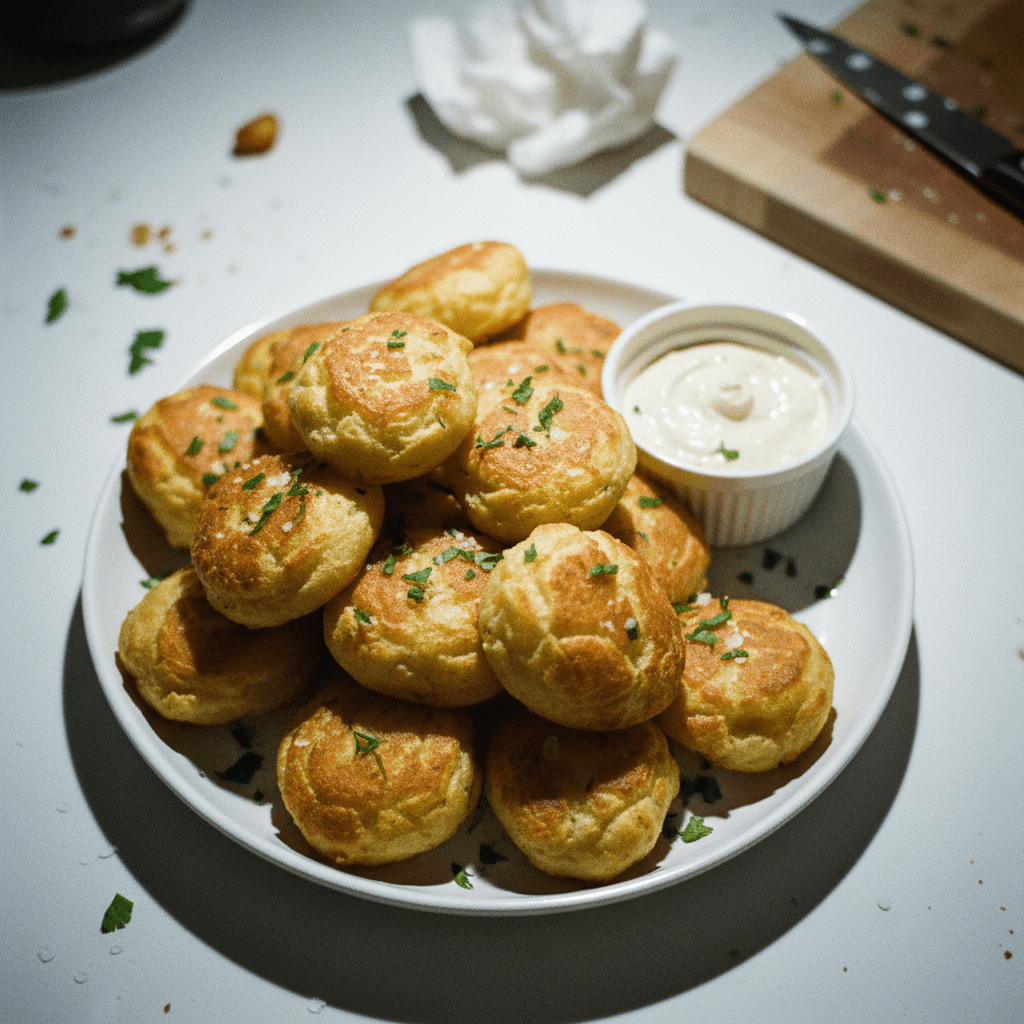
Pommes Dauphine with Sauce Choron
Pommes Dauphine with Sauce Choron
Ingredients
For the Pommes Dauphine
- 1 1/2 pounds Russet potatoes, peeled and quartered
- 1/4 cup unsalted butter, cubed
- 1/2 cup water
- 1/2 cup all-purpose flour, sifted
- 2 large eggs, plus 1 yolk, at room temperature
- 1/4 teaspoon freshly grated nutmeg
- 1 teaspoon kosher salt
- 1/4 teaspoon white pepper
- 6 cups peanut oil, or other high smoke point oil, for deep frying
For the Sauce Choron
- 1/2 cup clarified butter, warm
- 3 large egg yolks
- 2 tablespoons white wine vinegar
- 1 tablespoon finely minced shallot
- 1 tablespoon fresh tarragon leaves, chopped
- 1 tablespoon fresh chervil leaves, chopped
- 1/2 teaspoon tomato paste
- 1/4 teaspoon kosher salt, or to taste
- 1/8 teaspoon white pepper, or to taste
- 1/8 teaspoon cayenne pepper
For Garnish
- 4 fresh chervil sprigs
Instructions
- 1
Begin by preparing the potatoes for the dauphine. Place the peeled and quartered Russet potatoes in a large saucepan, cover with cold, salted water, and bring to a boil. Reduce heat and simmer until fork-tender, about 15-20 minutes. Drain thoroughly and return to the hot pan over low heat for 1-2 minutes to evaporate any residual moisture. Pass the hot potatoes through a potato ricer or mash until perfectly smooth. Set aside to cool slightly.
⏱️ 25 min
- 2
For the pâte à choux: In a separate medium saucepan, combine the 1/4 cup cubed unsalted butter, 1/2 cup water, 1 teaspoon kosher salt, and 1/4 teaspoon white pepper. Bring to a rolling boil over medium-high heat. Once boiling, remove from heat and immediately add the sifted all-purpose flour all at once. Stir vigorously with a wooden spoon until the mixture forms a ball and pulls away cleanly from the sides of the pan.
⏱️ 5 min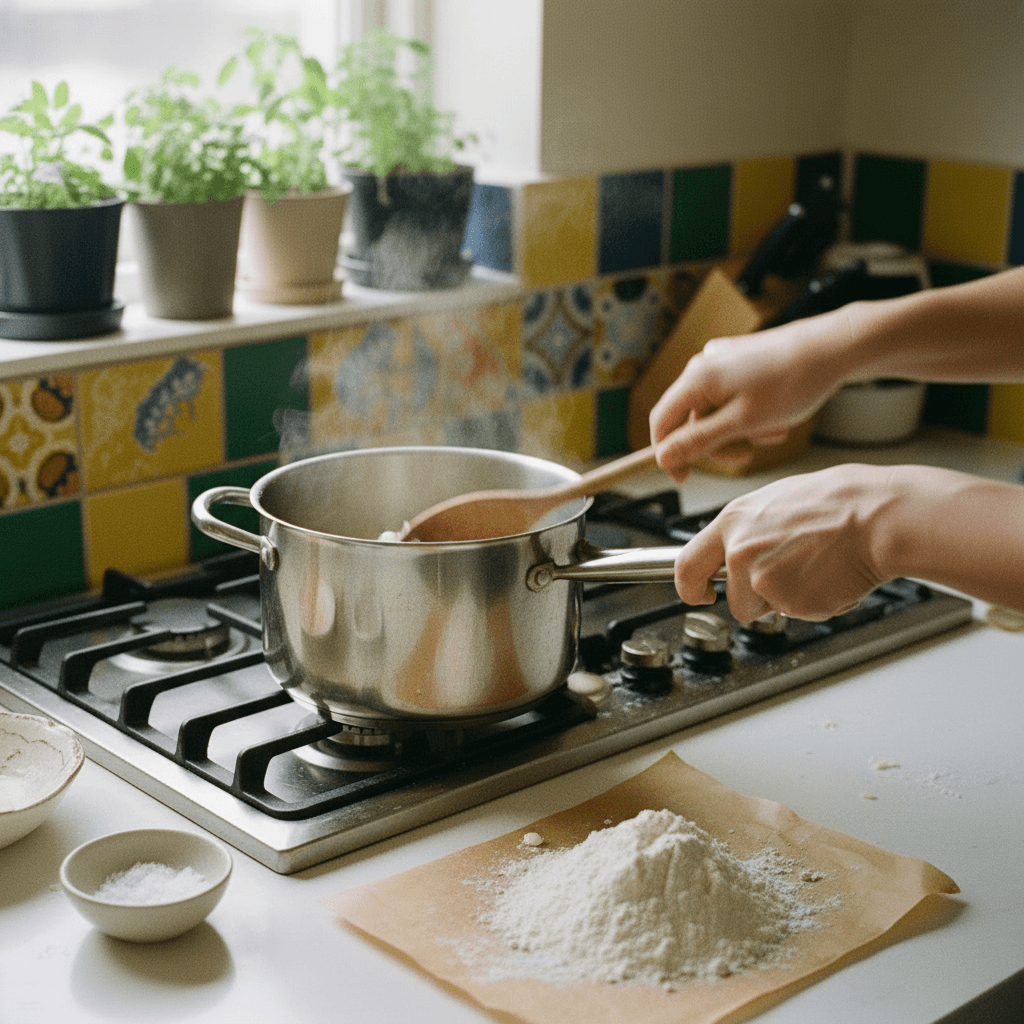
- 3
Return the pan to medium-low heat and continue to cook the pâte à choux, stirring constantly, for 2-3 minutes to dry it out. This step is crucial for a light and airy dauphine. Transfer the mixture to a stand mixer fitted with a paddle attachment (or use a hand mixer). Add the eggs and egg yolk one at a time, incorporating each fully before adding the next. The mixture will look curdled at first but will come together into a smooth, thick, and glossy paste. Stir in the freshly grated nutmeg. The choux should be firm enough to hold its shape but soft enough to pipe.
⏱️ 10 min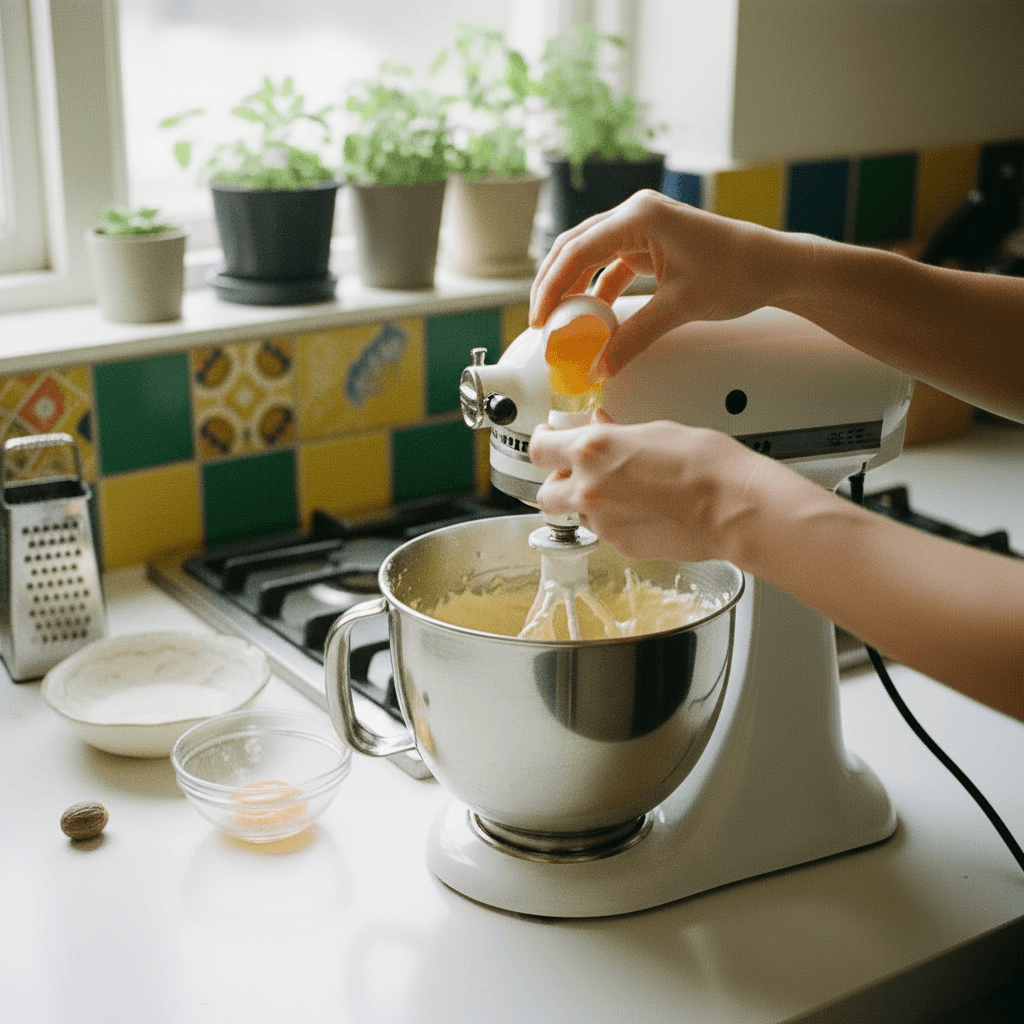
- 4
Gently fold the slightly cooled riced potatoes into the pâte à choux until just combined. Overmixing will develop gluten and make the dauphine tough. Taste and adjust seasoning with salt and white pepper if necessary. Transfer the dauphine mixture to a piping bag fitted with a 1/2-inch plain round tip.
⏱️ 5 min
- 5
Prepare the Sauce Choron: In a small saucepan, combine the white wine vinegar, finely minced shallot, 1 tablespoon chopped fresh tarragon, and 1 tablespoon chopped fresh chervil. Bring to a simmer over medium heat and reduce until only about 1 tablespoon of liquid remains. Strain the reduction through a fine-mesh sieve, pressing on the solids to extract all liquid. Discard solids and let the reduction cool slightly.
⏱️ 8 min
- 6
Set up a double boiler: Fill a saucepan with about 1 inch of water and bring to a gentle simmer. In a heatproof bowl that fits snugly over the saucepan without touching the water, whisk the 3 large egg yolks with the cooled herb reduction, 1/4 teaspoon kosher salt, 1/8 teaspoon white pepper, and 1/8 teaspoon cayenne pepper. Place the bowl over the simmering water and whisk constantly and vigorously until the mixture thickens to a ribbon stage (when the whisk is lifted, the mixture falls back in a thick ribbon), about 5-7 minutes. Ensure the water does not boil too rapidly, or the eggs may scramble.
⏱️ 10 min
- 7
Remove the bowl from the heat. Gradually drizzle in the warm clarified butter in a slow, steady stream while continuously whisking until the sauce is thick, emulsified, and glossy. Stir in the tomato paste until fully incorporated, which will give the sauce its characteristic pale pink hue. Taste and adjust seasoning as needed. Keep the sauce warm in a thermos or a warm (not hot) spot, stirring occasionally.
⏱️ 7 min
- 8
Heat the peanut oil in a deep fryer or a heavy-bottomed pot to 350°F. Using the piping bag, pipe 1-inch lengths of the dauphine mixture directly into the hot oil, cutting them with a knife or kitchen shears. Do not overcrowd the fryer; work in batches. Fry for 3-5 minutes, turning occasionally, until the dauphine are puffed, golden brown, and crispy. Use a slotted spoon or spider to remove them from the oil and drain on a wire rack lined with paper towels. Season immediately with a pinch of fine sea salt.
⏱️ 10 min•🌡️ 350
- 9
To plate, arrange a small mound of the crispy Pommes Dauphine artfully on a warm plate. Spoon a generous quenelle or swirl of the vibrant Sauce Choron alongside. Garnish with a fresh chervil sprig for an elegant finish. Serve immediately, ensuring the dauphine are hot and crisp and the sauce is warm.
⏱️ 3 min
Kitchen Tools
Nutrition Facts (per serving)
Pommes Dauphine with Sauce Choron
For the Pommes Dauphine
- 1 1/2 pounds Russet potatoes, peeled and quartered
- 1/4 cup unsalted butter, cubed
- 1/2 cup water
- 1/2 cup all-purpose flour, sifted
- 2 large eggs, plus 1 yolk, at room temperature
- 1/4 teaspoon freshly grated nutmeg
- 1 teaspoon kosher salt
- 1/4 teaspoon white pepper
- 6 cups peanut oil, or other high smoke point oil, for deep frying
For the Sauce Choron
- 1/2 cup clarified butter, warm
- 3 large egg yolks
- 2 tablespoons white wine vinegar
- 1 tablespoon finely minced shallot
- 1 tablespoon fresh tarragon leaves, chopped
- 1 tablespoon fresh chervil leaves, chopped
- 1/2 teaspoon tomato paste
- 1/4 teaspoon kosher salt, or to taste
- 1/8 teaspoon white pepper, or to taste
- 1/8 teaspoon cayenne pepper
For Garnish
- 4 fresh chervil sprigs
Instructions
- 1
Begin by preparing the potatoes for the dauphine. Place the peeled and quartered Russet potatoes in a large saucepan, cover with cold, salted water, and bring to a boil. Reduce heat and simmer until fork-tender, about 15-20 minutes. Drain thoroughly and return to the hot pan over low heat for 1-2 minutes to evaporate any residual moisture. Pass the hot potatoes through a potato ricer or mash until perfectly smooth. Set aside to cool slightly.
⏱️ 25 min - 2
For the pâte à choux: In a separate medium saucepan, combine the 1/4 cup cubed unsalted butter, 1/2 cup water, 1 teaspoon kosher salt, and 1/4 teaspoon white pepper. Bring to a rolling boil over medium-high heat. Once boiling, remove from heat and immediately add the sifted all-purpose flour all at once. Stir vigorously with a wooden spoon until the mixture forms a ball and pulls away cleanly from the sides of the pan.
⏱️ 5 min - 3
Return the pan to medium-low heat and continue to cook the pâte à choux, stirring constantly, for 2-3 minutes to dry it out. This step is crucial for a light and airy dauphine. Transfer the mixture to a stand mixer fitted with a paddle attachment (or use a hand mixer). Add the eggs and egg yolk one at a time, incorporating each fully before adding the next. The mixture will look curdled at first but will come together into a smooth, thick, and glossy paste. Stir in the freshly grated nutmeg. The choux should be firm enough to hold its shape but soft enough to pipe.
⏱️ 10 min - 4
Gently fold the slightly cooled riced potatoes into the pâte à choux until just combined. Overmixing will develop gluten and make the dauphine tough. Taste and adjust seasoning with salt and white pepper if necessary. Transfer the dauphine mixture to a piping bag fitted with a 1/2-inch plain round tip.
⏱️ 5 min - 5
Prepare the Sauce Choron: In a small saucepan, combine the white wine vinegar, finely minced shallot, 1 tablespoon chopped fresh tarragon, and 1 tablespoon chopped fresh chervil. Bring to a simmer over medium heat and reduce until only about 1 tablespoon of liquid remains. Strain the reduction through a fine-mesh sieve, pressing on the solids to extract all liquid. Discard solids and let the reduction cool slightly.
⏱️ 8 min - 6
Set up a double boiler: Fill a saucepan with about 1 inch of water and bring to a gentle simmer. In a heatproof bowl that fits snugly over the saucepan without touching the water, whisk the 3 large egg yolks with the cooled herb reduction, 1/4 teaspoon kosher salt, 1/8 teaspoon white pepper, and 1/8 teaspoon cayenne pepper. Place the bowl over the simmering water and whisk constantly and vigorously until the mixture thickens to a ribbon stage (when the whisk is lifted, the mixture falls back in a thick ribbon), about 5-7 minutes. Ensure the water does not boil too rapidly, or the eggs may scramble.
⏱️ 10 min - 7
Remove the bowl from the heat. Gradually drizzle in the warm clarified butter in a slow, steady stream while continuously whisking until the sauce is thick, emulsified, and glossy. Stir in the tomato paste until fully incorporated, which will give the sauce its characteristic pale pink hue. Taste and adjust seasoning as needed. Keep the sauce warm in a thermos or a warm (not hot) spot, stirring occasionally.
⏱️ 7 min - 8
Heat the peanut oil in a deep fryer or a heavy-bottomed pot to 350°F. Using the piping bag, pipe 1-inch lengths of the dauphine mixture directly into the hot oil, cutting them with a knife or kitchen shears. Do not overcrowd the fryer; work in batches. Fry for 3-5 minutes, turning occasionally, until the dauphine are puffed, golden brown, and crispy. Use a slotted spoon or spider to remove them from the oil and drain on a wire rack lined with paper towels. Season immediately with a pinch of fine sea salt.
⏱️ 10 min•🌡️ 350 - 9
To plate, arrange a small mound of the crispy Pommes Dauphine artfully on a warm plate. Spoon a generous quenelle or swirl of the vibrant Sauce Choron alongside. Garnish with a fresh chervil sprig for an elegant finish. Serve immediately, ensuring the dauphine are hot and crisp and the sauce is warm.
⏱️ 3 min