Updated Pizza Dough Recipe
Updated Pizza Dough Recipe

Ingredients
For the Poolish
- 50 g all-purpose flour
- 0.12 g instant dry yeast
- 50 g cold water
For the Main Dough
- 400 g all-purpose flour
- 100 g poolish
- 0.3 g instant dry yeast
- 250 g water, approximately, adjust as needed
- 10 g fine sea salt
- 10 g olive oil
Instructions
- 1
Prepare the poolish: In a small bowl, combine 50 grams of all-purpose flour, 0.12 grams of instant dry yeast, and 50 grams of cold water. Mix until well combined and no dry spots remain. Cover the bowl with plastic wrap and let it ferment at room temperature (around 20-22°C or 68-72°F) for 12-16 hours, or until it is bubbly and has a pleasant, slightly alcoholic aroma. It should have doubled in size and show signs of activity.
⏱️ 5 min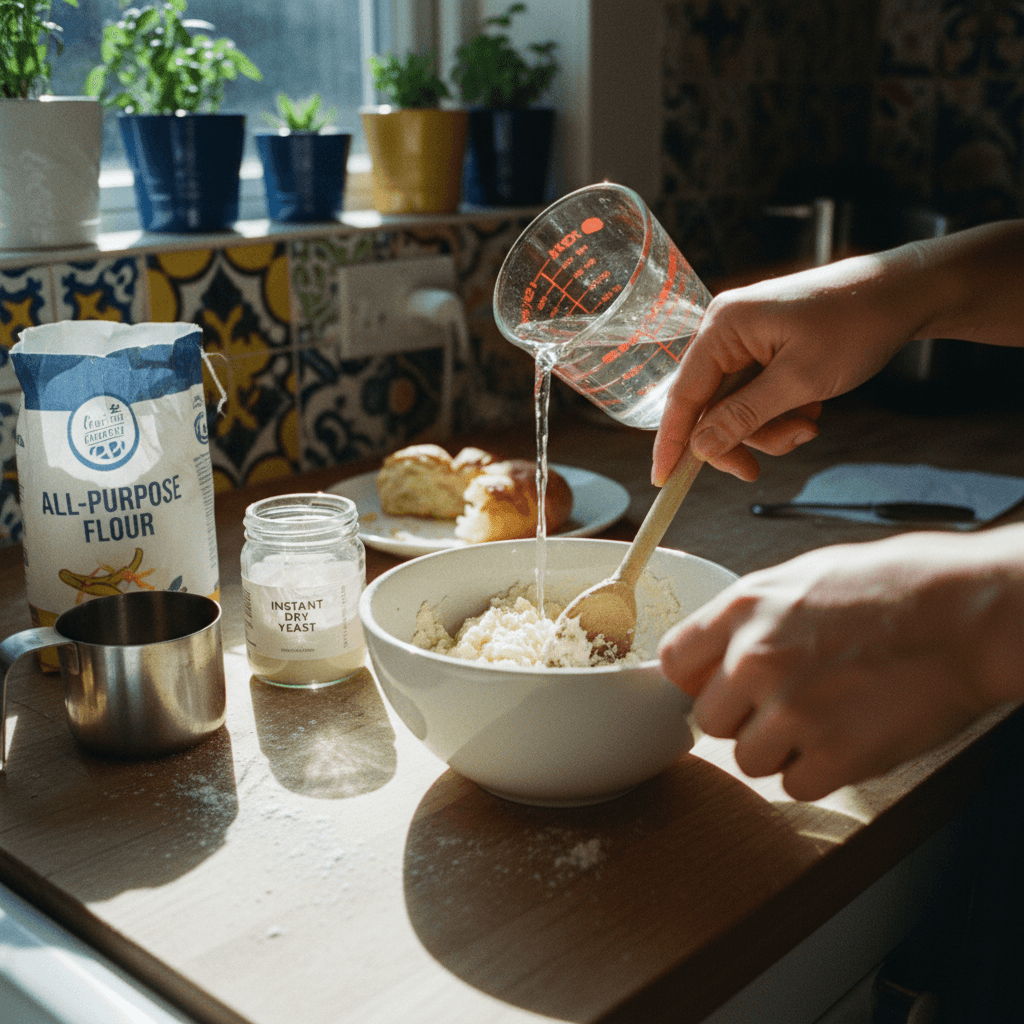
- 2
Once the poolish is ready, prepare the main dough: In a large mixing bowl, combine 400 grams of all-purpose flour, 0.3 grams of instant dry yeast, and the entire 100 grams of prepared poolish. Add about 200 grams of water to start. Mix with your hands or a stand mixer on low speed until a shaggy dough forms. Gradually add the remaining water (up to 50 grams more) until the dough comes together and is hydrated but not overly sticky. The exact amount of water may vary depending on your flour.
⏱️ 10 min
- 3
Add the salt and olive oil: Once the dough has come together, add 10 grams of fine sea salt and 10 grams of olive oil. Continue to mix or knead for 8-10 minutes, until the dough is smooth, elastic, and passes the windowpane test (you can stretch a small piece thin enough to see light through it without tearing).
⏱️ 10 min
- 4
First fermentation (bulk fermentation): Lightly oil a clean bowl. Place the dough in the bowl, turning it once to coat. Cover the bowl with plastic wrap and let it ferment at room temperature for 2-3 hours, or until it has increased in volume by about 50%. During this time, perform 2-3 sets of stretch and folds every 30-45 minutes. To do this, gently pull a portion of the dough from the edge, stretch it upwards, and fold it over the center. Rotate the bowl and repeat 3-4 times until all sides have been stretched and folded.
⏱️ 180 min
- 5
Cold fermentation: After the bulk fermentation, gently turn the dough out onto a lightly floured surface. Divide the dough into two equal portions (for two 15-inch pizzas). Gently shape each portion into a round ball, being careful not to degas it too much. Place each dough ball into a lightly oiled container or bowl, cover tightly with plastic wrap, and refrigerate for 24-72 hours. This slow cold fermentation develops flavor and makes the dough easier to handle.
⏱️ 2160 min
- 6
Before baking: About 2-3 hours before you plan to bake, remove the dough balls from the refrigerator and let them come to room temperature. This will make them much easier to stretch.
⏱️ 180 min
Kitchen Tools
Updated Pizza Dough Recipe
For the Poolish
- 50 g all-purpose flour
- 0.12 g instant dry yeast
- 50 g cold water
For the Main Dough
- 400 g all-purpose flour
- 100 g poolish
- 0.3 g instant dry yeast
- 250 g water, approximately, adjust as needed
- 10 g fine sea salt
- 10 g olive oil
Instructions
- 1
Prepare the poolish: In a small bowl, combine 50 grams of all-purpose flour, 0.12 grams of instant dry yeast, and 50 grams of cold water. Mix until well combined and no dry spots remain. Cover the bowl with plastic wrap and let it ferment at room temperature (around 20-22°C or 68-72°F) for 12-16 hours, or until it is bubbly and has a pleasant, slightly alcoholic aroma. It should have doubled in size and show signs of activity.
⏱️ 5 min - 2
Once the poolish is ready, prepare the main dough: In a large mixing bowl, combine 400 grams of all-purpose flour, 0.3 grams of instant dry yeast, and the entire 100 grams of prepared poolish. Add about 200 grams of water to start. Mix with your hands or a stand mixer on low speed until a shaggy dough forms. Gradually add the remaining water (up to 50 grams more) until the dough comes together and is hydrated but not overly sticky. The exact amount of water may vary depending on your flour.
⏱️ 10 min - 3
Add the salt and olive oil: Once the dough has come together, add 10 grams of fine sea salt and 10 grams of olive oil. Continue to mix or knead for 8-10 minutes, until the dough is smooth, elastic, and passes the windowpane test (you can stretch a small piece thin enough to see light through it without tearing).
⏱️ 10 min - 4
First fermentation (bulk fermentation): Lightly oil a clean bowl. Place the dough in the bowl, turning it once to coat. Cover the bowl with plastic wrap and let it ferment at room temperature for 2-3 hours, or until it has increased in volume by about 50%. During this time, perform 2-3 sets of stretch and folds every 30-45 minutes. To do this, gently pull a portion of the dough from the edge, stretch it upwards, and fold it over the center. Rotate the bowl and repeat 3-4 times until all sides have been stretched and folded.
⏱️ 180 min - 5
Cold fermentation: After the bulk fermentation, gently turn the dough out onto a lightly floured surface. Divide the dough into two equal portions (for two 15-inch pizzas). Gently shape each portion into a round ball, being careful not to degas it too much. Place each dough ball into a lightly oiled container or bowl, cover tightly with plastic wrap, and refrigerate for 24-72 hours. This slow cold fermentation develops flavor and makes the dough easier to handle.
⏱️ 2160 min - 6
Before baking: About 2-3 hours before you plan to bake, remove the dough balls from the refrigerator and let them come to room temperature. This will make them much easier to stretch.
⏱️ 180 min