Sous Vide Duck Breast with Jus Foam
Sous Vide Duck Breast with Jus Foam

Ingredients
For the Duck Breast
- 2 duck breasts, about 12-14 ounces each, skin on
- 1 teaspoon kosher salt
- 1/2 teaspoon freshly ground black pepper
- 1 tablespoon vegetable oil, high smoke point, for searing if needed
For the Jus Foam
- 1/2 cup duck trimmings or bones, from duck breasts, or 1/2 cup store-bought duck stock
- 1 shallot, minced
- 1 garlic clove, smashed
- 1/2 cup red wine, such as Pinot Noir
- 2 cups chicken or duck stock, low sodium
- 2 fresh thyme sprigs
- 1 bay leaf
- 1 tablespoon unsalted butter
- 1/2 teaspoon soy lecithin, granulated or liquid
For Serving (Optional)
- 1 tablespoon fresh chives, finely chopped
- 1/4 teaspoon flaky sea salt, such as Maldon
Instructions
- 1
Set up your sous vide water bath to 130°F (54°C) for medium-rare duck breast. While the water heats, prepare the duck breasts. Score the duck skin in a crosshatch pattern, being careful not to cut into the meat. Trim any excess fat from the edges, reserving it along with any bones for the jus. Season both sides of the duck breasts generously with kosher salt and freshly ground black pepper.
⏱️ 15 min•🌡️ 130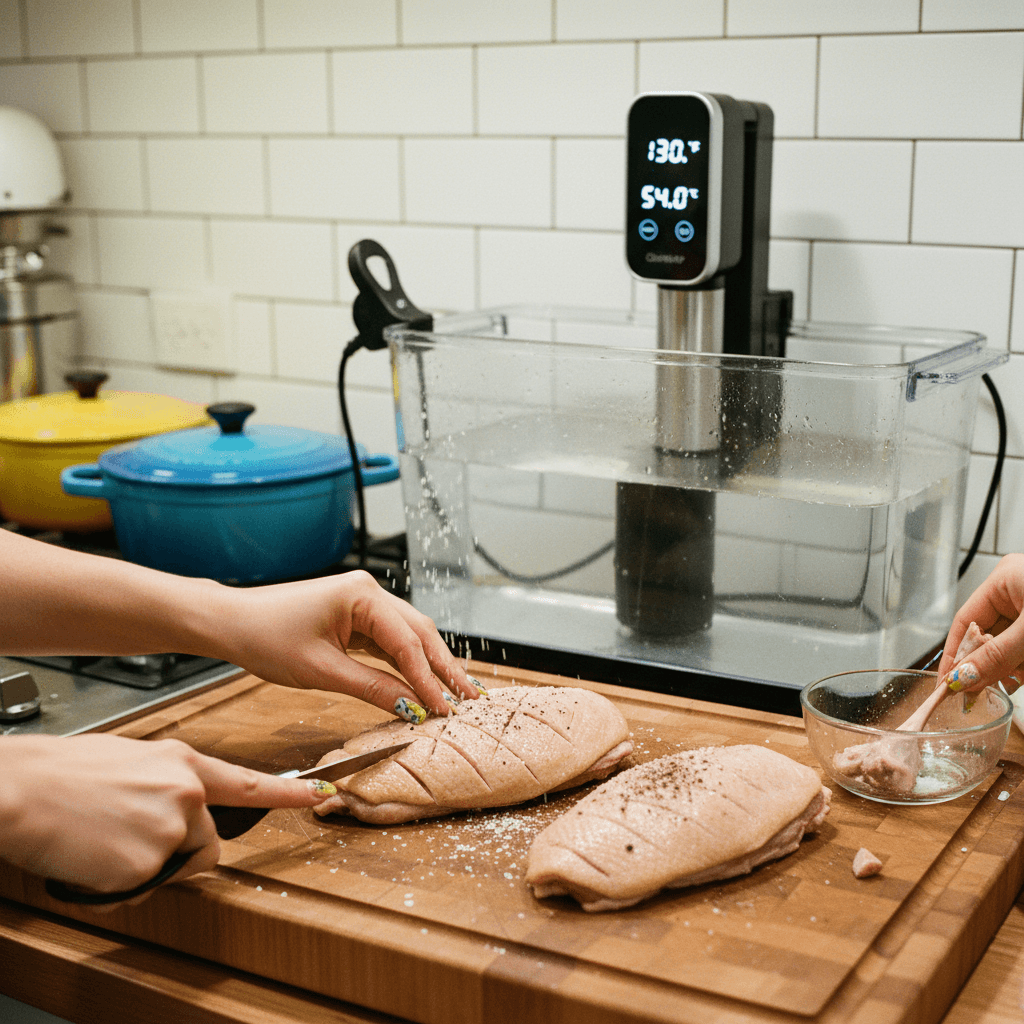
- 2
Place the seasoned duck breasts into a vacuum-sealable bag, ensuring they are in a single layer. If using trimmings for the jus, place them in a separate small vacuum bag or directly into the jus saucepan later. Vacuum seal the bag(s) and immerse the duck breasts into the preheated water bath. Cook for 2 hours.
⏱️ 120 min•🌡️ 130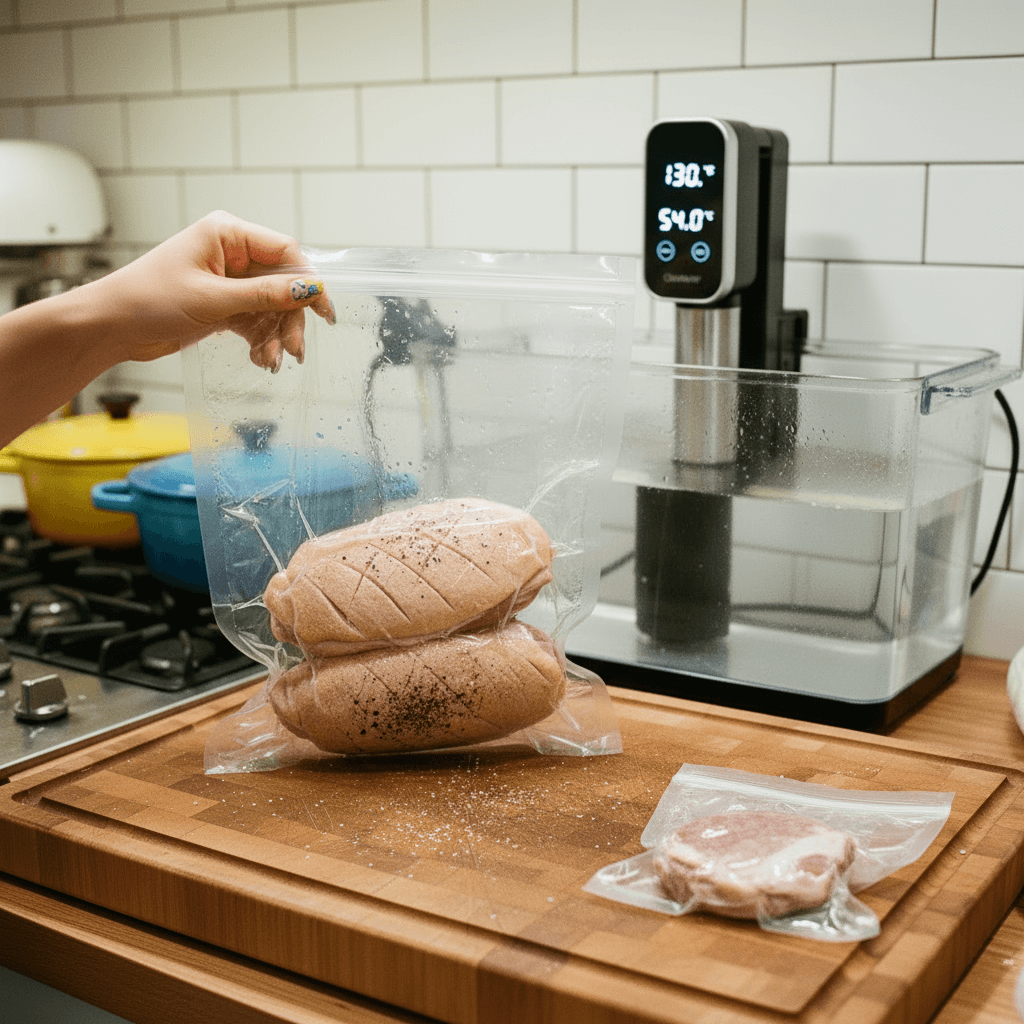
- 3
While the duck cooks, prepare the jus base. In a medium saucepan, render any reserved duck fat or add 1 teaspoon of vegetable oil. Add the minced shallot and smashed garlic clove, sautéing over medium heat until softened and fragrant, about 3-4 minutes. If you have duck trimmings/bones, add them now and brown slightly.
⏱️ 5 min - 4
Deglaze the pan with red wine, scraping up any browned bits from the bottom. Bring to a simmer and reduce by half, about 5 minutes. Add the chicken or duck stock, fresh thyme sprigs, and bay leaf. Bring to a gentle simmer and reduce the liquid by about two-thirds, until it coats the back of a spoon. This should take about 15-20 minutes. Strain the jus through a fine-mesh sieve into a clean saucepan, discarding the solids. Set aside.
⏱️ 20 min
- 5
Once the duck breasts have finished cooking, remove them from the water bath and the bag. Pat them thoroughly dry with paper towels; this is crucial for crispy skin. Heat a cast iron skillet or heavy-bottomed pan over high heat. If the duck breasts are lean, add 1 tablespoon of vegetable oil. Place the duck breasts skin-side down in the hot skillet. Sear for 5-7 minutes, pressing down gently with a spatula to ensure even contact, until the skin is deeply golden brown and crispy. Pour off any rendered fat as it accumulates.
⏱️ 7 min
- 6
Flip the duck breasts and sear on the flesh side for 1-2 minutes to develop a slight crust. Remove the duck breasts from the skillet and let them rest on a cutting board for 5 minutes. This allows the juices to redistribute.
⏱️ 5 min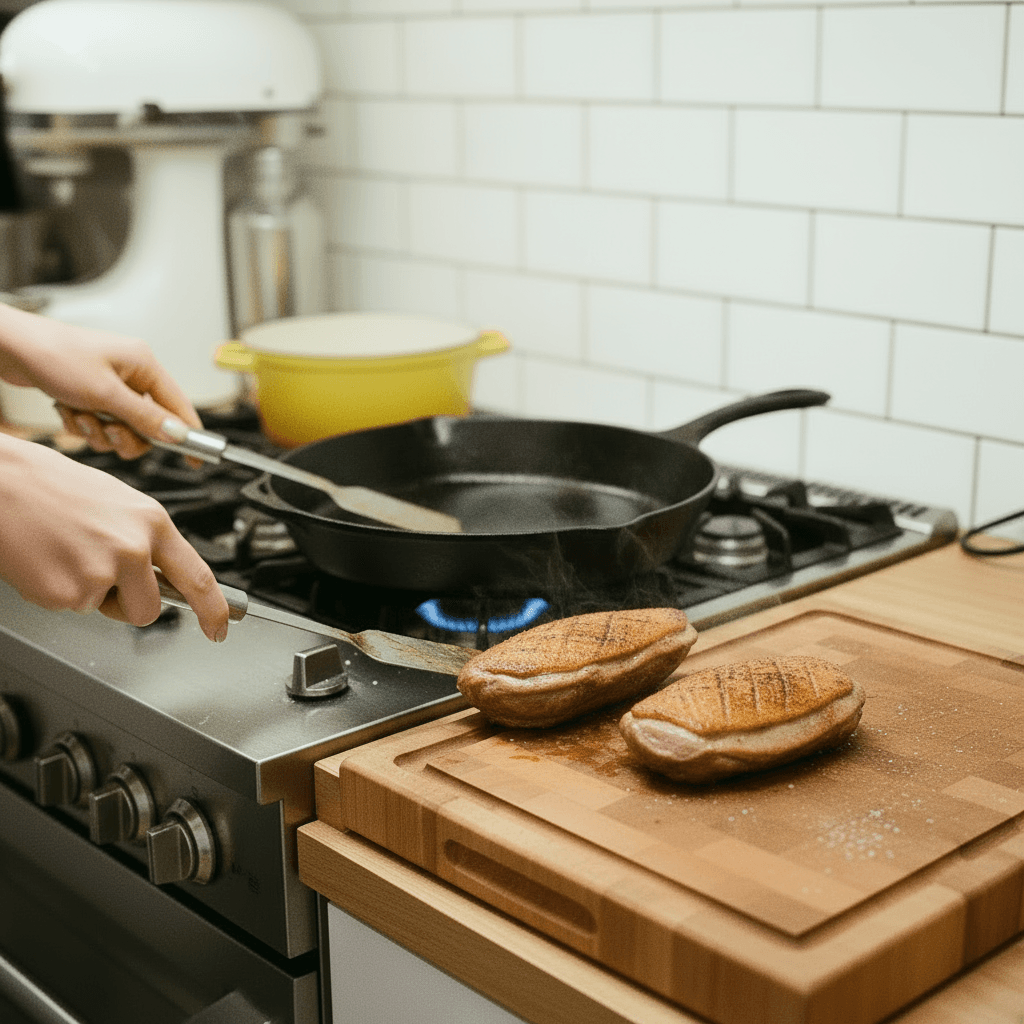
- 7
While the duck rests, gently reheat the strained jus base over low heat. Whisk in the unsalted butter until melted and emulsified. Add the soy lecithin. Using an immersion blender, blend the jus at the surface to create a stable foam. Continue blending until a thick, airy foam forms.
⏱️ 5 min
- 8
Slice the rested duck breasts against the grain into 1/4-inch thick slices. Arrange the slices on warm plates. Spoon a generous amount of the jus foam around and over the duck. Garnish with chopped fresh chives and a sprinkle of flaky sea salt, if desired. Serve immediately.
⏱️ 5 min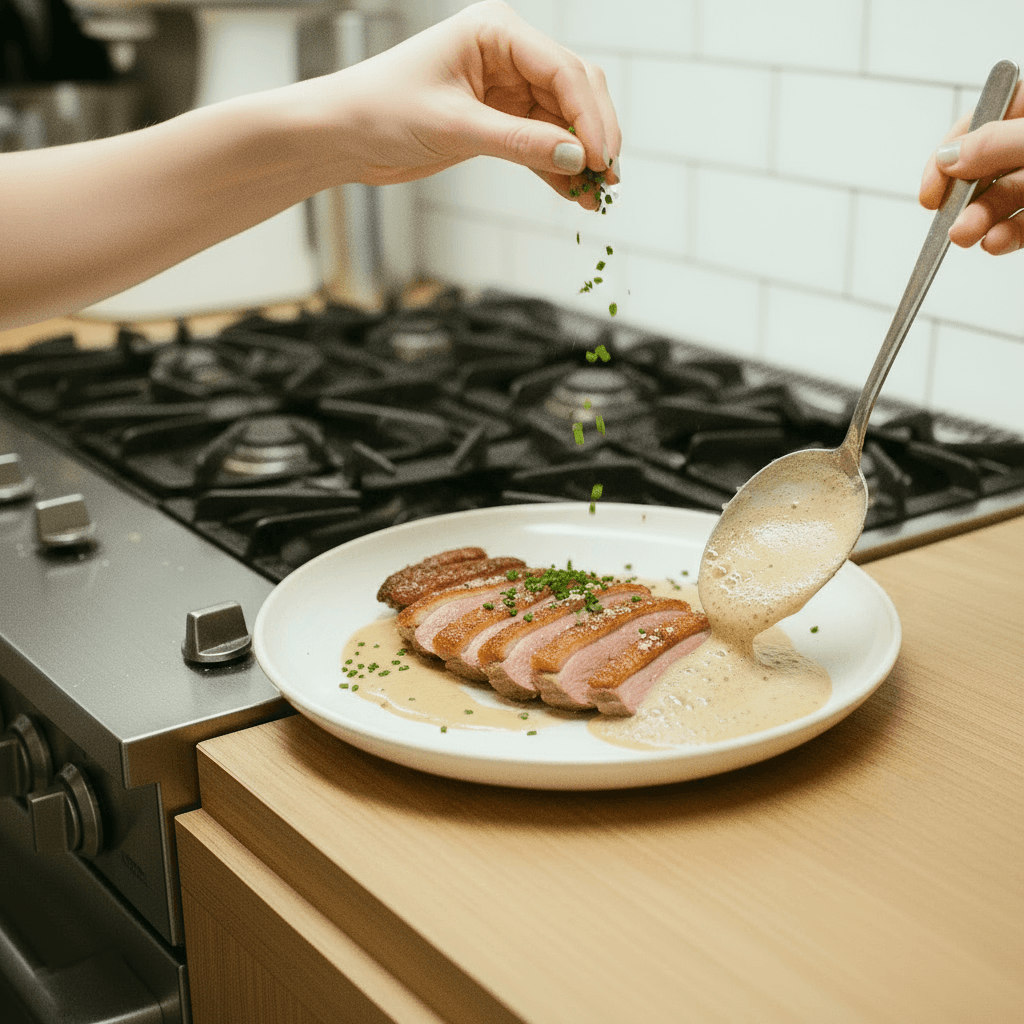
Kitchen Tools
Nutrition Facts (per serving)
Sous Vide Duck Breast with Jus Foam
For the Duck Breast
- 2 duck breasts, about 12-14 ounces each, skin on
- 1 teaspoon kosher salt
- 1/2 teaspoon freshly ground black pepper
- 1 tablespoon vegetable oil, high smoke point, for searing if needed
For the Jus Foam
- 1/2 cup duck trimmings or bones, from duck breasts, or 1/2 cup store-bought duck stock
- 1 shallot, minced
- 1 garlic clove, smashed
- 1/2 cup red wine, such as Pinot Noir
- 2 cups chicken or duck stock, low sodium
- 2 fresh thyme sprigs
- 1 bay leaf
- 1 tablespoon unsalted butter
- 1/2 teaspoon soy lecithin, granulated or liquid
For Serving (Optional)
- 1 tablespoon fresh chives, finely chopped
- 1/4 teaspoon flaky sea salt, such as Maldon
Instructions
- 1
Set up your sous vide water bath to 130°F (54°C) for medium-rare duck breast. While the water heats, prepare the duck breasts. Score the duck skin in a crosshatch pattern, being careful not to cut into the meat. Trim any excess fat from the edges, reserving it along with any bones for the jus. Season both sides of the duck breasts generously with kosher salt and freshly ground black pepper.
⏱️ 15 min•🌡️ 130 - 2
Place the seasoned duck breasts into a vacuum-sealable bag, ensuring they are in a single layer. If using trimmings for the jus, place them in a separate small vacuum bag or directly into the jus saucepan later. Vacuum seal the bag(s) and immerse the duck breasts into the preheated water bath. Cook for 2 hours.
⏱️ 120 min•🌡️ 130 - 3
While the duck cooks, prepare the jus base. In a medium saucepan, render any reserved duck fat or add 1 teaspoon of vegetable oil. Add the minced shallot and smashed garlic clove, sautéing over medium heat until softened and fragrant, about 3-4 minutes. If you have duck trimmings/bones, add them now and brown slightly.
⏱️ 5 min - 4
Deglaze the pan with red wine, scraping up any browned bits from the bottom. Bring to a simmer and reduce by half, about 5 minutes. Add the chicken or duck stock, fresh thyme sprigs, and bay leaf. Bring to a gentle simmer and reduce the liquid by about two-thirds, until it coats the back of a spoon. This should take about 15-20 minutes. Strain the jus through a fine-mesh sieve into a clean saucepan, discarding the solids. Set aside.
⏱️ 20 min - 5
Once the duck breasts have finished cooking, remove them from the water bath and the bag. Pat them thoroughly dry with paper towels; this is crucial for crispy skin. Heat a cast iron skillet or heavy-bottomed pan over high heat. If the duck breasts are lean, add 1 tablespoon of vegetable oil. Place the duck breasts skin-side down in the hot skillet. Sear for 5-7 minutes, pressing down gently with a spatula to ensure even contact, until the skin is deeply golden brown and crispy. Pour off any rendered fat as it accumulates.
⏱️ 7 min - 6
Flip the duck breasts and sear on the flesh side for 1-2 minutes to develop a slight crust. Remove the duck breasts from the skillet and let them rest on a cutting board for 5 minutes. This allows the juices to redistribute.
⏱️ 5 min - 7
While the duck rests, gently reheat the strained jus base over low heat. Whisk in the unsalted butter until melted and emulsified. Add the soy lecithin. Using an immersion blender, blend the jus at the surface to create a stable foam. Continue blending until a thick, airy foam forms.
⏱️ 5 min - 8
Slice the rested duck breasts against the grain into 1/4-inch thick slices. Arrange the slices on warm plates. Spoon a generous amount of the jus foam around and over the duck. Garnish with chopped fresh chives and a sprinkle of flaky sea salt, if desired. Serve immediately.
⏱️ 5 min