Shrimp Fried Spaghetti by August Shrimpscoffier
Shrimp Fried Spaghetti by August Shrimpscoffier

Ingredients
For the Shrimp Stock and Spaghetti
- 1 pound raw shrimps, heads and shells reserved, meat set aside
- 2 tablespoons duck fat
- 2 tablespoons tomato paste, (about the size of an egg)
- 1/2 onion, chopped
- 4 cups water, or as needed
- 1 pound spaghetti
- 1 tablespoon butter, a little knob
- 1/4 cup heavy cream, optional, for a more voluptuous sauce
Optional Broguste Flexcoffier Additions
- 6 eggs
- 100 grams Parmesan cheese, grated
Instructions
- 1
Prepare the shrimp: Carefully remove the heads and shells from the raw shrimps. Keep the heads and shells in one bowl and the peeled shrimp meat in another. Set the shrimp meat aside.
⏱️ 10 min
- 2
Start the sauce base: In a large pan or Dutch oven, melt the duck fat over medium-high heat.
⏱️ 1 min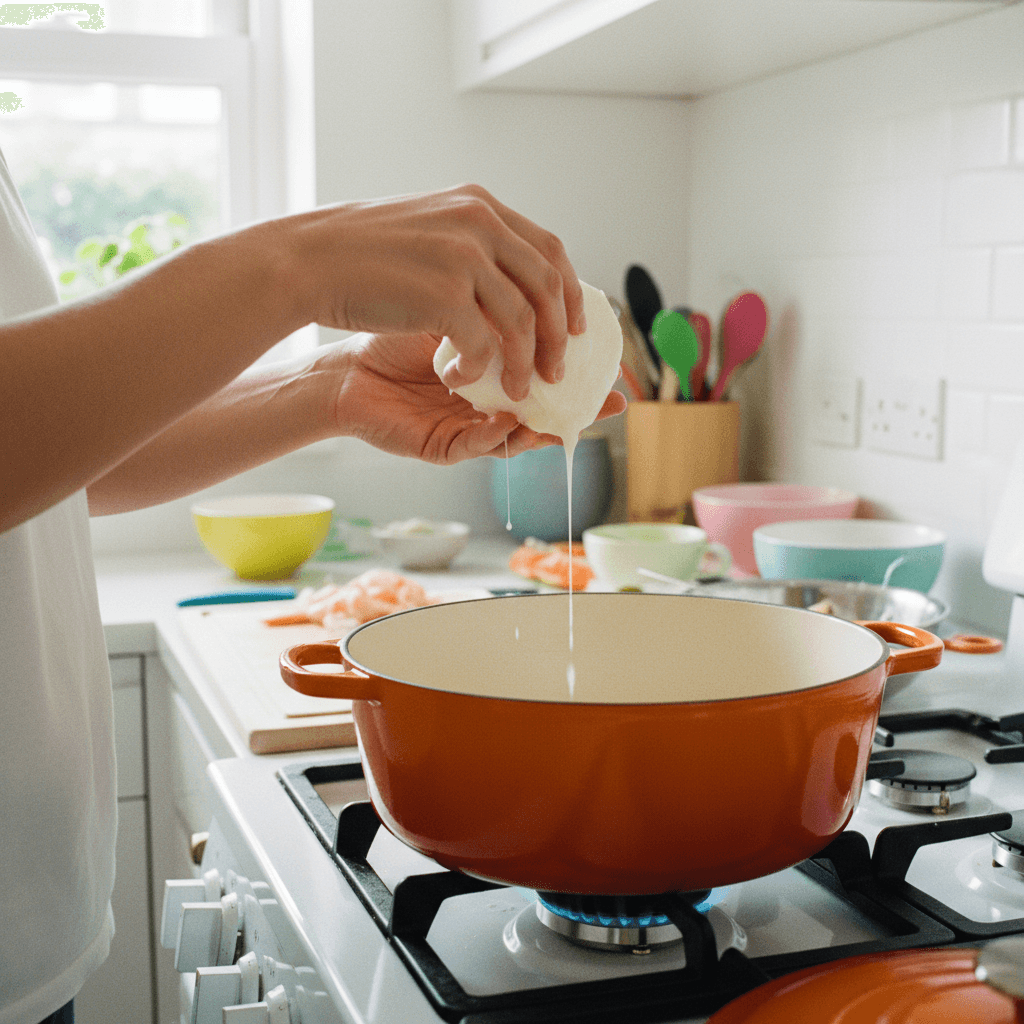
- 3
Cardinalize the shells: Add all the reserved shrimp heads and shells to the pan with the melted duck fat. Cook, stirring occasionally, until they turn bright red, which is referred to as 'cardinalizing them.' This should take about 3-5 minutes.
⏱️ 5 min
- 4
Add tomato paste: Stir in the tomato paste with the shrimp heads and shells. Mix thoroughly to coat everything.
⏱️ 1 min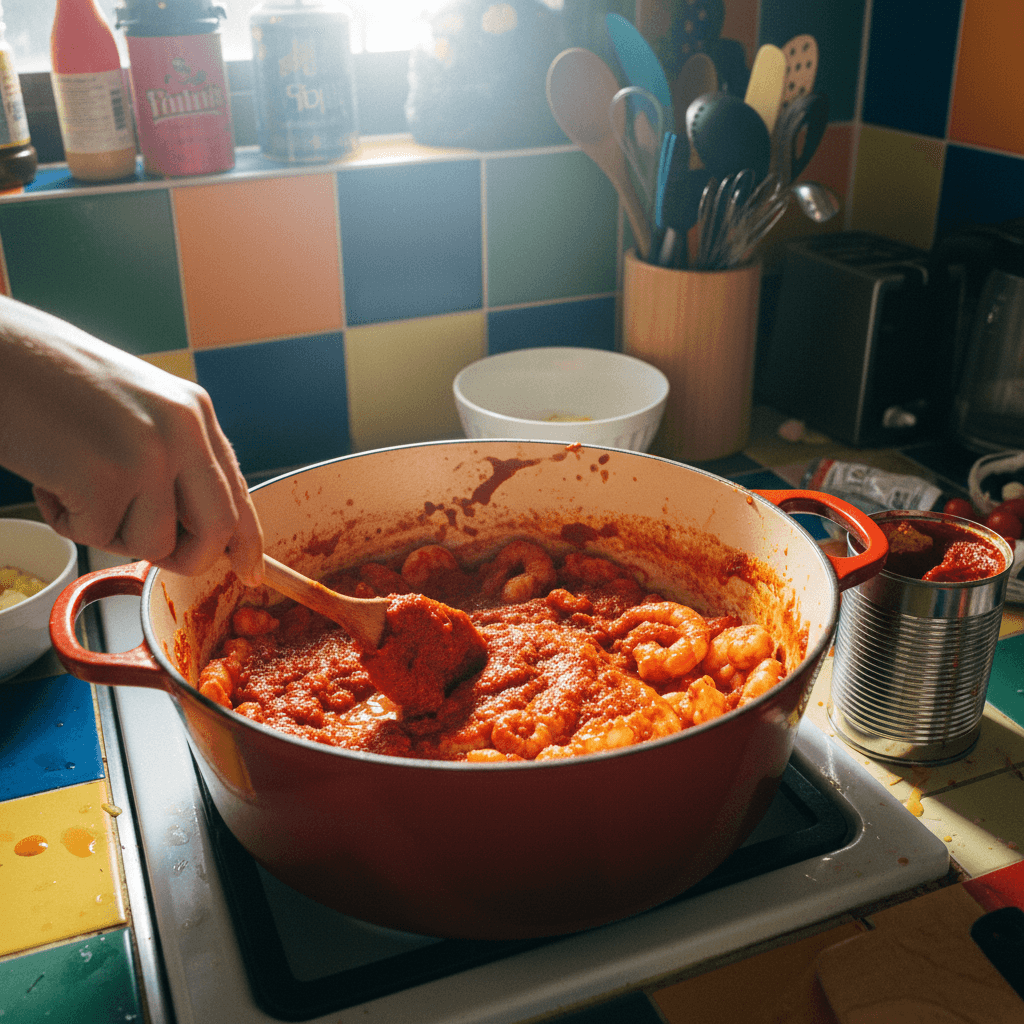
- 5
Cook the base: Continue cooking the mixture for approximately 10 minutes, stirring occasionally, allowing the flavors to deepen.
⏱️ 10 min
- 6
Add onion: Add the chopped onion to the pan and cook until it softens and becomes translucent, or 'sweats a little bit,' about 3-4 minutes.
⏱️ 4 min
- 7
Caramelize and deglaze: Once everything has been 'nicely toasting' and the tomato paste is 'nicely caramelized,' pour in the water to submerge the mixture. Bring to a simmer.
⏱️ 2 min
- 8
Blend the stock: Let the mixture simmer for about 10 minutes. Then, using an immersion blender, blend the mixture directly in the pan until very smooth and 'homogenous,' releasing all the juices from the heads and shells.
⏱️ 10 min
- 9
Strain the stock: Immediately strain the blended mixture through a fine-mesh sieve into another clean pan. Press down on the solids to extract as much liquid as possible. Discard the solids. This will yield a rich, 'very orange stock,' which is essentially a shrimp bisque base.
⏱️ 5 min
- 10
Cook the spaghetti: Bring the strained shrimp stock to a boil. Add the spaghetti directly into the stock. Cook the spaghetti according to package directions, stirring frequently to prevent it from sticking to the bottom of the pan and to ensure even cooking.
⏱️ 10 min
- 11
Reduce and thicken: As the spaghetti cooks, it will absorb the stock and become 'very shiny.' Continuously stir and toss the spaghetti with tongs to help steam escape and dehydrate the sauce, which will help create a 'thicker sauce.' Continue until the spaghetti is al dente and the sauce has thickened to your desired consistency.
⏱️ 5 min
- 12
Add butter: Once the spaghetti is cooked and the sauce is thick, add the knob of butter and mix 'very homogenously' until it's fully incorporated and adds a glossy finish.
⏱️ 1 min
- 13
Add cream (optional): If a 'more voluptuous sauce' is desired, stir in the heavy cream until 'very homogenously' combined.
⏱️ 1 min
- 14
Cook shrimp meat: While the spaghetti is cooking, quickly pan-fry or sauté the reserved shrimp meat in a separate pan with a little oil or butter until just cooked through, about 2-3 minutes per side. Do not overcook.
⏱️ 5 min
- 15
Plate the dish: Using tongs or 'Chinese tweezers,' carefully plate the spaghetti on serving dishes, creating a visually appealing, 'Instagrammable plate.'
⏱️ 2 min
- 16
Garnish: Place 'a serious amount of shrimp' (the cooked shrimp meat) on top of the spaghetti. Serve immediately.
⏱️ 1 min
Kitchen Tools
Nutrition Facts (per serving)
Shrimp Fried Spaghetti by August Shrimpscoffier
For the Shrimp Stock and Spaghetti
- 1 pound raw shrimps, heads and shells reserved, meat set aside
- 2 tablespoons duck fat
- 2 tablespoons tomato paste, (about the size of an egg)
- 1/2 onion, chopped
- 4 cups water, or as needed
- 1 pound spaghetti
- 1 tablespoon butter, a little knob
- 1/4 cup heavy cream, optional, for a more voluptuous sauce
Optional Broguste Flexcoffier Additions
- 6 eggs
- 100 grams Parmesan cheese, grated
Instructions
- 1
Prepare the shrimp: Carefully remove the heads and shells from the raw shrimps. Keep the heads and shells in one bowl and the peeled shrimp meat in another. Set the shrimp meat aside.
⏱️ 10 min - 2
Start the sauce base: In a large pan or Dutch oven, melt the duck fat over medium-high heat.
⏱️ 1 min - 3
Cardinalize the shells: Add all the reserved shrimp heads and shells to the pan with the melted duck fat. Cook, stirring occasionally, until they turn bright red, which is referred to as 'cardinalizing them.' This should take about 3-5 minutes.
⏱️ 5 min - 4
Add tomato paste: Stir in the tomato paste with the shrimp heads and shells. Mix thoroughly to coat everything.
⏱️ 1 min - 5
Cook the base: Continue cooking the mixture for approximately 10 minutes, stirring occasionally, allowing the flavors to deepen.
⏱️ 10 min - 6
Add onion: Add the chopped onion to the pan and cook until it softens and becomes translucent, or 'sweats a little bit,' about 3-4 minutes.
⏱️ 4 min - 7
Caramelize and deglaze: Once everything has been 'nicely toasting' and the tomato paste is 'nicely caramelized,' pour in the water to submerge the mixture. Bring to a simmer.
⏱️ 2 min - 8
Blend the stock: Let the mixture simmer for about 10 minutes. Then, using an immersion blender, blend the mixture directly in the pan until very smooth and 'homogenous,' releasing all the juices from the heads and shells.
⏱️ 10 min - 9
Strain the stock: Immediately strain the blended mixture through a fine-mesh sieve into another clean pan. Press down on the solids to extract as much liquid as possible. Discard the solids. This will yield a rich, 'very orange stock,' which is essentially a shrimp bisque base.
⏱️ 5 min - 10
Cook the spaghetti: Bring the strained shrimp stock to a boil. Add the spaghetti directly into the stock. Cook the spaghetti according to package directions, stirring frequently to prevent it from sticking to the bottom of the pan and to ensure even cooking.
⏱️ 10 min - 11
Reduce and thicken: As the spaghetti cooks, it will absorb the stock and become 'very shiny.' Continuously stir and toss the spaghetti with tongs to help steam escape and dehydrate the sauce, which will help create a 'thicker sauce.' Continue until the spaghetti is al dente and the sauce has thickened to your desired consistency.
⏱️ 5 min - 12
Add butter: Once the spaghetti is cooked and the sauce is thick, add the knob of butter and mix 'very homogenously' until it's fully incorporated and adds a glossy finish.
⏱️ 1 min - 13
Add cream (optional): If a 'more voluptuous sauce' is desired, stir in the heavy cream until 'very homogenously' combined.
⏱️ 1 min - 14
Cook shrimp meat: While the spaghetti is cooking, quickly pan-fry or sauté the reserved shrimp meat in a separate pan with a little oil or butter until just cooked through, about 2-3 minutes per side. Do not overcook.
⏱️ 5 min - 15
Plate the dish: Using tongs or 'Chinese tweezers,' carefully plate the spaghetti on serving dishes, creating a visually appealing, 'Instagrammable plate.'
⏱️ 2 min - 16
Garnish: Place 'a serious amount of shrimp' (the cooked shrimp meat) on top of the spaghetti. Serve immediately.
⏱️ 1 min