Homemade Pizza
Homemade Pizza

Ingredients
For the Dough
- 500 g 00 flour
- 350 g water
- 10 g salt
- 2 g dry yeast
For Topping (per pizza)
- 1/4 cup tomato sauce
- 1/2 cup mozzarella cheese, torn or shredded
- 5 fresh basil leaves
- 1/2 teaspoon olive oil, for drizzling
For Assembly
- as needed all-purpose flour, for dusting
- as needed semolina, for dusting pizza peel
Instructions
- 1
In a large mixing bowl, add 350 grams of water. Add 2 grams of dry yeast to the water and mix well with a spoon until dissolved.
⏱️ 2 min
- 2
Add 500 grams of 00 flour to the bowl. Mix with a spoon until the ingredients are mostly combined into a shaggy dough.
⏱️ 3 min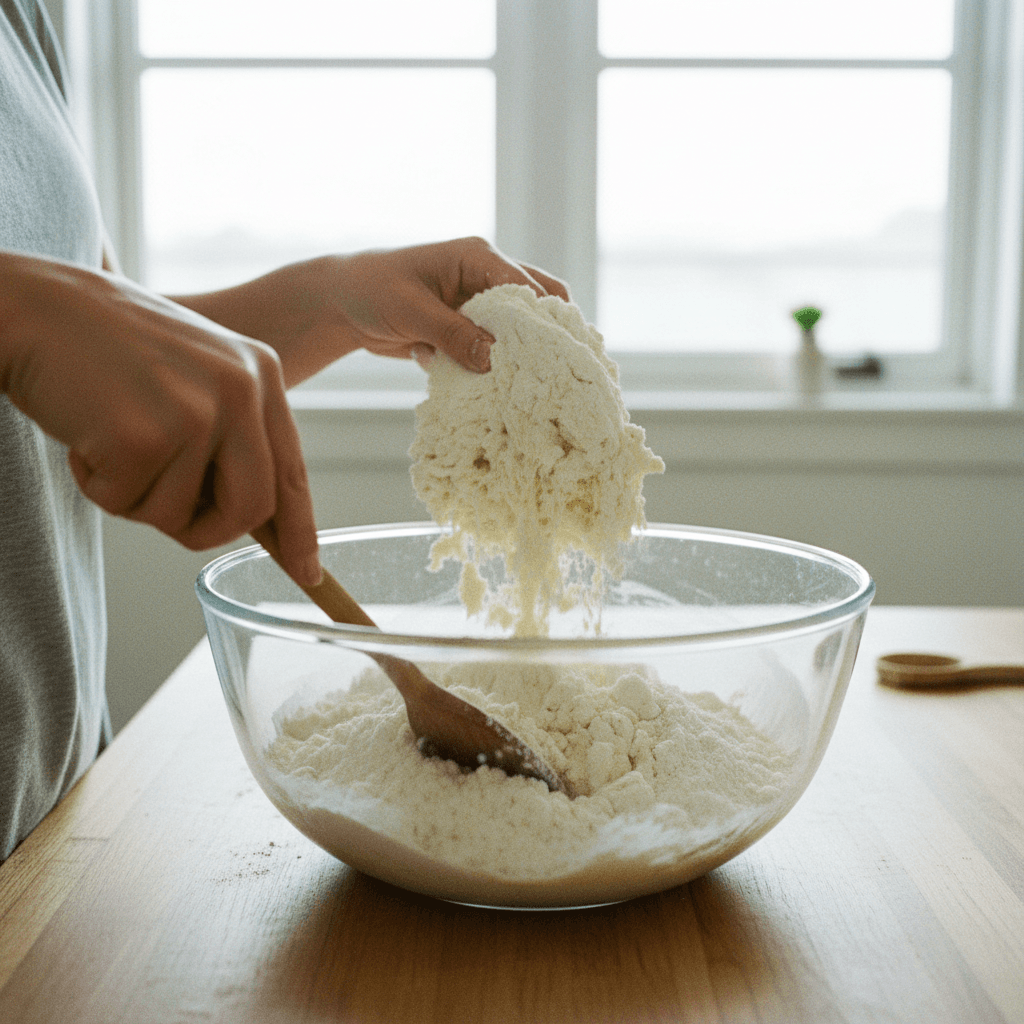
- 3
Add 10 grams of salt directly onto the dough. Use your hands to lightly knead the dough in the bowl for about 1 minute, ensuring the salt is incorporated.
⏱️ 2 min
- 4
Cover the bowl and let the dough rest for 15 minutes.
⏱️ 15 min
- 5
After 15 minutes, uncover the dough. Perform a series of stretch and folds: gently grab a portion of the dough from the bottom, stretch it upwards, and fold it over onto itself. Rotate the bowl and repeat this action several times until the dough feels stronger.
⏱️ 3 min
- 6
Cover the bowl and let the dough rest for another 15 minutes.
⏱️ 15 min
- 7
Repeat the stretch and fold process two more times, with 15-minute rests in between each session (totaling 3 rounds of stretch and folds).
⏱️ 36 min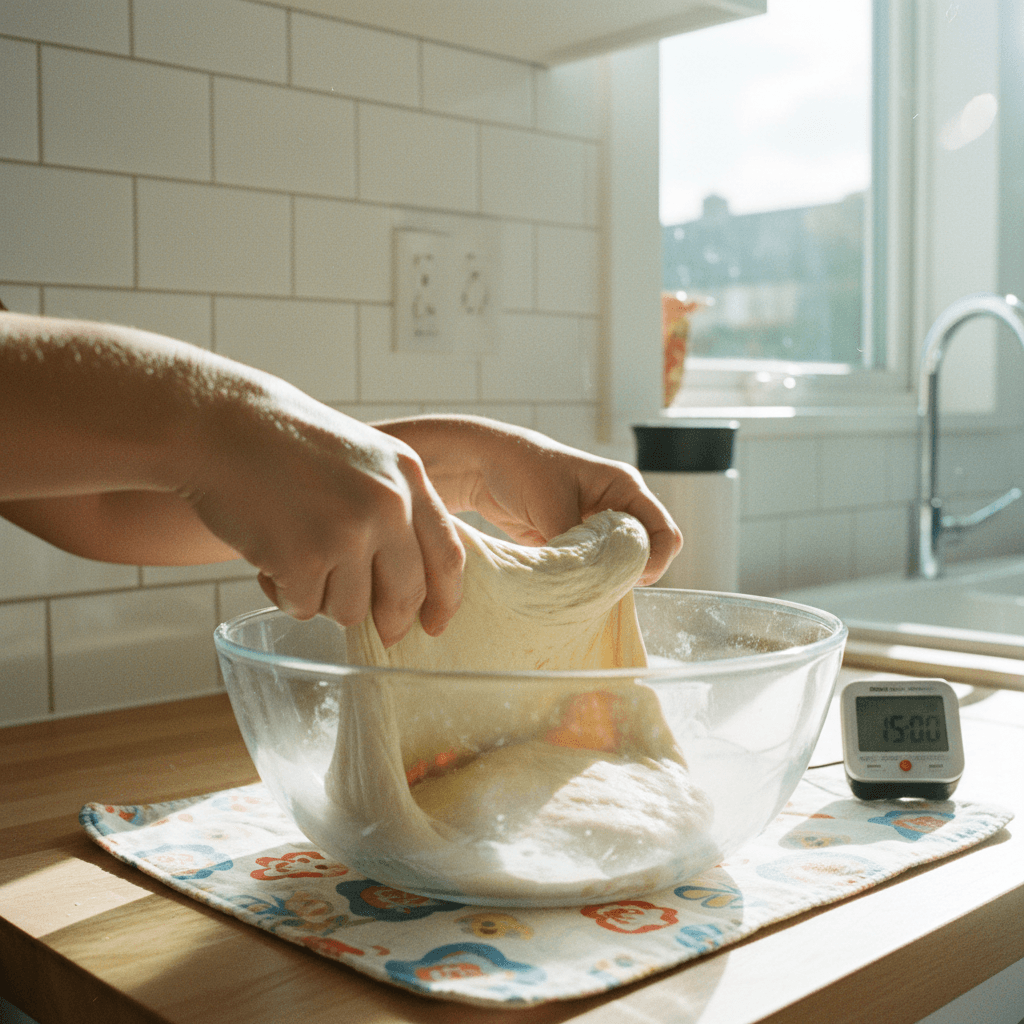
- 8
Transfer the dough to a lightly oiled clear container or bowl. Cover the container tightly.
⏱️ 2 min
- 9
Refrigerate the dough for 24-48 hours for a slow, cold fermentation.
⏱️ 2880 min•🌡️ 4
- 10
After cold fermentation, remove the dough from the refrigerator. It should be bubbly and increased in volume. Lightly flour your work surface.
⏱️ 1 min
- 11
Gently transfer the dough onto the floured surface. Divide the dough into 3-4 equal portions, depending on desired pizza size.
⏱️ 2 min
- 12
Take each portion and shape it into a tight ball by tucking the edges underneath and rotating it on the counter to create surface tension. Place each dough ball into individual, lightly oiled containers or on a floured tray, ensuring they are covered.
⏱️ 5 min
- 13
Cover the dough balls and let them proof at room temperature for 2-4 hours, or until they are visibly expanded and airy.
⏱️ 240 min
- 14
Lightly flour your work surface. Take one proofed dough ball and place it on the floured surface. Dust the top lightly with flour.
⏱️ 1 min
- 15
Gently press the dough from the center outwards with your fingertips, pushing air towards the edges to form a crust (cornicione). Avoid pressing the rim. Stretch the dough to your desired pizza size, maintaining the airy crust.
⏱️ 3 min
- 16
Carefully transfer the stretched pizza base onto a pizza peel dusted with semolina or flour. Spread a thin layer of tomato sauce evenly over the base, leaving the crust clear.
⏱️ 2 min
- 17
Add torn or shredded mozzarella cheese. Place fresh basil leaves. Drizzle with a little olive oil.
⏱️ 2 min
- 18
Preheat your oven to the highest possible temperature, preferably with a pizza stone or steel, for at least 30-60 minutes.
⏱️ 30 min•🌡️ 250
- 19
Carefully slide the pizza from the peel directly onto the hot pizza stone/steel in the oven. Bake for a few minutes (typically 5-10 minutes in a home oven, less in a dedicated pizza oven), rotating if necessary, until the crust is golden brown, puffed, and has leopard spots, and the cheese is melted and bubbly.
⏱️ 10 min•🌡️ 250
- 20
Remove the baked pizza from the oven. Let it cool for a moment before slicing and serving. Enjoy!
⏱️ 1 min
Kitchen Tools
Nutrition Facts (per serving)
Homemade Pizza
For the Dough
- 500 g 00 flour
- 350 g water
- 10 g salt
- 2 g dry yeast
For Topping (per pizza)
- 1/4 cup tomato sauce
- 1/2 cup mozzarella cheese, torn or shredded
- 5 fresh basil leaves
- 1/2 teaspoon olive oil, for drizzling
For Assembly
- as needed all-purpose flour, for dusting
- as needed semolina, for dusting pizza peel
Instructions
- 1
In a large mixing bowl, add 350 grams of water. Add 2 grams of dry yeast to the water and mix well with a spoon until dissolved.
⏱️ 2 min - 2
Add 500 grams of 00 flour to the bowl. Mix with a spoon until the ingredients are mostly combined into a shaggy dough.
⏱️ 3 min - 3
Add 10 grams of salt directly onto the dough. Use your hands to lightly knead the dough in the bowl for about 1 minute, ensuring the salt is incorporated.
⏱️ 2 min - 4
Cover the bowl and let the dough rest for 15 minutes.
⏱️ 15 min - 5
After 15 minutes, uncover the dough. Perform a series of stretch and folds: gently grab a portion of the dough from the bottom, stretch it upwards, and fold it over onto itself. Rotate the bowl and repeat this action several times until the dough feels stronger.
⏱️ 3 min - 6
Cover the bowl and let the dough rest for another 15 minutes.
⏱️ 15 min - 7
Repeat the stretch and fold process two more times, with 15-minute rests in between each session (totaling 3 rounds of stretch and folds).
⏱️ 36 min - 8
Transfer the dough to a lightly oiled clear container or bowl. Cover the container tightly.
⏱️ 2 min - 9
Refrigerate the dough for 24-48 hours for a slow, cold fermentation.
⏱️ 2880 min•🌡️ 4 - 10
After cold fermentation, remove the dough from the refrigerator. It should be bubbly and increased in volume. Lightly flour your work surface.
⏱️ 1 min - 11
Gently transfer the dough onto the floured surface. Divide the dough into 3-4 equal portions, depending on desired pizza size.
⏱️ 2 min - 12
Take each portion and shape it into a tight ball by tucking the edges underneath and rotating it on the counter to create surface tension. Place each dough ball into individual, lightly oiled containers or on a floured tray, ensuring they are covered.
⏱️ 5 min - 13
Cover the dough balls and let them proof at room temperature for 2-4 hours, or until they are visibly expanded and airy.
⏱️ 240 min - 14
Lightly flour your work surface. Take one proofed dough ball and place it on the floured surface. Dust the top lightly with flour.
⏱️ 1 min - 15
Gently press the dough from the center outwards with your fingertips, pushing air towards the edges to form a crust (cornicione). Avoid pressing the rim. Stretch the dough to your desired pizza size, maintaining the airy crust.
⏱️ 3 min - 16
Carefully transfer the stretched pizza base onto a pizza peel dusted with semolina or flour. Spread a thin layer of tomato sauce evenly over the base, leaving the crust clear.
⏱️ 2 min - 17
Add torn or shredded mozzarella cheese. Place fresh basil leaves. Drizzle with a little olive oil.
⏱️ 2 min - 18
Preheat your oven to the highest possible temperature, preferably with a pizza stone or steel, for at least 30-60 minutes.
⏱️ 30 min•🌡️ 250 - 19
Carefully slide the pizza from the peel directly onto the hot pizza stone/steel in the oven. Bake for a few minutes (typically 5-10 minutes in a home oven, less in a dedicated pizza oven), rotating if necessary, until the crust is golden brown, puffed, and has leopard spots, and the cheese is melted and bubbly.
⏱️ 10 min•🌡️ 250 - 20
Remove the baked pizza from the oven. Let it cool for a moment before slicing and serving. Enjoy!
⏱️ 1 min