Fermented Green Tomatoes
Fermented Green Tomatoes

Ingredients
For the Ferment
- 2 pounds green tomatoes
- 1/2 cup fresh parsley, roughly chopped
- 1/2 cup fresh dill, roughly chopped
- 2 celery stalks, cut into 2-inch pieces
- 6 garlic cloves, peeled
- 1 teaspoon mustard seeds, whole
- 1 teaspoon black peppercorns, whole
- 1 teaspoon coriander seeds, whole
- 3 grape leaves
- 1/2 teaspoon mustard powder
- 1 hot peppers, sliced (optional, for heat)
For the Brine
- 4 cups non-chlorinated water
- 4 tablespoons sea salt
Instructions
- 1
Wash the green tomatoes thoroughly. Place them in a large bowl and cover with water. Using a small, sharp knife or skewer, pierce each green tomato 2-3 times. This allows the brine to penetrate effectively and ensures even fermentation.
⏱️ 10 min
- 2
Begin layering ingredients in a large, clean glass fermentation jar. Start with a layer of pierced green tomatoes at the bottom. Add a portion of the fresh parsley, fresh dill, and celery stalks. Scatter some of the peeled garlic cloves, mustard seeds, black peppercorns, and coriander seeds (and sliced hot peppers, if using).
⏱️ 5 min
- 3
Continue layering the remaining green tomatoes, herbs, celery, garlic, and spices until the jar is almost full, leaving about 1 1/2 to 2 inches of headspace from the rim.
⏱️ 5 min
- 4
Prepare the brine: In a separate bowl or jar, combine the non-chlorinated water and sea salt. Stir thoroughly with a wooden or non-reactive utensil until the salt is completely dissolved. Ensure no undissolved salt remains at the bottom.
⏱️ 5 min
- 5
Carefully pour the prepared salt brine over the layered ingredients in the fermentation jar, ensuring all contents are fully submerged. Fill the jar until the brine covers the top layer of ingredients, maintaining the headspace.
⏱️ 2 min
- 6
Place the grape leaves on top of the submerged ingredients. These act as a protective barrier. Sprinkle the mustard powder evenly over the grape leaves; this helps to inhibit mold growth during fermentation.
⏱️ 1 min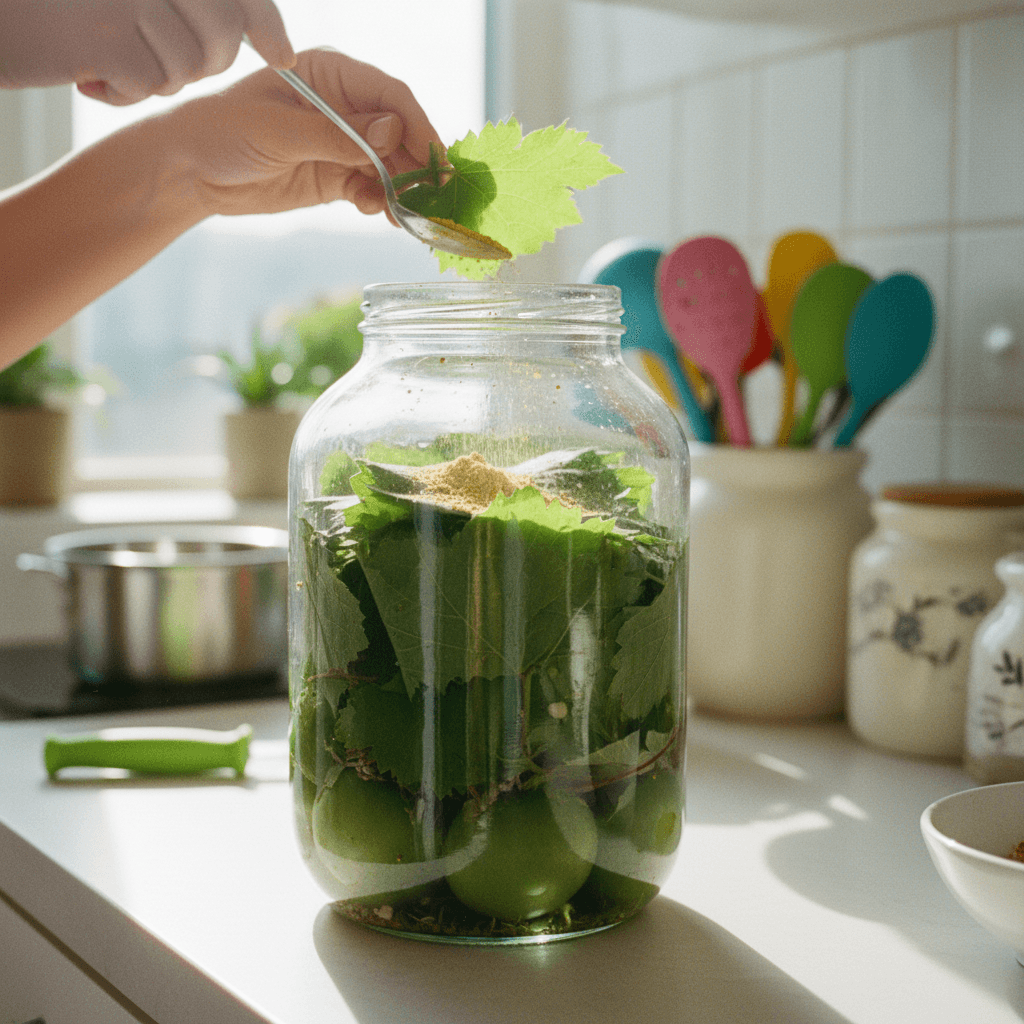
- 7
Place a fermentation weight on top of the grape leaves to keep all ingredients pressed down and fully submerged under the brine. This is crucial to prevent spoilage. Securely close the jar with its lid.
⏱️ 2 min
- 8
Allow the tomatoes to ferment at room temperature (ideally between 65-75°F or 18-24°C) for at least 2 weeks, or up to 4 weeks, depending on desired sourness and flavor development. Check the jar daily for any signs of mold or kahm yeast (a white film that is usually harmless but can be skimmed off). Once fermentation is complete to your liking, transfer the jar to the refrigerator to slow down the fermentation process and store for several months.
⏱️ 14400 min
Kitchen Tools
Nutrition Facts (per serving)
Fermented Green Tomatoes
For the Ferment
- 2 pounds green tomatoes
- 1/2 cup fresh parsley, roughly chopped
- 1/2 cup fresh dill, roughly chopped
- 2 celery stalks, cut into 2-inch pieces
- 6 garlic cloves, peeled
- 1 teaspoon mustard seeds, whole
- 1 teaspoon black peppercorns, whole
- 1 teaspoon coriander seeds, whole
- 3 grape leaves
- 1/2 teaspoon mustard powder
- 1 hot peppers, sliced (optional, for heat)
For the Brine
- 4 cups non-chlorinated water
- 4 tablespoons sea salt
Instructions
- 1
Wash the green tomatoes thoroughly. Place them in a large bowl and cover with water. Using a small, sharp knife or skewer, pierce each green tomato 2-3 times. This allows the brine to penetrate effectively and ensures even fermentation.
⏱️ 10 min - 2
Begin layering ingredients in a large, clean glass fermentation jar. Start with a layer of pierced green tomatoes at the bottom. Add a portion of the fresh parsley, fresh dill, and celery stalks. Scatter some of the peeled garlic cloves, mustard seeds, black peppercorns, and coriander seeds (and sliced hot peppers, if using).
⏱️ 5 min - 3
Continue layering the remaining green tomatoes, herbs, celery, garlic, and spices until the jar is almost full, leaving about 1 1/2 to 2 inches of headspace from the rim.
⏱️ 5 min - 4
Prepare the brine: In a separate bowl or jar, combine the non-chlorinated water and sea salt. Stir thoroughly with a wooden or non-reactive utensil until the salt is completely dissolved. Ensure no undissolved salt remains at the bottom.
⏱️ 5 min - 5
Carefully pour the prepared salt brine over the layered ingredients in the fermentation jar, ensuring all contents are fully submerged. Fill the jar until the brine covers the top layer of ingredients, maintaining the headspace.
⏱️ 2 min - 6
Place the grape leaves on top of the submerged ingredients. These act as a protective barrier. Sprinkle the mustard powder evenly over the grape leaves; this helps to inhibit mold growth during fermentation.
⏱️ 1 min - 7
Place a fermentation weight on top of the grape leaves to keep all ingredients pressed down and fully submerged under the brine. This is crucial to prevent spoilage. Securely close the jar with its lid.
⏱️ 2 min - 8
Allow the tomatoes to ferment at room temperature (ideally between 65-75°F or 18-24°C) for at least 2 weeks, or up to 4 weeks, depending on desired sourness and flavor development. Check the jar daily for any signs of mold or kahm yeast (a white film that is usually harmless but can be skimmed off). Once fermentation is complete to your liking, transfer the jar to the refrigerator to slow down the fermentation process and store for several months.
⏱️ 14400 min