No-Knead Ciabatta Rolls
No-Knead Ciabatta Rolls

Ingredients
- 1 teaspoon active dry yeast
- 1/2 teaspoon granulated sugar
- 1 1/2 cups warm water, 105-115°F (40-46°C)
- 3 1/2 cups all-purpose flour
- 1 1/2 teaspoons salt
- 2 tablespoons olive oil
- as needed all-purpose flour, for dusting
Instructions
- 1
In a measuring cup or small bowl, combine the active dry yeast, granulated sugar, and warm water. Stir gently and let it sit for 5-10 minutes until a foamy layer forms on top, indicating the yeast is active.
⏱️ 10 min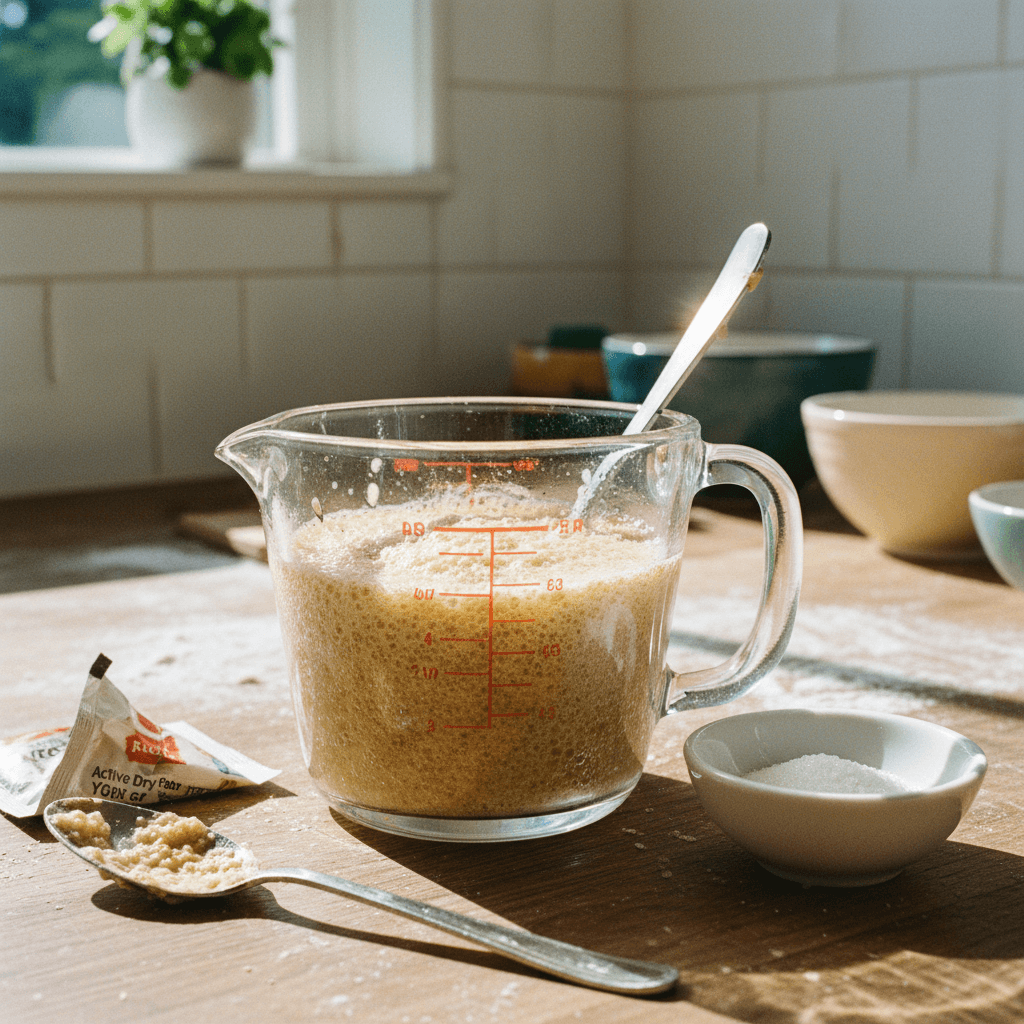
- 2
In a large mixing bowl, whisk together the all-purpose flour and salt.
⏱️ 2 min
- 3
Pour the activated yeast mixture and olive oil into the bowl with the dry ingredients. Use a sturdy spoon or spatula to mix everything together until a cohesive, shaggy dough forms. Do not overmix; a scraggly texture is desired.
⏱️ 3 min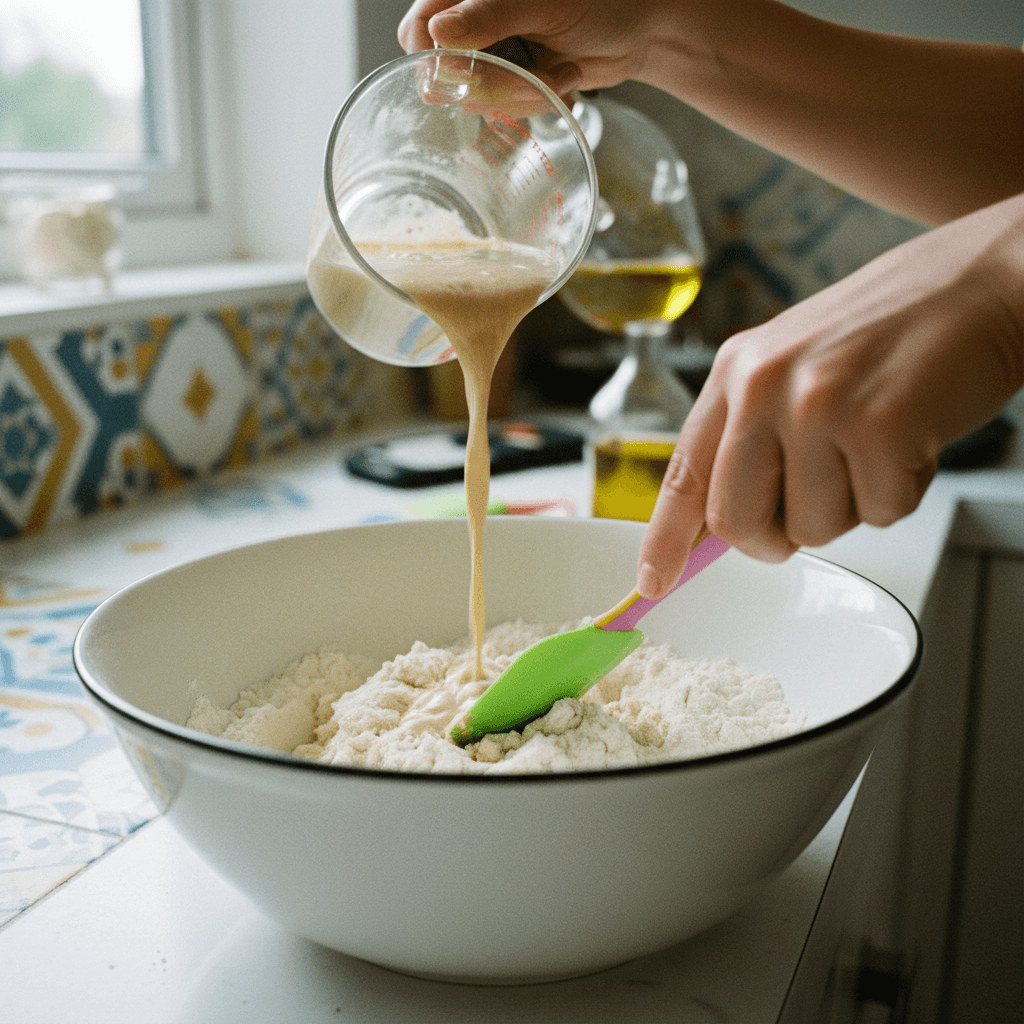
- 4
Cover the bowl tightly with plastic wrap and let the dough rest at room temperature for 30 minutes.
⏱️ 30 min
- 5
After the first rest, uncover the dough. Perform a 'stretch and fold' by gently lifting a portion of the dough from the edge of the bowl, stretching it upwards, and then folding it over itself towards the center of the bowl. Rotate the bowl a quarter turn and repeat this action around the entire dough, completing 4-6 stretches and folds. This helps develop gluten.
⏱️ 5 min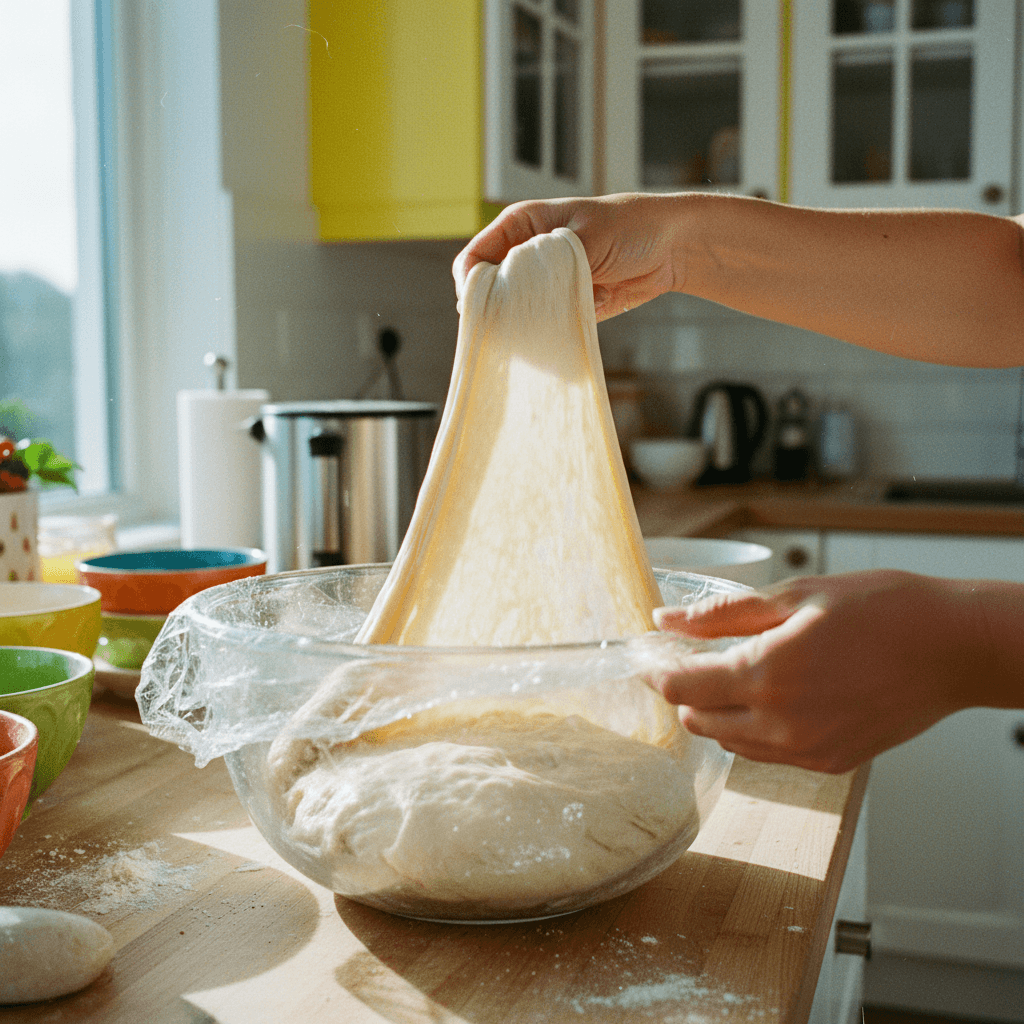
- 6
Re-cover the bowl tightly with plastic wrap and place it in the refrigerator to rest overnight (for at least 12 hours, up to 24 hours). This cold proof develops flavor and texture.
⏱️ 720 min
- 7
The next day, preheat your oven to 450°F (230°C). Lightly flour a clean work surface with a generous amount of all-purpose flour.
⏱️ 5 min•🌡️ 450
- 8
Gently scrape the 'jiggly' dough out of the bowl onto the floured surface. Avoid deflating the dough too much. Gently pat or stretch the dough into a rough rectangular shape, about 1-inch thick.
⏱️ 3 min
- 9
Using a dough scraper or a sharp knife, divide the dough into four individual pieces. Gently shape each piece into a rough ciabatta roll shape. They don't need to be perfectly shaped.
⏱️ 5 min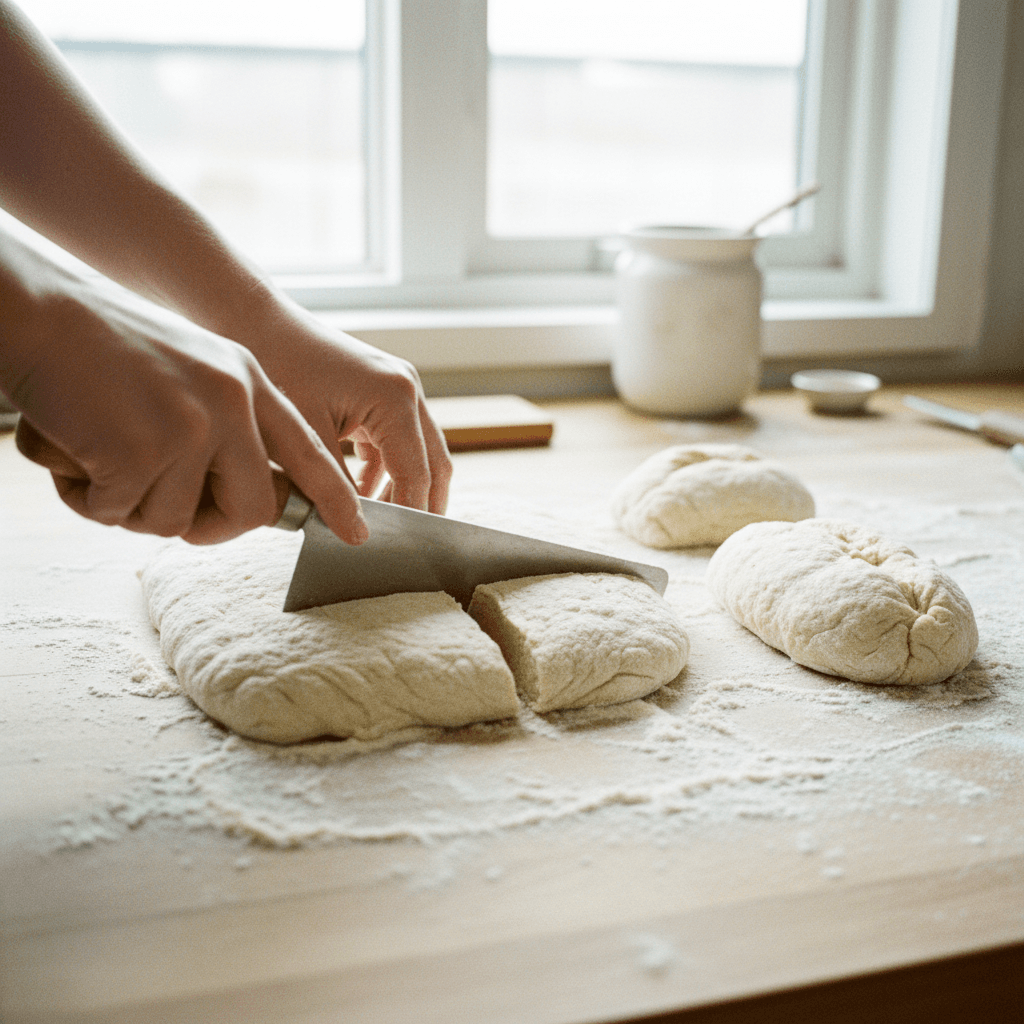
- 10
Lightly dust a baking sheet with flour or line it with parchment paper. Carefully transfer the shaped dough pieces onto the prepared baking sheet. Cover the dough pieces loosely with another baking sheet, plastic wrap, or a clean kitchen towel and let them rest for another 30 minutes for a second proof.
⏱️ 30 min
- 11
Bake the ciabatta rolls in the preheated oven for 20-25 minutes, or until they are golden brown, have a crusty exterior, and sound hollow when tapped on the bottom. If desired, you can place a pan of hot water on the bottom rack of the oven during baking to create steam for a crispier crust.
⏱️ 25 min•🌡️ 450
- 12
Remove the ciabatta rolls from the oven and let them cool on a wire rack before serving. Enjoy them sliced open with your favorite fillings!
⏱️ 10 min
Kitchen Tools
Nutrition Facts (per serving)
No-Knead Ciabatta Rolls
- 1 teaspoon active dry yeast
- 1/2 teaspoon granulated sugar
- 1 1/2 cups warm water, 105-115°F (40-46°C)
- 3 1/2 cups all-purpose flour
- 1 1/2 teaspoons salt
- 2 tablespoons olive oil
- as needed all-purpose flour, for dusting
Instructions
- 1
In a measuring cup or small bowl, combine the active dry yeast, granulated sugar, and warm water. Stir gently and let it sit for 5-10 minutes until a foamy layer forms on top, indicating the yeast is active.
⏱️ 10 min - 2
In a large mixing bowl, whisk together the all-purpose flour and salt.
⏱️ 2 min - 3
Pour the activated yeast mixture and olive oil into the bowl with the dry ingredients. Use a sturdy spoon or spatula to mix everything together until a cohesive, shaggy dough forms. Do not overmix; a scraggly texture is desired.
⏱️ 3 min - 4
Cover the bowl tightly with plastic wrap and let the dough rest at room temperature for 30 minutes.
⏱️ 30 min - 5
After the first rest, uncover the dough. Perform a 'stretch and fold' by gently lifting a portion of the dough from the edge of the bowl, stretching it upwards, and then folding it over itself towards the center of the bowl. Rotate the bowl a quarter turn and repeat this action around the entire dough, completing 4-6 stretches and folds. This helps develop gluten.
⏱️ 5 min - 6
Re-cover the bowl tightly with plastic wrap and place it in the refrigerator to rest overnight (for at least 12 hours, up to 24 hours). This cold proof develops flavor and texture.
⏱️ 720 min - 7
The next day, preheat your oven to 450°F (230°C). Lightly flour a clean work surface with a generous amount of all-purpose flour.
⏱️ 5 min•🌡️ 450 - 8
Gently scrape the 'jiggly' dough out of the bowl onto the floured surface. Avoid deflating the dough too much. Gently pat or stretch the dough into a rough rectangular shape, about 1-inch thick.
⏱️ 3 min - 9
Using a dough scraper or a sharp knife, divide the dough into four individual pieces. Gently shape each piece into a rough ciabatta roll shape. They don't need to be perfectly shaped.
⏱️ 5 min - 10
Lightly dust a baking sheet with flour or line it with parchment paper. Carefully transfer the shaped dough pieces onto the prepared baking sheet. Cover the dough pieces loosely with another baking sheet, plastic wrap, or a clean kitchen towel and let them rest for another 30 minutes for a second proof.
⏱️ 30 min - 11
Bake the ciabatta rolls in the preheated oven for 20-25 minutes, or until they are golden brown, have a crusty exterior, and sound hollow when tapped on the bottom. If desired, you can place a pan of hot water on the bottom rack of the oven during baking to create steam for a crispier crust.
⏱️ 25 min•🌡️ 450 - 12
Remove the ciabatta rolls from the oven and let them cool on a wire rack before serving. Enjoy them sliced open with your favorite fillings!
⏱️ 10 min