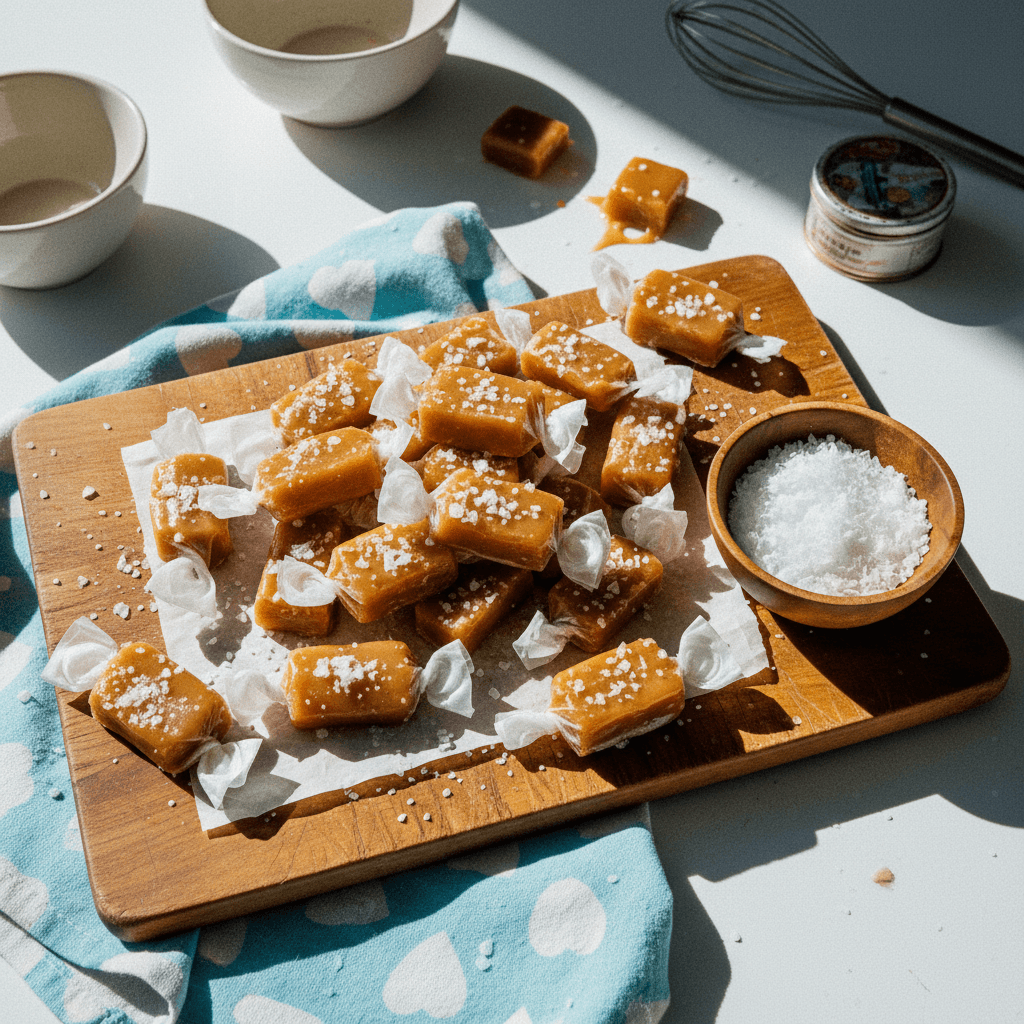
Soft, Buttery Homemade Caramels with Flaky Sea Salt
Soft, Buttery Homemade Caramels with Flaky Sea Salt
Ingredients
For the Caramels
- 1 1/2 cups granulated sugar
- 1/2 cup light corn syrup
- 1/2 cup unsalted butter, cut into 8 pieces
- 1 cup heavy cream
- 1 teaspoon vanilla extract
- 1/2 teaspoon flaky sea salt, plus more for sprinkling
Instructions
- 1
Prepare an 8x8 inch baking pan by lining it with parchment paper, leaving an overhang on all sides. Lightly grease the parchment paper with butter or non-stick spray.
⏱️ 5 min
- 2
In a heavy-bottomed 3-quart saucepan, combine the granulated sugar, light corn syrup, and 1/4 cup of the heavy cream. Stir gently to combine.
⏱️ 2 min
- 3
In a separate small saucepan, combine the remaining 3/4 cup heavy cream and the unsalted butter. Heat over medium-low heat until the butter is melted and the cream is warm, but not boiling. Keep warm over very low heat.
⏱️ 5 min
- 4
Place the saucepan with the sugar mixture over medium heat. Stir occasionally until the sugar is dissolved. Once dissolved, stop stirring and bring the mixture to a boil. Insert a candy thermometer.
⏱️ 5 min
- 5
Continue to cook the sugar mixture without stirring until it reaches 240°F (115°C). This is the 'soft ball' stage.
⏱️ 10 min•🌡️ 240
- 6
Once the mixture reaches 240°F (115°C), slowly and carefully pour the warm cream and butter mixture into the sugar mixture while constantly stirring with a whisk. Be very careful as the mixture will bubble up vigorously.
⏱️ 2 min
- 7
Continue to cook the caramel, stirring frequently to prevent scorching, until the candy thermometer reaches 245°F (118°C). This is the 'firm ball' stage.
⏱️ 10 min•🌡️ 245
- 8
Immediately remove the saucepan from the heat. Stir in the vanilla extract and 1/2 teaspoon of flaky sea salt.
⏱️ 1 min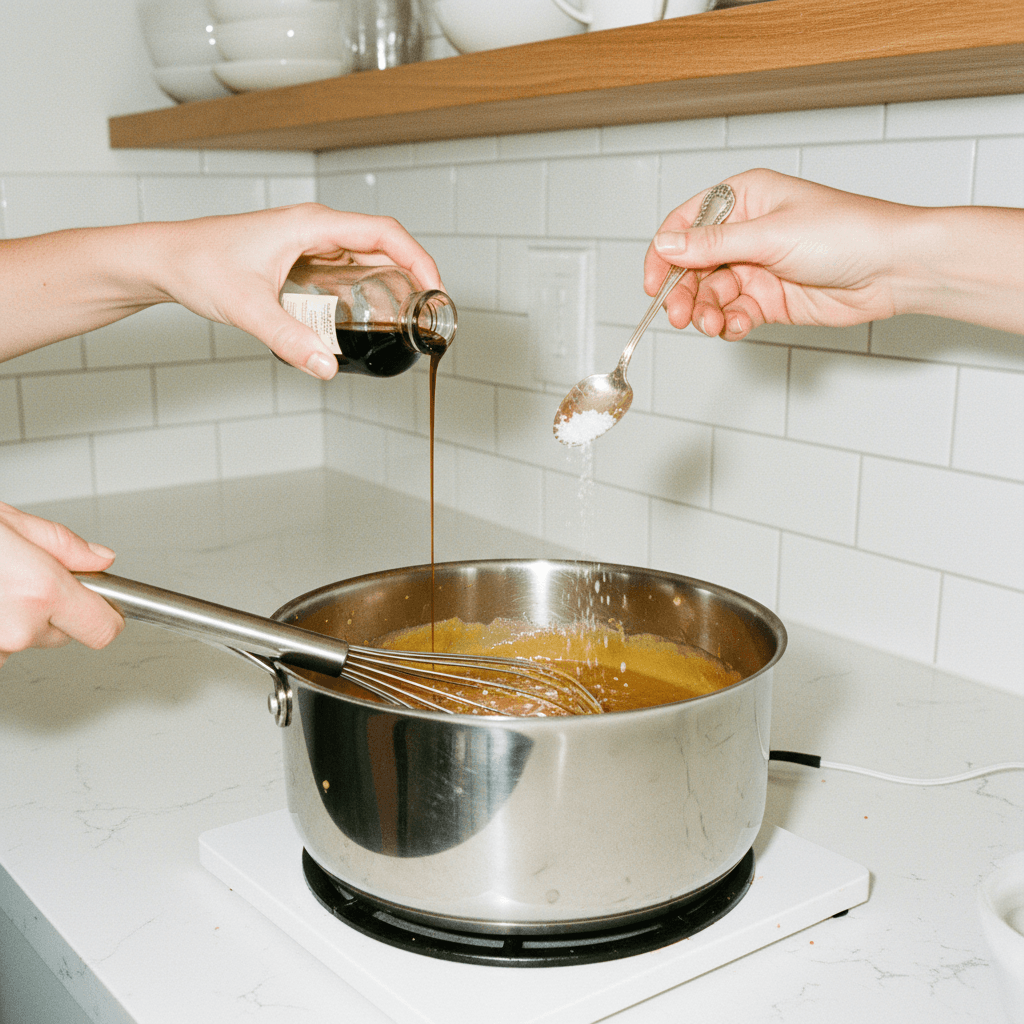
- 9
Pour the hot caramel into the prepared baking pan. Do not scrape the bottom or sides of the saucepan, as this can introduce sugar crystals and make the caramel grainy.
⏱️ 1 min
- 10
Allow the caramel to cool at room temperature for at least 2 hours, or until completely set. Do not refrigerate, as this can make the caramel too hard.
⏱️ 120 min
- 11
Once cooled and set, use the parchment paper overhang to lift the caramel out of the pan. Place it on a cutting board.
⏱️ 1 min
- 12
Sprinkle additional flaky sea salt generously over the top of the caramel. Using a sharp, lightly oiled knife, cut the caramel into 1-inch squares.
⏱️ 5 min
- 13
Wrap each caramel individually in wax paper or parchment paper to prevent sticking. Store at room temperature in an airtight container.
⏱️ 5 min
Kitchen Tools
Nutrition Facts (per serving)
Soft, Buttery Homemade Caramels with Flaky Sea Salt
For the Caramels
- 1 1/2 cups granulated sugar
- 1/2 cup light corn syrup
- 1/2 cup unsalted butter, cut into 8 pieces
- 1 cup heavy cream
- 1 teaspoon vanilla extract
- 1/2 teaspoon flaky sea salt, plus more for sprinkling
Instructions
- 1
Prepare an 8x8 inch baking pan by lining it with parchment paper, leaving an overhang on all sides. Lightly grease the parchment paper with butter or non-stick spray.
⏱️ 5 min - 2
In a heavy-bottomed 3-quart saucepan, combine the granulated sugar, light corn syrup, and 1/4 cup of the heavy cream. Stir gently to combine.
⏱️ 2 min - 3
In a separate small saucepan, combine the remaining 3/4 cup heavy cream and the unsalted butter. Heat over medium-low heat until the butter is melted and the cream is warm, but not boiling. Keep warm over very low heat.
⏱️ 5 min - 4
Place the saucepan with the sugar mixture over medium heat. Stir occasionally until the sugar is dissolved. Once dissolved, stop stirring and bring the mixture to a boil. Insert a candy thermometer.
⏱️ 5 min - 5
Continue to cook the sugar mixture without stirring until it reaches 240°F (115°C). This is the 'soft ball' stage.
⏱️ 10 min•🌡️ 240 - 6
Once the mixture reaches 240°F (115°C), slowly and carefully pour the warm cream and butter mixture into the sugar mixture while constantly stirring with a whisk. Be very careful as the mixture will bubble up vigorously.
⏱️ 2 min - 7
Continue to cook the caramel, stirring frequently to prevent scorching, until the candy thermometer reaches 245°F (118°C). This is the 'firm ball' stage.
⏱️ 10 min•🌡️ 245 - 8
Immediately remove the saucepan from the heat. Stir in the vanilla extract and 1/2 teaspoon of flaky sea salt.
⏱️ 1 min - 9
Pour the hot caramel into the prepared baking pan. Do not scrape the bottom or sides of the saucepan, as this can introduce sugar crystals and make the caramel grainy.
⏱️ 1 min - 10
Allow the caramel to cool at room temperature for at least 2 hours, or until completely set. Do not refrigerate, as this can make the caramel too hard.
⏱️ 120 min - 11
Once cooled and set, use the parchment paper overhang to lift the caramel out of the pan. Place it on a cutting board.
⏱️ 1 min - 12
Sprinkle additional flaky sea salt generously over the top of the caramel. Using a sharp, lightly oiled knife, cut the caramel into 1-inch squares.
⏱️ 5 min - 13
Wrap each caramel individually in wax paper or parchment paper to prevent sticking. Store at room temperature in an airtight container.
⏱️ 5 min