Poached Salmon the Vivaldi Way
Poached Salmon the Vivaldi Way

Ingredients
For the Poaching Liquid
- 4 cups water
- 1 cup dry white wine
- 1 lemon, sliced
- 4 sprigs fresh dill
- 1 bay leaf
- 1/2 teaspoon black peppercorns
- 1 teaspoon salt
For the Salmon
- 4 salmon fillets, 6-ounce, skin on or off
For Serving (Optional)
- 2 tablespoons fresh dill, chopped, for garnish
- 4 lemon wedges, for serving
Instructions
- 1
Combine water, dry white wine, sliced lemon, dill sprigs, bay leaf, black peppercorns, and salt in a large, wide pot or deep skillet. Bring the mixture to a gentle simmer over medium heat.
⏱️ 7 min
- 2
Once simmering, reduce the heat to low. The liquid should be barely bubbling, not boiling vigorously. This gentle heat is key to perfectly poached salmon.
⏱️ 1 min - 3
Carefully add the salmon fillets to the poaching liquid. Ensure the liquid covers the salmon. If not, add a little more water or wine until the fish is submerged.
⏱️ 1 min
- 4
Cover the pot and poach the salmon for 8-12 minutes, depending on the thickness of the fillets and your desired doneness. The salmon is cooked when it flakes easily with a fork.
⏱️ 10 min
- 5
Using a slotted spatula, carefully remove the poached salmon from the liquid and transfer it to serving plates.
⏱️ 1 min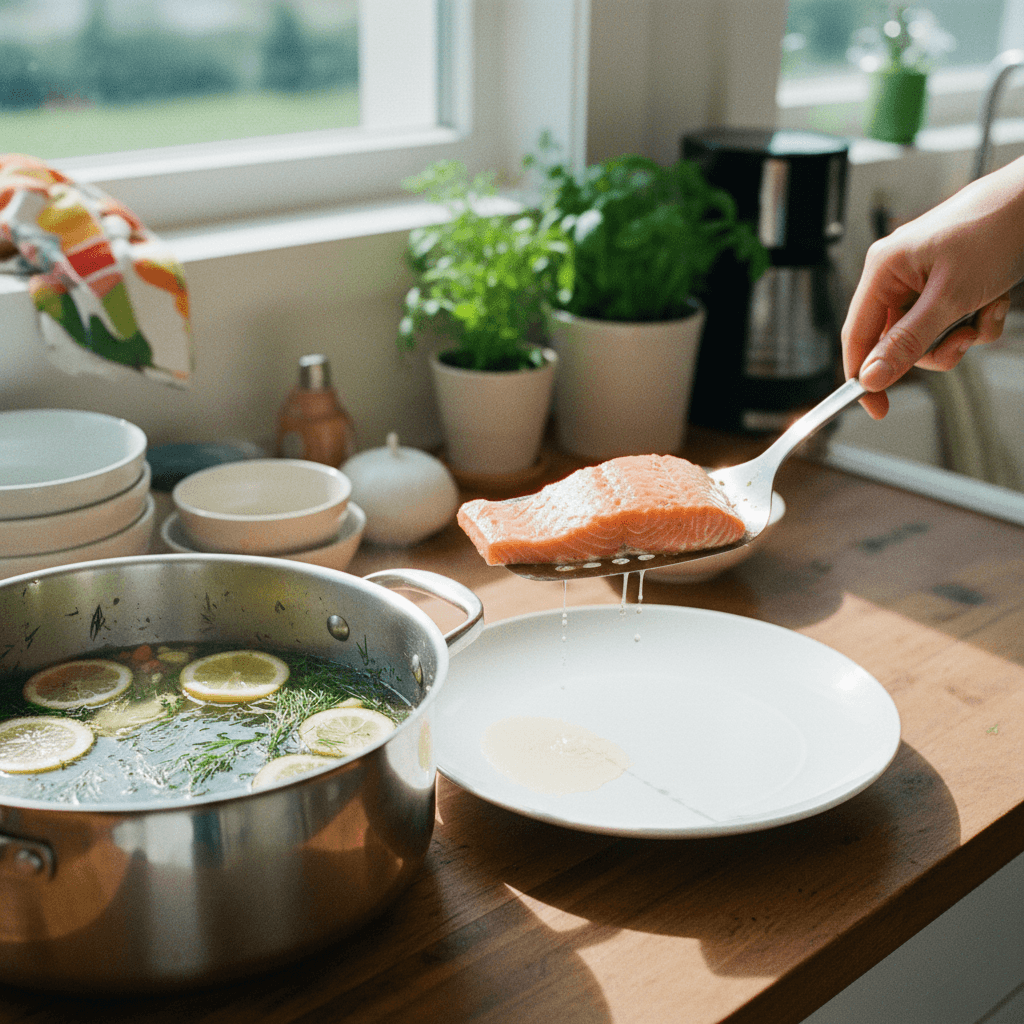
- 6
Garnish with fresh chopped dill and serve immediately with lemon wedges, if desired. The poaching liquid can be strained and reduced to create a light sauce, or discarded.
⏱️ 5 min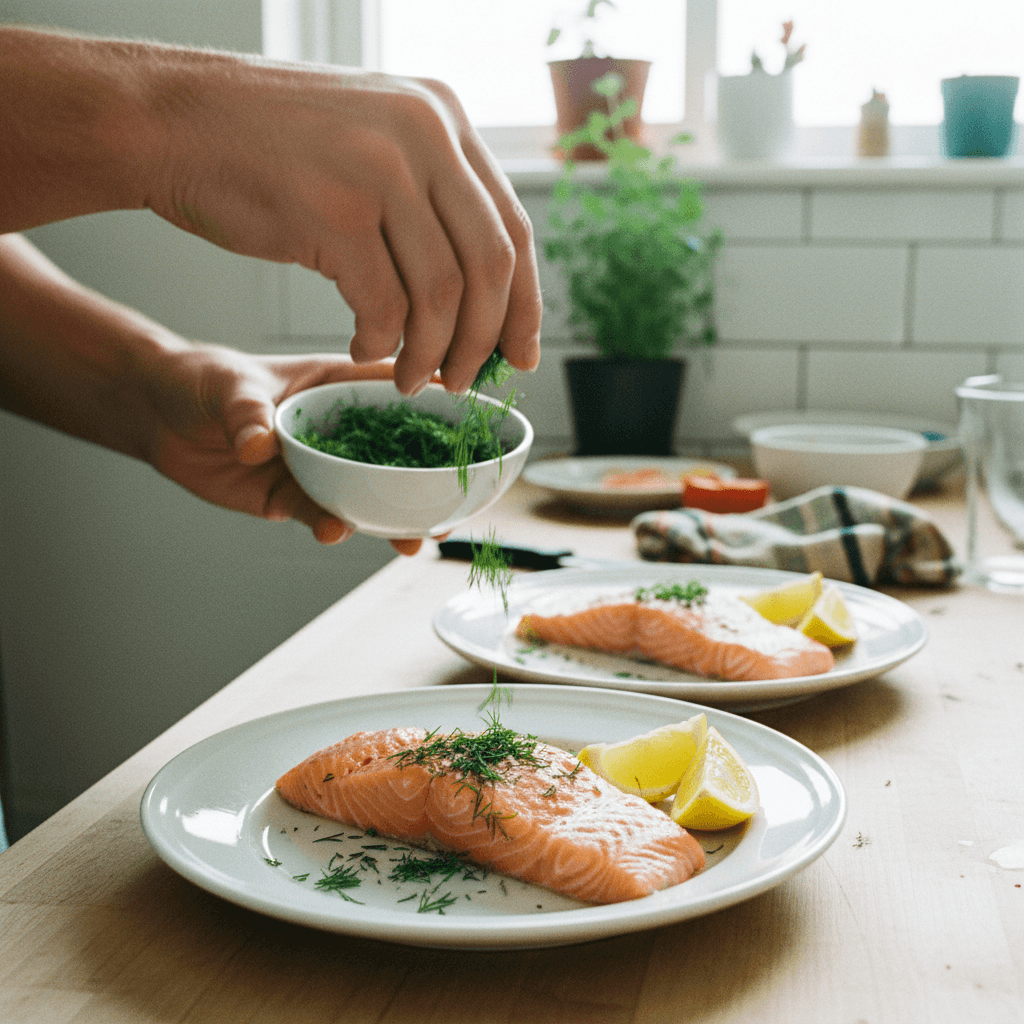
Kitchen Tools
Nutrition Facts (per serving)
Poached Salmon the Vivaldi Way
For the Poaching Liquid
- 4 cups water
- 1 cup dry white wine
- 1 lemon, sliced
- 4 sprigs fresh dill
- 1 bay leaf
- 1/2 teaspoon black peppercorns
- 1 teaspoon salt
For the Salmon
- 4 salmon fillets, 6-ounce, skin on or off
For Serving (Optional)
- 2 tablespoons fresh dill, chopped, for garnish
- 4 lemon wedges, for serving
Instructions
- 1
Combine water, dry white wine, sliced lemon, dill sprigs, bay leaf, black peppercorns, and salt in a large, wide pot or deep skillet. Bring the mixture to a gentle simmer over medium heat.
⏱️ 7 min - 2
Once simmering, reduce the heat to low. The liquid should be barely bubbling, not boiling vigorously. This gentle heat is key to perfectly poached salmon.
⏱️ 1 min - 3
Carefully add the salmon fillets to the poaching liquid. Ensure the liquid covers the salmon. If not, add a little more water or wine until the fish is submerged.
⏱️ 1 min - 4
Cover the pot and poach the salmon for 8-12 minutes, depending on the thickness of the fillets and your desired doneness. The salmon is cooked when it flakes easily with a fork.
⏱️ 10 min - 5
Using a slotted spatula, carefully remove the poached salmon from the liquid and transfer it to serving plates.
⏱️ 1 min - 6
Garnish with fresh chopped dill and serve immediately with lemon wedges, if desired. The poaching liquid can be strained and reduced to create a light sauce, or discarded.
⏱️ 5 min