Banh Cuon (Vietnamese Rice Roll Hack)
Banh Cuon (Vietnamese Rice Roll Hack)

Ingredients
For the Banh Cuon
- 12 sheets rice paper, Vietnamese 3 Ladies or Bamboo brand recommended
- 8 cups cold water, for soaking
- 1 pound ground pork, lean
- 1/4 cup wood ear mushrooms, dried, rehydrated and finely chopped
- 1/2 teaspoon salt, or to taste
- 1/4 teaspoon black pepper, freshly ground, or to taste
- 1 tablespoon fish sauce
- 1 tablespoon vegetable oil, plus more for brushing
For Serving
- 1/4 cup crispy shallots
- 1/2 cup fresh herbs, such as cilantro, mint, or Thai basil
- 1/2 cup Nuoc Cham, Mom's homemade recipe (recipe not provided here)
Instructions
- 1
Begin by soaking the rice paper. Fill a large shallow dish or bowl with cold water. Submerge one sheet of rice paper in the cold water. Allow it to soak for 10 to 25 minutes, depending on the brand. The goal is for the rice paper to become pillowy soft and pliable, not just softened for summer rolls. Test one sheet first to determine the optimal soaking time for your specific brand. Once a sheet is perfectly soft, carefully remove it and lay it flat on a clean, damp surface or cutting board. Repeat this process in batches as you assemble the rolls.
⏱️ 25 min
- 2
While the rice paper is soaking, prepare the filling. Heat 1 tablespoon of vegetable oil in a medium skillet over medium heat. Add the ground pork and cook, breaking it up with a spoon, until it is no longer pink, about 5-7 minutes. Drain any excess fat.
⏱️ 7 min
- 3
Add the rehydrated and finely chopped wood ear mushrooms to the cooked pork. Season with 1/2 teaspoon of salt, 1/4 teaspoon of black pepper, and 1 tablespoon of fish sauce. Stir well to combine and cook for another 3-5 minutes, allowing the flavors to meld. Remove from heat and set aside.
⏱️ 5 min
- 4
Once a rice paper sheet is properly softened, spoon about 2 tablespoons of the prepared pork and mushroom filling onto one end of the rice paper, leaving a small border. Carefully fold the sides of the rice paper over the filling, then roll it up tightly from the bottom to create a neat roll. Repeat with the remaining rice paper and filling.
⏱️ 10 min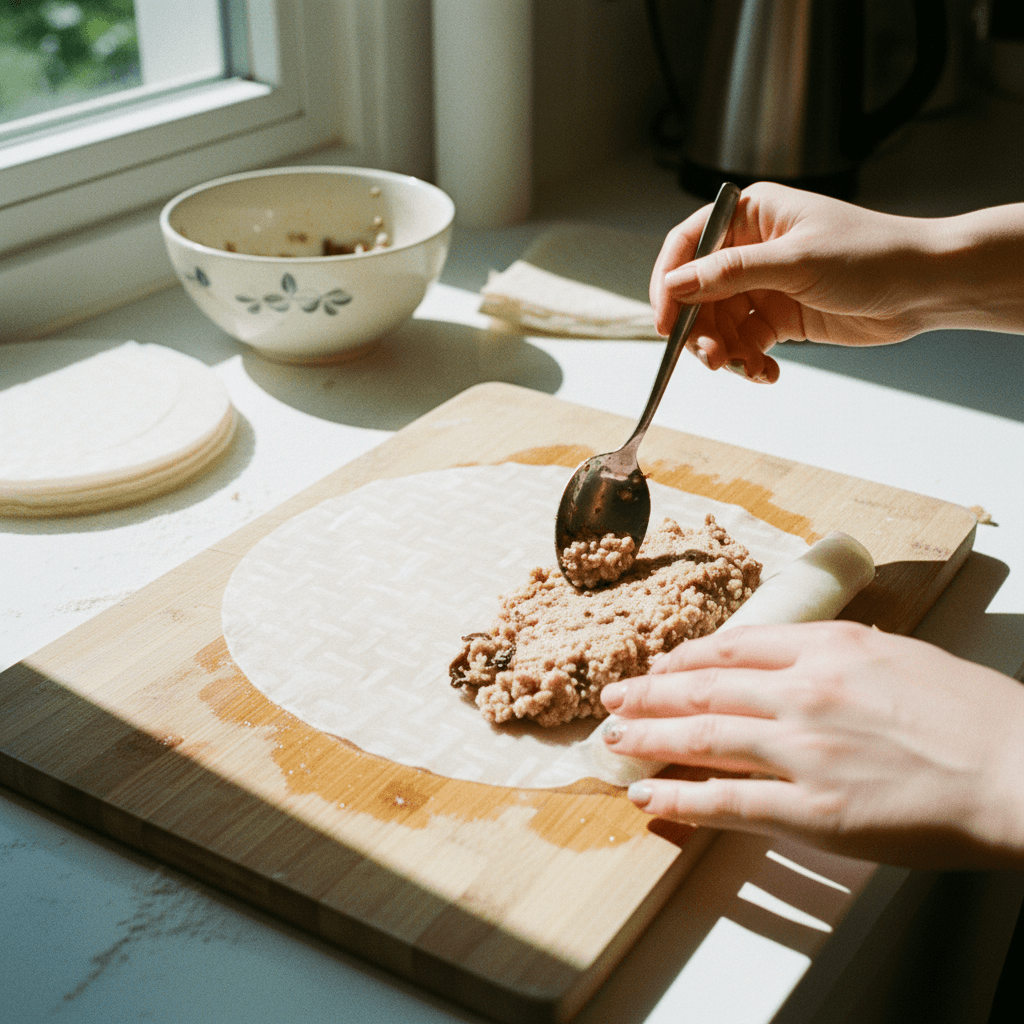
- 5
As you finish each Banh Cuon roll, lightly brush its exterior with a small amount of vegetable oil. This will prevent the rolls from sticking to each other and keep them moist.
⏱️ 3 min - 6
When ready to serve, you can gently reheat the Banh Cuon. Place them on a microwave-safe plate and microwave for a few seconds until just warm, or steam them lightly in a steamer basket for 1-2 minutes. Do not overcook, as this can make them tough.
⏱️ 2 min
- 7
Arrange the warm Banh Cuon on a serving platter. Garnish generously with crispy shallots and fresh herbs. Serve immediately with a side of Mom's homemade Nuoc Cham for dipping.
⏱️ 3 min
Kitchen Tools
Nutrition Facts (per serving)
Banh Cuon (Vietnamese Rice Roll Hack)
For the Banh Cuon
- 12 sheets rice paper, Vietnamese 3 Ladies or Bamboo brand recommended
- 8 cups cold water, for soaking
- 1 pound ground pork, lean
- 1/4 cup wood ear mushrooms, dried, rehydrated and finely chopped
- 1/2 teaspoon salt, or to taste
- 1/4 teaspoon black pepper, freshly ground, or to taste
- 1 tablespoon fish sauce
- 1 tablespoon vegetable oil, plus more for brushing
For Serving
- 1/4 cup crispy shallots
- 1/2 cup fresh herbs, such as cilantro, mint, or Thai basil
- 1/2 cup Nuoc Cham, Mom's homemade recipe (recipe not provided here)
Instructions
- 1
Begin by soaking the rice paper. Fill a large shallow dish or bowl with cold water. Submerge one sheet of rice paper in the cold water. Allow it to soak for 10 to 25 minutes, depending on the brand. The goal is for the rice paper to become pillowy soft and pliable, not just softened for summer rolls. Test one sheet first to determine the optimal soaking time for your specific brand. Once a sheet is perfectly soft, carefully remove it and lay it flat on a clean, damp surface or cutting board. Repeat this process in batches as you assemble the rolls.
⏱️ 25 min - 2
While the rice paper is soaking, prepare the filling. Heat 1 tablespoon of vegetable oil in a medium skillet over medium heat. Add the ground pork and cook, breaking it up with a spoon, until it is no longer pink, about 5-7 minutes. Drain any excess fat.
⏱️ 7 min - 3
Add the rehydrated and finely chopped wood ear mushrooms to the cooked pork. Season with 1/2 teaspoon of salt, 1/4 teaspoon of black pepper, and 1 tablespoon of fish sauce. Stir well to combine and cook for another 3-5 minutes, allowing the flavors to meld. Remove from heat and set aside.
⏱️ 5 min - 4
Once a rice paper sheet is properly softened, spoon about 2 tablespoons of the prepared pork and mushroom filling onto one end of the rice paper, leaving a small border. Carefully fold the sides of the rice paper over the filling, then roll it up tightly from the bottom to create a neat roll. Repeat with the remaining rice paper and filling.
⏱️ 10 min - 5
As you finish each Banh Cuon roll, lightly brush its exterior with a small amount of vegetable oil. This will prevent the rolls from sticking to each other and keep them moist.
⏱️ 3 min - 6
When ready to serve, you can gently reheat the Banh Cuon. Place them on a microwave-safe plate and microwave for a few seconds until just warm, or steam them lightly in a steamer basket for 1-2 minutes. Do not overcook, as this can make them tough.
⏱️ 2 min - 7
Arrange the warm Banh Cuon on a serving platter. Garnish generously with crispy shallots and fresh herbs. Serve immediately with a side of Mom's homemade Nuoc Cham for dipping.
⏱️ 3 min