Kimchi Master's Kimchi
Kimchi Master's Kimchi

Ingredients
For the Cabbage Brining
- 1 napa cabbage
- 1 cup 10-year aged salt, divided
- 8 cups water, for brine
For the Stock (Yuksu)
- 8 cups water
- 1 piece kombu, dried kelp
- 1/2 cup dipori, dried anchovies
- 2 stalks pa, green onions/leeks
- 1 yangpa, onion
- 1/2 Korean radish, sliced, for stock
- 4 dried shiitake mushrooms
- 3 dried jujube
For the Kimchi Paste
- 1/4 cup rice and bean paste
- 1/4 cup anchovy sauce
- 2 tablespoons blended shrimp paste
- 1/2 cup gochugaru, Korean chili powder
- 2 tablespoons sugar
- 1/4 cup garlic, minced
- 2 tablespoons ginger syrup
- 1 cup radish, julienned, for paste
- 1/2 cup mustard greens, chopped, for paste
- 1/2 cup green onion, chopped, for paste
- 1/4 cup blended oysters
Instructions
- 1
Split the napa cabbage in half lengthwise. In a large bowl, prepare a salt water brine by adding half of the 10-year aged salt to water and mixing until dissolved. Dip the split napa cabbage halves into the salt water brine.
⏱️ 10 min
- 2
With the remaining salt, thoroughly salt each individual leaf of the cabbage, ensuring all surfaces are covered. Place the salted cabbage halves into a large bowl. Pour the remaining salt water brine over the cabbages in the bowl.
⏱️ 15 min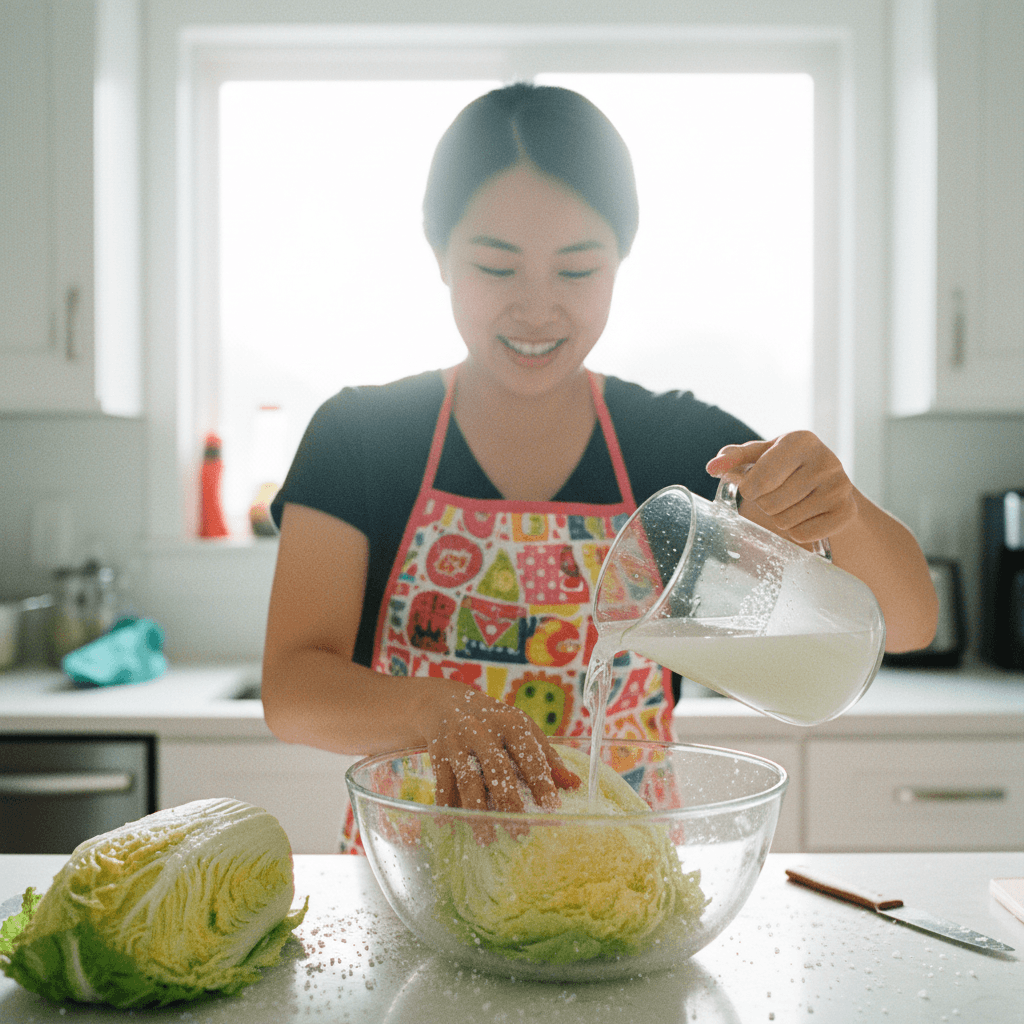
- 3
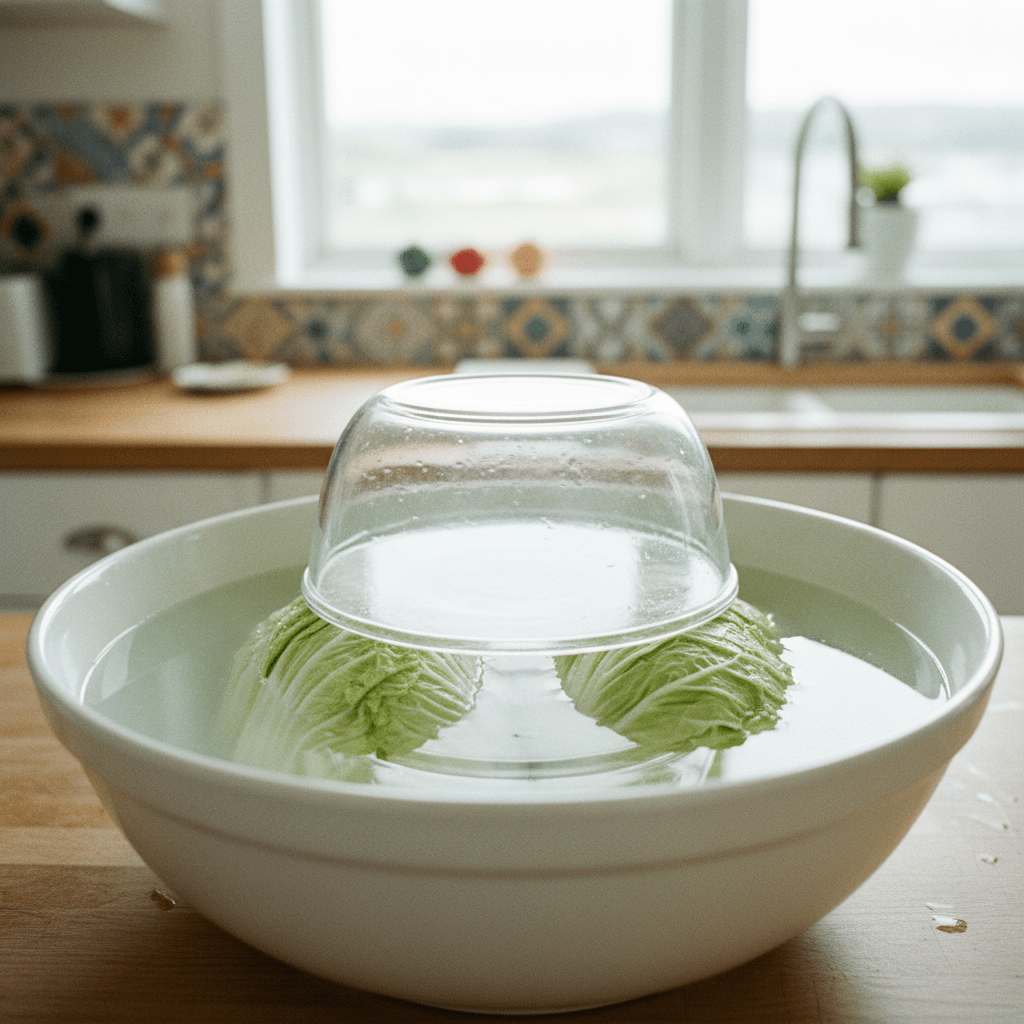
Cover the cabbages with a heavy object (like another bowl filled with water) to keep them submerged. Let the cabbage sit for 12 hours to brine.
- 4
After 12 hours, remove the brined cabbages. Rinse the cabbages thoroughly under running water. Place the rinsed cabbages in a colander or strainer and let them drain for approximately 4 hours.
⏱️ 5 min
- 5
While the cabbage drains, prepare the stock. In a large pot, add water. Add kombu, dipori, pa, yangpa, sliced Korean radish, dried shiitake mushrooms, and dried jujube to the water. Cover the pot and bring to a boil to create the stock. Once the stock is ready, strain out the solids and reserve the liquid stock.
⏱️ 30 min
- 6
In a large mixing bowl, pour the prepared stock. Add rice and bean paste, anchovy sauce, blended shrimp paste, gochugaru, sugar, garlic, and ginger syrup. Mix all the ingredients thoroughly with gloved hands until well combined into a paste.
⏱️ 15 min
- 7
Add julienned radish, chopped mustard greens, and chopped green onion to the paste. Mix the vegetables into the paste. Add blended oysters to the paste and continue mixing until all ingredients are evenly distributed.
⏱️ 15 min
- 8
Place a drained cabbage half on a clean tray. Wearing gloves, apply the kimchi paste to each individual leaf of the cabbage, ensuring thorough coverage. Fold the cabbage leaves inward to create a compact shape. Roll the prepared cabbage in its outermost leaf to secure the shape and prevent oxidation.
⏱️ 30 min
- 9
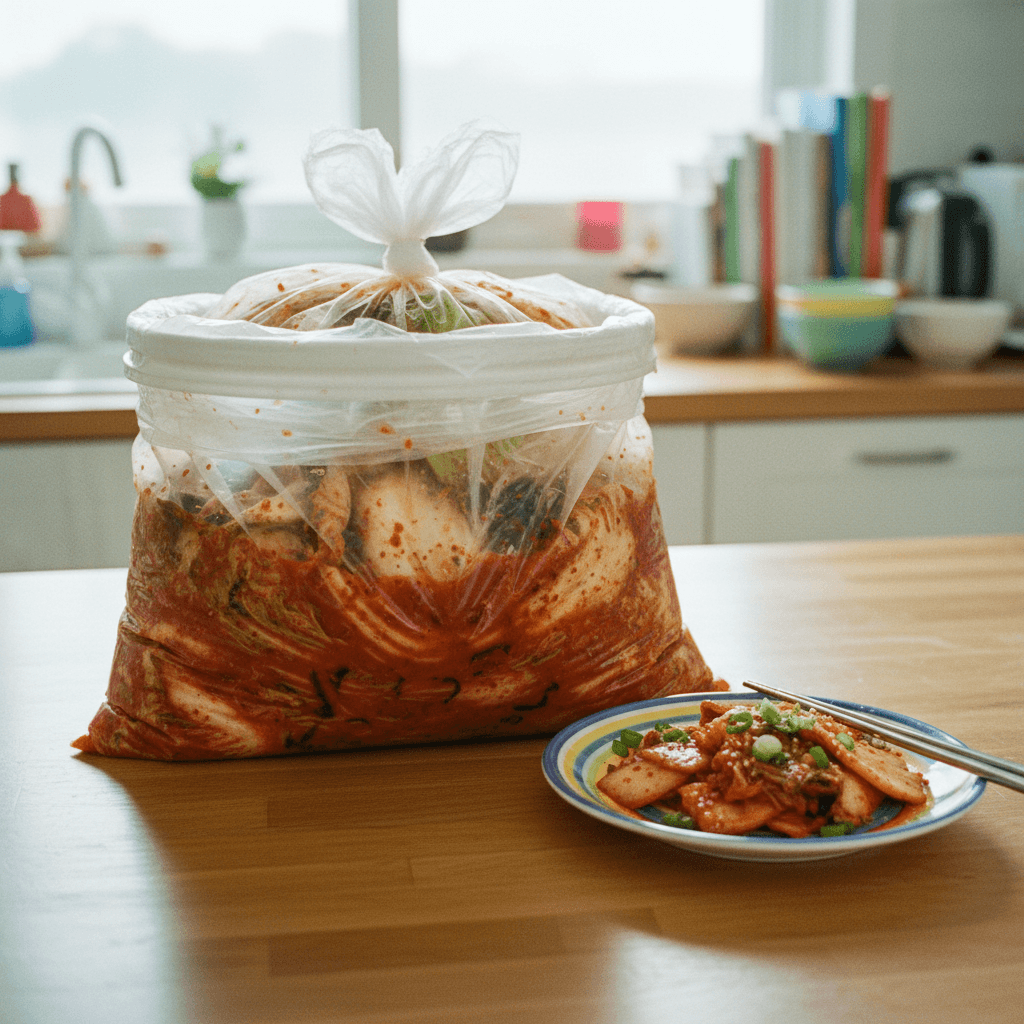
Place the marinated kimchi into a clear plastic bag inside a kimchi container. Cover the kimchi with an outer cabbage leaf on top within the bag. Press out as much air as possible from the plastic bag and tie it securely. Close the kimchi container lid.
⏱️ 5 min
- 10
Let the kimchi ferment for one month at room temperature (or according to your preference for fermentation speed and desired sourness). After one month, the kimchi is fully fermented and ready to eat. It will be slightly carbonated.
Kitchen Tools
Nutrition Facts (per serving)
Kimchi Master's Kimchi
For the Cabbage Brining
- 1 napa cabbage
- 1 cup 10-year aged salt, divided
- 8 cups water, for brine
For the Stock (Yuksu)
- 8 cups water
- 1 piece kombu, dried kelp
- 1/2 cup dipori, dried anchovies
- 2 stalks pa, green onions/leeks
- 1 yangpa, onion
- 1/2 Korean radish, sliced, for stock
- 4 dried shiitake mushrooms
- 3 dried jujube
For the Kimchi Paste
- 1/4 cup rice and bean paste
- 1/4 cup anchovy sauce
- 2 tablespoons blended shrimp paste
- 1/2 cup gochugaru, Korean chili powder
- 2 tablespoons sugar
- 1/4 cup garlic, minced
- 2 tablespoons ginger syrup
- 1 cup radish, julienned, for paste
- 1/2 cup mustard greens, chopped, for paste
- 1/2 cup green onion, chopped, for paste
- 1/4 cup blended oysters
Instructions
- 1
Split the napa cabbage in half lengthwise. In a large bowl, prepare a salt water brine by adding half of the 10-year aged salt to water and mixing until dissolved. Dip the split napa cabbage halves into the salt water brine.
⏱️ 10 min - 2
With the remaining salt, thoroughly salt each individual leaf of the cabbage, ensuring all surfaces are covered. Place the salted cabbage halves into a large bowl. Pour the remaining salt water brine over the cabbages in the bowl.
⏱️ 15 min - 3
Cover the cabbages with a heavy object (like another bowl filled with water) to keep them submerged. Let the cabbage sit for 12 hours to brine.
- 4
After 12 hours, remove the brined cabbages. Rinse the cabbages thoroughly under running water. Place the rinsed cabbages in a colander or strainer and let them drain for approximately 4 hours.
⏱️ 5 min - 5
While the cabbage drains, prepare the stock. In a large pot, add water. Add kombu, dipori, pa, yangpa, sliced Korean radish, dried shiitake mushrooms, and dried jujube to the water. Cover the pot and bring to a boil to create the stock. Once the stock is ready, strain out the solids and reserve the liquid stock.
⏱️ 30 min - 6
In a large mixing bowl, pour the prepared stock. Add rice and bean paste, anchovy sauce, blended shrimp paste, gochugaru, sugar, garlic, and ginger syrup. Mix all the ingredients thoroughly with gloved hands until well combined into a paste.
⏱️ 15 min - 7
Add julienned radish, chopped mustard greens, and chopped green onion to the paste. Mix the vegetables into the paste. Add blended oysters to the paste and continue mixing until all ingredients are evenly distributed.
⏱️ 15 min - 8
Place a drained cabbage half on a clean tray. Wearing gloves, apply the kimchi paste to each individual leaf of the cabbage, ensuring thorough coverage. Fold the cabbage leaves inward to create a compact shape. Roll the prepared cabbage in its outermost leaf to secure the shape and prevent oxidation.
⏱️ 30 min - 9
Place the marinated kimchi into a clear plastic bag inside a kimchi container. Cover the kimchi with an outer cabbage leaf on top within the bag. Press out as much air as possible from the plastic bag and tie it securely. Close the kimchi container lid.
⏱️ 5 min - 10
Let the kimchi ferment for one month at room temperature (or according to your preference for fermentation speed and desired sourness). After one month, the kimchi is fully fermented and ready to eat. It will be slightly carbonated.