Homemade Butter
Homemade Butter

Ingredients
- 2 cups heavy whipping cream, cold
- 1/2 teaspoon flaky sea salt, or to taste (optional)
Instructions
- 1
Pour the cold heavy whipping cream into the bowl of a stand mixer fitted with a whisk attachment. Begin mixing on low speed.
⏱️ 1 min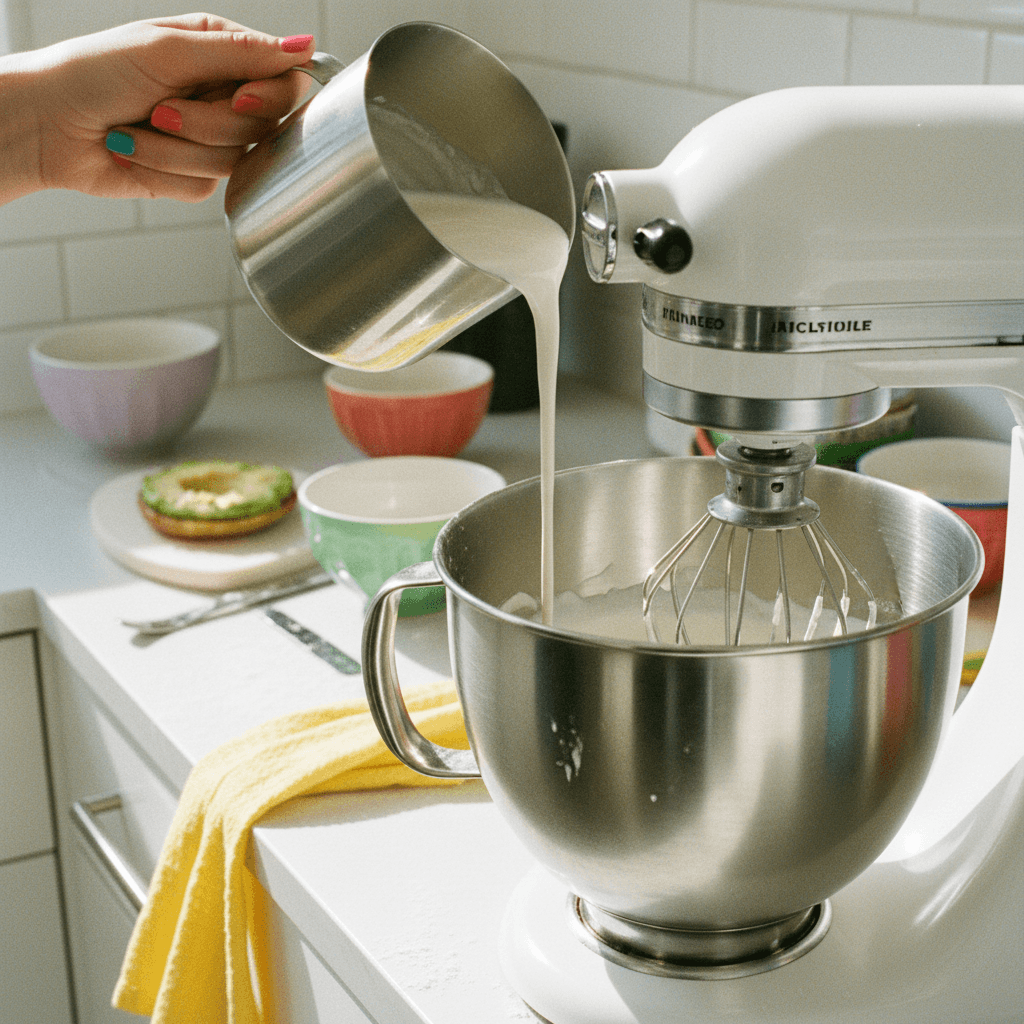
- 2
As the cream begins to thicken and resembles classic whipped cream, increase the mixer speed to medium-high.
⏱️ 3 min
- 3
Continue mixing. The cream will become grainy, then almost curdled, and will start to turn yellow. Keep mixing until the butter solids fully separate from the liquid. The separated liquid is buttermilk.
⏱️ 5 min
- 4
Carefully remove the butter solids from the mixer bowl. Using clean hands, gently squeeze the butter to press out as much buttermilk as possible.
⏱️ 2 min
- 5
Strain the separated buttermilk through a fine-mesh strainer into a mason jar or other container. This buttermilk can be saved for other recipes, such as pancakes.
⏱️ 1 min
- 6
Place the butter in a large bowl filled with cold, icy water. Knead and squeeze the butter repeatedly in the cold water. The water will become cloudy from residual buttermilk. Change the water and continue rinsing until the water runs clear. This step is crucial for removing all buttermilk, which helps the butter last longer.
⏱️ 5 min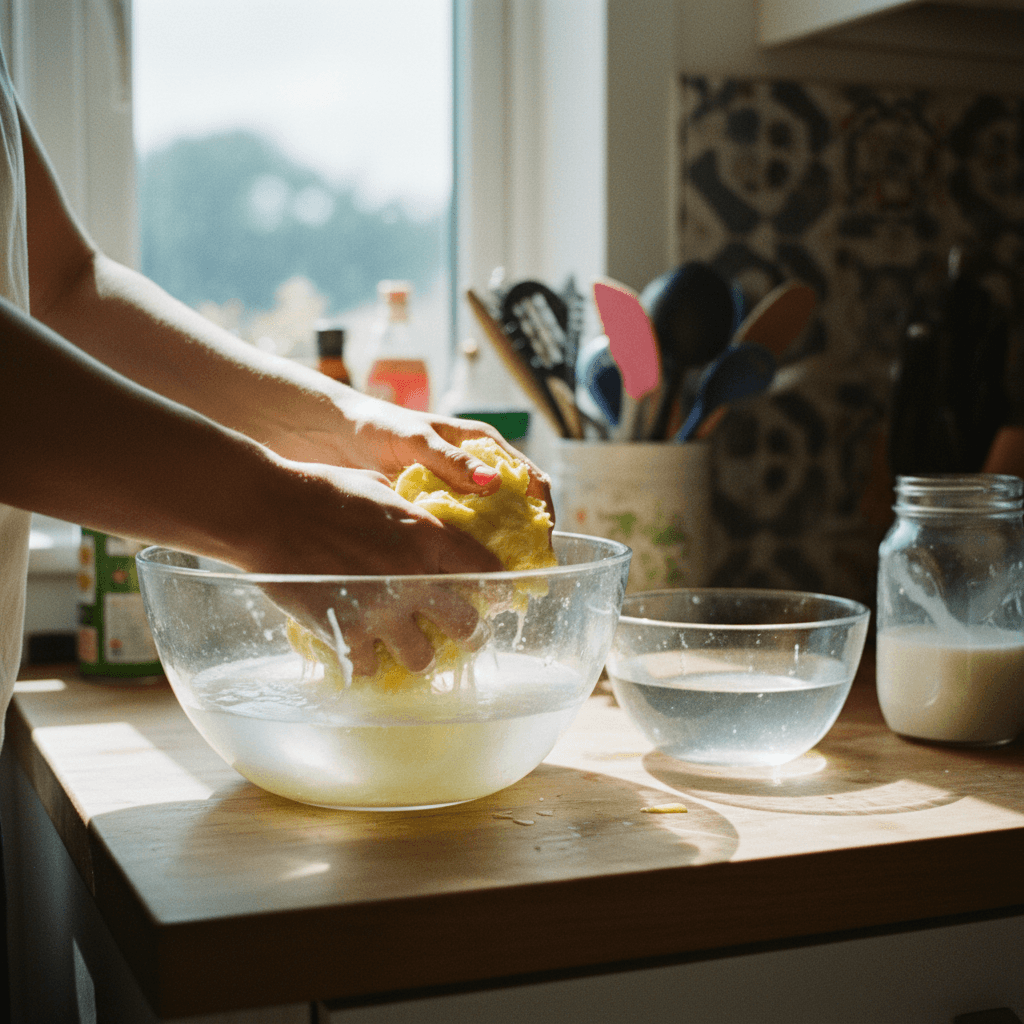
- 7
Once the butter is thoroughly rinsed and the water runs clear, place it back in a clean bowl. If desired, sprinkle with flaky sea salt and mix it in with a spatula or your hands until evenly distributed.
⏱️ 2 min
- 8
Store the homemade butter in small jars, or shape it into a log and wrap it tightly in parchment paper or plastic wrap. Refrigerate until ready to use.
⏱️ 1 min
Kitchen Tools
Nutrition Facts (per serving)
Homemade Butter
- 2 cups heavy whipping cream, cold
- 1/2 teaspoon flaky sea salt, or to taste (optional)
Instructions
- 1
Pour the cold heavy whipping cream into the bowl of a stand mixer fitted with a whisk attachment. Begin mixing on low speed.
⏱️ 1 min - 2
As the cream begins to thicken and resembles classic whipped cream, increase the mixer speed to medium-high.
⏱️ 3 min - 3
Continue mixing. The cream will become grainy, then almost curdled, and will start to turn yellow. Keep mixing until the butter solids fully separate from the liquid. The separated liquid is buttermilk.
⏱️ 5 min - 4
Carefully remove the butter solids from the mixer bowl. Using clean hands, gently squeeze the butter to press out as much buttermilk as possible.
⏱️ 2 min - 5
Strain the separated buttermilk through a fine-mesh strainer into a mason jar or other container. This buttermilk can be saved for other recipes, such as pancakes.
⏱️ 1 min - 6
Place the butter in a large bowl filled with cold, icy water. Knead and squeeze the butter repeatedly in the cold water. The water will become cloudy from residual buttermilk. Change the water and continue rinsing until the water runs clear. This step is crucial for removing all buttermilk, which helps the butter last longer.
⏱️ 5 min - 7
Once the butter is thoroughly rinsed and the water runs clear, place it back in a clean bowl. If desired, sprinkle with flaky sea salt and mix it in with a spatula or your hands until evenly distributed.
⏱️ 2 min - 8
Store the homemade butter in small jars, or shape it into a log and wrap it tightly in parchment paper or plastic wrap. Refrigerate until ready to use.
⏱️ 1 min