Fresh Vegetable Kimbap Rolls
Fresh Vegetable Kimbap Rolls
Ingredients
For the Seasoned Rice
- 2 cups short-grain white rice, rinsed
- 2 1/2 cups water
- 1 tablespoon sesame oil
- 1/2 teaspoon salt
For the Vegetable Fillings
- 2 carrots, medium, julienned
- 1 cucumber, medium, julienned
- 5 ounces fresh spinach, blanched, squeezed dry, and seasoned with 1/2 teaspoon sesame oil and a pinch of salt
- 4 ounces yellow pickled radish, julienned (danmuji)
- 4 ounces burdock root, julienned (gobu twigim, optional)
- 1 bell pepper, medium, any color, julienned
- 3 eggs, beaten with a pinch of salt
- 2 tablespoons vegetable oil, divided, for cooking
- 1/4 teaspoon salt, divided, for seasoning vegetables
- 1 tablespoon sesame oil, divided, for seasoning vegetables
For Assembly and Garnish
- 8 nori sheets, large
- 1 tablespoon sesame oil, for brushing
- 1 tablespoon toasted sesame seeds, for garnish
Instructions
- 1
Cook the rice: Rinse the short-grain white rice thoroughly until the water runs clear. Combine the rinsed rice and 2 1/2 cups of water in a rice cooker or a heavy-bottomed pot. Cook according to your rice cooker's instructions or bring to a boil, then reduce heat to low, cover, and simmer for 15-20 minutes until water is absorbed. Let it steam, covered, for 10 minutes after cooking. Transfer the cooked rice to a large bowl, add 1 tablespoon sesame oil and 1/2 teaspoon salt, and mix gently with a rice paddle until well combined. Let it cool slightly.
⏱️ 30 min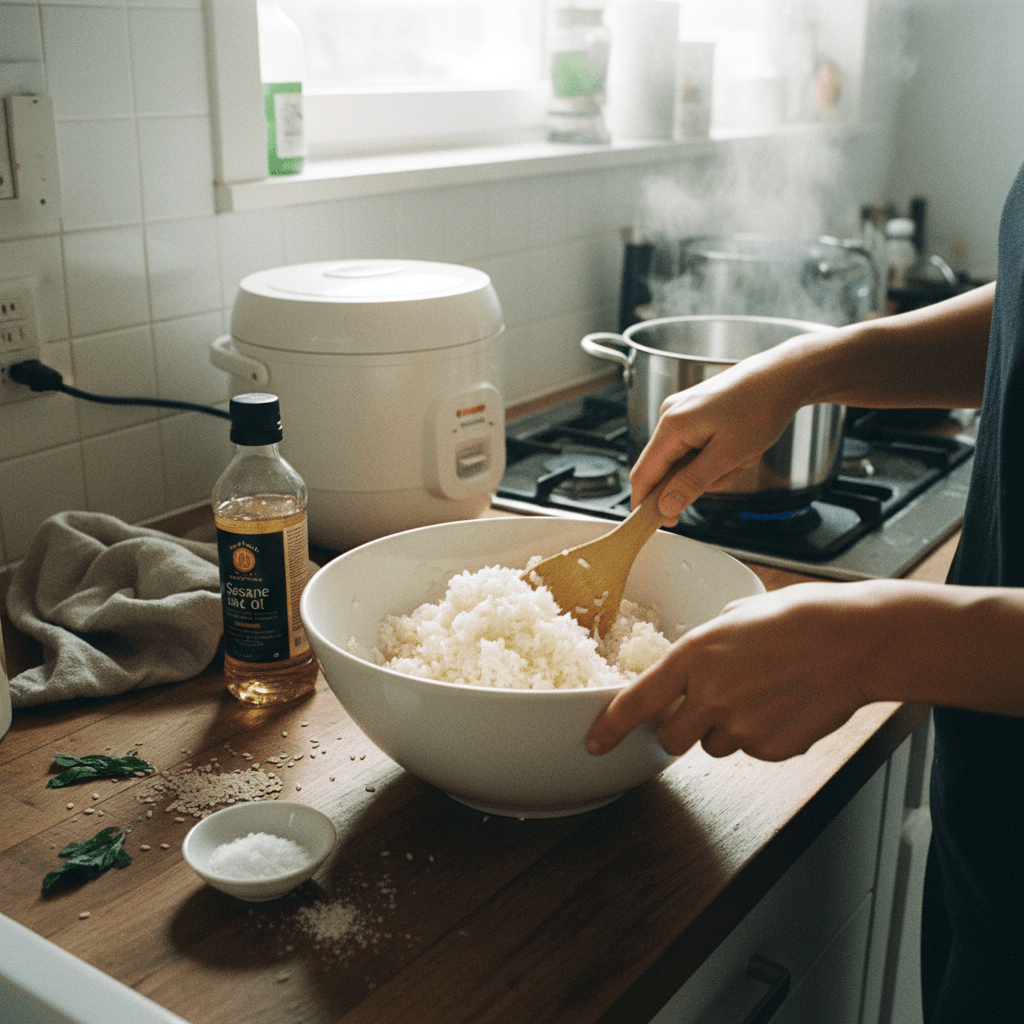
- 2
Prepare the vegetables: Heat 1 tablespoon of vegetable oil in a large frying pan over medium heat. Add the julienned carrots and a pinch of salt, stir-fry for 2-3 minutes until slightly tender-crisp. Transfer to a separate bowl. Repeat with the julienned bell pepper, cooking for 2-3 minutes, then transfer to another bowl. The spinach should already be blanched, squeezed dry, and seasoned from the ingredient prep.
⏱️ 10 min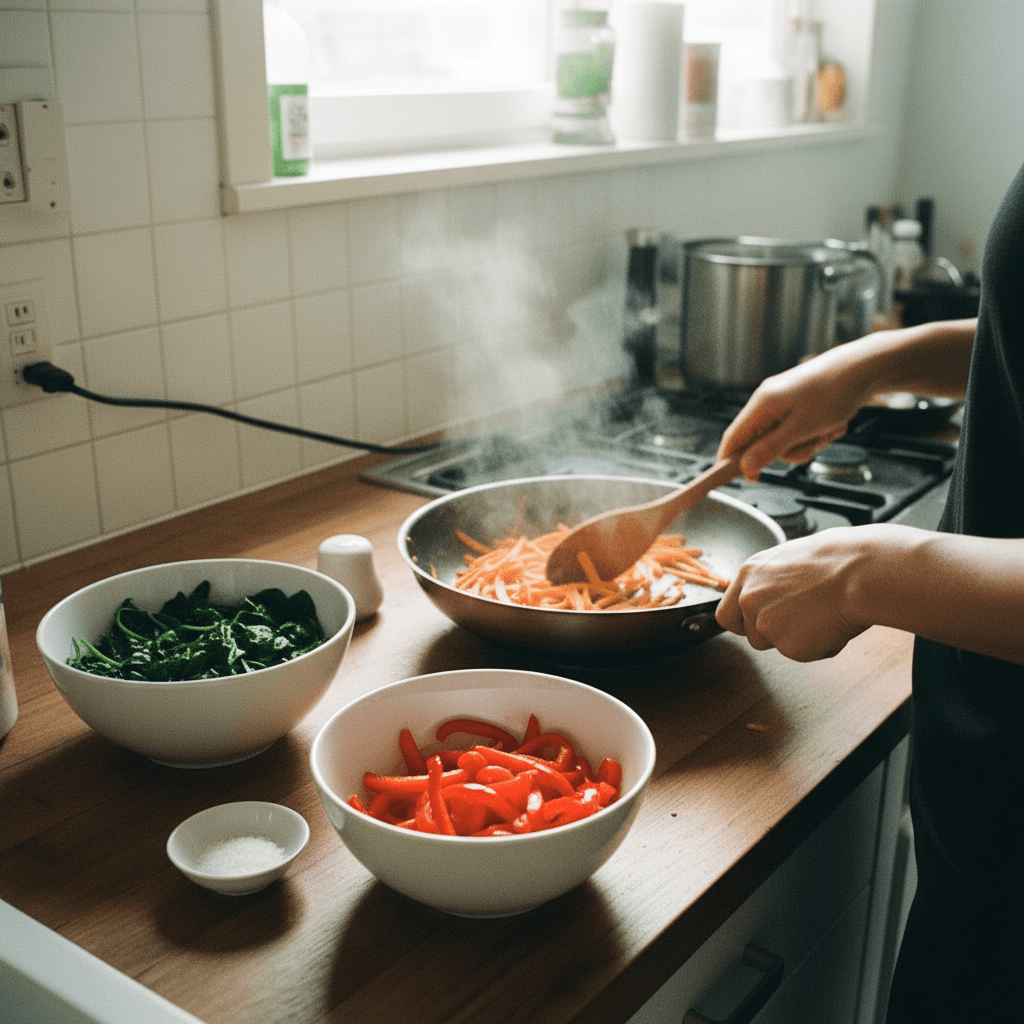
- 3
Prepare the eggs: Whisk the 3 eggs with a pinch of salt. Heat the remaining 1 tablespoon of vegetable oil in the same frying pan over medium-low heat. Pour in the egg mixture and cook like a thin omelet or crepe. Once set, flip and cook briefly on the other side. Transfer to a cutting board, let cool, then slice into thin strips.
⏱️ 5 min
- 4
Arrange your filling station: Lay out all your prepared ingredients (seasoned rice, carrots, cucumber, spinach, pickled radish, burdock root, bell pepper, and egg strips) neatly on a clean surface. This makes assembly much easier.
⏱️ 5 min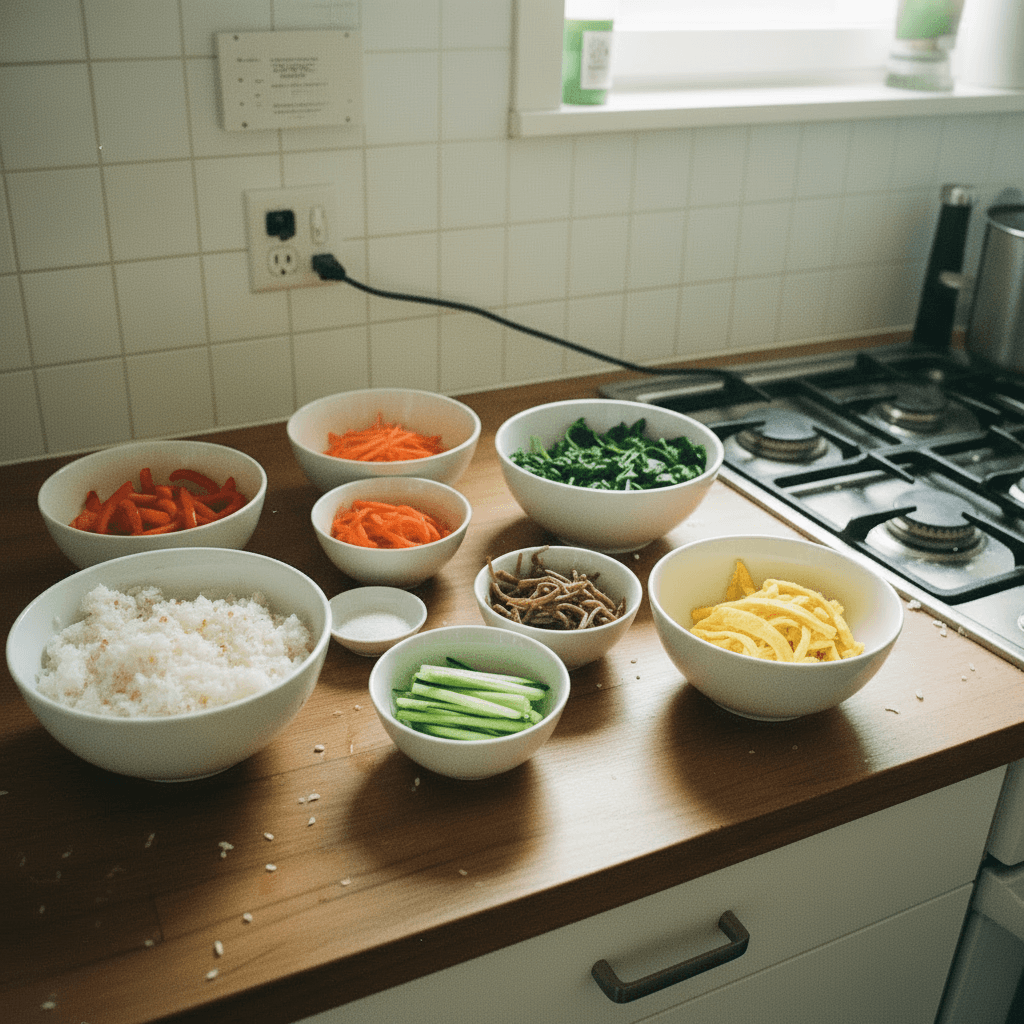
- 5
Assemble the kimbap rolls: Place a bamboo rolling mat on a clean surface. Lay one nori sheet, shiny side down, on the mat. Spread a thin, even layer of seasoned rice over about two-thirds of the nori sheet, leaving about 1 1/2 inches bare at the top edge. Arrange small portions of each vegetable and egg filling in a horizontal line across the center of the rice-covered section.
⏱️ 10 min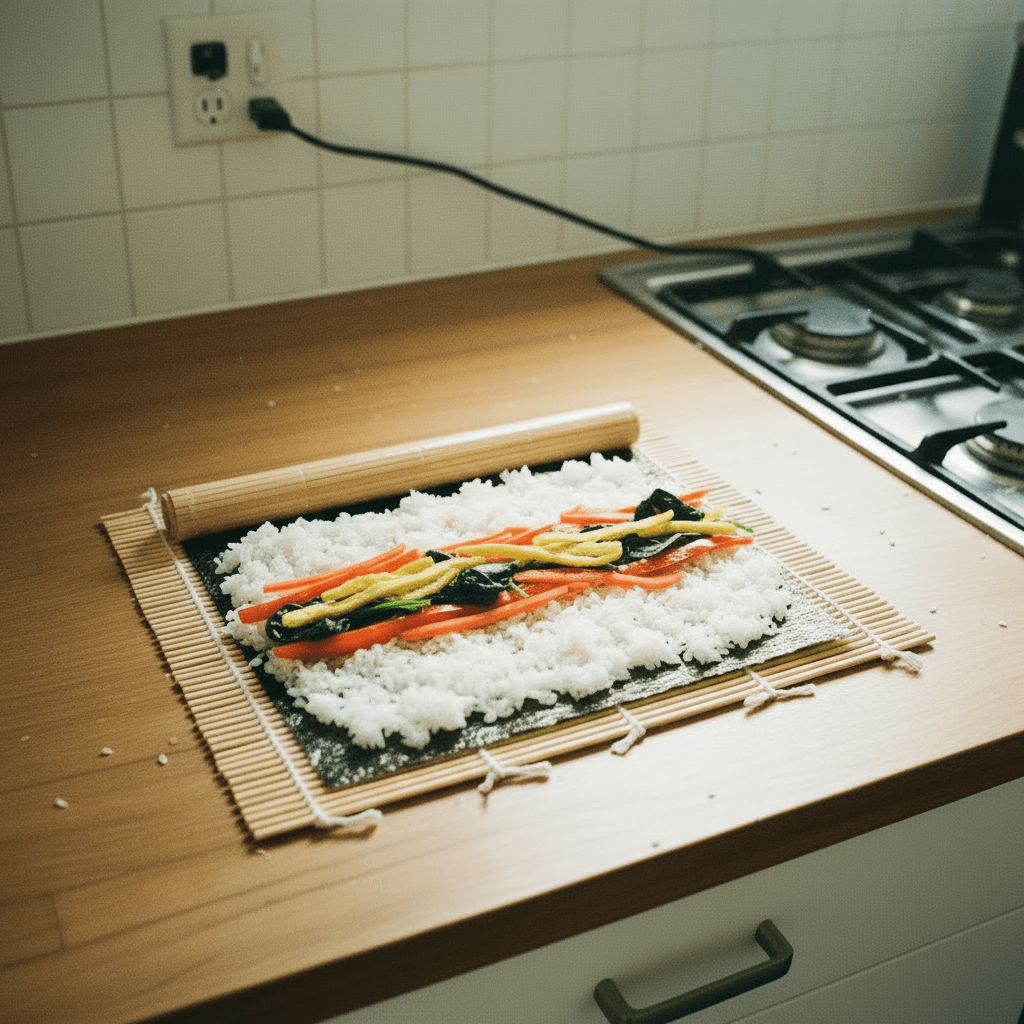
- 6
Roll the kimbap: Using the bamboo mat, carefully lift the edge closest to you and begin to roll the nori tightly over the fillings. Press down firmly to compact the roll as you go. Continue rolling, pulling the mat back slightly with each roll, until you reach the bare edge of the nori. Moisten the bare edge with a little water to seal the roll. Repeat for the remaining nori sheets and fillings.
⏱️ 10 min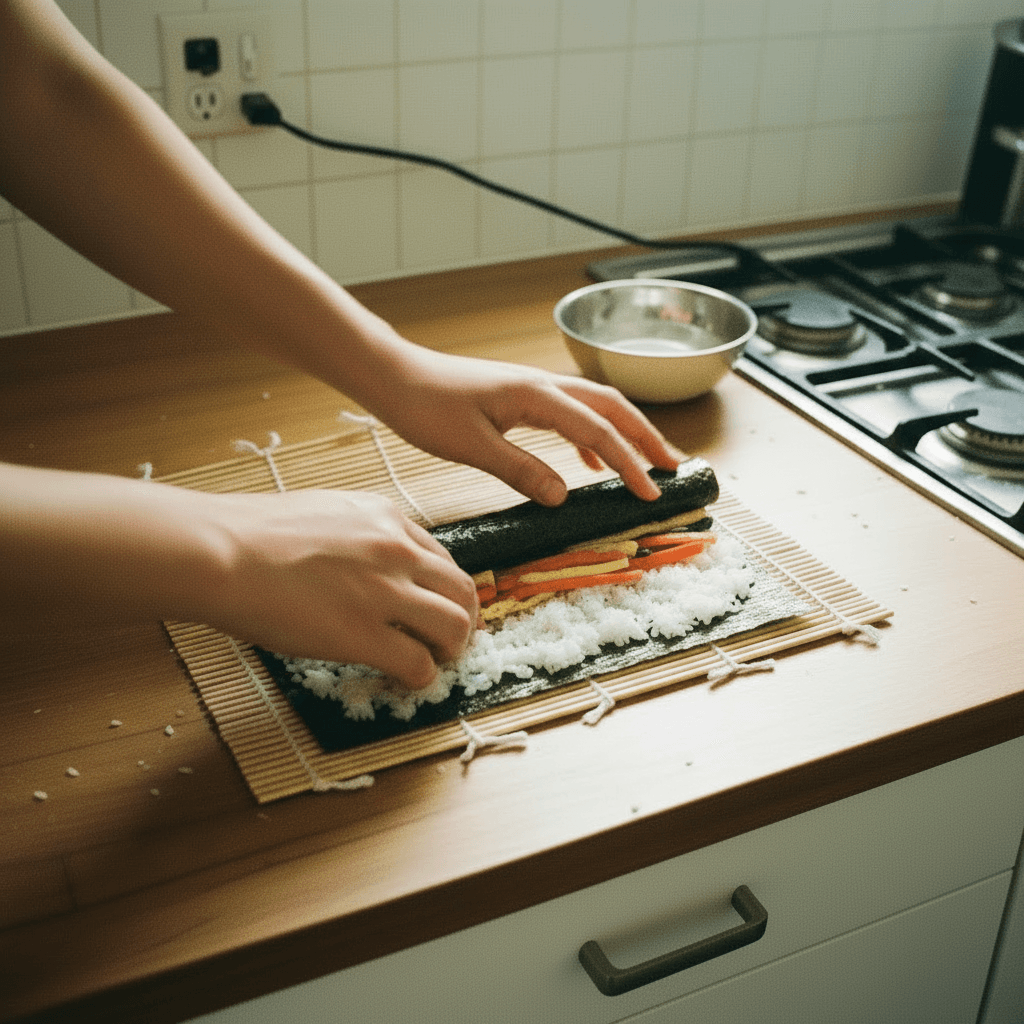
- 7
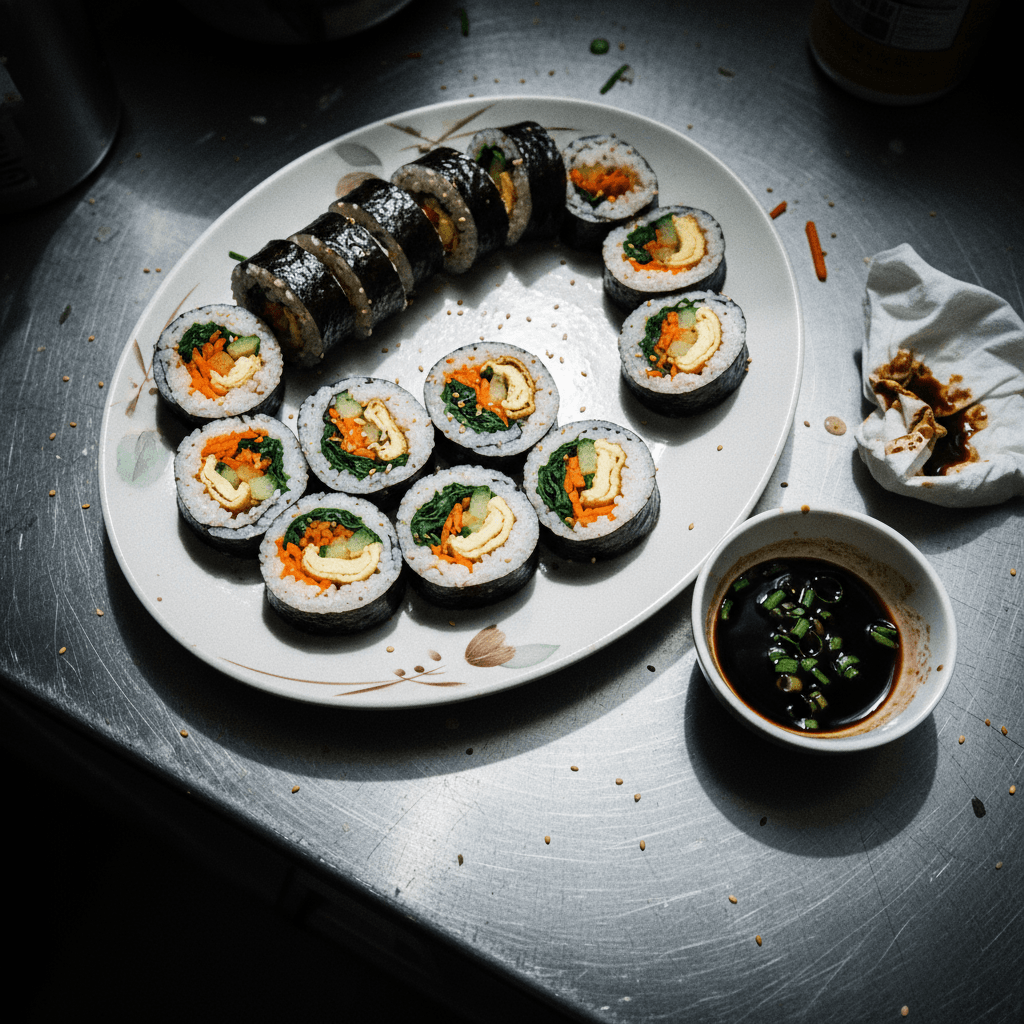
Slice and serve: Lightly brush the surface of each kimbap roll with sesame oil and sprinkle with toasted sesame seeds. Using a very sharp knife (lightly oiled to prevent sticking), slice each roll into 1/2 to 3/4-inch thick pieces. Serve immediately and enjoy!
⏱️ 5 min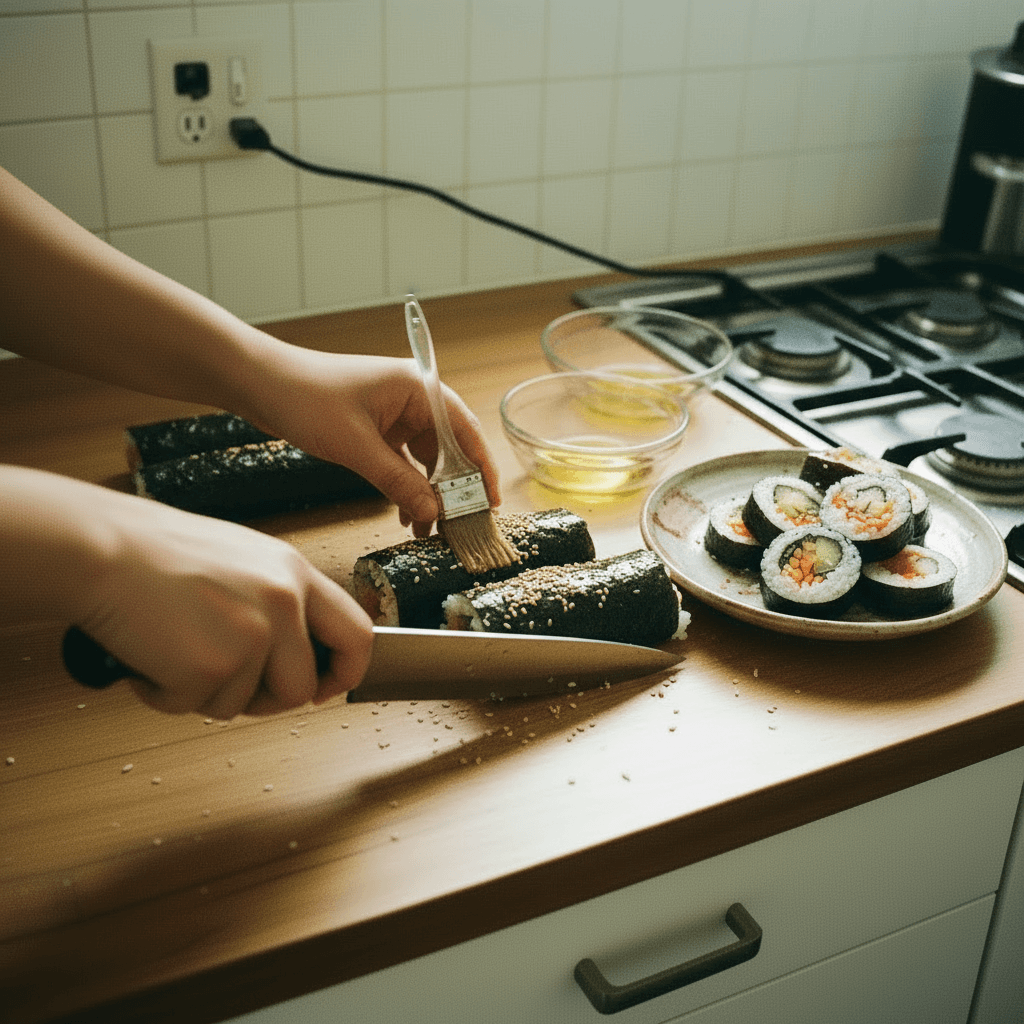
Kitchen Tools
Nutrition Facts (per serving)
Fresh Vegetable Kimbap Rolls
Ingredients
For the Seasoned Rice
- 2 cups short-grain white rice, rinsed
- 2 1/2 cups water
- 1 tablespoon sesame oil
- 1/2 teaspoon salt
For the Vegetable Fillings
- 2 carrots, medium, julienned
- 1 cucumber, medium, julienned
- 5 ounces fresh spinach, blanched, squeezed dry, and seasoned with 1/2 teaspoon sesame oil and a pinch of salt
- 4 ounces yellow pickled radish, julienned (danmuji)
- 4 ounces burdock root, julienned (gobu twigim, optional)
- 1 bell pepper, medium, any color, julienned
- 3 eggs, beaten with a pinch of salt
- 2 tablespoons vegetable oil, divided, for cooking
- 1/4 teaspoon salt, divided, for seasoning vegetables
- 1 tablespoon sesame oil, divided, for seasoning vegetables
For Assembly and Garnish
- 8 nori sheets, large
- 1 tablespoon sesame oil, for brushing
- 1 tablespoon toasted sesame seeds, for garnish
Instructions
- 1
Cook the rice: Rinse the short-grain white rice thoroughly until the water runs clear. Combine the rinsed rice and 2 1/2 cups of water in a rice cooker or a heavy-bottomed pot. Cook according to your rice cooker's instructions or bring to a boil, then reduce heat to low, cover, and simmer for 15-20 minutes until water is absorbed. Let it steam, covered, for 10 minutes after cooking. Transfer the cooked rice to a large bowl, add 1 tablespoon sesame oil and 1/2 teaspoon salt, and mix gently with a rice paddle until well combined. Let it cool slightly.
⏱️ 30 min - 2
Prepare the vegetables: Heat 1 tablespoon of vegetable oil in a large frying pan over medium heat. Add the julienned carrots and a pinch of salt, stir-fry for 2-3 minutes until slightly tender-crisp. Transfer to a separate bowl. Repeat with the julienned bell pepper, cooking for 2-3 minutes, then transfer to another bowl. The spinach should already be blanched, squeezed dry, and seasoned from the ingredient prep.
⏱️ 10 min - 3
Prepare the eggs: Whisk the 3 eggs with a pinch of salt. Heat the remaining 1 tablespoon of vegetable oil in the same frying pan over medium-low heat. Pour in the egg mixture and cook like a thin omelet or crepe. Once set, flip and cook briefly on the other side. Transfer to a cutting board, let cool, then slice into thin strips.
⏱️ 5 min - 4
Arrange your filling station: Lay out all your prepared ingredients (seasoned rice, carrots, cucumber, spinach, pickled radish, burdock root, bell pepper, and egg strips) neatly on a clean surface. This makes assembly much easier.
⏱️ 5 min - 5
Assemble the kimbap rolls: Place a bamboo rolling mat on a clean surface. Lay one nori sheet, shiny side down, on the mat. Spread a thin, even layer of seasoned rice over about two-thirds of the nori sheet, leaving about 1 1/2 inches bare at the top edge. Arrange small portions of each vegetable and egg filling in a horizontal line across the center of the rice-covered section.
⏱️ 10 min - 6
Roll the kimbap: Using the bamboo mat, carefully lift the edge closest to you and begin to roll the nori tightly over the fillings. Press down firmly to compact the roll as you go. Continue rolling, pulling the mat back slightly with each roll, until you reach the bare edge of the nori. Moisten the bare edge with a little water to seal the roll. Repeat for the remaining nori sheets and fillings.
⏱️ 10 min - 7
Slice and serve: Lightly brush the surface of each kimbap roll with sesame oil and sprinkle with toasted sesame seeds. Using a very sharp knife (lightly oiled to prevent sticking), slice each roll into 1/2 to 3/4-inch thick pieces. Serve immediately and enjoy!
⏱️ 5 min