Croissant-Like Butter Sourdough Loaf
Croissant-Like Butter Sourdough Loaf

Ingredients
For the Butter Sourdough Loaf
- 1 1/2 pounds prepared sourdough dough, at room temperature, about 70-75°F
- 1/2 cup unsalted butter, grated and kept very cold
- 1/4 cup all-purpose flour, for dusting
Instructions
- 1
Grate the cold butter using a box grater onto a plate or small tray. Place the grated butter in the freezer for 5-10 minutes to ensure it remains very cold and firm.
⏱️ 3 min
- 2
Transfer your prepared sourdough dough to a large mixing bowl. Gently flatten the dough slightly to create a larger surface area.
⏱️ 1 min
- 3
Evenly sprinkle the cold, grated butter over the surface of the sourdough dough. Begin to gently fold and stretch the dough, working the butter into the dough. This process should be done carefully to avoid melting the butter. Continue folding and stretching for about 5-7 minutes until the butter is mostly incorporated and the dough starts to feel smoother and more elastic.
⏱️ 10 min
- 4
Insert a digital thermometer into the dough to check its temperature. The ideal temperature for proofing after butter incorporation is between 70-75°F (21-24°C). If the dough is too warm, briefly refrigerate it.
⏱️ 1 min
- 5
Lightly flour your work surface. Gently shape the dough into your desired loaf form, either an oblong or a round. Be careful not to degas the dough too much.
⏱️ 3 min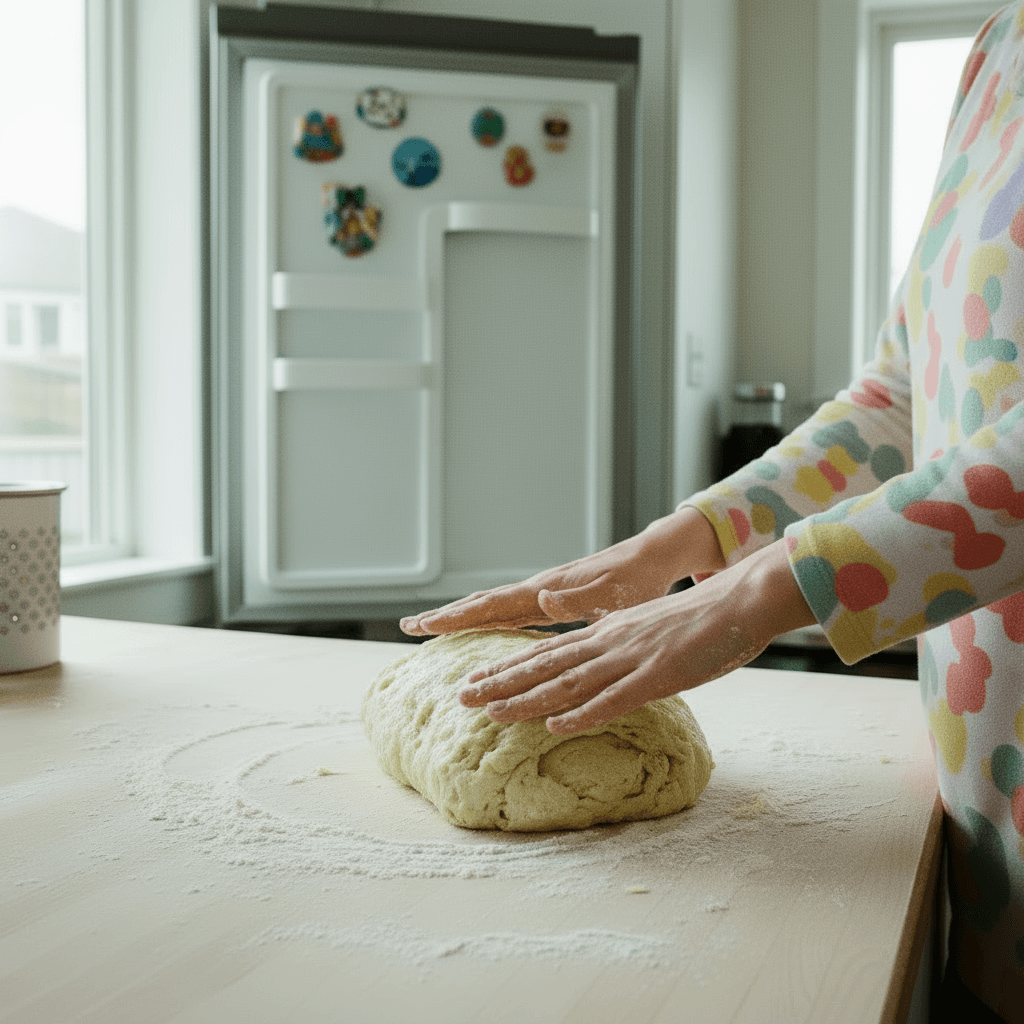
- 6
Generously flour a proofing basket (banneton) or a bowl lined with a floured cloth. Carefully transfer the shaped dough, seam-side up, into the prepared basket. Cover the basket with a clean kitchen towel or plastic wrap and proof in a warm place for 1-2 hours, or for best results, refrigerate overnight (8-12 hours) for a cold proof.
⏱️ 2 min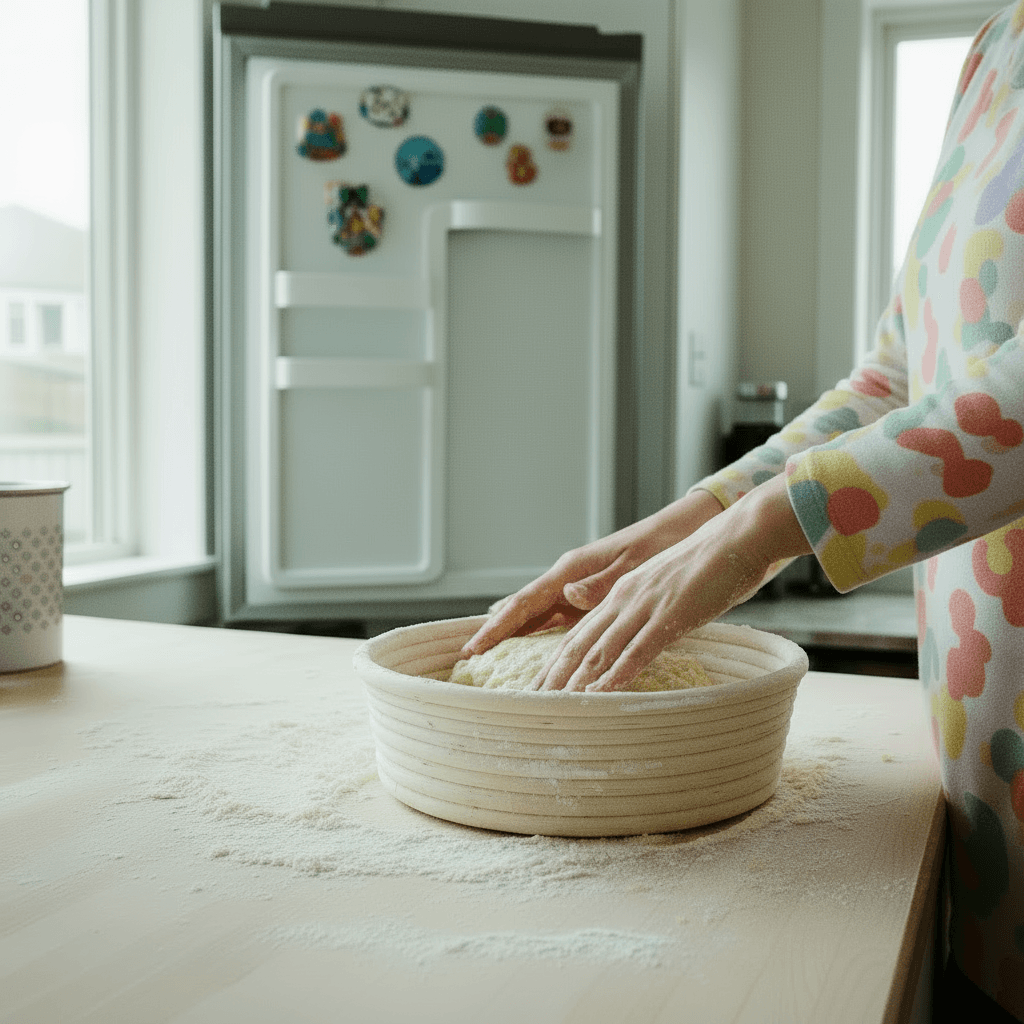
- 7
About 30-45 minutes before you are ready to bake, place a Dutch oven with its lid into your oven and preheat to 450°F. Ensure the oven and Dutch oven are fully preheated.
⏱️ 3 min•🌡️ 450
- 8
Carefully remove the hot Dutch oven from the oven. Gently invert the dough from the proofing basket into the hot Dutch oven (you may use parchment paper for easier transfer). Score the top of the dough with a sharp knife or lame. Cover with the lid and bake for 25 minutes.
⏱️ 25 min•🌡️ 450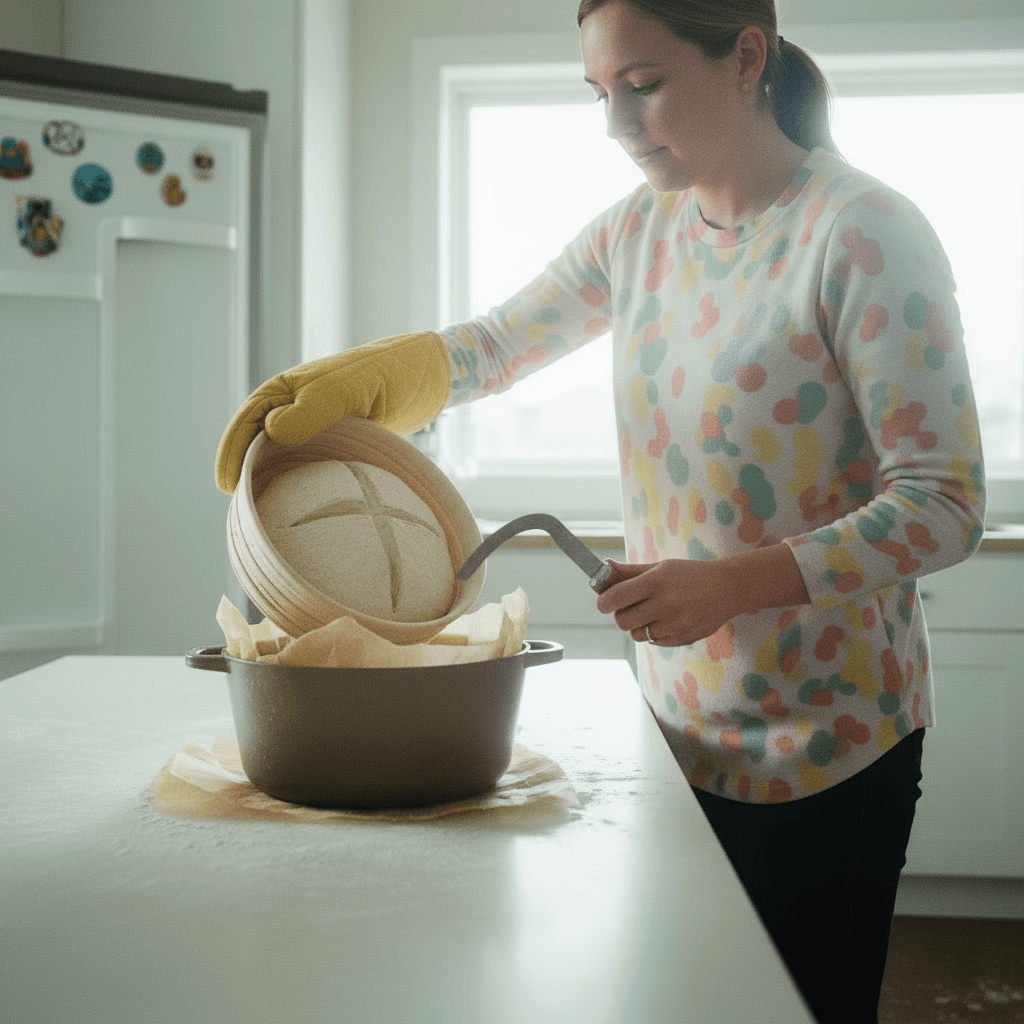
- 9
Remove the lid from the Dutch oven and continue baking for another 15-20 minutes, or until the crust is deeply golden brown and the internal temperature of the loaf reaches 200-210°F.
⏱️ 15 min•🌡️ 450
- 10
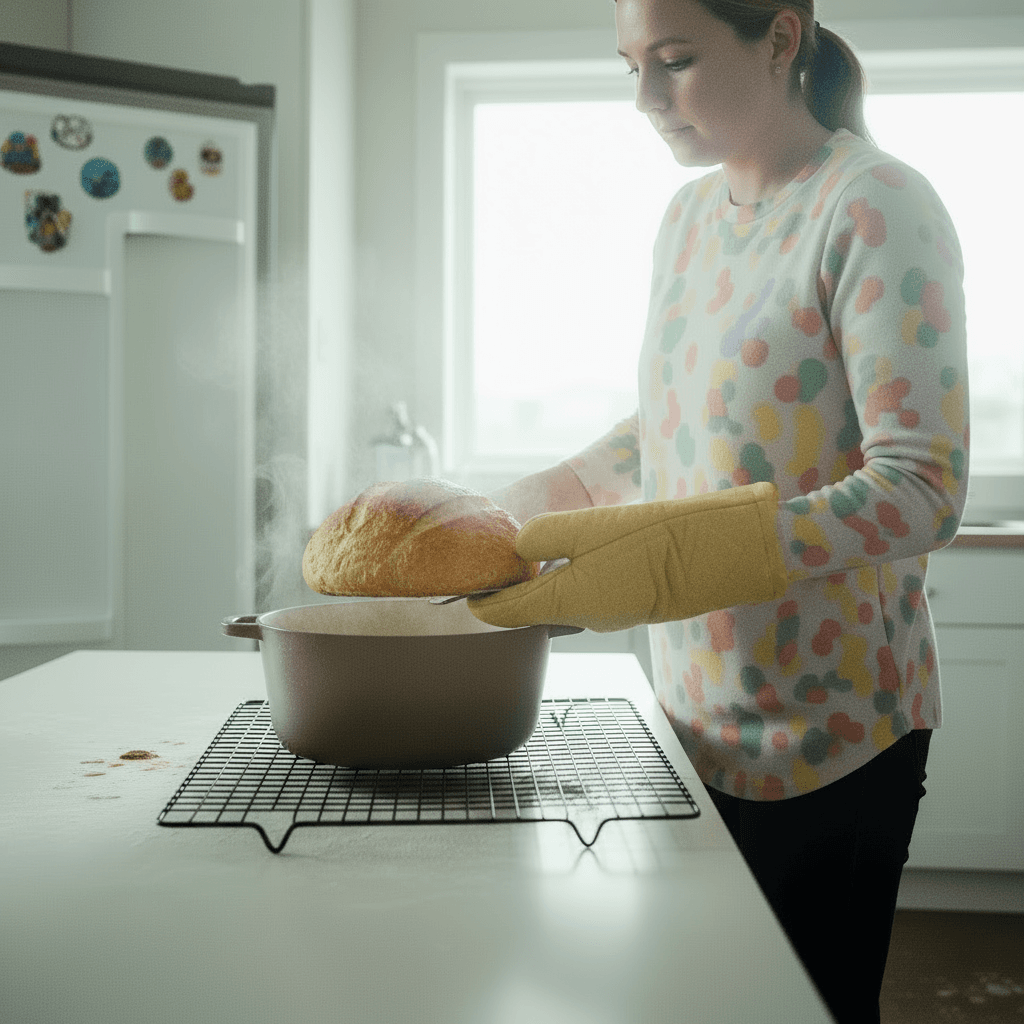
Carefully remove the loaf from the Dutch oven and transfer it to a wire rack to cool completely before slicing. This allows the internal structure to set and prevents a gummy texture.
Kitchen Tools
Nutrition Facts (per serving)
Croissant-Like Butter Sourdough Loaf
Ingredients
For the Butter Sourdough Loaf
- 1 1/2 pounds prepared sourdough dough, at room temperature, about 70-75°F
- 1/2 cup unsalted butter, grated and kept very cold
- 1/4 cup all-purpose flour, for dusting
Instructions
- 1
Grate the cold butter using a box grater onto a plate or small tray. Place the grated butter in the freezer for 5-10 minutes to ensure it remains very cold and firm.
⏱️ 3 min - 2
Transfer your prepared sourdough dough to a large mixing bowl. Gently flatten the dough slightly to create a larger surface area.
⏱️ 1 min - 3
Evenly sprinkle the cold, grated butter over the surface of the sourdough dough. Begin to gently fold and stretch the dough, working the butter into the dough. This process should be done carefully to avoid melting the butter. Continue folding and stretching for about 5-7 minutes until the butter is mostly incorporated and the dough starts to feel smoother and more elastic.
⏱️ 10 min - 4
Insert a digital thermometer into the dough to check its temperature. The ideal temperature for proofing after butter incorporation is between 70-75°F (21-24°C). If the dough is too warm, briefly refrigerate it.
⏱️ 1 min - 5
Lightly flour your work surface. Gently shape the dough into your desired loaf form, either an oblong or a round. Be careful not to degas the dough too much.
⏱️ 3 min - 6
Generously flour a proofing basket (banneton) or a bowl lined with a floured cloth. Carefully transfer the shaped dough, seam-side up, into the prepared basket. Cover the basket with a clean kitchen towel or plastic wrap and proof in a warm place for 1-2 hours, or for best results, refrigerate overnight (8-12 hours) for a cold proof.
⏱️ 2 min - 7
About 30-45 minutes before you are ready to bake, place a Dutch oven with its lid into your oven and preheat to 450°F. Ensure the oven and Dutch oven are fully preheated.
⏱️ 3 min•🌡️ 450 - 8
Carefully remove the hot Dutch oven from the oven. Gently invert the dough from the proofing basket into the hot Dutch oven (you may use parchment paper for easier transfer). Score the top of the dough with a sharp knife or lame. Cover with the lid and bake for 25 minutes.
⏱️ 25 min•🌡️ 450 - 9
Remove the lid from the Dutch oven and continue baking for another 15-20 minutes, or until the crust is deeply golden brown and the internal temperature of the loaf reaches 200-210°F.
⏱️ 15 min•🌡️ 450 - 10
Carefully remove the loaf from the Dutch oven and transfer it to a wire rack to cool completely before slicing. This allows the internal structure to set and prevents a gummy texture.