Danish Roast Duck
Danish Roast Duck
Ingredients
For the Duck
- 1 whole duck, 3-4 pounds, free-range or organic
- 2 cups boiling water
- 1 tablespoon salt, or as needed
For the Stuffing
- 3 apples, diced
- 2 onions, chopped into large chunks
- 1/2 cup prunes, pitted
- 3 fresh thyme sprigs
- 2 bay leaves
For the Roasting Pan & Sauce Base
- 1 duck neck, from duck cavity
- 1 duck heart, from duck cavity
- 1 duck gizzards, from duck cavity
- 1 duck liver, from duck cavity
- 2 duck wing tips, trimmed from duck
- 2 carrots, chopped
- 2 bay leaves
- 3 fresh thyme sprigs
- 1/2 cup dry red wine
- 2 cups chicken stock
Instructions
- 1
Preheat your oven to 375°F. Remove the duck from its packaging. Carefully remove the neck and all innards (heart, liver, gizzards) from the duck cavity. Set these aside for the roasting pan and sauce base.
⏱️ 5 min•🌡️ 375
- 2
Prepare the stuffing: In a medium bowl, combine the diced apples, chopped onions, and pitted prunes. Mix well.
⏱️ 5 min
- 3
Stuff the duck: Stand the duck upright. Carefully spoon the apple, onion, and prune mixture into the duck cavity. Add the fresh thyme sprigs and bay leaves directly into the stuffing inside the duck. Ensure the cavity is well-filled but not overly packed.
⏱️ 5 min
- 4
Seal the duck: Use metal skewers to 'sew' up the cavity opening, closing it securely. Turn the duck upside down and use another skewer to secure the tail or neck flap, if necessary. Trim the wing tips and set them aside with the other duck parts for the roasting pan.
⏱️ 5 min
- 5
Prepare the roasting pan: Place a roasting rack inside a large roasting tray. Arrange the reserved duck neck, heart, gizzards, liver, trimmed wing tips, any leftover apple and onion chunks from the stuffing, chopped carrots, 2 bay leaves, and 3 fresh thyme sprigs in the bottom of the tray, beneath where the duck will sit. Pour the red wine and chicken stock into the pan.
⏱️ 5 min
- 6
Prepare the duck skin: Place the stuffed duck on the roasting rack in the prepared tray. Slowly and carefully pour the 2 cups of boiling water over the entire duck skin. This helps to tighten the skin for a crispier result. Generously season the duck all over with salt.
⏱️ 5 min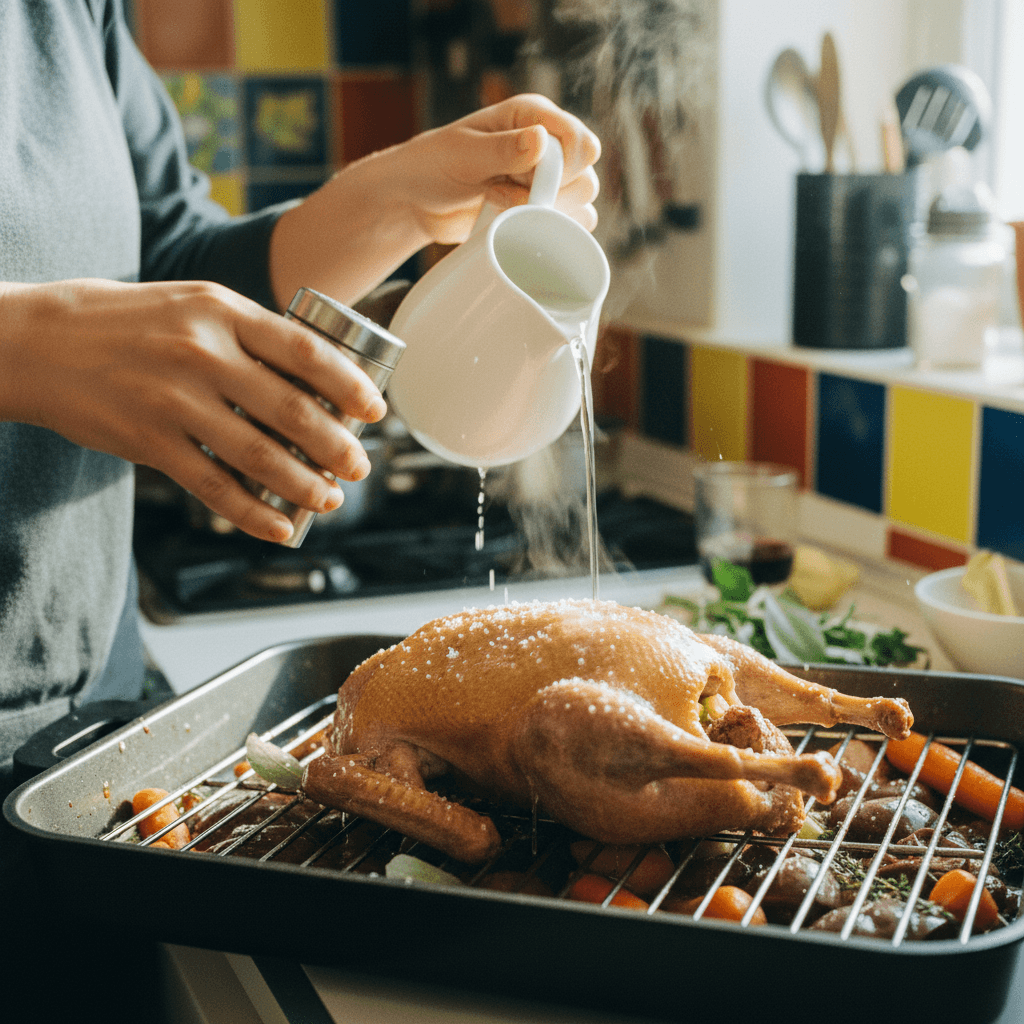
- 7
Roast the duck: Place the roasting tray with the duck into the preheated oven. Roast for a total of approximately 3 hours, or until the duck is beautifully golden brown and crispy, and an internal temperature of 165°F is reached in the thickest part of the thigh without touching the bone.
⏱️ 180 min•🌡️ 375
- 8
Rotate the duck: Every 30 minutes during roasting, carefully remove the duck from the oven, turn it around (e.g., rotate the pan 180 degrees), and return it to the oven. This ensures even cooking and browning.

- 9
Rest and carve: Once roasted, remove the duck from the oven and transfer it to a cutting board. Tent loosely with foil and let it rest for 15-20 minutes before carving. This allows the juices to redistribute, resulting in a more tender duck.

- 10
Serve: Carve the duck into portions. Carefully scoop out the cooked apple, onion, and prune stuffing from the duck cavity and serve alongside the carved duck. The pan drippings can be used to make a rich gravy or sauce.

Kitchen Tools
Nutrition Facts (per serving)
Danish Roast Duck
For the Duck
- 1 whole duck, 3-4 pounds, free-range or organic
- 2 cups boiling water
- 1 tablespoon salt, or as needed
For the Stuffing
- 3 apples, diced
- 2 onions, chopped into large chunks
- 1/2 cup prunes, pitted
- 3 fresh thyme sprigs
- 2 bay leaves
For the Roasting Pan & Sauce Base
- 1 duck neck, from duck cavity
- 1 duck heart, from duck cavity
- 1 duck gizzards, from duck cavity
- 1 duck liver, from duck cavity
- 2 duck wing tips, trimmed from duck
- 2 carrots, chopped
- 2 bay leaves
- 3 fresh thyme sprigs
- 1/2 cup dry red wine
- 2 cups chicken stock
Instructions
- 1
Preheat your oven to 375°F. Remove the duck from its packaging. Carefully remove the neck and all innards (heart, liver, gizzards) from the duck cavity. Set these aside for the roasting pan and sauce base.
⏱️ 5 min•🌡️ 375 - 2
Prepare the stuffing: In a medium bowl, combine the diced apples, chopped onions, and pitted prunes. Mix well.
⏱️ 5 min - 3
Stuff the duck: Stand the duck upright. Carefully spoon the apple, onion, and prune mixture into the duck cavity. Add the fresh thyme sprigs and bay leaves directly into the stuffing inside the duck. Ensure the cavity is well-filled but not overly packed.
⏱️ 5 min - 4
Seal the duck: Use metal skewers to 'sew' up the cavity opening, closing it securely. Turn the duck upside down and use another skewer to secure the tail or neck flap, if necessary. Trim the wing tips and set them aside with the other duck parts for the roasting pan.
⏱️ 5 min - 5
Prepare the roasting pan: Place a roasting rack inside a large roasting tray. Arrange the reserved duck neck, heart, gizzards, liver, trimmed wing tips, any leftover apple and onion chunks from the stuffing, chopped carrots, 2 bay leaves, and 3 fresh thyme sprigs in the bottom of the tray, beneath where the duck will sit. Pour the red wine and chicken stock into the pan.
⏱️ 5 min - 6
Prepare the duck skin: Place the stuffed duck on the roasting rack in the prepared tray. Slowly and carefully pour the 2 cups of boiling water over the entire duck skin. This helps to tighten the skin for a crispier result. Generously season the duck all over with salt.
⏱️ 5 min - 7
Roast the duck: Place the roasting tray with the duck into the preheated oven. Roast for a total of approximately 3 hours, or until the duck is beautifully golden brown and crispy, and an internal temperature of 165°F is reached in the thickest part of the thigh without touching the bone.
⏱️ 180 min•🌡️ 375 - 8
Rotate the duck: Every 30 minutes during roasting, carefully remove the duck from the oven, turn it around (e.g., rotate the pan 180 degrees), and return it to the oven. This ensures even cooking and browning.
- 9
Rest and carve: Once roasted, remove the duck from the oven and transfer it to a cutting board. Tent loosely with foil and let it rest for 15-20 minutes before carving. This allows the juices to redistribute, resulting in a more tender duck.
- 10
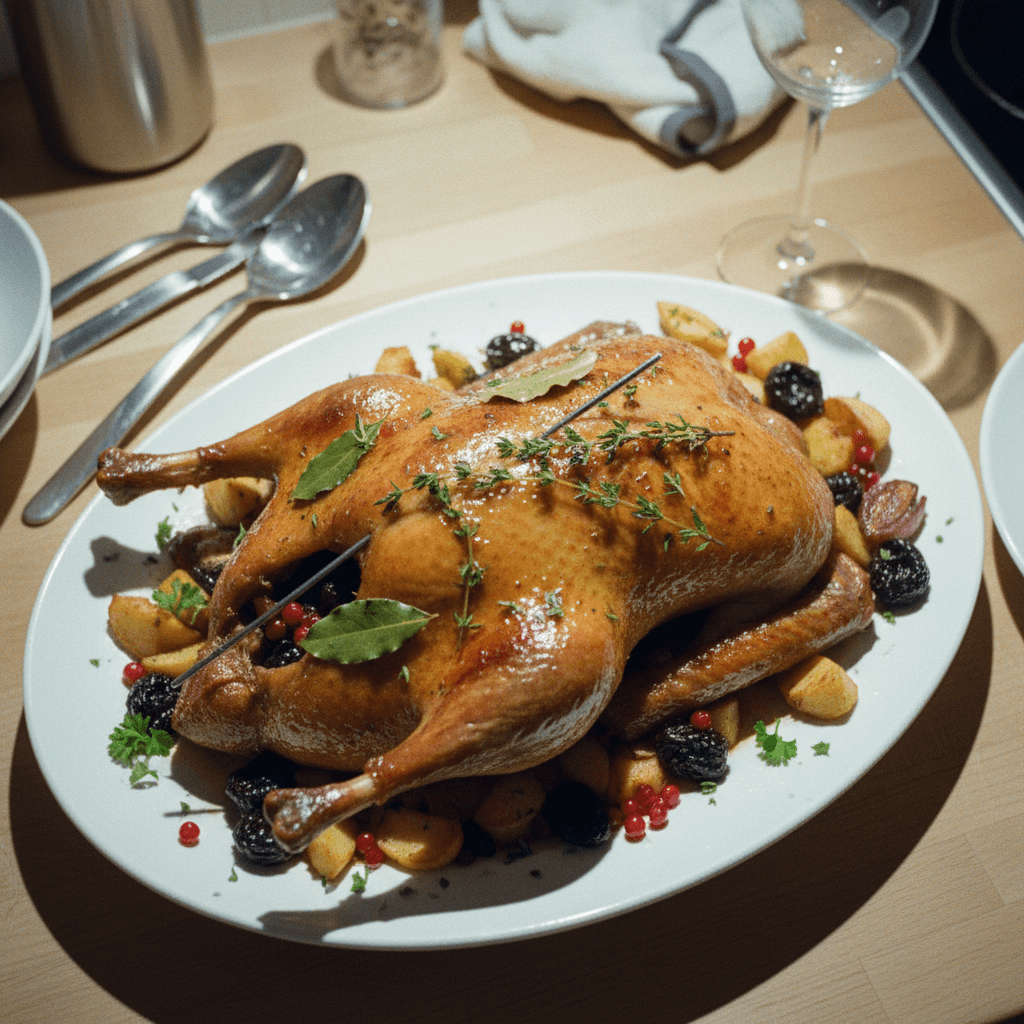
Serve: Carve the duck into portions. Carefully scoop out the cooked apple, onion, and prune stuffing from the duck cavity and serve alongside the carved duck. The pan drippings can be used to make a rich gravy or sauce.