Essential Indian Spices for Cooking (A Guide)
Essential Indian Spices for Cooking (A Guide)
Ingredients
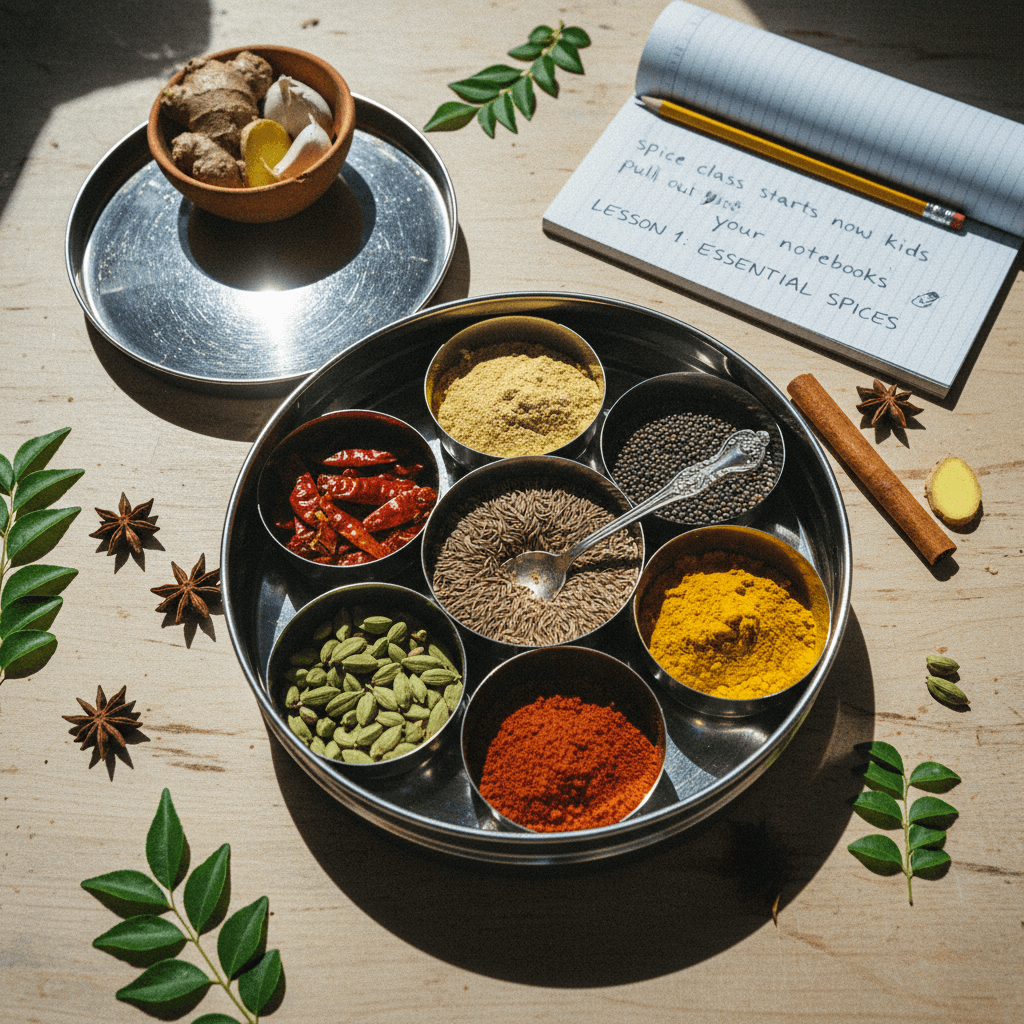
Essential Indian Spices
- as needed cumin seeds, whole
- as needed coriander powder
- as needed mustard seeds, whole
- as needed turmeric powder
- as needed red chili peppers, whole, dried
- as needed black peppercorns, whole
- as needed asafoetida powder
- as needed garam masala
Instructions
- 1
Gather your eight essential Indian spices: cumin seeds, coriander powder, mustard seeds, turmeric powder, whole dried red chili peppers, whole black peppercorns, asafoetida powder, and garam masala. Ensure you have a traditional Indian spice box (masala dabba) with multiple compartments ready.
⏱️ 2 min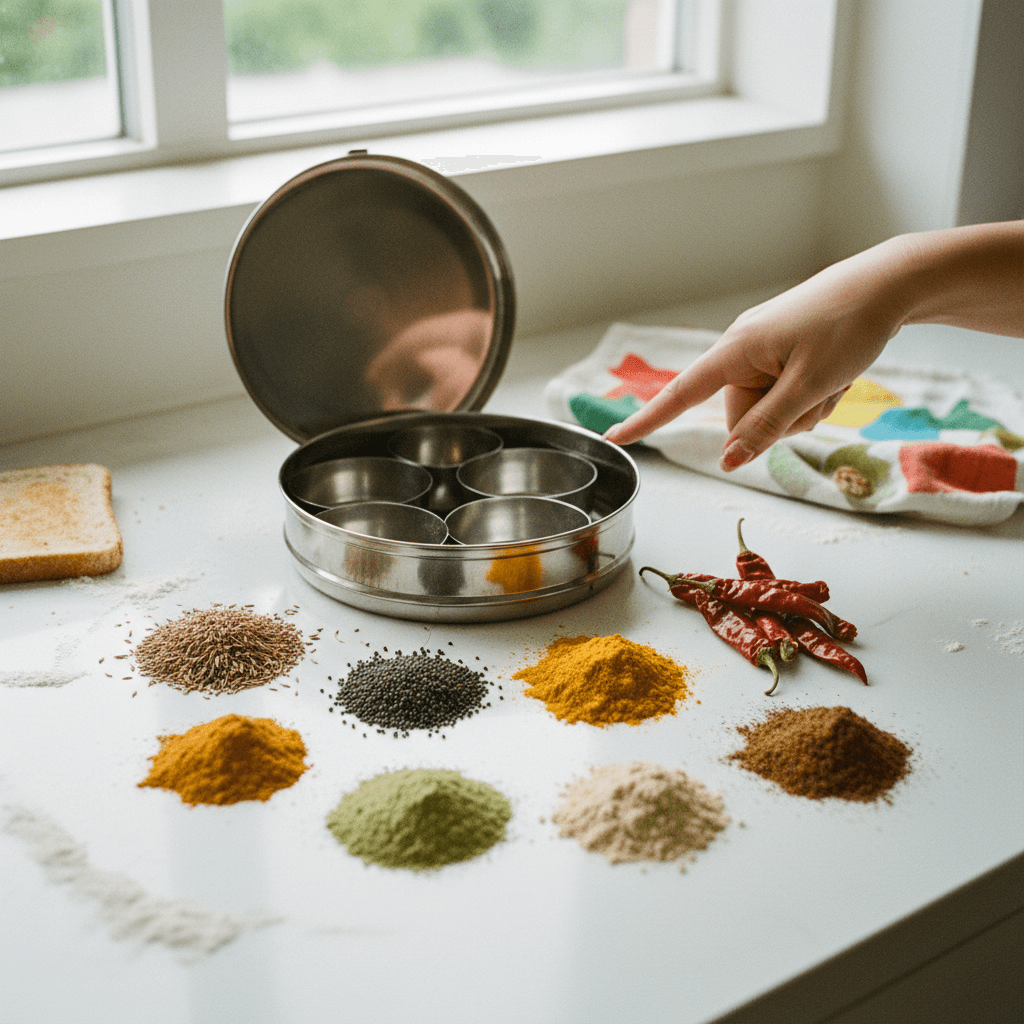
- 2
Carefully scoop or pour cumin seeds into the first compartment of your spice box. These whole seeds form a base, creating a warm, earthy flavor in curries.
⏱️ 1 min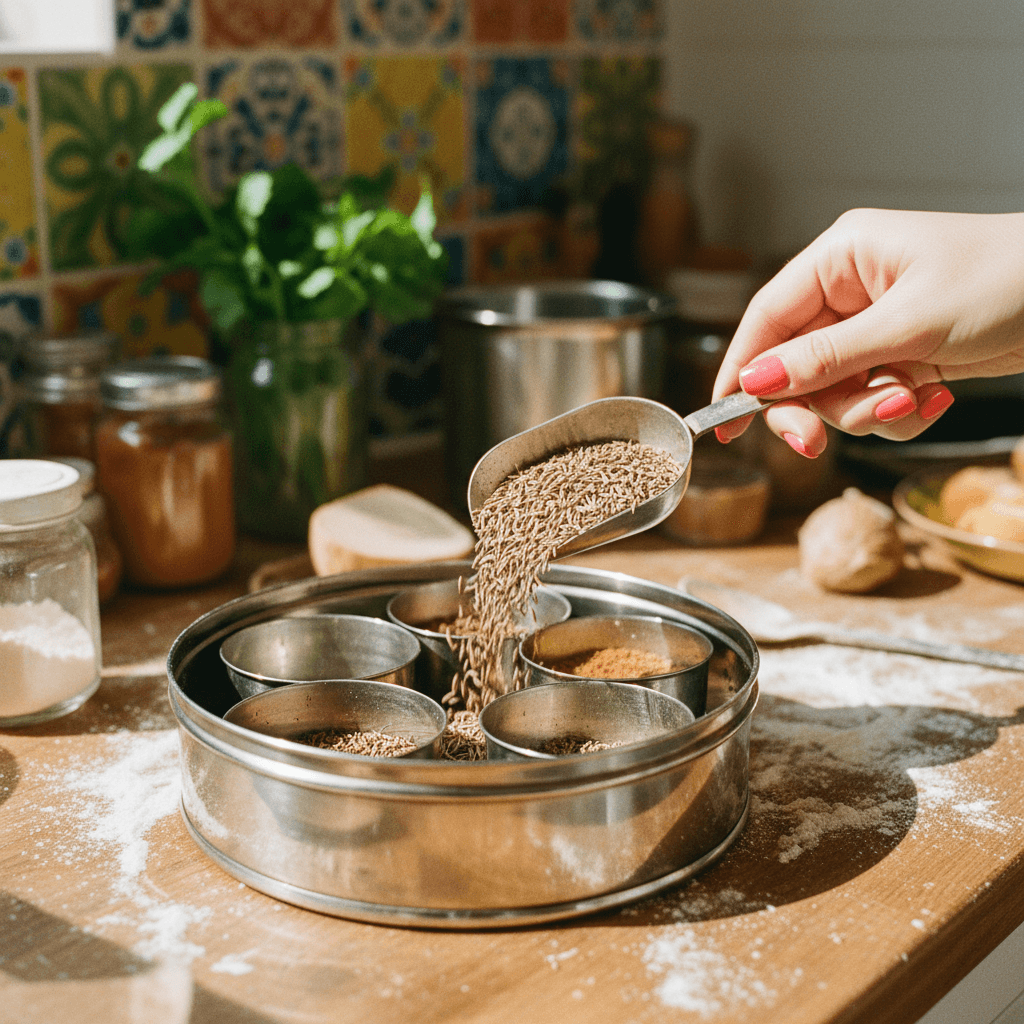
- 3
Add coriander powder to the second compartment. This ground spice is key for smoothing and balancing the flavors in your curries.
⏱️ 1 min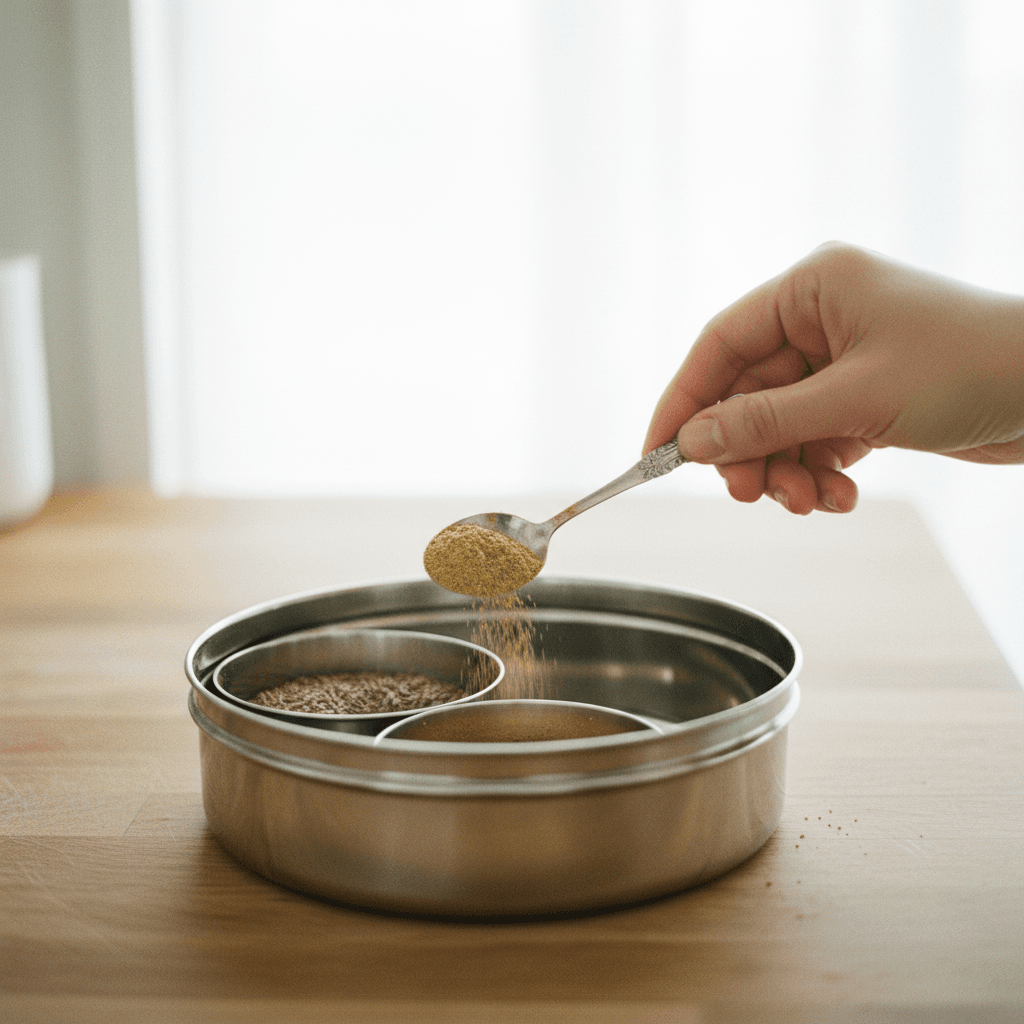
- 4
Pour mustard seeds into the third compartment. These small, dark seeds are often used for tempering, which 'wakes up' the entire dish with their pungent flavor when heated.
⏱️ 1 min
- 5
Fill the fourth compartment with turmeric powder. This bright yellow powder not only brings vibrant color to dishes but is also known for its antiseptic and anti-inflammatory properties.
⏱️ 1 min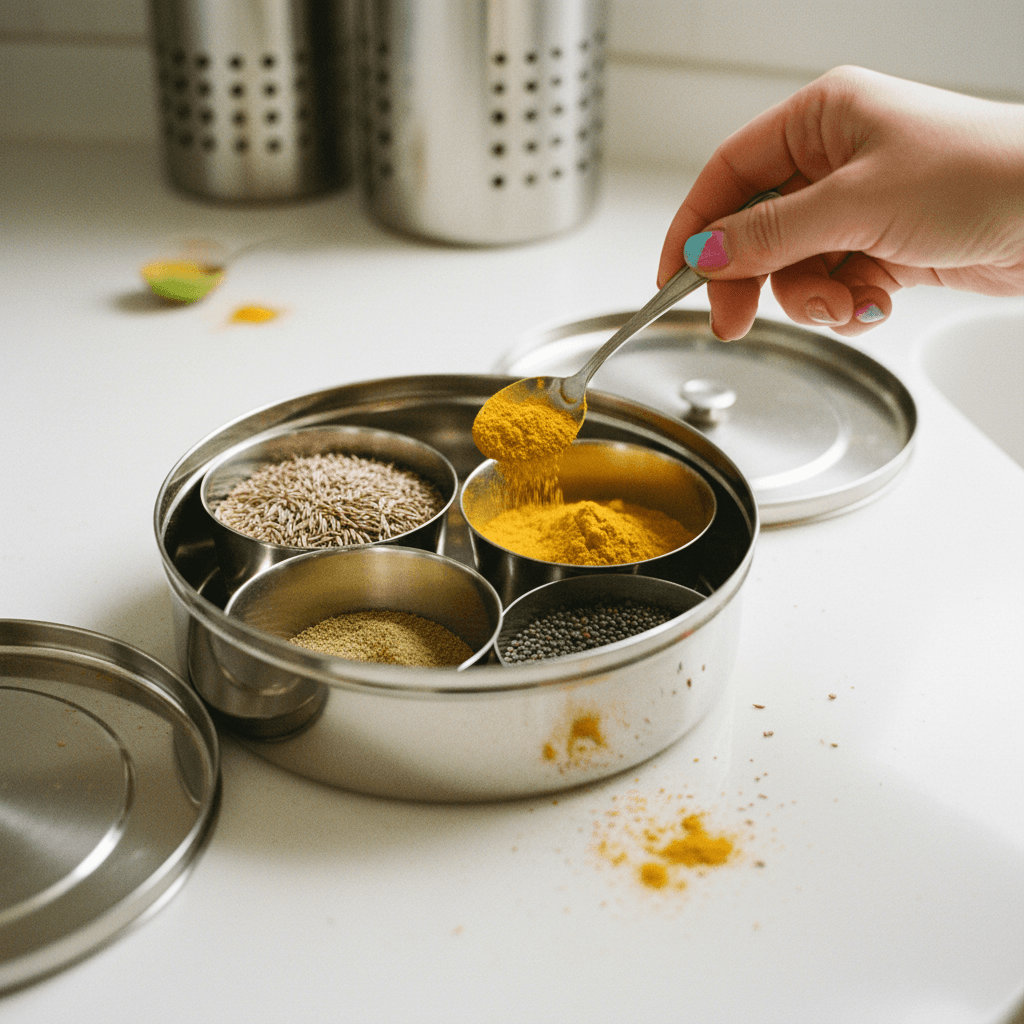
- 6
Place the whole, dried red chili peppers into the fifth compartment. These are added to dishes to provide a varying degree of heat, depending on the quantity used.
⏱️ 1 min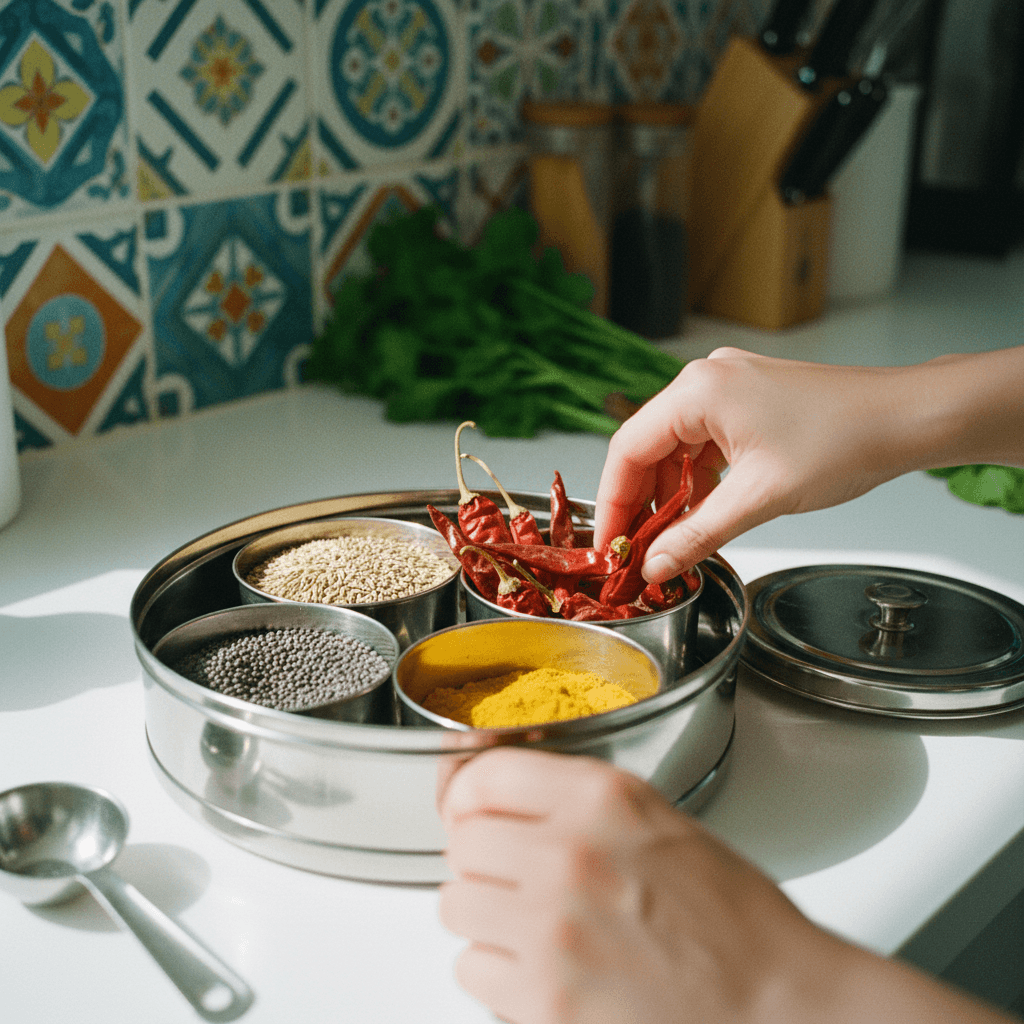
- 7
Pour whole black peppercorns into the sixth compartment. Like red chilies, black pepper contributes another type of heat and a distinct pungent flavor to Indian cuisine.
⏱️ 1 min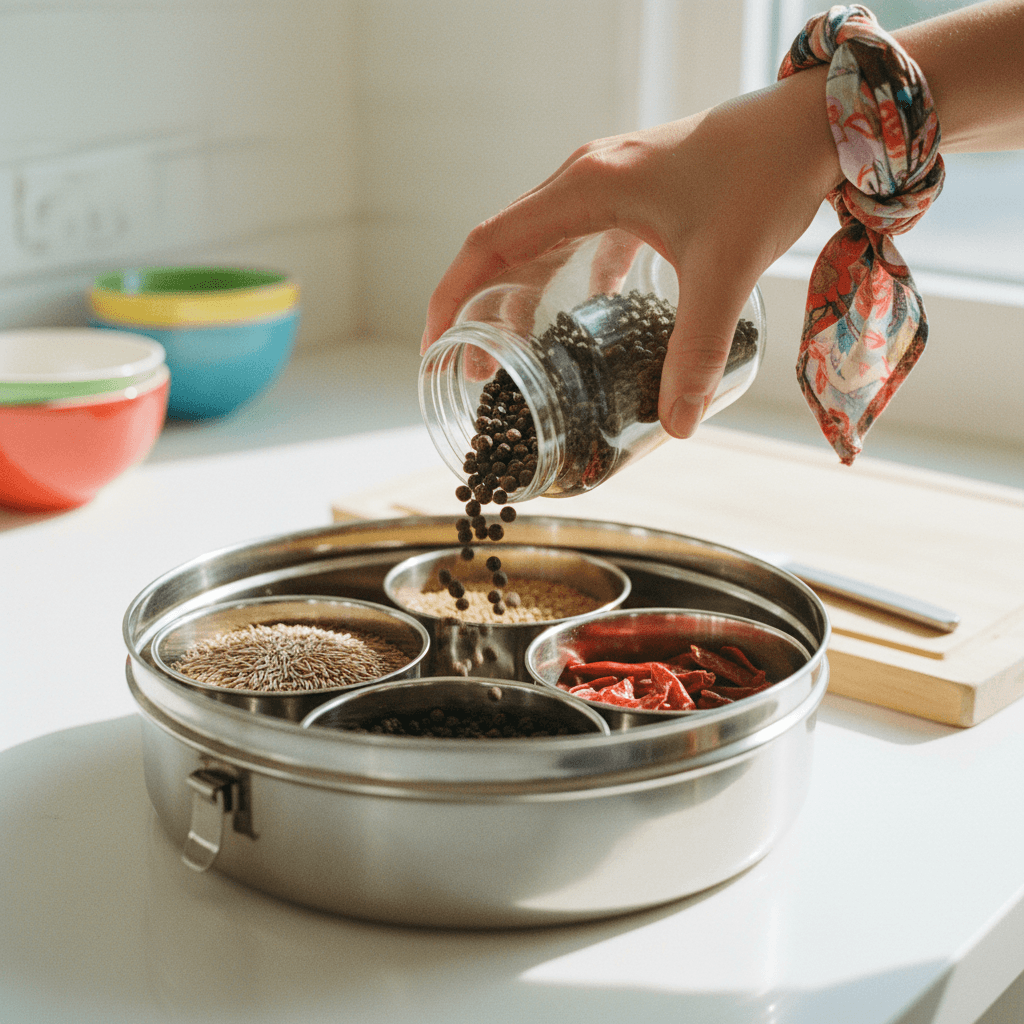
- 8
Add asafoetida powder to the seventh compartment. This potent spice, often referred to as 'hing,' is particularly useful when cooking with lentils or beans, aiding in digestion and adding a savory, onion-like flavor.
⏱️ 1 min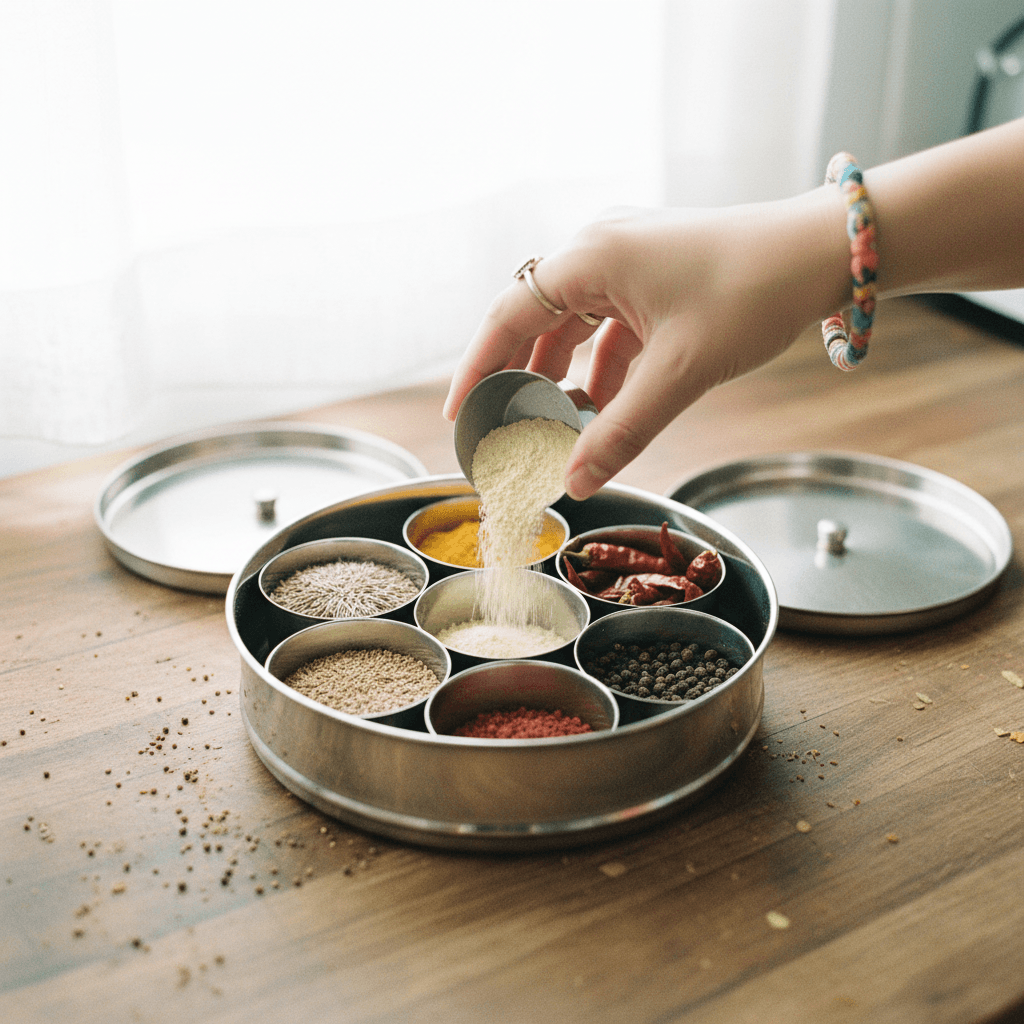
- 9
Finally, scoop garam masala into the eighth and final compartment. This aromatic blend of ground spices is typically added at the end of cooking to refresh and brighten the flavors of a curry.
⏱️ 1 min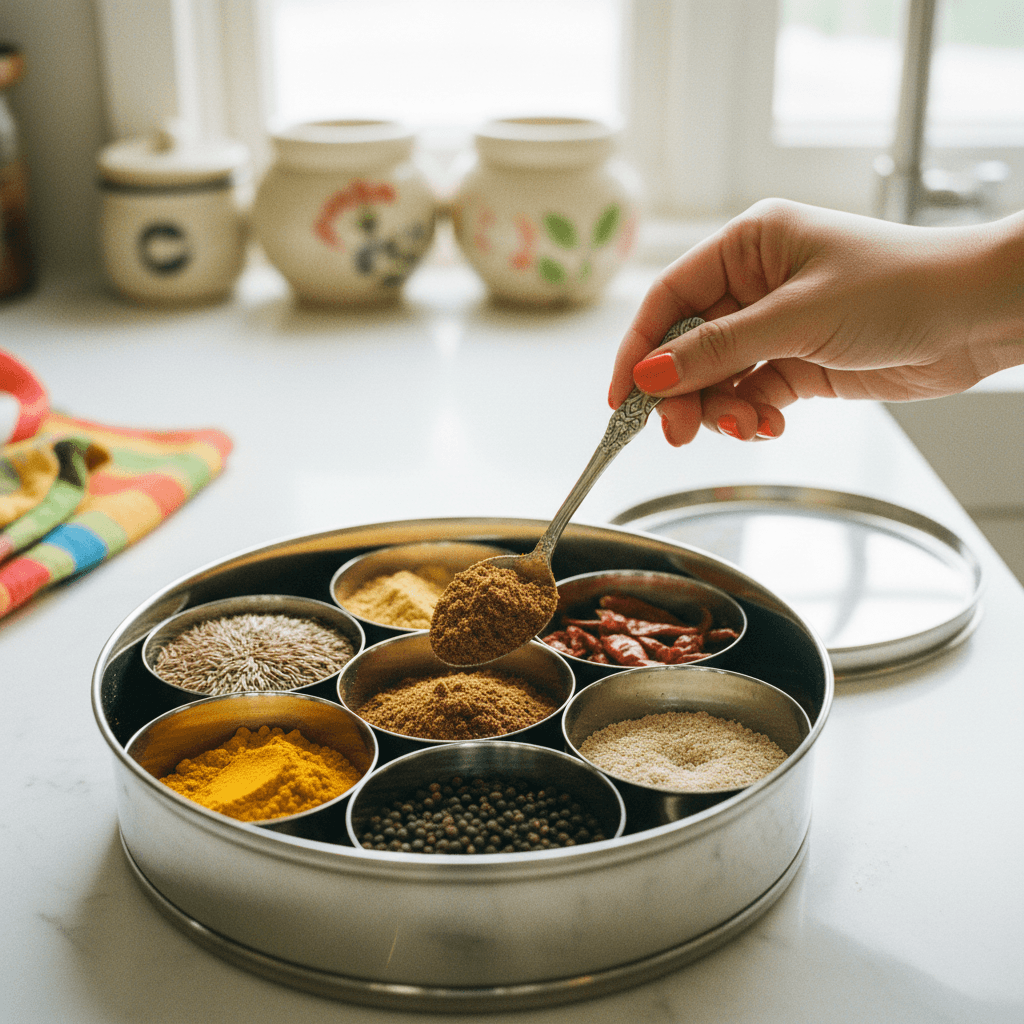
- 10
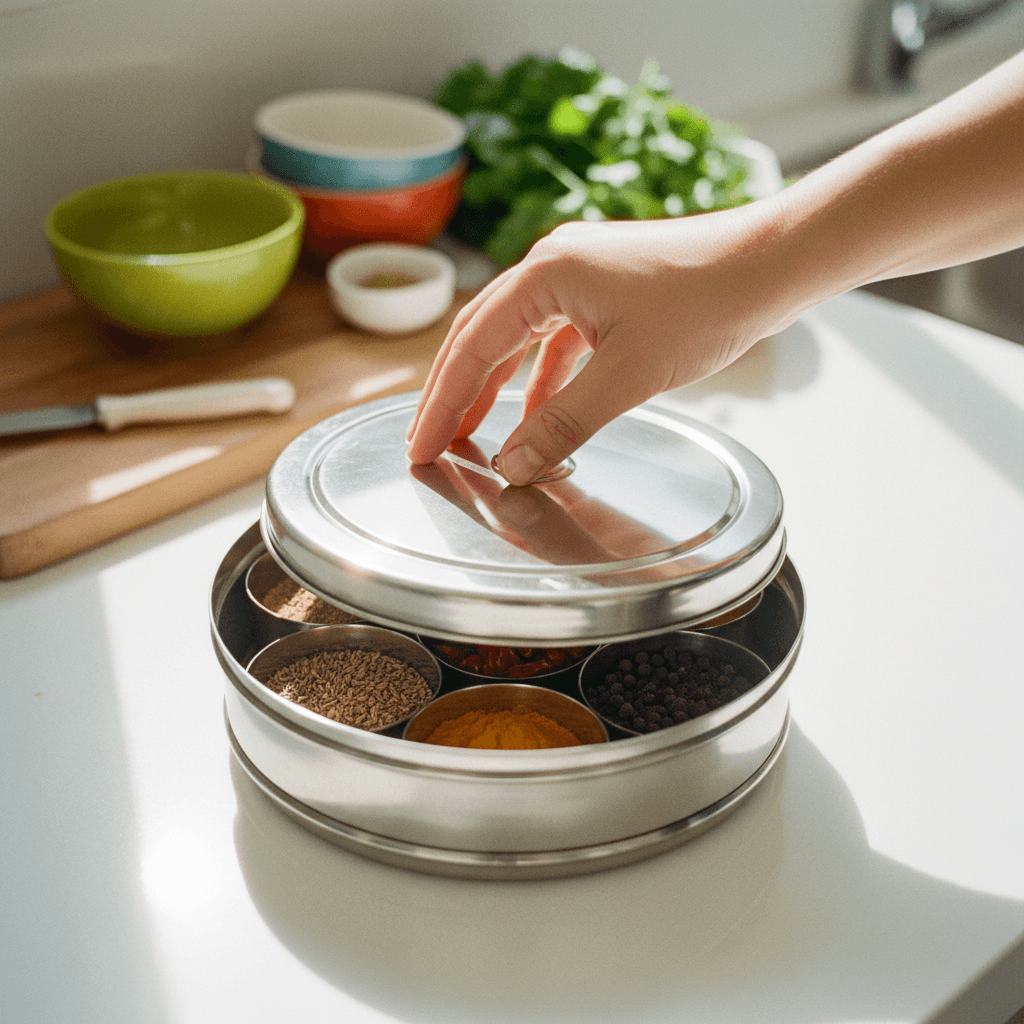
Close the lid of your spice box. Your essential Indian spice collection is now organized and ready for your culinary adventures, bringing you one step closer to mastering Indian cooking.
Kitchen Tools
Essential Indian Spices for Cooking (A Guide)
Essential Indian Spices
- as needed cumin seeds, whole
- as needed coriander powder
- as needed mustard seeds, whole
- as needed turmeric powder
- as needed red chili peppers, whole, dried
- as needed black peppercorns, whole
- as needed asafoetida powder
- as needed garam masala
Instructions
- 1
Gather your eight essential Indian spices: cumin seeds, coriander powder, mustard seeds, turmeric powder, whole dried red chili peppers, whole black peppercorns, asafoetida powder, and garam masala. Ensure you have a traditional Indian spice box (masala dabba) with multiple compartments ready.
⏱️ 2 min - 2
Carefully scoop or pour cumin seeds into the first compartment of your spice box. These whole seeds form a base, creating a warm, earthy flavor in curries.
⏱️ 1 min - 3
Add coriander powder to the second compartment. This ground spice is key for smoothing and balancing the flavors in your curries.
⏱️ 1 min - 4
Pour mustard seeds into the third compartment. These small, dark seeds are often used for tempering, which 'wakes up' the entire dish with their pungent flavor when heated.
⏱️ 1 min - 5
Fill the fourth compartment with turmeric powder. This bright yellow powder not only brings vibrant color to dishes but is also known for its antiseptic and anti-inflammatory properties.
⏱️ 1 min - 6
Place the whole, dried red chili peppers into the fifth compartment. These are added to dishes to provide a varying degree of heat, depending on the quantity used.
⏱️ 1 min - 7
Pour whole black peppercorns into the sixth compartment. Like red chilies, black pepper contributes another type of heat and a distinct pungent flavor to Indian cuisine.
⏱️ 1 min - 8
Add asafoetida powder to the seventh compartment. This potent spice, often referred to as 'hing,' is particularly useful when cooking with lentils or beans, aiding in digestion and adding a savory, onion-like flavor.
⏱️ 1 min - 9
Finally, scoop garam masala into the eighth and final compartment. This aromatic blend of ground spices is typically added at the end of cooking to refresh and brighten the flavors of a curry.
⏱️ 1 min - 10
Close the lid of your spice box. Your essential Indian spice collection is now organized and ready for your culinary adventures, bringing you one step closer to mastering Indian cooking.