Vanilla Ice Cream Base
Vanilla Ice Cream Base

Ingredients
- 2 cups milk
- 4 cups cream
- 3/4 cup granulated sugar
- 1/4 cup liquid invert sugar
- 2 heaping tablespoons vanilla paste, add more if desired
- 1 tablespoon vanilla extract, add more if desired
- 1 teaspoon salt
- 6 egg yolks
Instructions
- 1
In a saucepan, combine the milk, cream, granulated sugar, liquid invert sugar, vanilla paste, vanilla extract, and salt. Heat this mixture over medium heat, stirring occasionally, until it is hot but not boiling and all the sugar and salt have dissolved.
⏱️ 7 min
- 2
In a separate medium-sized bowl, whisk the egg yolks until they are light in color and well combined.
⏱️ 3 min
- 3
Slowly pour about 1 cup of the hot milk and cream mixture into the whisked egg yolks while continuously whisking the yolks. This process, known as tempering, gradually raises the temperature of the egg yolks without scrambling them.
⏱️ 3 min
- 4
Pour the tempered egg yolk mixture back into the saucepan with the remaining hot milk and cream. Continue to cook the custard over medium-low heat, stirring constantly with a spatula, until the mixture thickens. The custard is ready when it coats the back of a spoon (nappe consistency) and a line drawn across the spoon with a finger holds its shape. Ensure the mixture does not boil, as this can curdle the eggs.
⏱️ 5 min
- 5
Immediately remove the saucepan from the heat. Strain the hot custard through a fine-mesh sieve into a clean bowl. This step removes any potential small scrambled egg bits or vanilla bean seeds from the vanilla paste, ensuring a smooth ice cream base.
⏱️ 2 min
- 6
Place the bowl with the strained custard into a larger bowl filled with ice water (an ice bath) and stir occasionally to help it cool down quickly. Alternatively, cover the surface of the custard directly with plastic wrap to prevent a skin from forming, and refrigerate for at least 4 hours, or preferably overnight, until it is thoroughly chilled. A well-chilled base is crucial for optimal ice cream texture.
⏱️ 240 min
- 7
Once the vanilla ice cream base is thoroughly chilled, pour it into an ice cream maker. Churn the mixture according to the manufacturer's instructions until it reaches a soft-serve consistency.
⏱️ 20 min
- 8
Transfer the freshly churned, soft ice cream to an airtight container. Place the container in the freezer for at least 4-6 hours, or overnight, to allow the ice cream to harden to a scoopable consistency.
⏱️ 240 min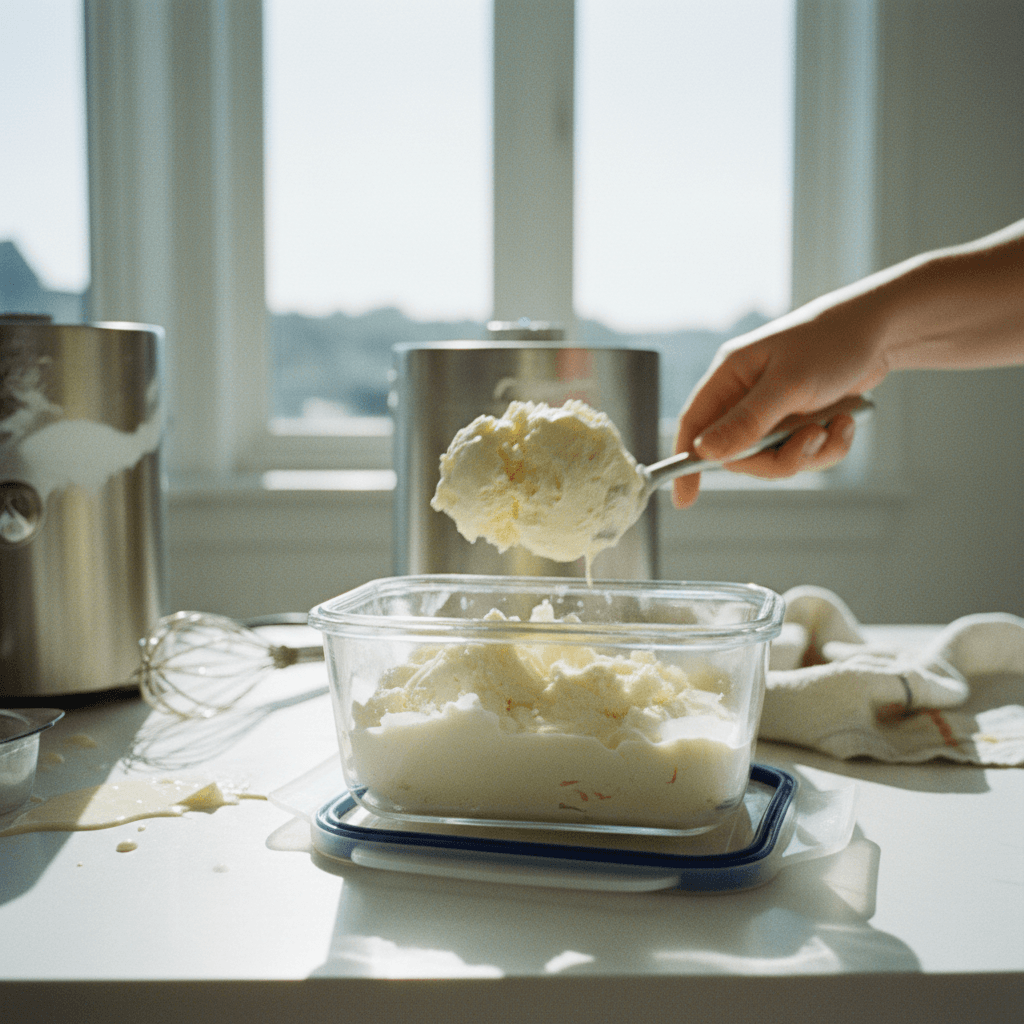
Kitchen Tools
Nutrition Facts (per serving)
Vanilla Ice Cream Base
- 2 cups milk
- 4 cups cream
- 3/4 cup granulated sugar
- 1/4 cup liquid invert sugar
- 2 heaping tablespoons vanilla paste, add more if desired
- 1 tablespoon vanilla extract, add more if desired
- 1 teaspoon salt
- 6 egg yolks
Instructions
- 1
In a saucepan, combine the milk, cream, granulated sugar, liquid invert sugar, vanilla paste, vanilla extract, and salt. Heat this mixture over medium heat, stirring occasionally, until it is hot but not boiling and all the sugar and salt have dissolved.
⏱️ 7 min - 2
In a separate medium-sized bowl, whisk the egg yolks until they are light in color and well combined.
⏱️ 3 min - 3
Slowly pour about 1 cup of the hot milk and cream mixture into the whisked egg yolks while continuously whisking the yolks. This process, known as tempering, gradually raises the temperature of the egg yolks without scrambling them.
⏱️ 3 min - 4
Pour the tempered egg yolk mixture back into the saucepan with the remaining hot milk and cream. Continue to cook the custard over medium-low heat, stirring constantly with a spatula, until the mixture thickens. The custard is ready when it coats the back of a spoon (nappe consistency) and a line drawn across the spoon with a finger holds its shape. Ensure the mixture does not boil, as this can curdle the eggs.
⏱️ 5 min - 5
Immediately remove the saucepan from the heat. Strain the hot custard through a fine-mesh sieve into a clean bowl. This step removes any potential small scrambled egg bits or vanilla bean seeds from the vanilla paste, ensuring a smooth ice cream base.
⏱️ 2 min - 6
Place the bowl with the strained custard into a larger bowl filled with ice water (an ice bath) and stir occasionally to help it cool down quickly. Alternatively, cover the surface of the custard directly with plastic wrap to prevent a skin from forming, and refrigerate for at least 4 hours, or preferably overnight, until it is thoroughly chilled. A well-chilled base is crucial for optimal ice cream texture.
⏱️ 240 min - 7
Once the vanilla ice cream base is thoroughly chilled, pour it into an ice cream maker. Churn the mixture according to the manufacturer's instructions until it reaches a soft-serve consistency.
⏱️ 20 min - 8
Transfer the freshly churned, soft ice cream to an airtight container. Place the container in the freezer for at least 4-6 hours, or overnight, to allow the ice cream to harden to a scoopable consistency.
⏱️ 240 min