Pasta (Square Spaghetti) all'Amatriciana
Pasta (Square Spaghetti) all'Amatriciana

Ingredients
- 320 g tonnarelli, or spaghetti/rigatoni
- 20 spoonfuls Pecorino Romano, grated
- 400 g guanciale
- as needed black pepper, freshly ground
- as needed salt, for pasta water
Instructions
- 1
Cut the guanciale into thin strips, removing the rind.
⏱️ 5 min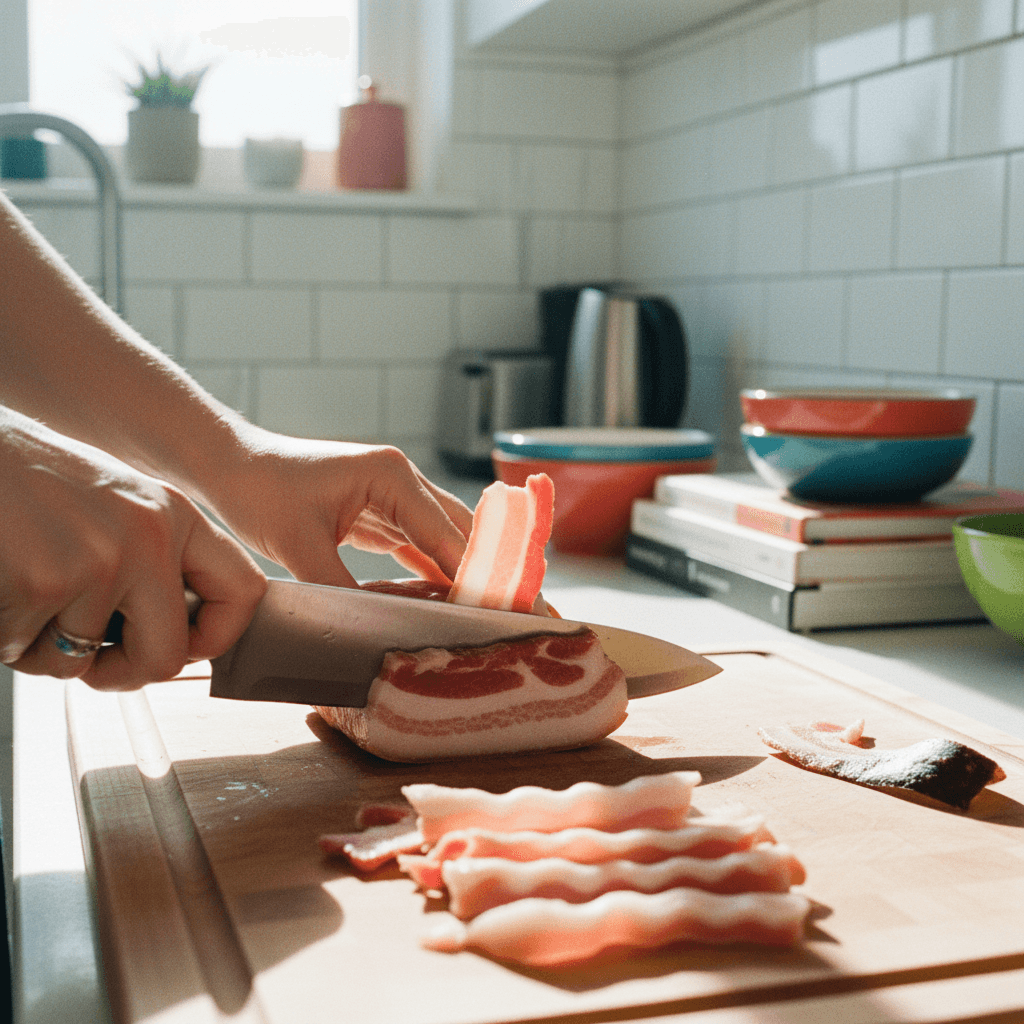
- 2
In a large pan over medium heat, render the guanciale until it is crispy and golden. No added oil is needed as the fat will melt out from the guanciale.
⏱️ 8 min
- 3
Once rendered, remove the crispy guanciale from the pan and set it aside on paper towel to absorb any extra fat. This crispy guanciale will be used for topping later. Leave half of the rendered guanciale fat in the pan and set the other half aside in a separate bowl.
⏱️ 2 min
- 4
In a bowl, combine the grated Pecorino Romano with some freshly ground black pepper and the half of the rendered guanciale fat that was set aside. Add a splash of hot pasta water (from the boiling pasta pot) to the mixture. Stir vigorously until it forms a smooth, creamy paste.
⏱️ 3 min
- 5
Meanwhile, cook the tonnarelli (or spaghetti/rigatoni) in lightly salted or even non-salted water. The guanciale and pecorino will provide plenty of saltiness.
⏱️ 10 min
- 6
When the pasta is al dente, use tongs to transfer it directly to the pan containing the remaining guanciale fat and some freshly ground black pepper. Save some of the starchy pasta water.
⏱️ 1 min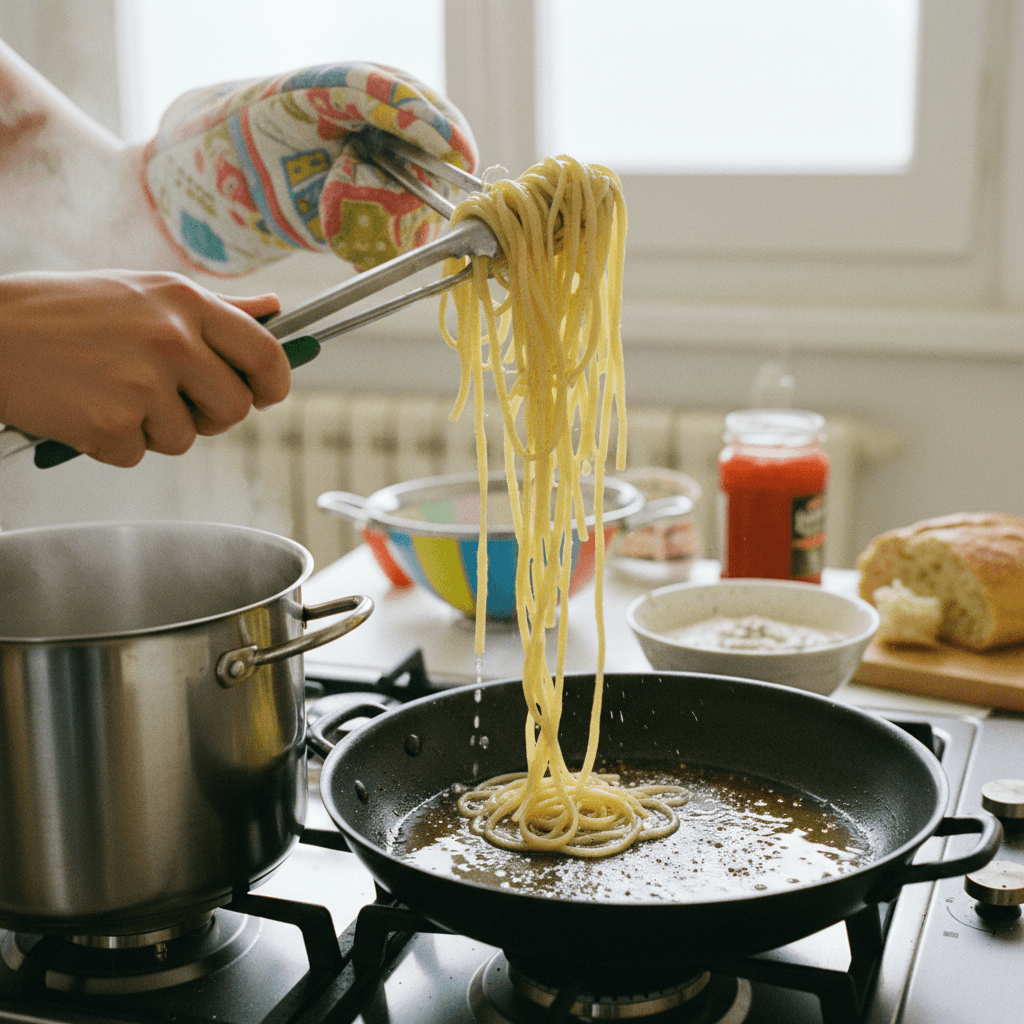
- 7
Let the pasta finish cooking on high heat, tossing it continuously. Add a ladle of starchy pasta water if the pasta gets too dry. The pasta will absorb the guanciale fat and pepper flavor, and a first layer of cream will start to form.
⏱️ 2 min
- 8
Turn off the heat and let the pasta rest for a minute or two. This step is key to avoid clumping. Then, add the prepared Pecorino and guanciale fat cream to the pasta in the pan.
⏱️ 2 min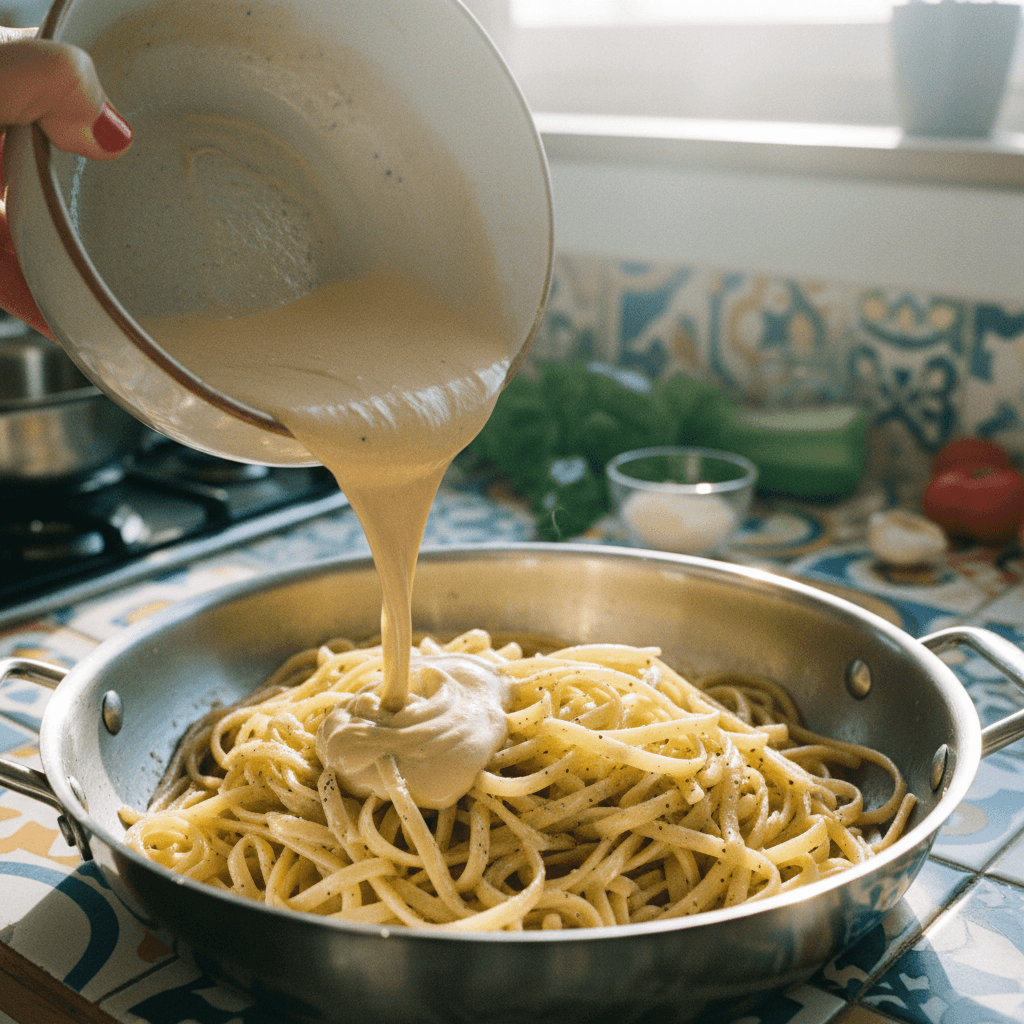
- 9
Mix vigorously until the pasta is fully coated in the glossy sauce. Add about half of the crispy guanciale back into the pan and mix it in with the pasta.
⏱️ 1 min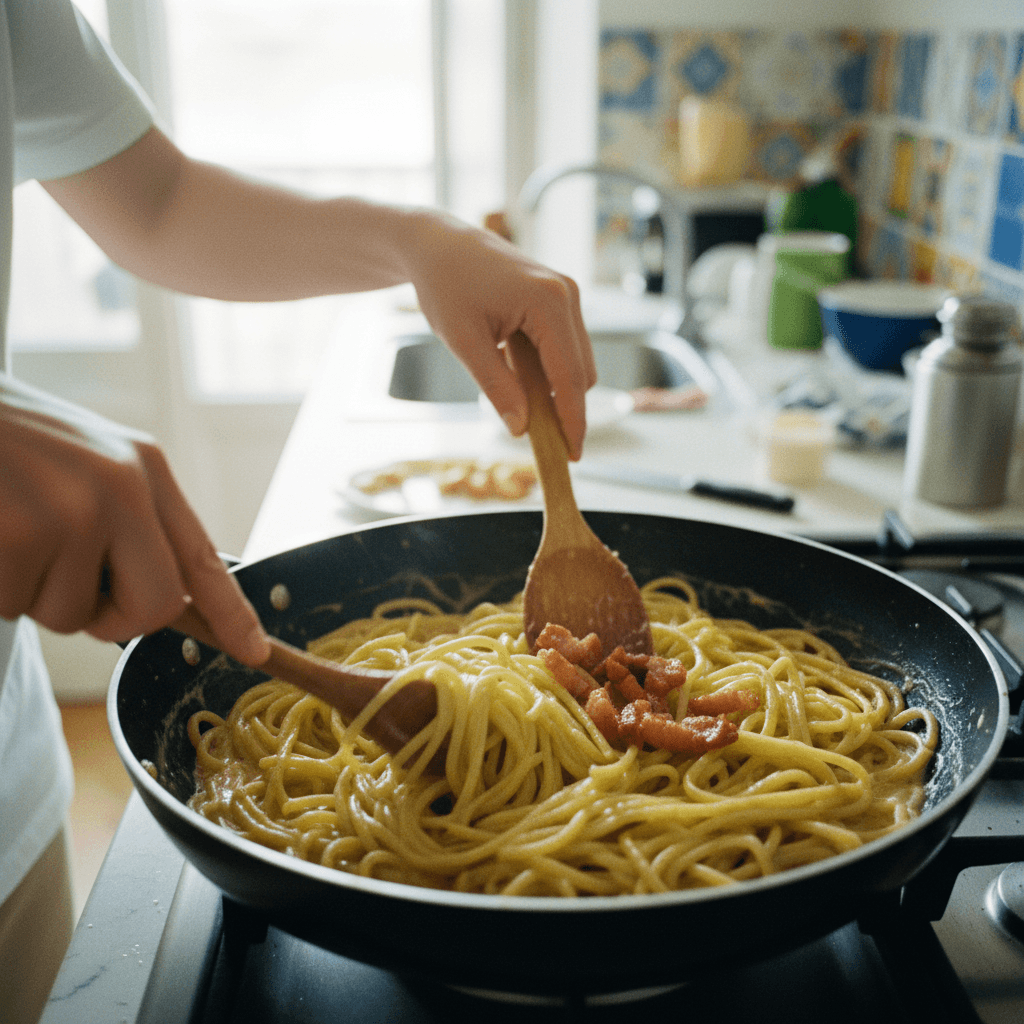
- 10
Plate the pasta. Add more of the reserved crispy guanciale on top, grate more Pecorino Romano over the dish, and finish with freshly ground black pepper. Buon appetito!
⏱️ 1 min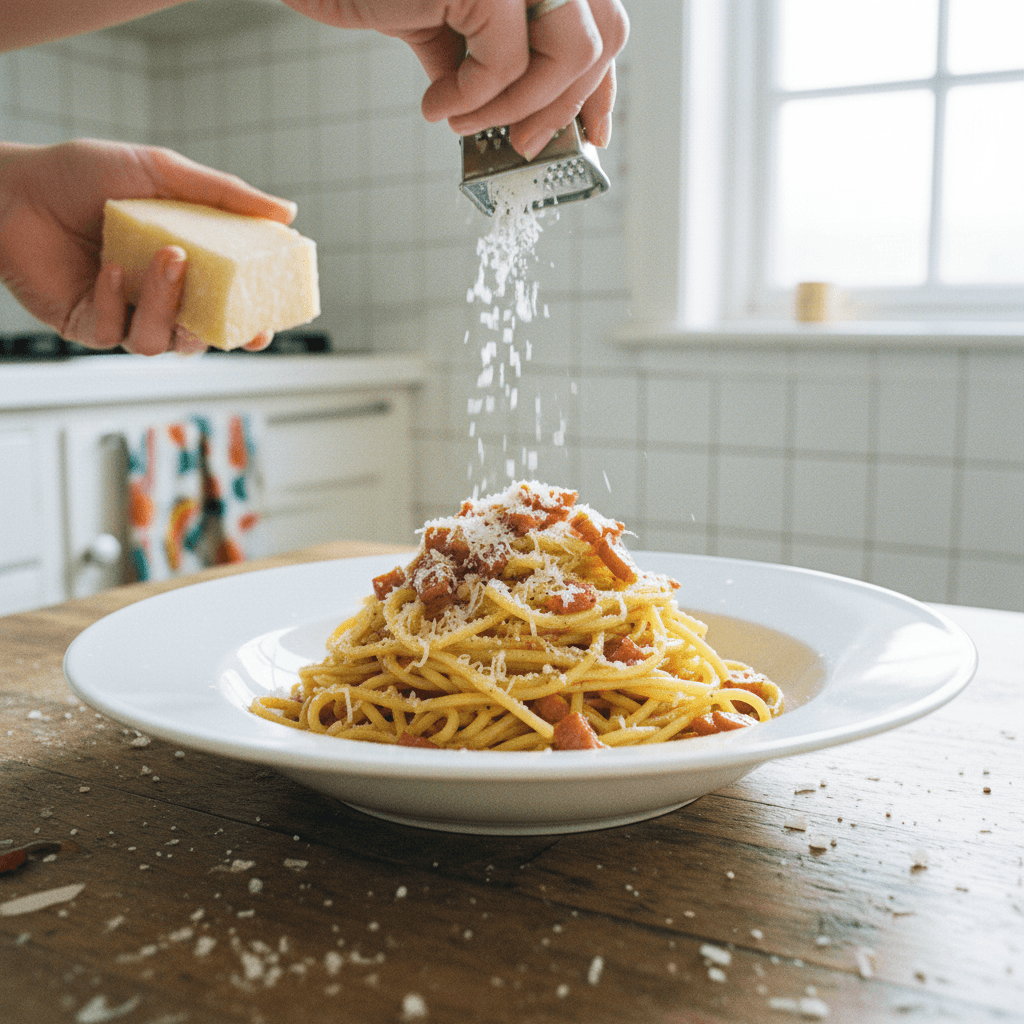
Kitchen Tools
Nutrition Facts (per serving)
Pasta (Square Spaghetti) all'Amatriciana
- 320 g tonnarelli, or spaghetti/rigatoni
- 20 spoonfuls Pecorino Romano, grated
- 400 g guanciale
- as needed black pepper, freshly ground
- as needed salt, for pasta water
Instructions
- 1
Cut the guanciale into thin strips, removing the rind.
⏱️ 5 min - 2
In a large pan over medium heat, render the guanciale until it is crispy and golden. No added oil is needed as the fat will melt out from the guanciale.
⏱️ 8 min - 3
Once rendered, remove the crispy guanciale from the pan and set it aside on paper towel to absorb any extra fat. This crispy guanciale will be used for topping later. Leave half of the rendered guanciale fat in the pan and set the other half aside in a separate bowl.
⏱️ 2 min - 4
In a bowl, combine the grated Pecorino Romano with some freshly ground black pepper and the half of the rendered guanciale fat that was set aside. Add a splash of hot pasta water (from the boiling pasta pot) to the mixture. Stir vigorously until it forms a smooth, creamy paste.
⏱️ 3 min - 5
Meanwhile, cook the tonnarelli (or spaghetti/rigatoni) in lightly salted or even non-salted water. The guanciale and pecorino will provide plenty of saltiness.
⏱️ 10 min - 6
When the pasta is al dente, use tongs to transfer it directly to the pan containing the remaining guanciale fat and some freshly ground black pepper. Save some of the starchy pasta water.
⏱️ 1 min - 7
Let the pasta finish cooking on high heat, tossing it continuously. Add a ladle of starchy pasta water if the pasta gets too dry. The pasta will absorb the guanciale fat and pepper flavor, and a first layer of cream will start to form.
⏱️ 2 min - 8
Turn off the heat and let the pasta rest for a minute or two. This step is key to avoid clumping. Then, add the prepared Pecorino and guanciale fat cream to the pasta in the pan.
⏱️ 2 min - 9
Mix vigorously until the pasta is fully coated in the glossy sauce. Add about half of the crispy guanciale back into the pan and mix it in with the pasta.
⏱️ 1 min - 10
Plate the pasta. Add more of the reserved crispy guanciale on top, grate more Pecorino Romano over the dish, and finish with freshly ground black pepper. Buon appetito!
⏱️ 1 min