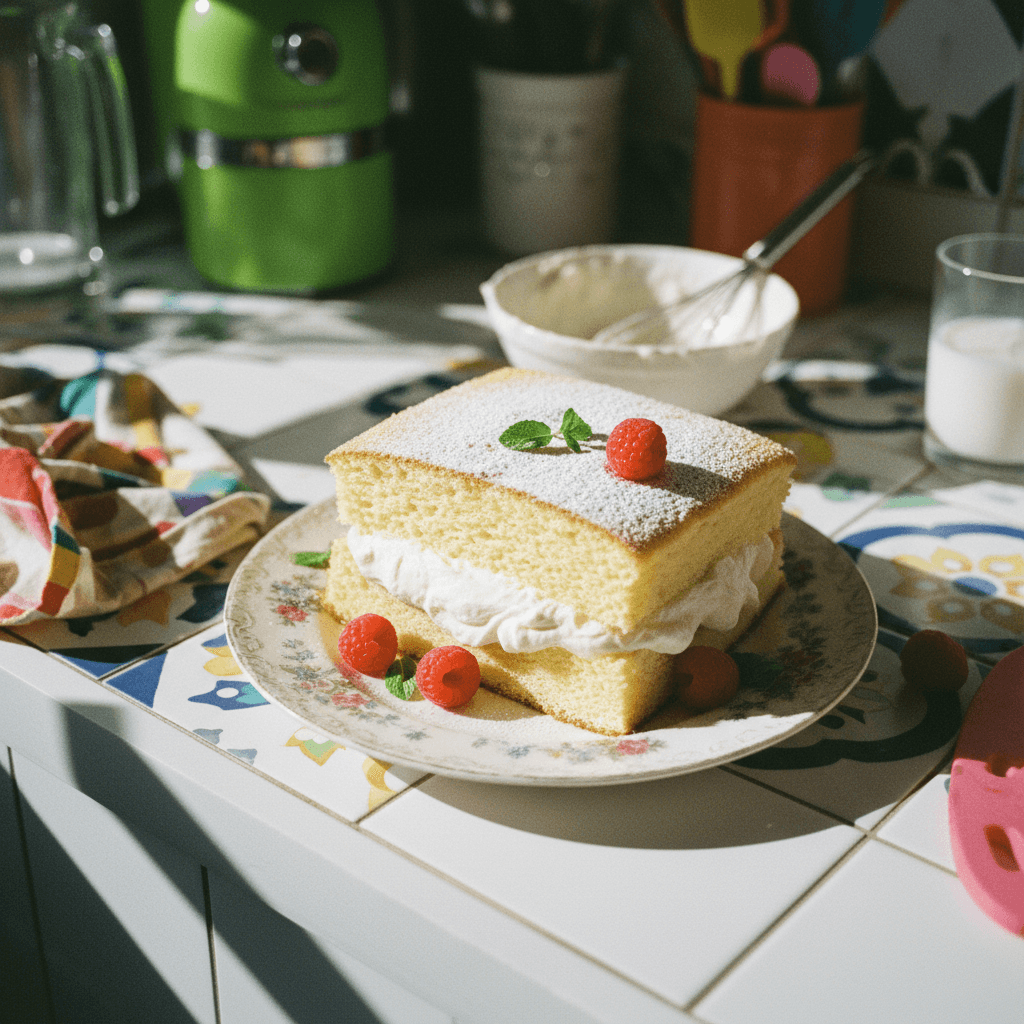
Fluffy Cream-Filled Sponge Cake (Japanese Cream Sandwich Cake)
Fluffy Cream-Filled Sponge Cake (Japanese Cream Sandwich Cake)
Ingredients
For the Sponge Cake
- 4 large eggs, separated
- 1/4 cup whole milk
- 1/2 cup all-purpose flour, sifted
- 1/4 cup granulated sugar
- 1/2 teaspoon lemon juice
For the Cream Filling
- 1 1/2 cups heavy cream, chilled
- 1/4 cup powdered sugar
- 1 teaspoon vanilla extract
Instructions
- 1
Preheat your oven to 325°F (160°C). Line a rectangular baking pan (approximately 9x13 inches or similar) with parchment paper, leaving an overhang on the sides for easy removal. Prepare a larger roasting pan or baking dish that can hold the cake pan for the water bath.
⏱️ 10 min•🌡️ 325
- 2
In a large bowl, combine the egg yolks, milk, and sifted all-purpose flour. Whisk until the mixture is smooth and free of lumps. Set aside.
⏱️ 5 min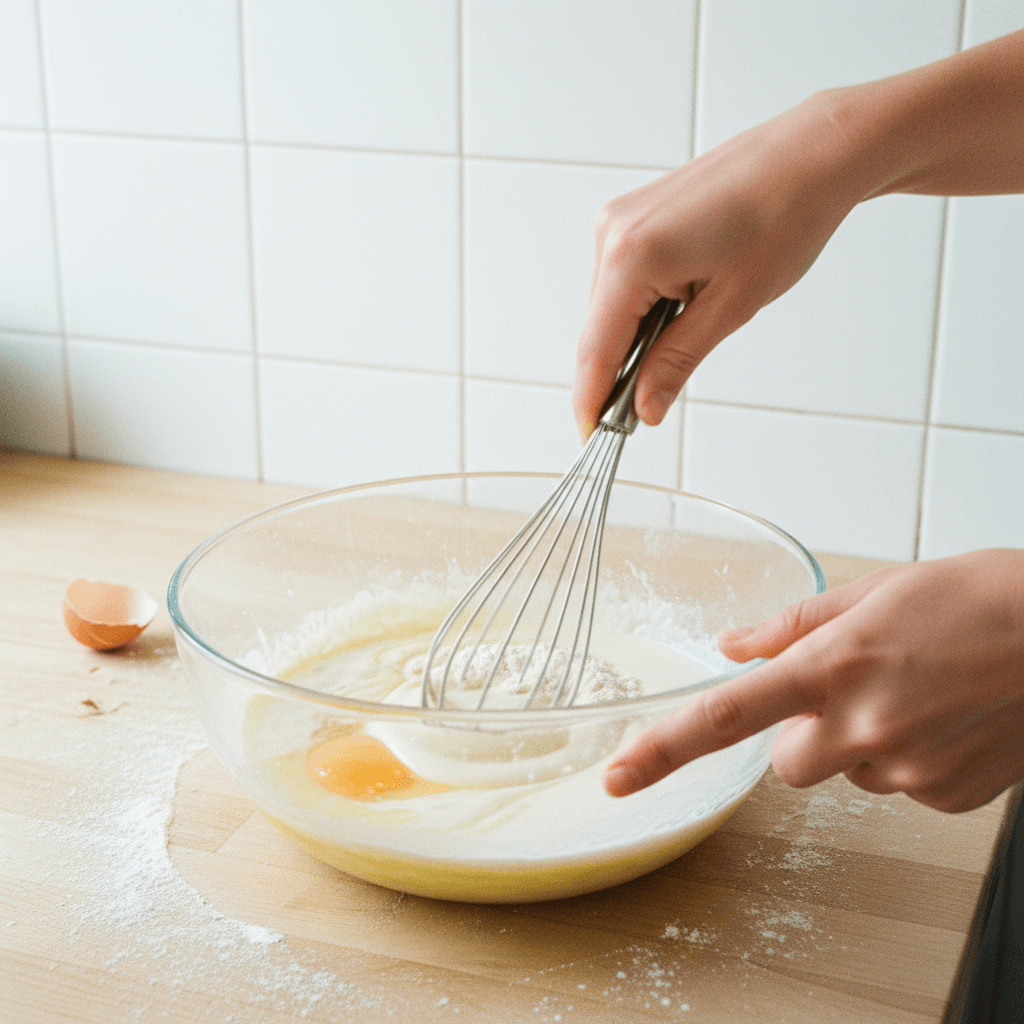
- 3
In a separate, very clean bowl, combine the egg whites and lemon juice. Using an electric mixer, begin whipping the egg whites on medium speed. Gradually add the granulated sugar, a tablespoon at a time, once the egg whites become foamy. Continue whipping on medium-high speed until stiff, glossy peaks form. Be careful not to overbeat.
⏱️ 10 min
- 4
Gently fold about one-third of the meringue into the egg yolk mixture using a spatula. This lightens the yolk batter. Once partially combined, add the lightened yolk mixture to the remaining meringue.
⏱️ 5 min
- 5
Carefully fold the two mixtures together until just combined and no streaks of egg white remain. Be gentle to maintain as much air as possible. The batter should be smooth and pourable.
⏱️ 5 min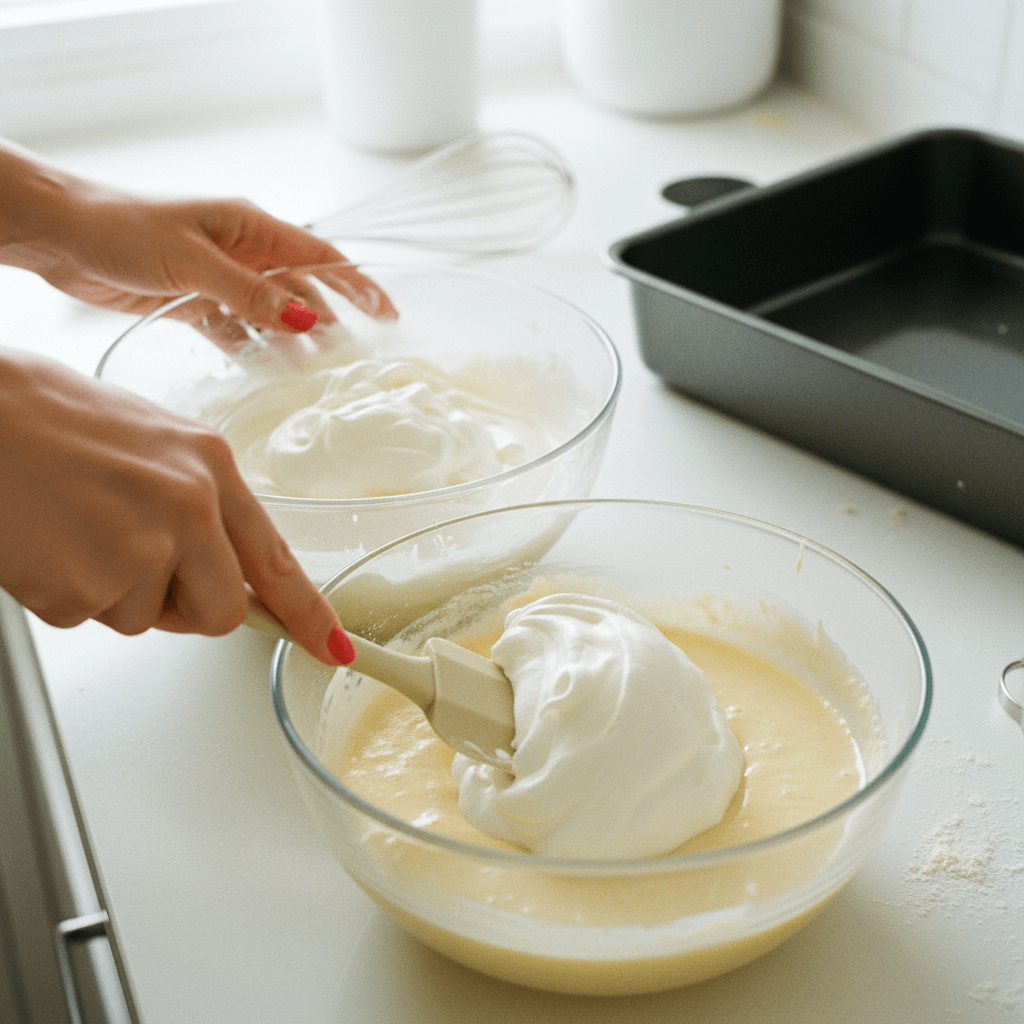
- 6
Pour the cake batter into the prepared rectangular baking pan. Place the cake pan into the larger roasting pan. Carefully pour hot water into the larger pan, reaching about 1 inch up the sides of the cake pan. This creates a bain-marie (water bath).
⏱️ 5 min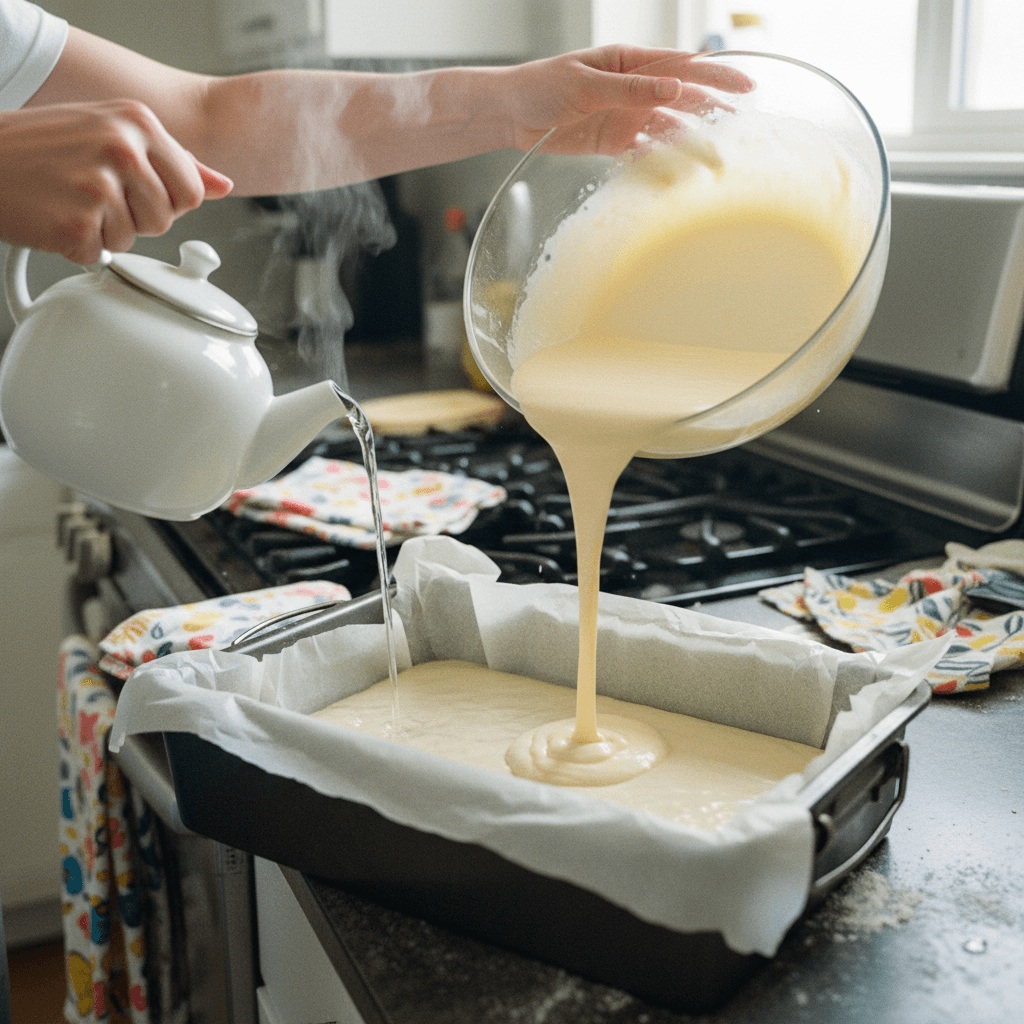
- 7
Carefully transfer the roasting pan with the cake pan and water bath to the preheated oven. Bake for 50-60 minutes, or until the top is golden brown and a wooden skewer inserted into the center comes out clean. The cake should be springy to the touch.
⏱️ 60 min•🌡️ 325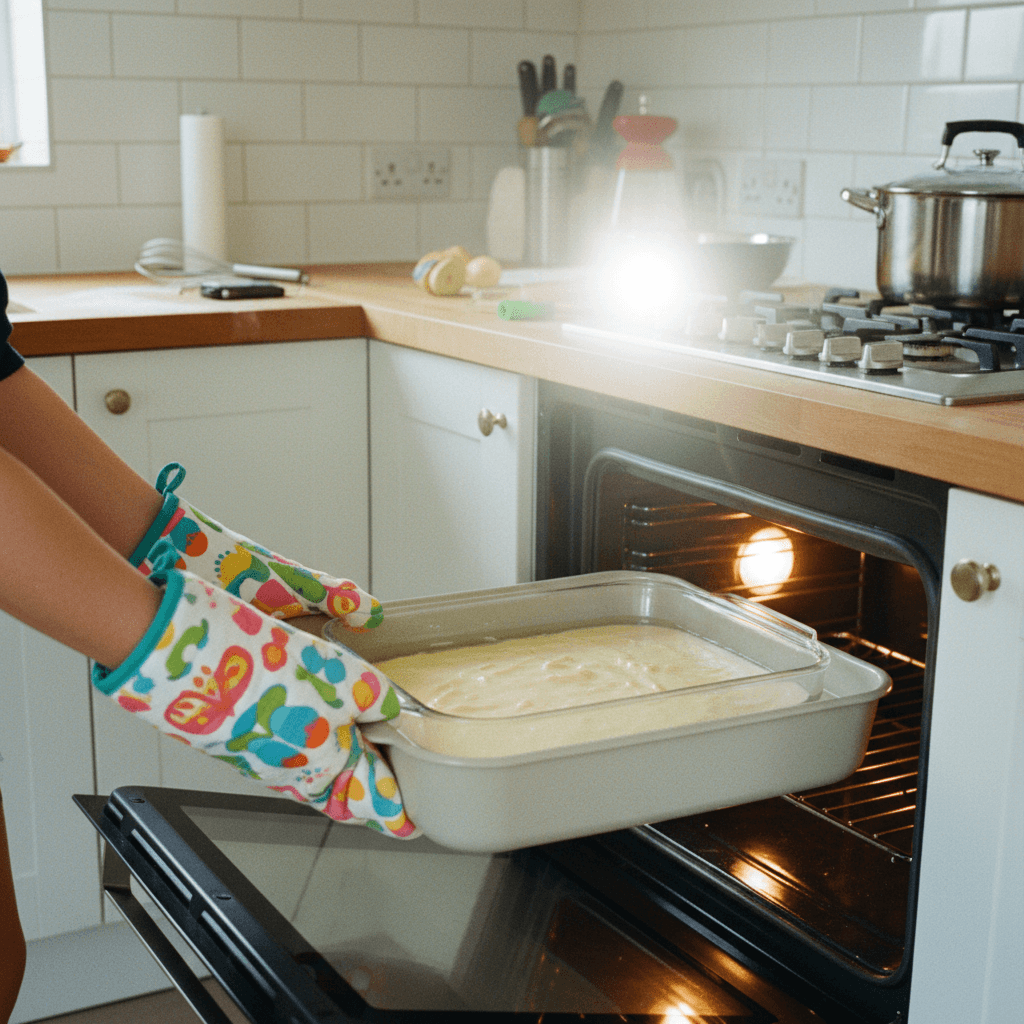
- 8
Once baked, carefully remove the cake pan from the water bath and let it cool in the pan for 15 minutes. Then, using the parchment paper overhang, lift the cake out of the pan and transfer it to a wire rack to cool completely. This will take at least 1 hour.
⏱️ 75 min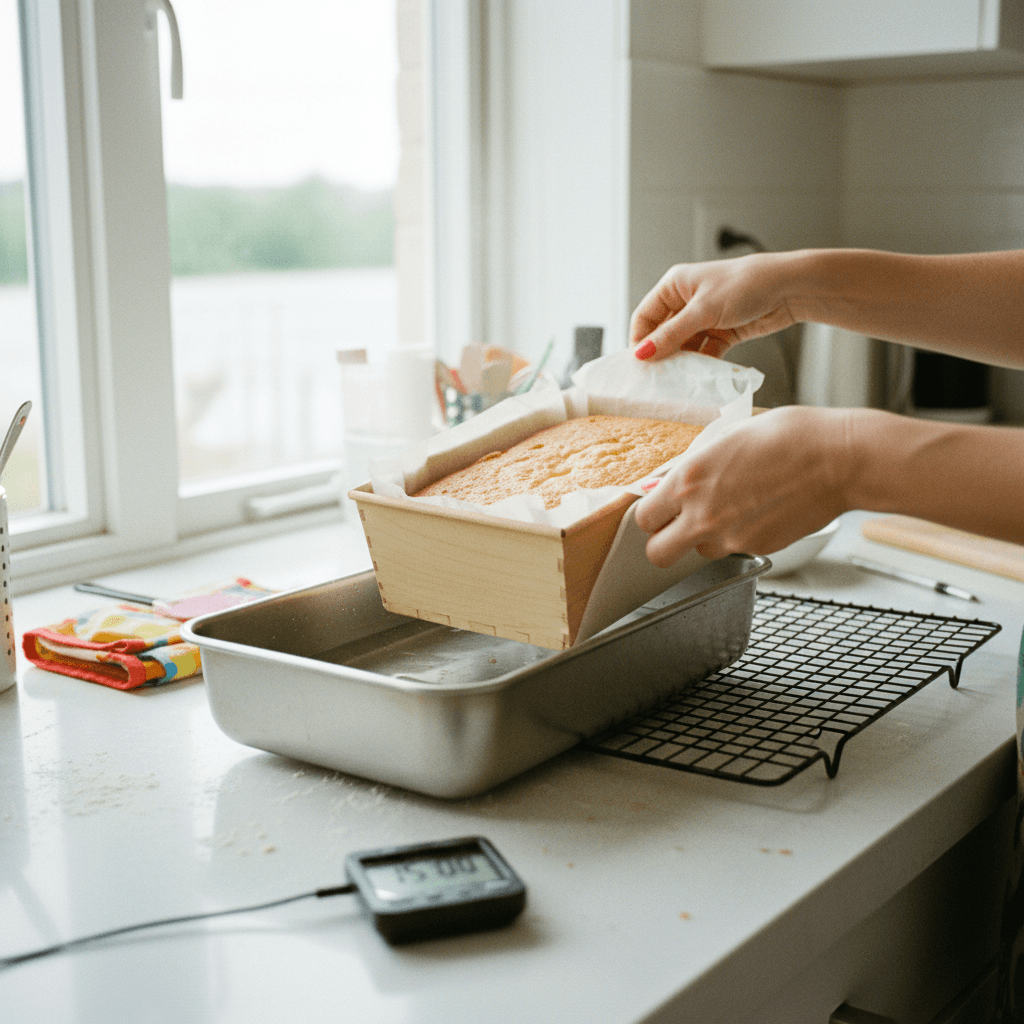
- 9
While the cake cools, prepare the cream filling. In a chilled bowl, combine the heavy cream, powdered sugar, and vanilla extract. Using an electric mixer, whip on medium-high speed until stiff peaks form.
⏱️ 10 min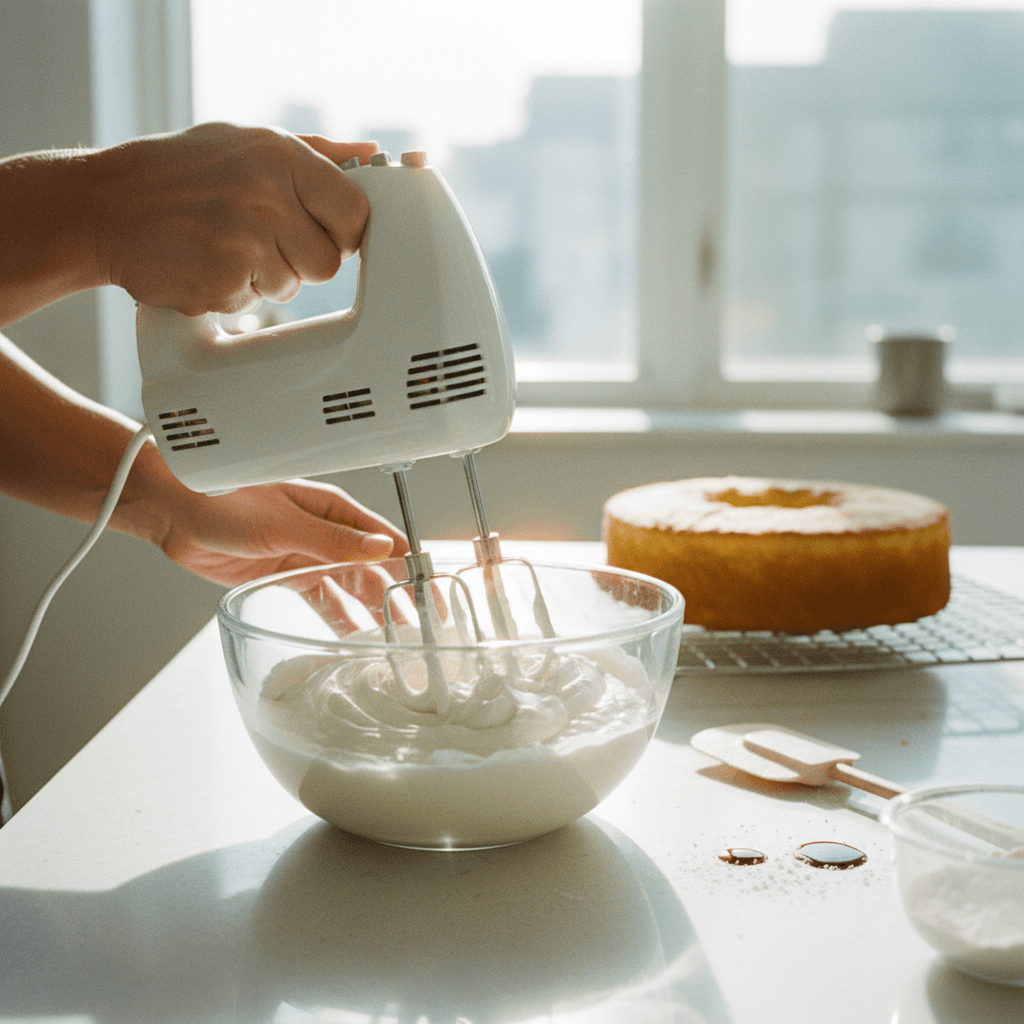
- 10
Once the cake is completely cool, carefully slice it horizontally into two even layers using a long serrated knife. Place the bottom layer on your serving platter.
⏱️ 5 min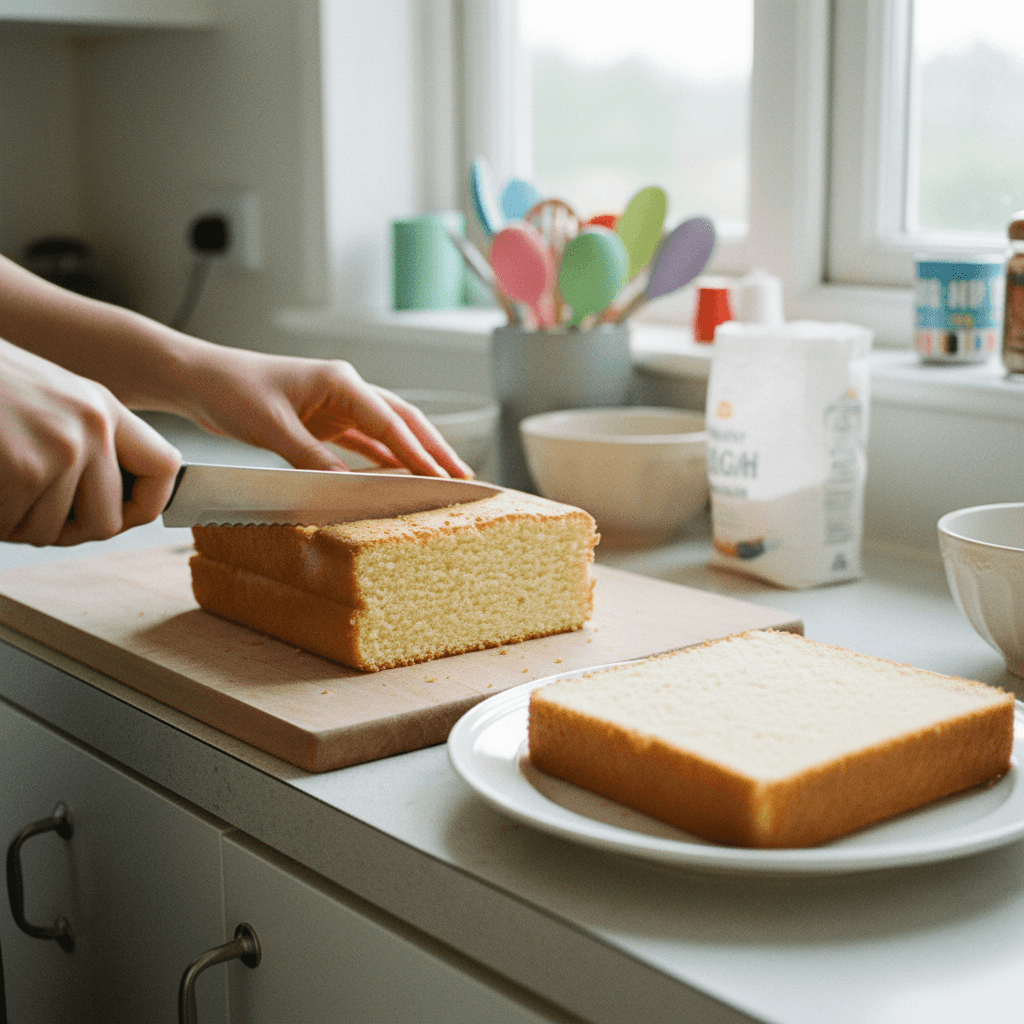
- 11
Pipe or spread a generous amount of the whipped cream filling evenly over the bottom cake layer, leaving a small border around the edges. Gently place the second cake layer on top, forming a sandwich.
⏱️ 5 min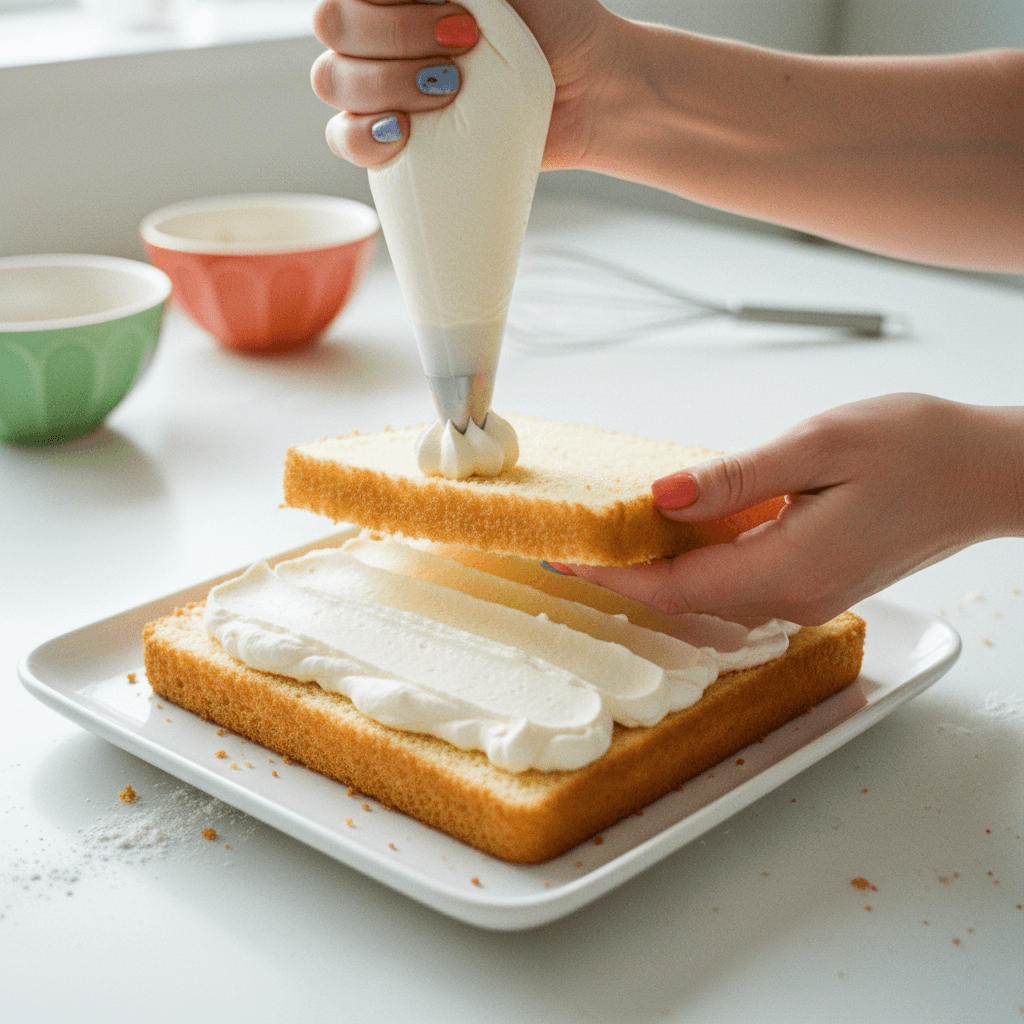
- 12
Using a sharp knife, trim the edges of the cake if desired, then cut the large cake into individual rectangular portions. Serve immediately or chill for at least 30 minutes for the cream to set slightly.
⏱️ 5 min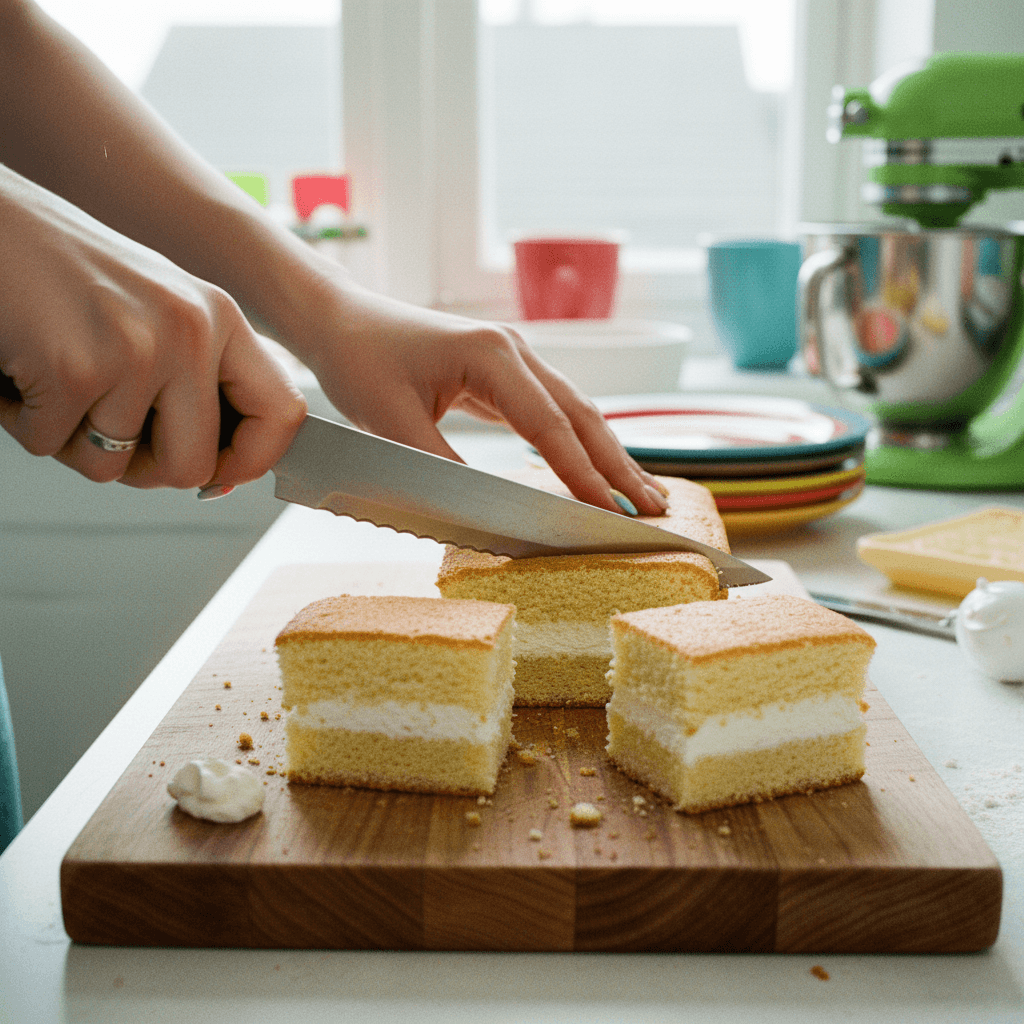
Kitchen Tools
Nutrition Facts (per serving)
Fluffy Cream-Filled Sponge Cake (Japanese Cream Sandwich Cake)
For the Sponge Cake
- 4 large eggs, separated
- 1/4 cup whole milk
- 1/2 cup all-purpose flour, sifted
- 1/4 cup granulated sugar
- 1/2 teaspoon lemon juice
For the Cream Filling
- 1 1/2 cups heavy cream, chilled
- 1/4 cup powdered sugar
- 1 teaspoon vanilla extract
Instructions
- 1
Preheat your oven to 325°F (160°C). Line a rectangular baking pan (approximately 9x13 inches or similar) with parchment paper, leaving an overhang on the sides for easy removal. Prepare a larger roasting pan or baking dish that can hold the cake pan for the water bath.
⏱️ 10 min•🌡️ 325 - 2
In a large bowl, combine the egg yolks, milk, and sifted all-purpose flour. Whisk until the mixture is smooth and free of lumps. Set aside.
⏱️ 5 min - 3
In a separate, very clean bowl, combine the egg whites and lemon juice. Using an electric mixer, begin whipping the egg whites on medium speed. Gradually add the granulated sugar, a tablespoon at a time, once the egg whites become foamy. Continue whipping on medium-high speed until stiff, glossy peaks form. Be careful not to overbeat.
⏱️ 10 min - 4
Gently fold about one-third of the meringue into the egg yolk mixture using a spatula. This lightens the yolk batter. Once partially combined, add the lightened yolk mixture to the remaining meringue.
⏱️ 5 min - 5
Carefully fold the two mixtures together until just combined and no streaks of egg white remain. Be gentle to maintain as much air as possible. The batter should be smooth and pourable.
⏱️ 5 min - 6
Pour the cake batter into the prepared rectangular baking pan. Place the cake pan into the larger roasting pan. Carefully pour hot water into the larger pan, reaching about 1 inch up the sides of the cake pan. This creates a bain-marie (water bath).
⏱️ 5 min - 7
Carefully transfer the roasting pan with the cake pan and water bath to the preheated oven. Bake for 50-60 minutes, or until the top is golden brown and a wooden skewer inserted into the center comes out clean. The cake should be springy to the touch.
⏱️ 60 min•🌡️ 325 - 8
Once baked, carefully remove the cake pan from the water bath and let it cool in the pan for 15 minutes. Then, using the parchment paper overhang, lift the cake out of the pan and transfer it to a wire rack to cool completely. This will take at least 1 hour.
⏱️ 75 min - 9
While the cake cools, prepare the cream filling. In a chilled bowl, combine the heavy cream, powdered sugar, and vanilla extract. Using an electric mixer, whip on medium-high speed until stiff peaks form.
⏱️ 10 min - 10
Once the cake is completely cool, carefully slice it horizontally into two even layers using a long serrated knife. Place the bottom layer on your serving platter.
⏱️ 5 min - 11
Pipe or spread a generous amount of the whipped cream filling evenly over the bottom cake layer, leaving a small border around the edges. Gently place the second cake layer on top, forming a sandwich.
⏱️ 5 min - 12
Using a sharp knife, trim the edges of the cake if desired, then cut the large cake into individual rectangular portions. Serve immediately or chill for at least 30 minutes for the cream to set slightly.
⏱️ 5 min