Hindi Burong Kanin (Fermented Fish with Rice)
Hindi Burong Kanin (Fermented Fish with Rice)

Ingredients
- 1 cup cooked rice
- 1/2 cup salt
- 1 tilapia, whole, cleaned
- 1 chili, small
- 1 garlic, small, sliced
- 1 ginger, small, sliced
For Serving (Optional)
- 1/4 cup vegetable oil, for frying, or as needed
- 1 fresh tomatoes, sliced, as needed
- 1 onion, small, sliced, as needed
Instructions
- 1
In a clean mixing bowl, combine the cooked rice and the 1/2 cup of salt. Mix thoroughly with your hands, ensuring the salt is evenly distributed throughout the rice. This step is crucial for the fermentation process.
⏱️ 5 min
- 2
Take the cleaned whole tilapia and make several diagonal scores (cuts) on both sides of the fish. These scores will help the salt penetrate the flesh and aid in fermentation. Rub a generous amount of salt all over the fish, both inside the cavity and on the scored skin, ensuring it is well-coated.
⏱️ 5 min
- 3
Prepare a clean, airtight container for fermentation. Layer about one-third of the seasoned rice mixture at the bottom of the container, spreading it evenly.
⏱️ 2 min
- 4
Carefully place the salted tilapia on top of the rice layer in the container.
⏱️ 1 min
- 5
Cover the fish completely with the remaining seasoned rice mixture, pressing it down gently to ensure the fish is fully submerged and surrounded by rice.
⏱️ 3 min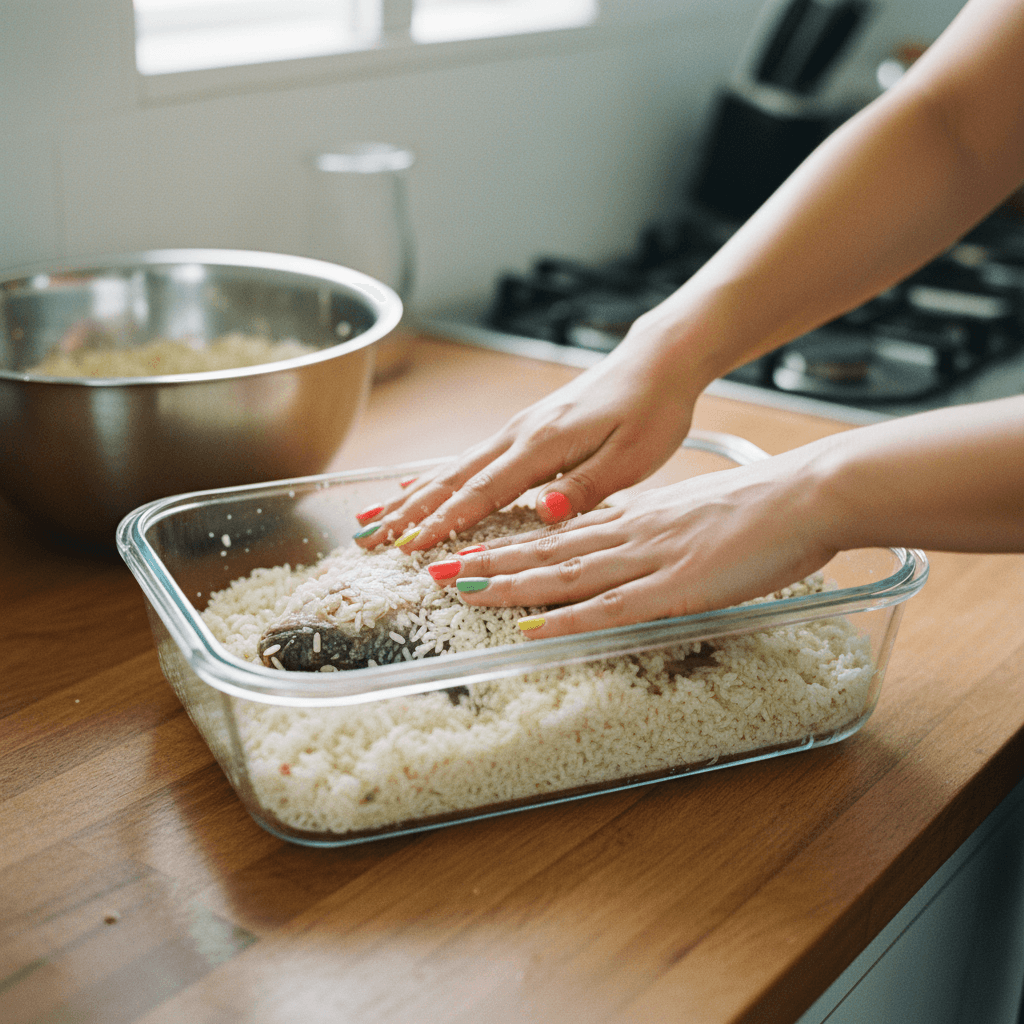
- 6
Place the whole small chili, sliced garlic, and sliced ginger on top of the final rice layer.
⏱️ 2 min
- 7
Seal the container tightly to prevent air from entering. This creates an anaerobic environment necessary for fermentation.
⏱️ 1 min
- 8
Allow the mixture to ferment for 3 to 5 days at room temperature. The ideal temperature is around 70-80°F (21-27°C). The longer it ferments, the stronger the flavor will be. During this time, the rice will break down and the fish will cure.
⏱️ 7200 min
- 9
After 3 to 5 days of fermentation, the burong kanin is ready. You will notice a distinct sour aroma.

- 10
To serve, carefully remove the fermented fish from the rice mixture. In a large skillet, heat about 1/4 cup of vegetable oil over medium-high heat. Once the oil is hot, fry the fermented fish until it is golden brown and cooked through, about 5-7 minutes per side, depending on thickness. You can also fry some of the fermented rice alongside the fish for extra flavor.
⏱️ 10 min•🌡️ 350
- 11
Serve the fried burong isda (fermented fish) immediately with fresh sliced tomatoes and onions on the side. The tangy fish pairs wonderfully with the fresh vegetables.
⏱️ 1 min
Kitchen Tools
Hindi Burong Kanin (Fermented Fish with Rice)
- 1 cup cooked rice
- 1/2 cup salt
- 1 tilapia, whole, cleaned
- 1 chili, small
- 1 garlic, small, sliced
- 1 ginger, small, sliced
For Serving (Optional)
- 1/4 cup vegetable oil, for frying, or as needed
- 1 fresh tomatoes, sliced, as needed
- 1 onion, small, sliced, as needed
Instructions
- 1
In a clean mixing bowl, combine the cooked rice and the 1/2 cup of salt. Mix thoroughly with your hands, ensuring the salt is evenly distributed throughout the rice. This step is crucial for the fermentation process.
⏱️ 5 min - 2
Take the cleaned whole tilapia and make several diagonal scores (cuts) on both sides of the fish. These scores will help the salt penetrate the flesh and aid in fermentation. Rub a generous amount of salt all over the fish, both inside the cavity and on the scored skin, ensuring it is well-coated.
⏱️ 5 min - 3
Prepare a clean, airtight container for fermentation. Layer about one-third of the seasoned rice mixture at the bottom of the container, spreading it evenly.
⏱️ 2 min - 4
Carefully place the salted tilapia on top of the rice layer in the container.
⏱️ 1 min - 5
Cover the fish completely with the remaining seasoned rice mixture, pressing it down gently to ensure the fish is fully submerged and surrounded by rice.
⏱️ 3 min - 6
Place the whole small chili, sliced garlic, and sliced ginger on top of the final rice layer.
⏱️ 2 min - 7
Seal the container tightly to prevent air from entering. This creates an anaerobic environment necessary for fermentation.
⏱️ 1 min - 8
Allow the mixture to ferment for 3 to 5 days at room temperature. The ideal temperature is around 70-80°F (21-27°C). The longer it ferments, the stronger the flavor will be. During this time, the rice will break down and the fish will cure.
⏱️ 7200 min - 9
After 3 to 5 days of fermentation, the burong kanin is ready. You will notice a distinct sour aroma.
- 10
To serve, carefully remove the fermented fish from the rice mixture. In a large skillet, heat about 1/4 cup of vegetable oil over medium-high heat. Once the oil is hot, fry the fermented fish until it is golden brown and cooked through, about 5-7 minutes per side, depending on thickness. You can also fry some of the fermented rice alongside the fish for extra flavor.
⏱️ 10 min•🌡️ 350 - 11
Serve the fried burong isda (fermented fish) immediately with fresh sliced tomatoes and onions on the side. The tangy fish pairs wonderfully with the fresh vegetables.
⏱️ 1 min