Heirloom Tomato Tart, Goat Cheese, Basil
Heirloom Tomato Tart, Goat Cheese, Basil
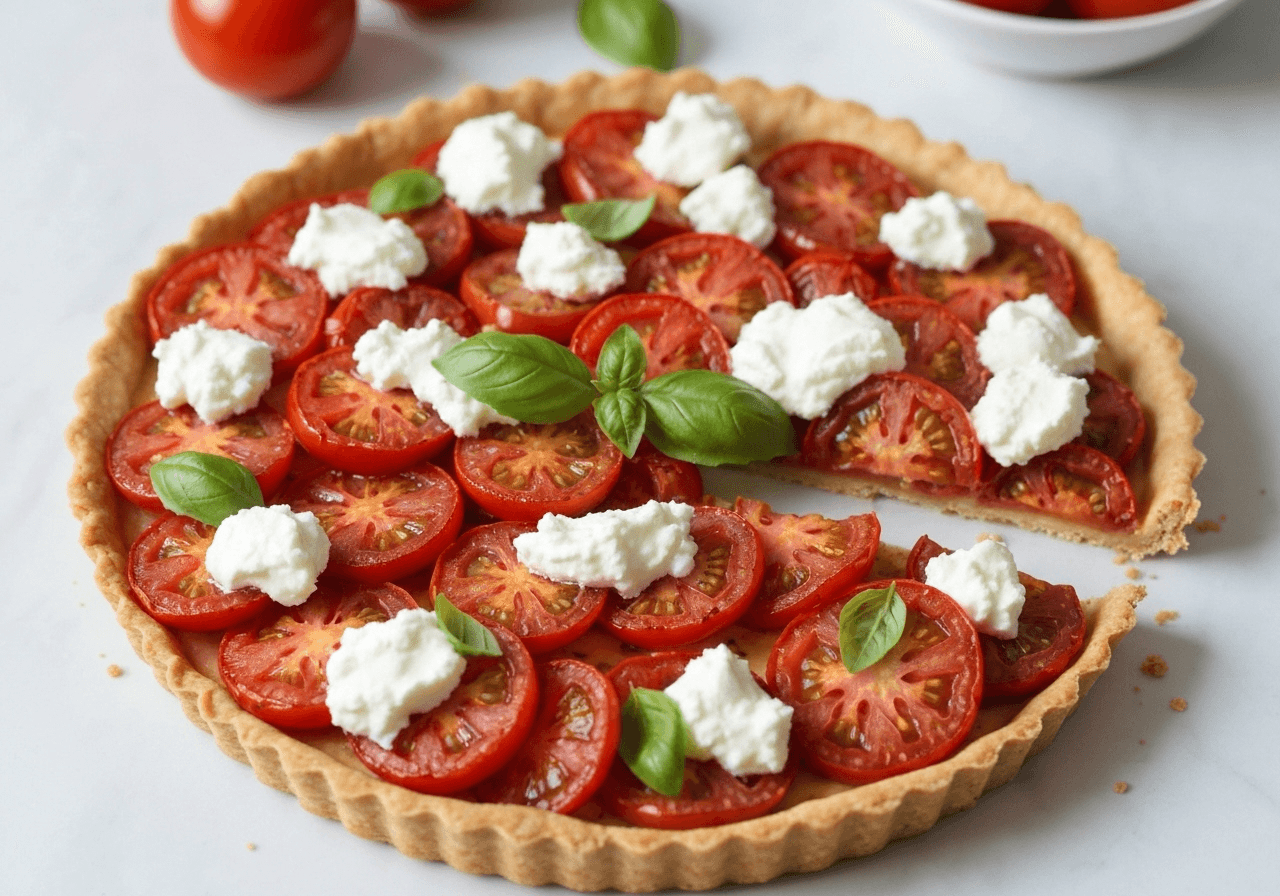
Ingredients
For the Crust
- 1 1/4 cups all-purpose flour
- 1/2 cup unsalted butter, cold, cut into 1/2-inch cubes
- 3 tablespoons ice water
- 1/4 teaspoon salt
For the Filling
- 1 1/2 pounds heirloom tomatoes, mixed colors, sliced 1/4 inch thick
- 6 ounces goat cheese, crumbled
- 1/2 cup fresh basil leaves, torn or thinly sliced
- 2 tablespoons extra virgin olive oil
- 1 garlic, clove, minced
- 1/4 teaspoon salt
- 1/8 teaspoon black pepper, freshly ground
- 2 tablespoons balsamic glaze, for drizzling (optional)
Instructions
- 1
Prepare the crust: In a food processor, combine the flour and salt. Add the cold butter cubes and pulse until the mixture resembles coarse meal with some pea-sized pieces of butter remaining. Gradually add the ice water, 1 tablespoon at a time, pulsing until the dough just comes together. Do not overmix. Gather the dough into a disk, wrap tightly in plastic wrap, and refrigerate for at least 30 minutes.
⏱️ 10 min - 2
Preheat the oven to 400°F (200°C). On a lightly floured surface, roll out the chilled dough into a 12-inch circle. Carefully transfer the dough to a 9-inch tart pan with a removable bottom, pressing it gently into the fluted sides. Trim any excess dough. Prick the bottom of the crust several times with a fork.
⏱️ 10 min•🌡️ 400°F - 3
Line the tart shell with parchment paper and fill with pie weights or dried beans. Blind bake for 15 minutes. Remove the parchment paper and weights, then continue to bake for another 5-7 minutes, or until the crust is lightly golden. Remove from the oven and reduce the oven temperature to 375°F (190°C).
⏱️ 20 min•🌡️ 400°F - 4
While the crust cools slightly, prepare the filling. In a small bowl, whisk together the extra virgin olive oil and minced garlic. Brush the bottom of the partially baked tart crust with the garlic-infused olive oil. Arrange half of the sliced heirloom tomatoes in a single layer over the bottom of the crust.
⏱️ 5 min - 5
Sprinkle half of the crumbled goat cheese and half of the fresh basil over the tomatoes. Season lightly with 1/8 teaspoon salt and 1/16 teaspoon black pepper. Repeat with the remaining tomatoes, goat cheese, basil, and seasonings, layering them artfully.
⏱️ 5 min - 6
Bake the tart for 25-30 minutes at 375°F (190°C), or until the tomatoes are tender and slightly caramelized, and the goat cheese is lightly golden and bubbly. If the crust begins to brown too quickly, you may loosely tent the edges with aluminum foil.
⏱️ 30 min•🌡️ 375°F - 7
Remove the tart from the oven and let it cool on a wire rack for at least 10 minutes before carefully removing the outer ring of the tart pan. Drizzle with balsamic glaze, if desired, just before serving. Serve warm or at room temperature.
⏱️ 10 min
Kitchen Tools
Nutrition Facts (per serving)
Heirloom Tomato Tart, Goat Cheese, Basil
Ingredients
For the Crust
- 1 1/4 cups all-purpose flour
- 1/2 cup unsalted butter, cold, cut into 1/2-inch cubes
- 3 tablespoons ice water
- 1/4 teaspoon salt
For the Filling
- 1 1/2 pounds heirloom tomatoes, mixed colors, sliced 1/4 inch thick
- 6 ounces goat cheese, crumbled
- 1/2 cup fresh basil leaves, torn or thinly sliced
- 2 tablespoons extra virgin olive oil
- 1 garlic, clove, minced
- 1/4 teaspoon salt
- 1/8 teaspoon black pepper, freshly ground
- 2 tablespoons balsamic glaze, for drizzling (optional)
Instructions
- 1
Prepare the crust: In a food processor, combine the flour and salt. Add the cold butter cubes and pulse until the mixture resembles coarse meal with some pea-sized pieces of butter remaining. Gradually add the ice water, 1 tablespoon at a time, pulsing until the dough just comes together. Do not overmix. Gather the dough into a disk, wrap tightly in plastic wrap, and refrigerate for at least 30 minutes.
⏱️ 10 min - 2
Preheat the oven to 400°F (200°C). On a lightly floured surface, roll out the chilled dough into a 12-inch circle. Carefully transfer the dough to a 9-inch tart pan with a removable bottom, pressing it gently into the fluted sides. Trim any excess dough. Prick the bottom of the crust several times with a fork.
⏱️ 10 min•🌡️ 400°F - 3
Line the tart shell with parchment paper and fill with pie weights or dried beans. Blind bake for 15 minutes. Remove the parchment paper and weights, then continue to bake for another 5-7 minutes, or until the crust is lightly golden. Remove from the oven and reduce the oven temperature to 375°F (190°C).
⏱️ 20 min•🌡️ 400°F - 4
While the crust cools slightly, prepare the filling. In a small bowl, whisk together the extra virgin olive oil and minced garlic. Brush the bottom of the partially baked tart crust with the garlic-infused olive oil. Arrange half of the sliced heirloom tomatoes in a single layer over the bottom of the crust.
⏱️ 5 min - 5
Sprinkle half of the crumbled goat cheese and half of the fresh basil over the tomatoes. Season lightly with 1/8 teaspoon salt and 1/16 teaspoon black pepper. Repeat with the remaining tomatoes, goat cheese, basil, and seasonings, layering them artfully.
⏱️ 5 min - 6
Bake the tart for 25-30 minutes at 375°F (190°C), or until the tomatoes are tender and slightly caramelized, and the goat cheese is lightly golden and bubbly. If the crust begins to brown too quickly, you may loosely tent the edges with aluminum foil.
⏱️ 30 min•🌡️ 375°F - 7
Remove the tart from the oven and let it cool on a wire rack for at least 10 minutes before carefully removing the outer ring of the tart pan. Drizzle with balsamic glaze, if desired, just before serving. Serve warm or at room temperature.
⏱️ 10 min