Classic Braised Lamb Shanks
Classic Braised Lamb Shanks

Ingredients
For the Lamb Shanks
- 7 lamb shanks, about 1 1/4 to 1 1/2 pounds each, trimmed of excess fat
- 2 teaspoons kosher salt, or to taste
- 1 teaspoon black pepper, freshly ground, or to taste
- 3 tablespoons olive oil
For the Aromatics and Braising Liquid
- 2 yellow onions, large, chopped
- 3 carrots, medium, peeled and chopped
- 3 celery stalks, chopped
- 7 garlic cloves, minced
- 1/4 cup tomato paste
- 2 1/2 cups dry red wine, such as Cabernet Sauvignon or Merlot
- 4 cups beef broth, low sodium
- 2 fresh rosemary sprigs
- 4 fresh thyme sprigs
- 2 bay leaves
For Serving (Optional)
- 1/4 cup fresh parsley, chopped, for garnish
Instructions
- 1
Pat the lamb shanks dry with paper towels. Season generously all over with kosher salt and freshly ground black pepper.
⏱️ 5 min
- 2
Heat the olive oil in a large Dutch oven or oven-safe pot with a lid over medium-high heat. Once hot, sear the lamb shanks in batches, turning occasionally, until deeply browned on all sides, about 3-5 minutes per side. Remove the seared shanks from the pot and set aside.
⏱️ 15 min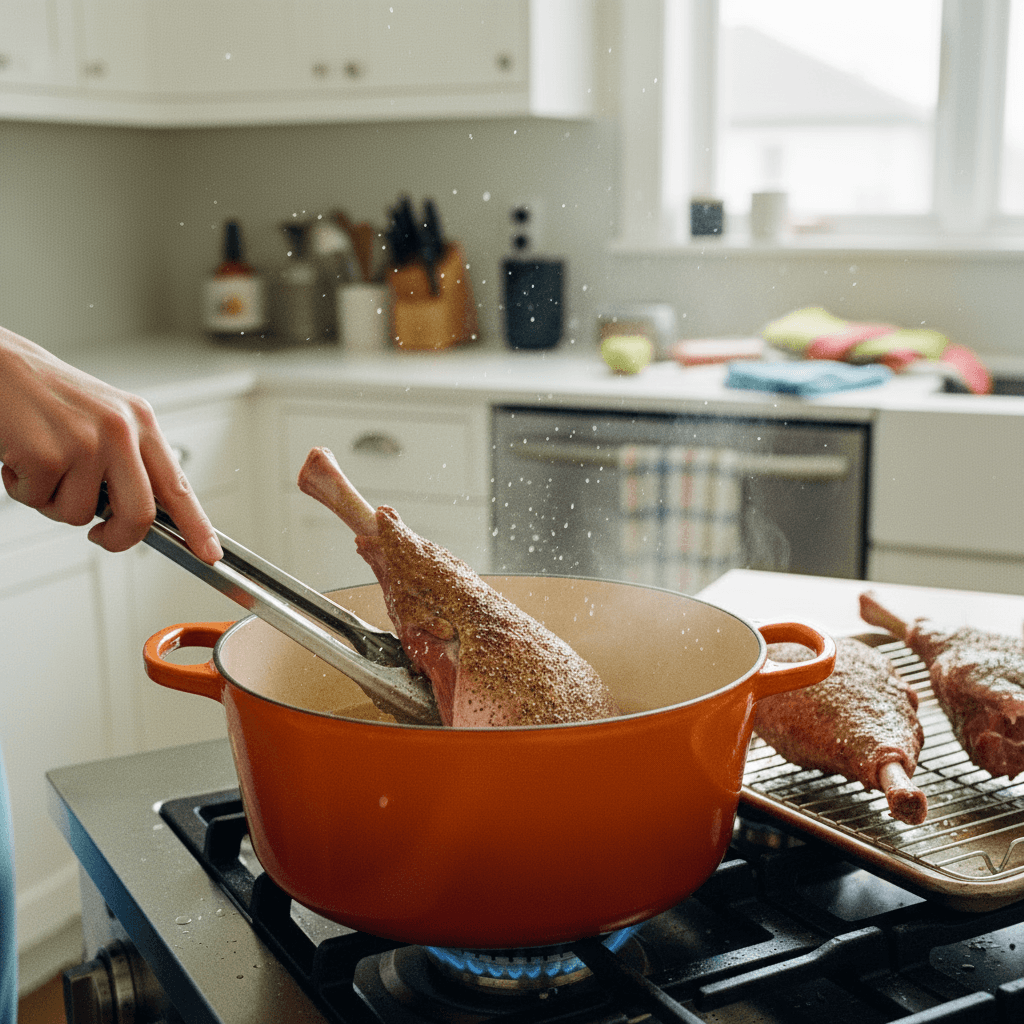
- 3
Reduce the heat to medium. Add the chopped yellow onions, carrots, and celery to the same pot. Sauté, stirring occasionally, until the vegetables have softened and started to brown, about 8-10 minutes. If the pot seems dry, add a splash more olive oil.
⏱️ 10 min
- 4
Stir in the minced garlic and cook for 1 minute until fragrant. Add the tomato paste and cook, stirring constantly, for 2-3 minutes, allowing it to deepen in color and caramelize slightly.
⏱️ 5 min
- 5
Pour in the dry red wine, scraping the bottom of the pot with a wooden spoon to deglaze and release any browned bits. Bring the wine to a simmer and let it reduce by about half, which should take 5-7 minutes.
⏱️ 7 min
- 6
Stir in the beef broth, fresh rosemary sprigs, fresh thyme sprigs, and bay leaves. Bring the liquid to a gentle simmer. Return the seared lamb shanks to the pot, ensuring they are partially submerged in the liquid. If needed, add a bit more broth to cover about two-thirds of the shanks.
⏱️ 5 min
- 7
Preheat your oven to 325°F. Cover the Dutch oven tightly with its lid and transfer it to the preheated oven. Braise for 2 1/2 to 3 hours, or until the lamb is fork-tender and easily pulls away from the bone. Flip the shanks once or twice during cooking for even braising.
⏱️ 180 min•🌡️ 325
- 8
Carefully remove the pot from the oven. Transfer the lamb shanks to a platter, tent loosely with foil, and let them rest for 10-15 minutes. Skim any excess fat from the surface of the braising liquid. For a smoother sauce, you can strain the liquid through a fine-mesh sieve, pressing on the solids to extract all flavor. Discard the solids and herbs. If desired, return the strained sauce to the stovetop and reduce over medium-high heat until it reaches your preferred consistency.
⏱️ 15 min
- 9
Serve the braised lamb shanks hot, spooning the rich sauce over them. Garnish with fresh chopped parsley, if using.
⏱️ 3 min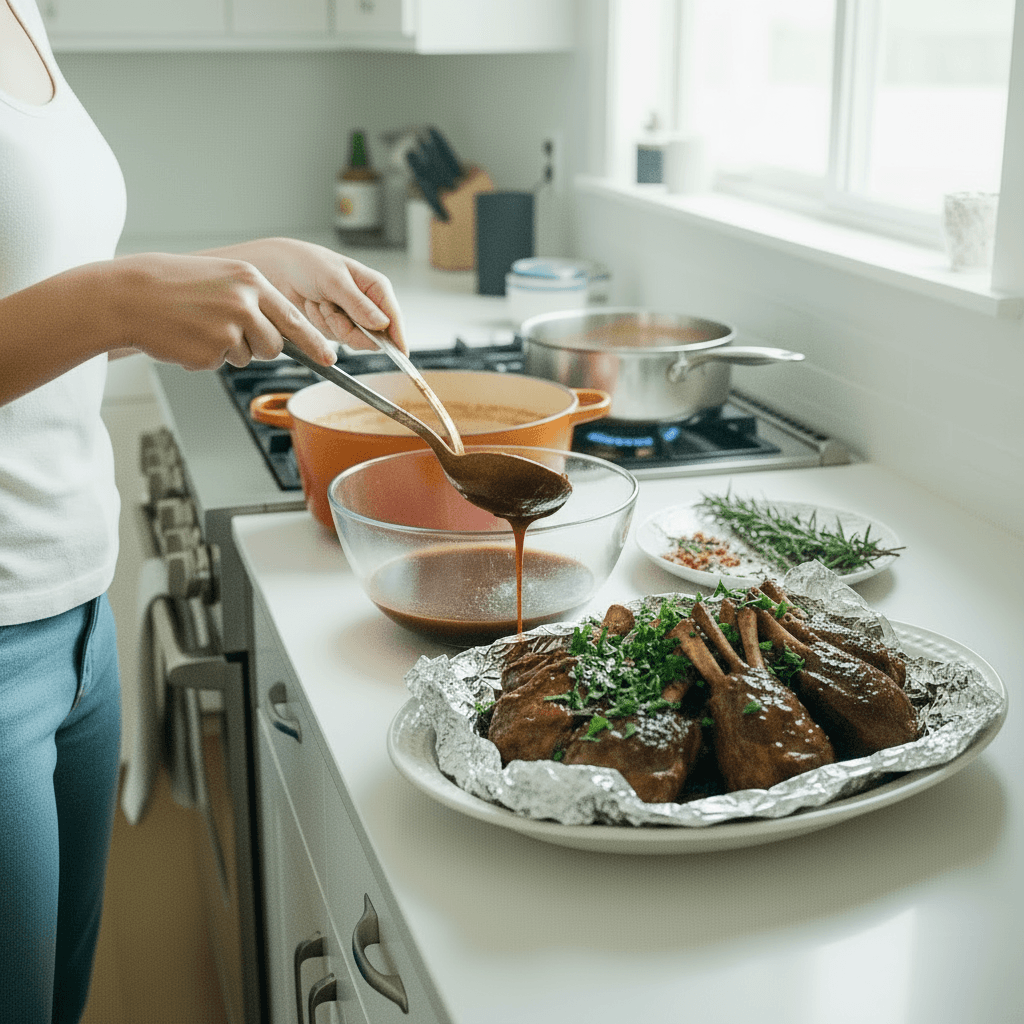
Kitchen Tools
Nutrition Facts (per serving)
Classic Braised Lamb Shanks
Ingredients
For the Lamb Shanks
- 7 lamb shanks, about 1 1/4 to 1 1/2 pounds each, trimmed of excess fat
- 2 teaspoons kosher salt, or to taste
- 1 teaspoon black pepper, freshly ground, or to taste
- 3 tablespoons olive oil
For the Aromatics and Braising Liquid
- 2 yellow onions, large, chopped
- 3 carrots, medium, peeled and chopped
- 3 celery stalks, chopped
- 7 garlic cloves, minced
- 1/4 cup tomato paste
- 2 1/2 cups dry red wine, such as Cabernet Sauvignon or Merlot
- 4 cups beef broth, low sodium
- 2 fresh rosemary sprigs
- 4 fresh thyme sprigs
- 2 bay leaves
For Serving (Optional)
- 1/4 cup fresh parsley, chopped, for garnish
Instructions
- 1
Pat the lamb shanks dry with paper towels. Season generously all over with kosher salt and freshly ground black pepper.
⏱️ 5 min - 2
Heat the olive oil in a large Dutch oven or oven-safe pot with a lid over medium-high heat. Once hot, sear the lamb shanks in batches, turning occasionally, until deeply browned on all sides, about 3-5 minutes per side. Remove the seared shanks from the pot and set aside.
⏱️ 15 min - 3
Reduce the heat to medium. Add the chopped yellow onions, carrots, and celery to the same pot. Sauté, stirring occasionally, until the vegetables have softened and started to brown, about 8-10 minutes. If the pot seems dry, add a splash more olive oil.
⏱️ 10 min - 4
Stir in the minced garlic and cook for 1 minute until fragrant. Add the tomato paste and cook, stirring constantly, for 2-3 minutes, allowing it to deepen in color and caramelize slightly.
⏱️ 5 min - 5
Pour in the dry red wine, scraping the bottom of the pot with a wooden spoon to deglaze and release any browned bits. Bring the wine to a simmer and let it reduce by about half, which should take 5-7 minutes.
⏱️ 7 min - 6
Stir in the beef broth, fresh rosemary sprigs, fresh thyme sprigs, and bay leaves. Bring the liquid to a gentle simmer. Return the seared lamb shanks to the pot, ensuring they are partially submerged in the liquid. If needed, add a bit more broth to cover about two-thirds of the shanks.
⏱️ 5 min - 7
Preheat your oven to 325°F. Cover the Dutch oven tightly with its lid and transfer it to the preheated oven. Braise for 2 1/2 to 3 hours, or until the lamb is fork-tender and easily pulls away from the bone. Flip the shanks once or twice during cooking for even braising.
⏱️ 180 min•🌡️ 325 - 8
Carefully remove the pot from the oven. Transfer the lamb shanks to a platter, tent loosely with foil, and let them rest for 10-15 minutes. Skim any excess fat from the surface of the braising liquid. For a smoother sauce, you can strain the liquid through a fine-mesh sieve, pressing on the solids to extract all flavor. Discard the solids and herbs. If desired, return the strained sauce to the stovetop and reduce over medium-high heat until it reaches your preferred consistency.
⏱️ 15 min - 9
Serve the braised lamb shanks hot, spooning the rich sauce over them. Garnish with fresh chopped parsley, if using.
⏱️ 3 min