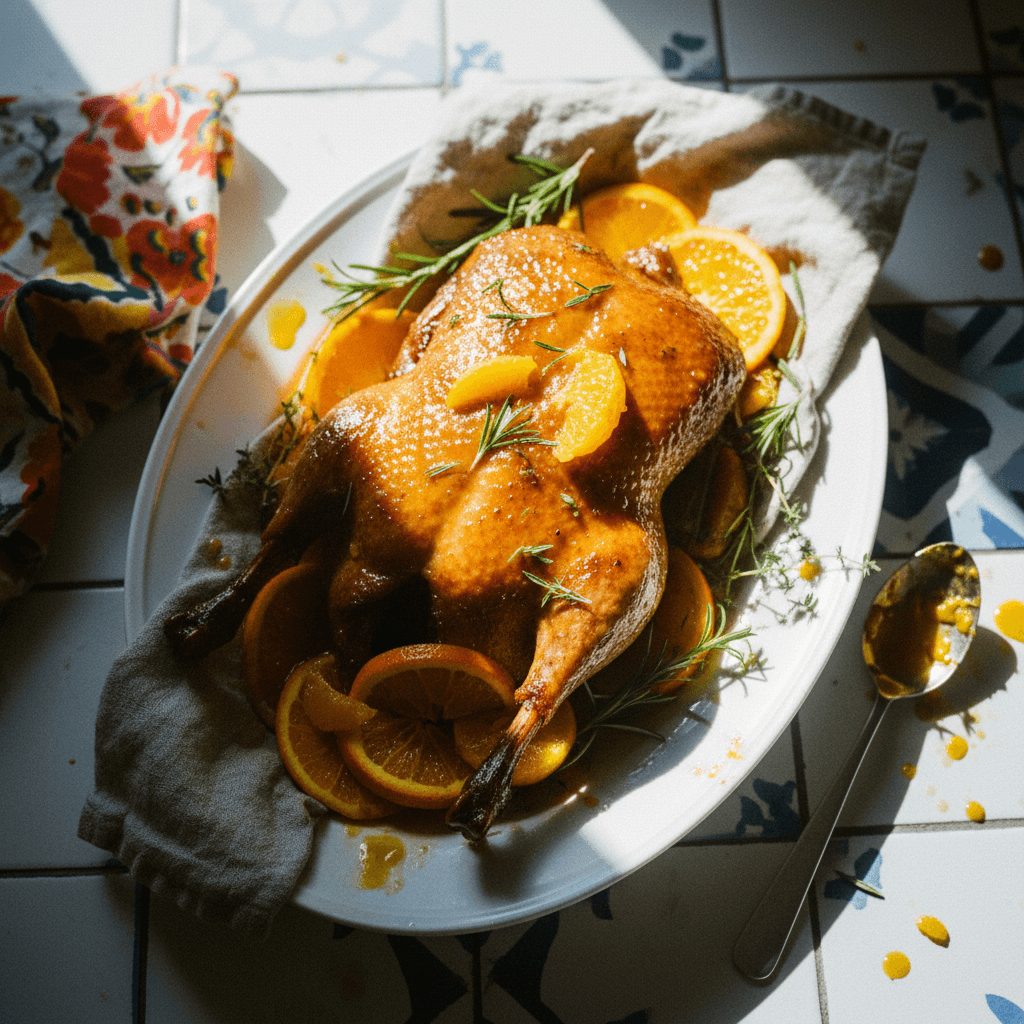
Christmas Duck à l'Orange
Christmas Duck à l'Orange
Ingredients
For the Duck
- 1 whole duck, about 5-6 pounds, patted dry
- as needed sea salt, for dry brining
- 1 orange, halved
- 1 onion, quartered
- 2 sprigs fresh rosemary
- 2 sprigs fresh thyme
For the Glaze
- 2 tablespoons honey
- 1 tablespoon sherry vinegar
- 1 tablespoon Worcestershire sauce
- 1 teaspoon dark soy sauce
- 2 cloves garlic, minced
- 1 sprig fresh rosemary
- 1 sprig fresh thyme
- 1 teaspoon orange zest
For the Orange Sauce
- 2 tablespoons granulated sugar
- 4 tablespoons sherry vinegar
- 3 fluid ounces Grand Marnier
- 3/4 cup orange juice, from 3 oranges
- 1 1/2 cups chicken stock, or demi-glace
- 1 tablespoon corn starch
- 1 tablespoon water
- as needed sea salt
- as needed black pepper
- 1/2 teaspoon fresh thyme, chopped
- 2 tablespoons unsalted butter, cold, cut into cubes
- 1 orange, segmented
For Garnish
- 2 tablespoons fresh chives, finely chopped
Instructions
- 1
Pat the duck completely dry with paper towels. Season generously all over with sea salt, ensuring to get some inside the cavity. Place the duck on a wire rack set over a baking sheet, uncovered, and refrigerate overnight for dry brining.
⏱️ 10 min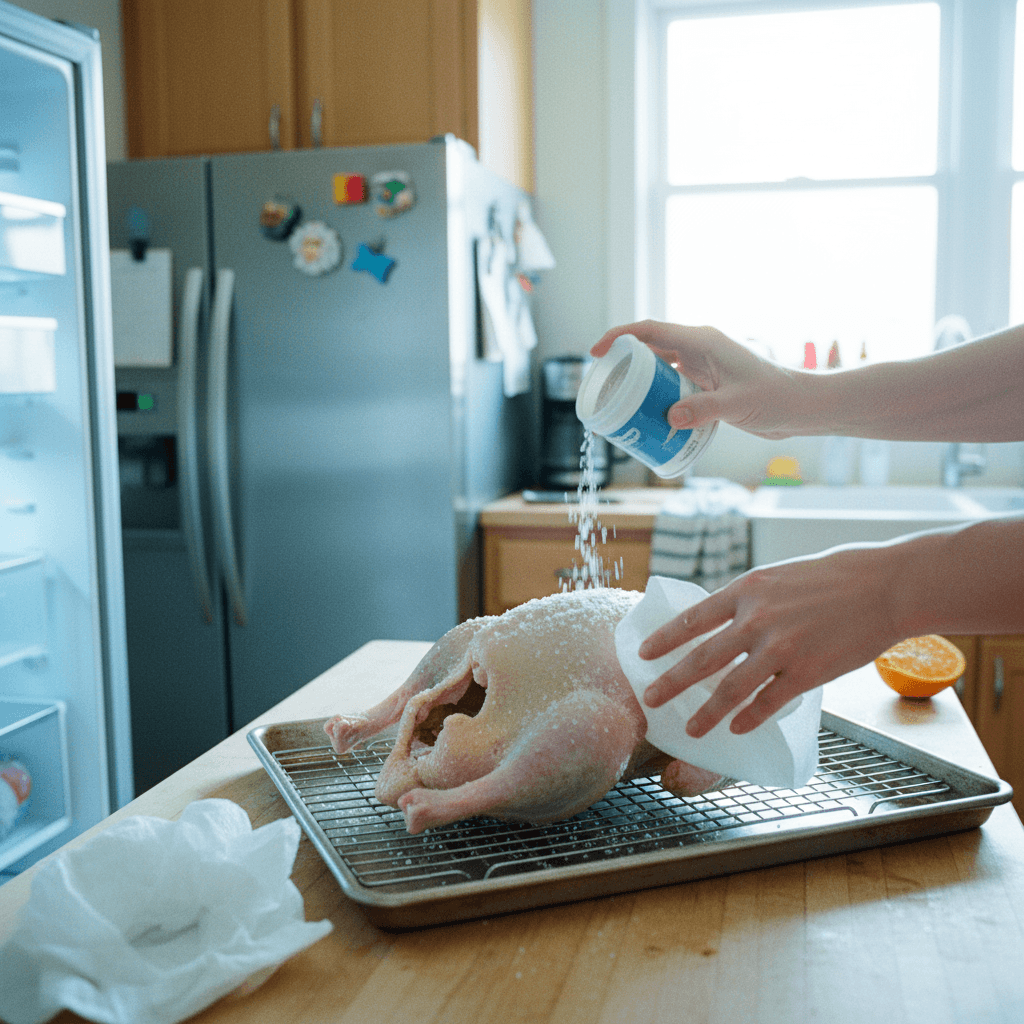
- 2
The next day, remove the duck from the refrigerator. Using a sharp knife, gently score the fat on the duck breasts in a crosshatch pattern, being careful not to cut into the meat. This is easier when the duck is cold. Let the duck sit at room temperature for 1 hour.
⏱️ 60 min
- 3
Prepare the glaze: In a small saucepan, combine the honey, sherry vinegar, Worcestershire sauce, dark soy sauce, minced garlic, rosemary sprig, thyme sprig, and orange zest. Bring to medium heat and simmer for 5 to 7 minutes, stirring occasionally, until the glaze thickens and becomes glossy. Remove from heat and let cool slightly. Strain the glaze through a fine-mesh sieve to remove solids, if desired, for a smoother glaze.
⏱️ 15 min
- 4
Preheat your oven to 400°F. Stuff the duck cavity with the halved orange, quartered onion, and fresh rosemary and thyme sprigs. Place the duck on a roasting rack in a roasting pan. Brush the duck all over with a generous layer of the prepared glaze.
⏱️ 10 min•🌡️ 400
- 5
Roast the duck in the preheated oven. Every 20 minutes, remove the duck from the oven and brush with more glaze to build up color and caramelization. Continue roasting and basting until the internal temperature of the duck breast reaches 125-130°F. This typically takes about 1 hour 30 minutes to 1 hour 45 minutes, depending on the size of the duck.
⏱️ 105 min•🌡️ 400
- 6
Once the duck reaches the desired internal temperature, remove it from the oven. Transfer the duck to a cutting board and tent loosely with foil. Let it rest for at least 30 minutes before carving. This is crucial for juicy meat.
⏱️ 30 min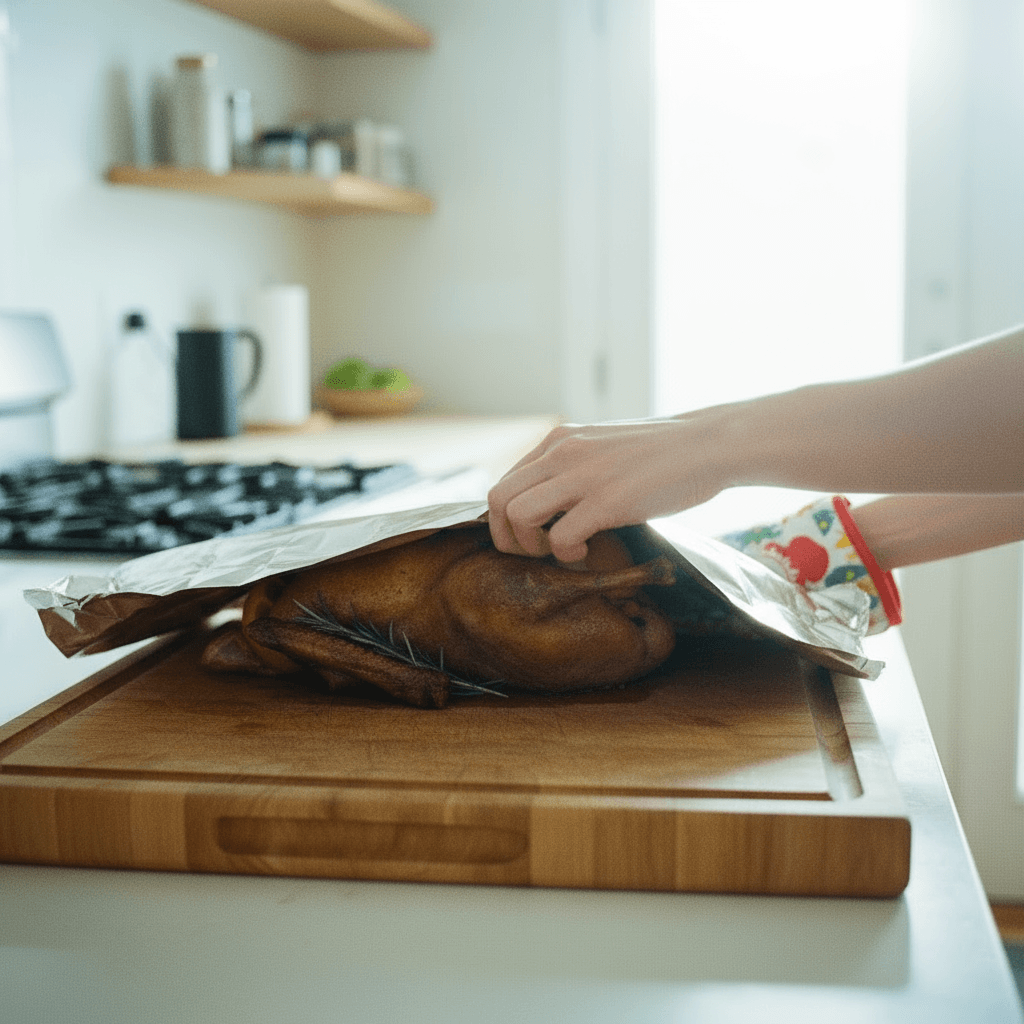
- 7
While the duck rests, prepare the orange sauce. In a clean saucepan, add the granulated sugar. Bring to medium heat and stir continuously until the sugar melts and forms a light caramel. Be careful not to burn it.
⏱️ 5 min
- 8
Carefully add the sherry vinegar and Grand Marnier to the caramel. Whisk vigorously to combine. The mixture may seize initially but will smooth out. If using a gas stove, the alcohol may briefly ignite (flambé); allow the flames to die down naturally.
⏱️ 3 min
- 9
Stir in the orange juice and chicken stock (or demi-glace). Bring the sauce to a gentle simmer and reduce slightly for 3 to 4 minutes. If desired, you can hold the resting duck over the pan to allow any accumulated drippings to fall into the sauce, enriching its flavor.
⏱️ 5 min
- 10
In a small bowl, whisk together the corn starch and water to create a slurry. Add the slurry to the simmering sauce and whisk continuously until the sauce thickens to your desired consistency. Season with sea salt, black pepper, and chopped fresh thyme. Adjust seasoning to taste.
⏱️ 5 min
- 11
Remove the sauce from the heat. Whisk in the cold, cubed unsalted butter, one cube at a time, until it is fully emulsified and the sauce is glossy. Stir in the segmented orange pieces.
⏱️ 3 min
- 12
Carve the rested duck by first removing the breast meat, then slicing it against the grain. Arrange the sliced duck on a serving platter. Generously spoon the warm orange sauce over the duck. Garnish with finely chopped fresh chives before serving.
⏱️ 10 min
Kitchen Tools
Nutrition Facts (per serving)
Christmas Duck à l'Orange
Ingredients
For the Duck
- 1 whole duck, about 5-6 pounds, patted dry
- as needed sea salt, for dry brining
- 1 orange, halved
- 1 onion, quartered
- 2 sprigs fresh rosemary
- 2 sprigs fresh thyme
For the Glaze
- 2 tablespoons honey
- 1 tablespoon sherry vinegar
- 1 tablespoon Worcestershire sauce
- 1 teaspoon dark soy sauce
- 2 cloves garlic, minced
- 1 sprig fresh rosemary
- 1 sprig fresh thyme
- 1 teaspoon orange zest
For the Orange Sauce
- 2 tablespoons granulated sugar
- 4 tablespoons sherry vinegar
- 3 fluid ounces Grand Marnier
- 3/4 cup orange juice, from 3 oranges
- 1 1/2 cups chicken stock, or demi-glace
- 1 tablespoon corn starch
- 1 tablespoon water
- as needed sea salt
- as needed black pepper
- 1/2 teaspoon fresh thyme, chopped
- 2 tablespoons unsalted butter, cold, cut into cubes
- 1 orange, segmented
For Garnish
- 2 tablespoons fresh chives, finely chopped
Instructions
- 1
Pat the duck completely dry with paper towels. Season generously all over with sea salt, ensuring to get some inside the cavity. Place the duck on a wire rack set over a baking sheet, uncovered, and refrigerate overnight for dry brining.
⏱️ 10 min - 2
The next day, remove the duck from the refrigerator. Using a sharp knife, gently score the fat on the duck breasts in a crosshatch pattern, being careful not to cut into the meat. This is easier when the duck is cold. Let the duck sit at room temperature for 1 hour.
⏱️ 60 min - 3
Prepare the glaze: In a small saucepan, combine the honey, sherry vinegar, Worcestershire sauce, dark soy sauce, minced garlic, rosemary sprig, thyme sprig, and orange zest. Bring to medium heat and simmer for 5 to 7 minutes, stirring occasionally, until the glaze thickens and becomes glossy. Remove from heat and let cool slightly. Strain the glaze through a fine-mesh sieve to remove solids, if desired, for a smoother glaze.
⏱️ 15 min - 4
Preheat your oven to 400°F. Stuff the duck cavity with the halved orange, quartered onion, and fresh rosemary and thyme sprigs. Place the duck on a roasting rack in a roasting pan. Brush the duck all over with a generous layer of the prepared glaze.
⏱️ 10 min•🌡️ 400 - 5
Roast the duck in the preheated oven. Every 20 minutes, remove the duck from the oven and brush with more glaze to build up color and caramelization. Continue roasting and basting until the internal temperature of the duck breast reaches 125-130°F. This typically takes about 1 hour 30 minutes to 1 hour 45 minutes, depending on the size of the duck.
⏱️ 105 min•🌡️ 400 - 6
Once the duck reaches the desired internal temperature, remove it from the oven. Transfer the duck to a cutting board and tent loosely with foil. Let it rest for at least 30 minutes before carving. This is crucial for juicy meat.
⏱️ 30 min - 7
While the duck rests, prepare the orange sauce. In a clean saucepan, add the granulated sugar. Bring to medium heat and stir continuously until the sugar melts and forms a light caramel. Be careful not to burn it.
⏱️ 5 min - 8
Carefully add the sherry vinegar and Grand Marnier to the caramel. Whisk vigorously to combine. The mixture may seize initially but will smooth out. If using a gas stove, the alcohol may briefly ignite (flambé); allow the flames to die down naturally.
⏱️ 3 min - 9
Stir in the orange juice and chicken stock (or demi-glace). Bring the sauce to a gentle simmer and reduce slightly for 3 to 4 minutes. If desired, you can hold the resting duck over the pan to allow any accumulated drippings to fall into the sauce, enriching its flavor.
⏱️ 5 min - 10
In a small bowl, whisk together the corn starch and water to create a slurry. Add the slurry to the simmering sauce and whisk continuously until the sauce thickens to your desired consistency. Season with sea salt, black pepper, and chopped fresh thyme. Adjust seasoning to taste.
⏱️ 5 min - 11
Remove the sauce from the heat. Whisk in the cold, cubed unsalted butter, one cube at a time, until it is fully emulsified and the sauce is glossy. Stir in the segmented orange pieces.
⏱️ 3 min - 12
Carve the rested duck by first removing the breast meat, then slicing it against the grain. Arrange the sliced duck on a serving platter. Generously spoon the warm orange sauce over the duck. Garnish with finely chopped fresh chives before serving.
⏱️ 10 min