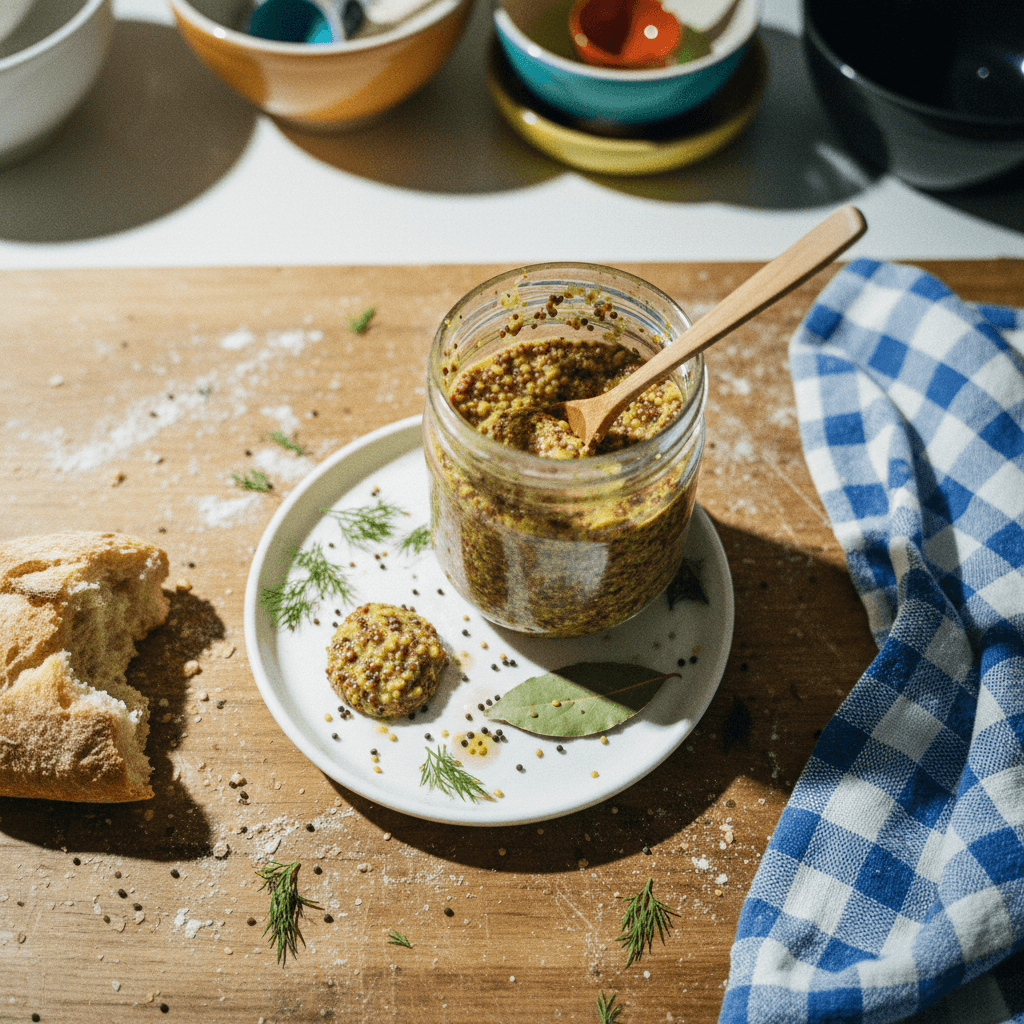
Homemade Fermented Mustard
Homemade Fermented Mustard
Ingredients
For Fermenting the Mustard Seeds
- 1/2 cup yellow mustard seeds
- 1/2 cup black mustard seeds
- 1 1/2 cups water
- 1 3/4 teaspoons sea salt, for 3% brine solution
For Blending the Mustard
- 1/4 cup apple cider vinegar
- 1/2 teaspoon sea salt, or to taste
Instructions
- 1
In a clean glass jar (a pint-sized or larger jar is recommended), combine the yellow mustard seeds and black mustard seeds. Ensure the jar is large enough to accommodate the seeds expanding during fermentation.
⏱️ 1 min
- 2
In a separate bowl or measuring cup, prepare the 3% salt solution. Dissolve 1 3/4 teaspoons of sea salt into 1 1/2 cups of water, stirring thoroughly until the salt is completely dissolved.
⏱️ 2 min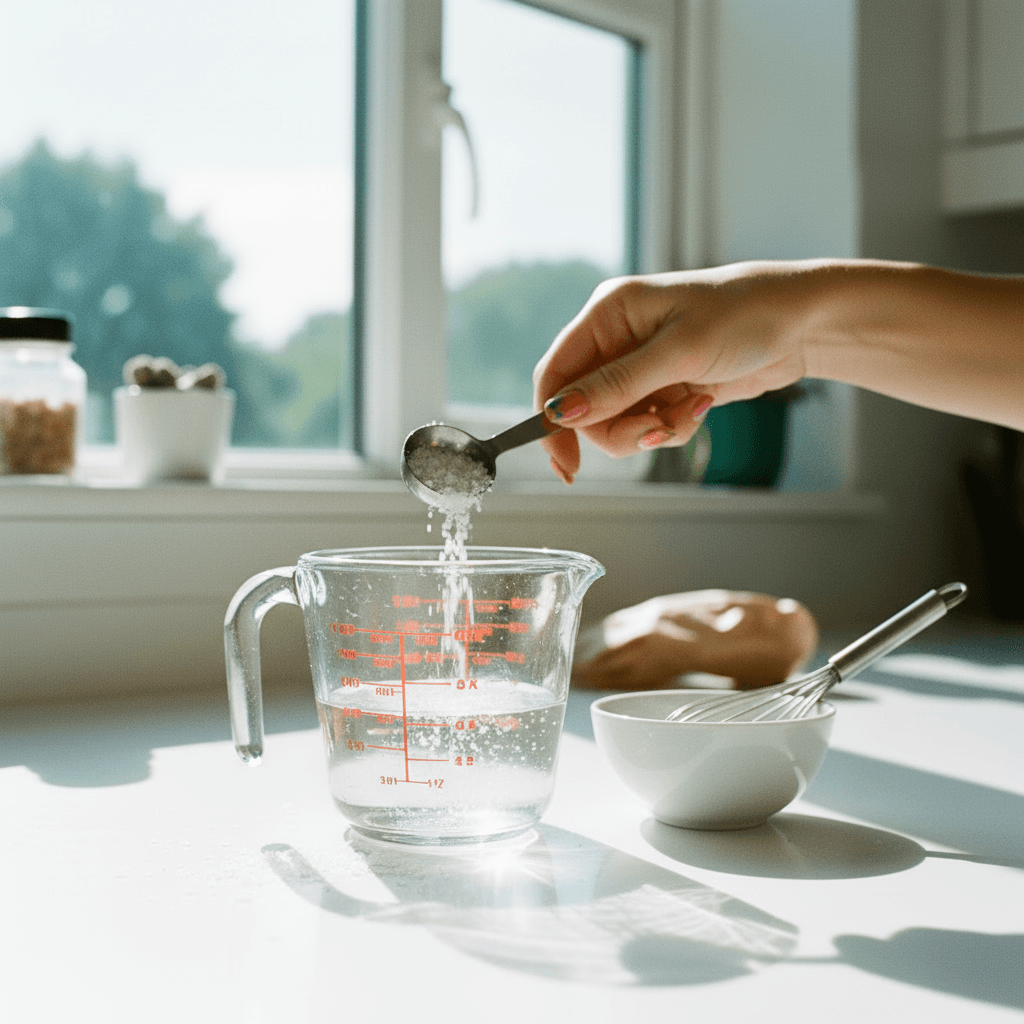
- 3
Pour the prepared salt solution over the mustard seeds in the jar. Ensure the seeds are fully submerged in the liquid. Leave at least 1 inch of headspace from the top of the jar, as the seeds will absorb liquid and expand. If necessary, use a fermentation weight to keep the seeds submerged below the brine.
⏱️ 2 min
- 4
Cover the jar loosely with a lid, an airlock, or a coffee filter secured with a rubber band to allow gases to escape. Place the jar in a cool, dark place (ideally between 60-75°F) to ferment for two weeks. During this period, the seeds will soften and their natural bitterness will mellow. Check periodically to ensure the seeds remain submerged in the brine.
⏱️ 20160 min
- 5
After two weeks, carefully transfer the fermented mustard seeds and their liquid into a blender. Add the apple cider vinegar and 1/2 teaspoon of sea salt.
⏱️ 3 min
- 6
Blend the mixture until it reaches a smooth, spreadable consistency. You may need to stop and scrape down the sides of the blender occasionally to ensure everything is incorporated. Taste the mustard and adjust the salt or add more vinegar if desired for your preferred consistency and flavor. This is also the stage where you can incorporate other flavorings like honey, spices, or herbs.
⏱️ 5 min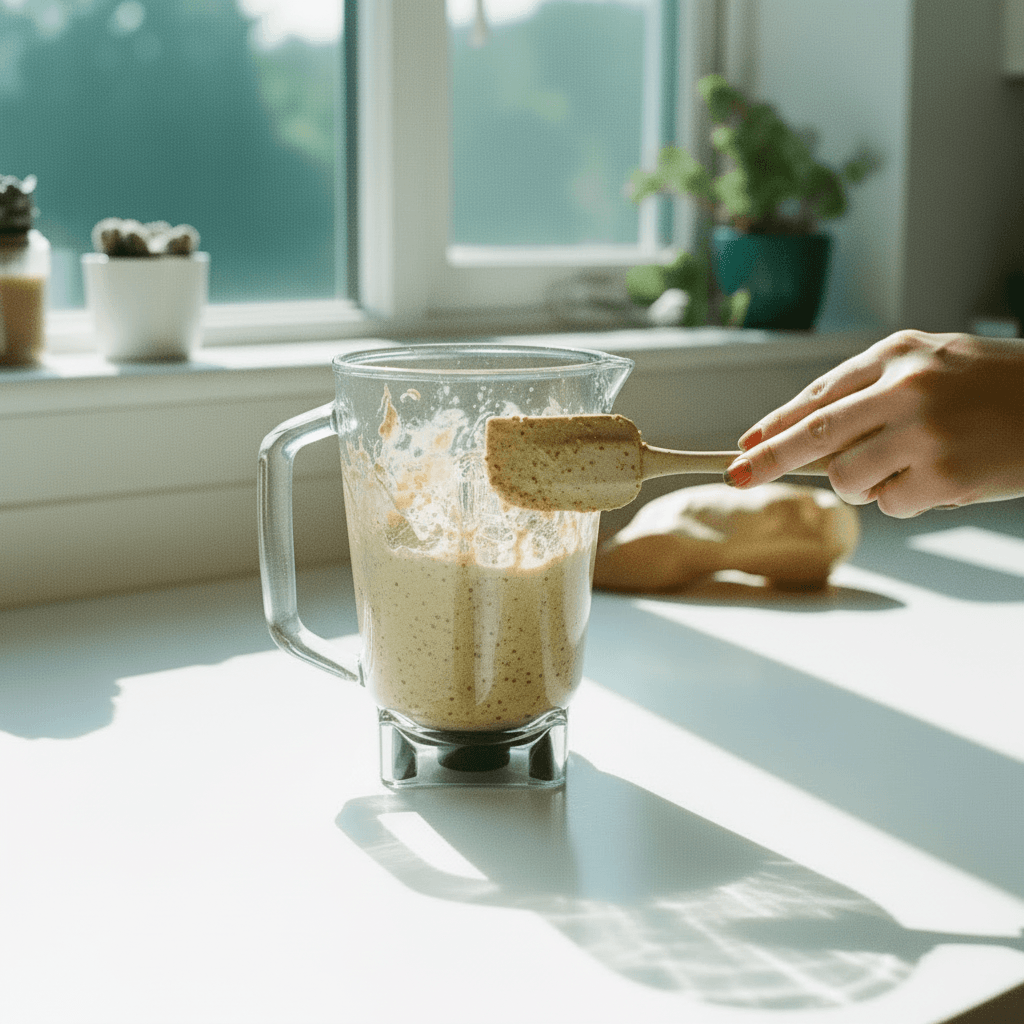
- 7
Transfer the finished fermented mustard to a clean, airtight jar and store it in the refrigerator. The flavor will continue to develop and deepen over time. Properly stored, homemade fermented mustard typically lasts for several months.
⏱️ 1 min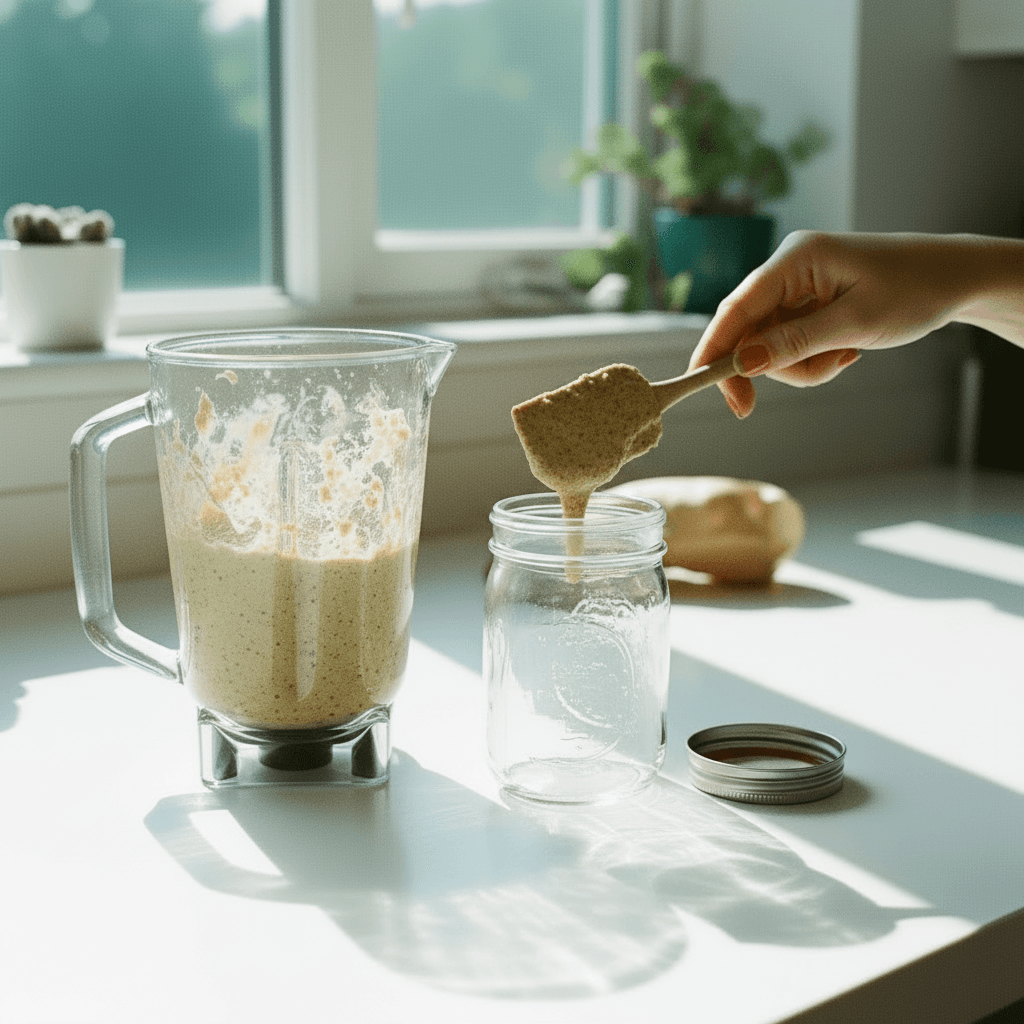
Kitchen Tools
Nutrition Facts (per serving)
Homemade Fermented Mustard
For Fermenting the Mustard Seeds
- 1/2 cup yellow mustard seeds
- 1/2 cup black mustard seeds
- 1 1/2 cups water
- 1 3/4 teaspoons sea salt, for 3% brine solution
For Blending the Mustard
- 1/4 cup apple cider vinegar
- 1/2 teaspoon sea salt, or to taste
Instructions
- 1
In a clean glass jar (a pint-sized or larger jar is recommended), combine the yellow mustard seeds and black mustard seeds. Ensure the jar is large enough to accommodate the seeds expanding during fermentation.
⏱️ 1 min - 2
In a separate bowl or measuring cup, prepare the 3% salt solution. Dissolve 1 3/4 teaspoons of sea salt into 1 1/2 cups of water, stirring thoroughly until the salt is completely dissolved.
⏱️ 2 min - 3
Pour the prepared salt solution over the mustard seeds in the jar. Ensure the seeds are fully submerged in the liquid. Leave at least 1 inch of headspace from the top of the jar, as the seeds will absorb liquid and expand. If necessary, use a fermentation weight to keep the seeds submerged below the brine.
⏱️ 2 min - 4
Cover the jar loosely with a lid, an airlock, or a coffee filter secured with a rubber band to allow gases to escape. Place the jar in a cool, dark place (ideally between 60-75°F) to ferment for two weeks. During this period, the seeds will soften and their natural bitterness will mellow. Check periodically to ensure the seeds remain submerged in the brine.
⏱️ 20160 min - 5
After two weeks, carefully transfer the fermented mustard seeds and their liquid into a blender. Add the apple cider vinegar and 1/2 teaspoon of sea salt.
⏱️ 3 min - 6
Blend the mixture until it reaches a smooth, spreadable consistency. You may need to stop and scrape down the sides of the blender occasionally to ensure everything is incorporated. Taste the mustard and adjust the salt or add more vinegar if desired for your preferred consistency and flavor. This is also the stage where you can incorporate other flavorings like honey, spices, or herbs.
⏱️ 5 min - 7
Transfer the finished fermented mustard to a clean, airtight jar and store it in the refrigerator. The flavor will continue to develop and deepen over time. Properly stored, homemade fermented mustard typically lasts for several months.
⏱️ 1 min