Galician Empanada (Masa Gramada)
Galician Empanada (Masa Gramada)

Ingredients
For the Dough
- 600 g pastry flour, start with 500g, add more if needed until not sticky
- 100 g white wine
- 80 g water
- 180 g fat, rendered from filling, completed with cold butter
- 6 g salt
- 1 egg, for egg wash
- 1 tablespoon smoked paprika
For the Filling (for one empanada)
- 600 g white onion, diced
- 250 g green bell pepper, diced
- 90 g extra virgin olive oil
- 1 bay leaf
- 3 g salt
- 2 cans tuna in olive oil, small, drained
- 4 piquillo peppers, to 5
Instructions
- 1
Pour 90 g of extra virgin olive oil into a pan on the stove over medium heat.
⏱️ 1 min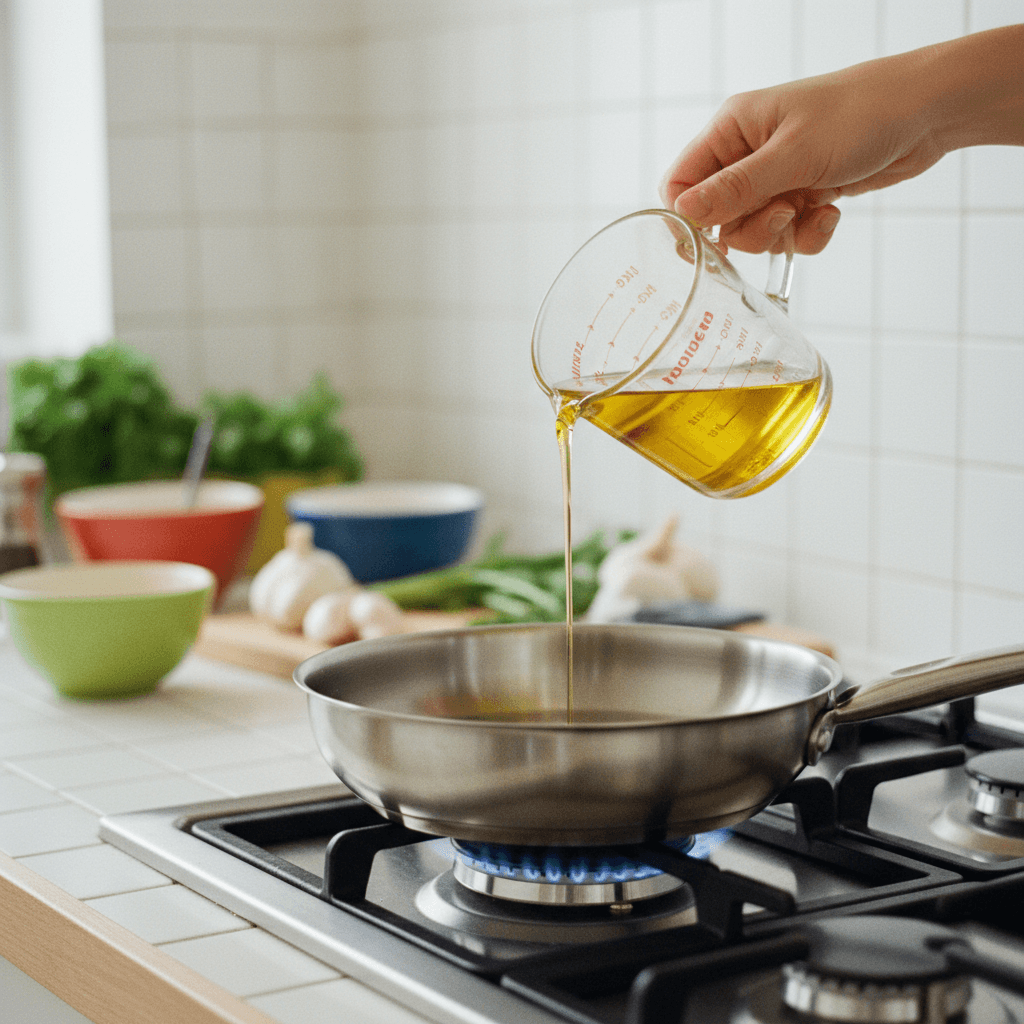
- 2
Add 600 g of diced white onion and 250 g of diced green bell pepper to the pan. Add 3 g of salt and 1 bay leaf.
⏱️ 5 min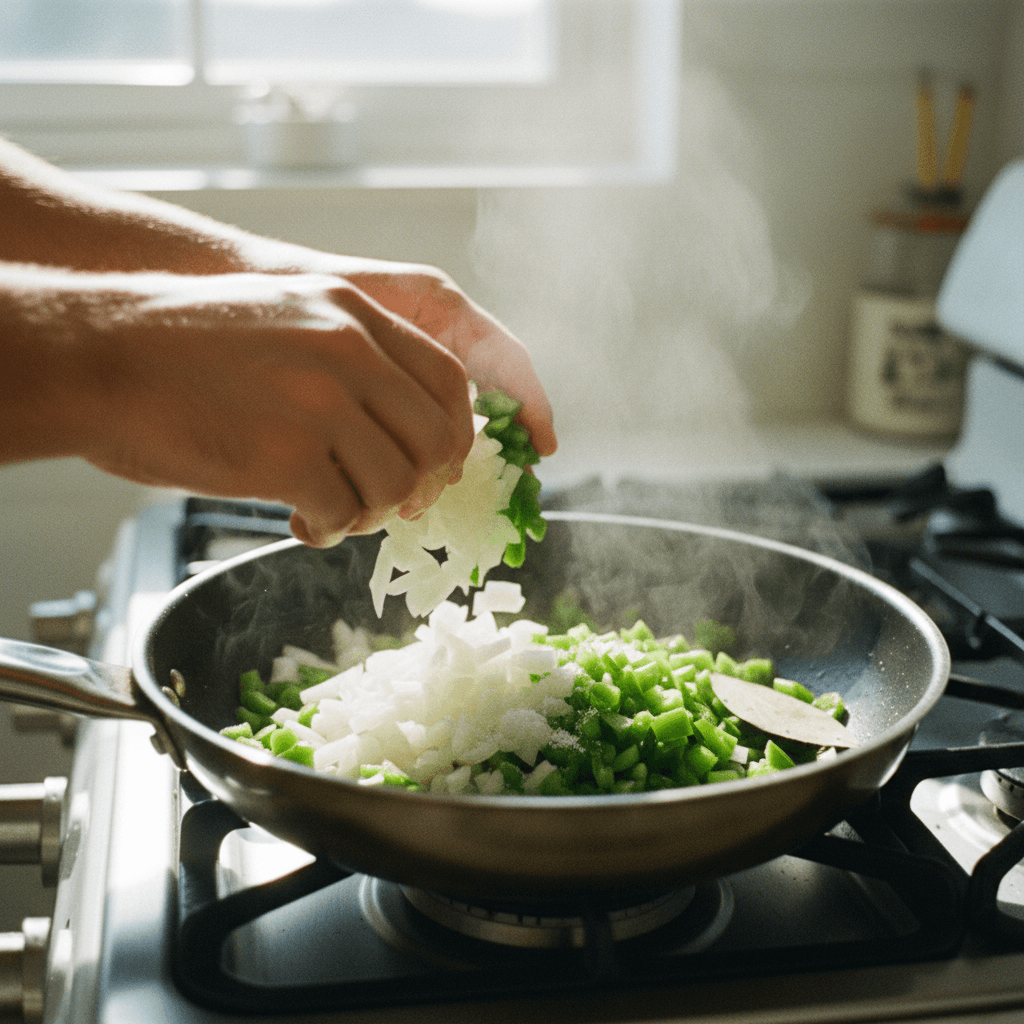
- 3
Cook the vegetables, stirring occasionally, until they are deeply caramelized and tender. This can take 20-30 minutes.
⏱️ 25 min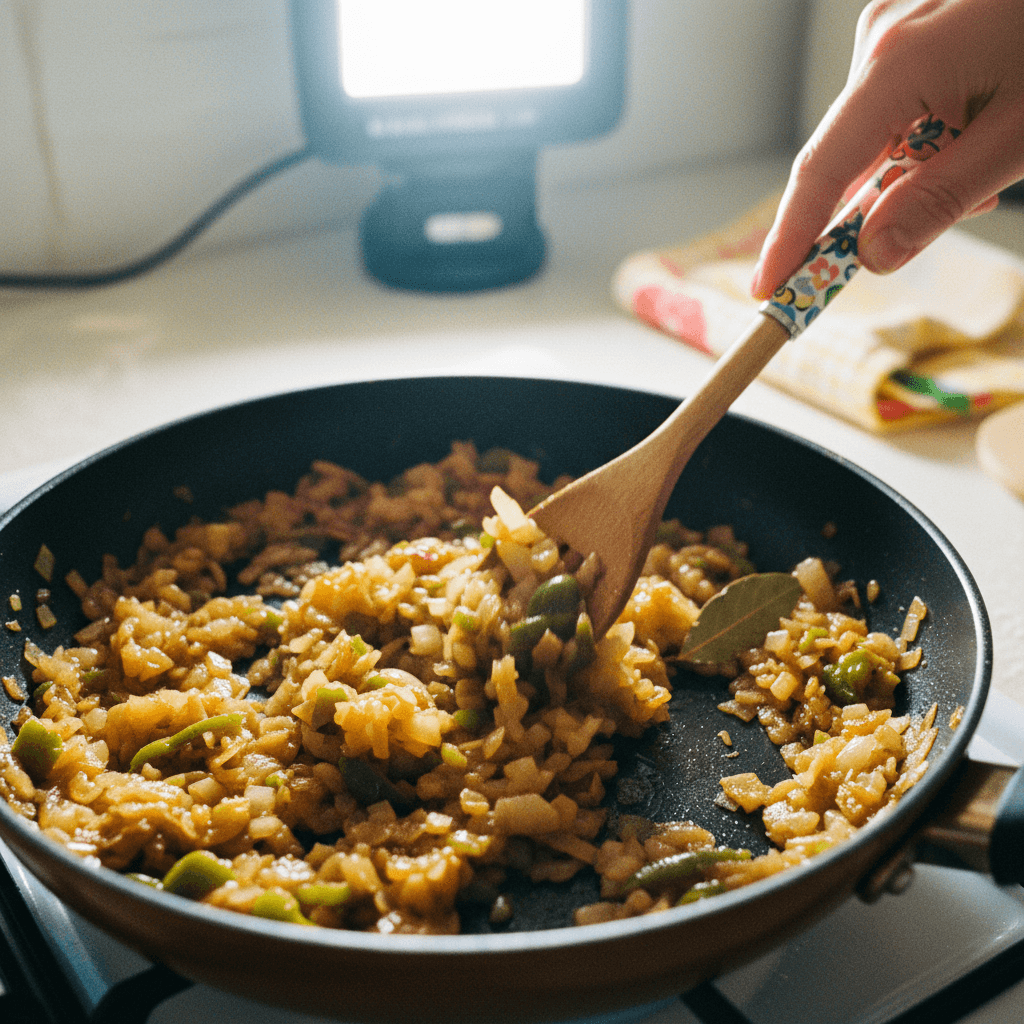
- 4
Once caramelized, transfer the cooked vegetables to a strainer placed over a bowl to separate the fat from the vegetables. Collect all the rendered fat; this will be used for the dough.
⏱️ 5 min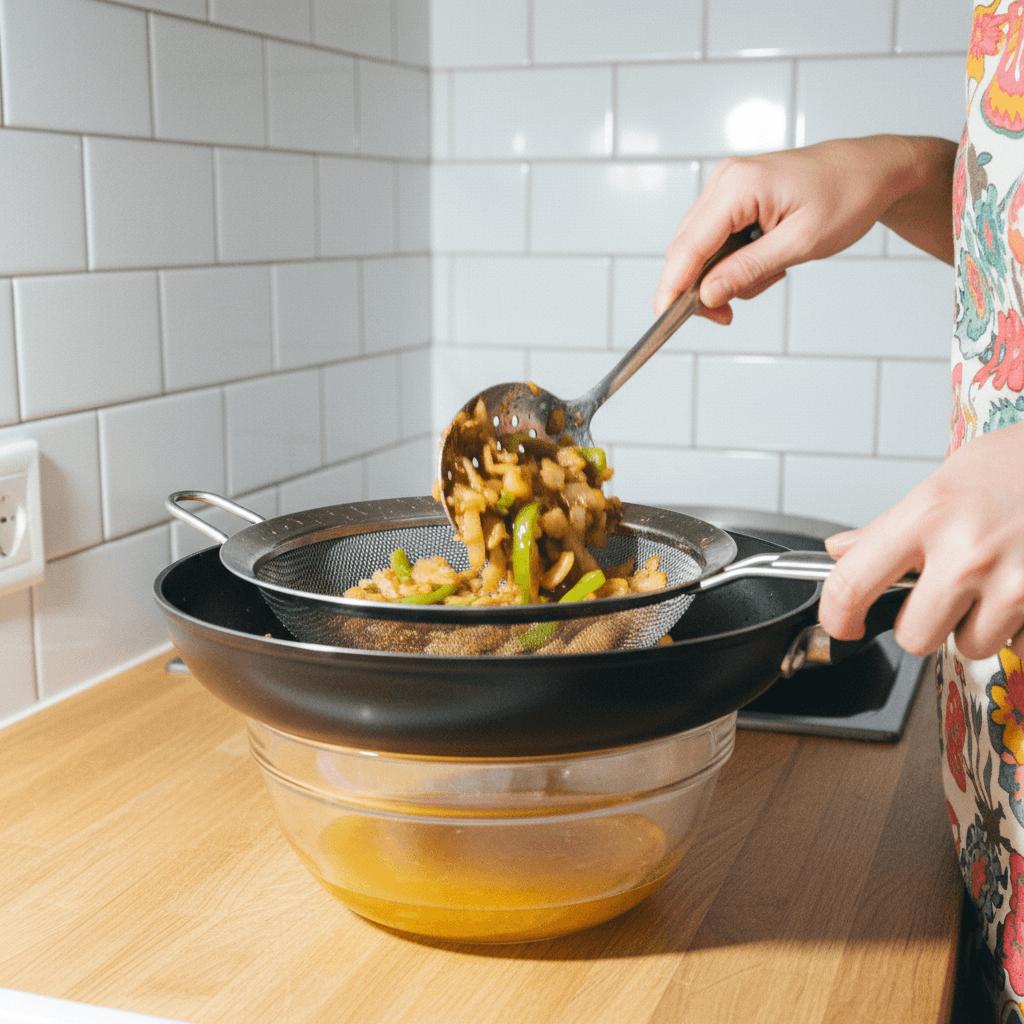
- 5
In a large bowl, combine 600-700 g of pastry flour (start with 500g and add more if needed until the dough is not sticky) and 6 g of salt. Add 1 tablespoon of smoked paprika to the flour mixture and mix well.
⏱️ 5 min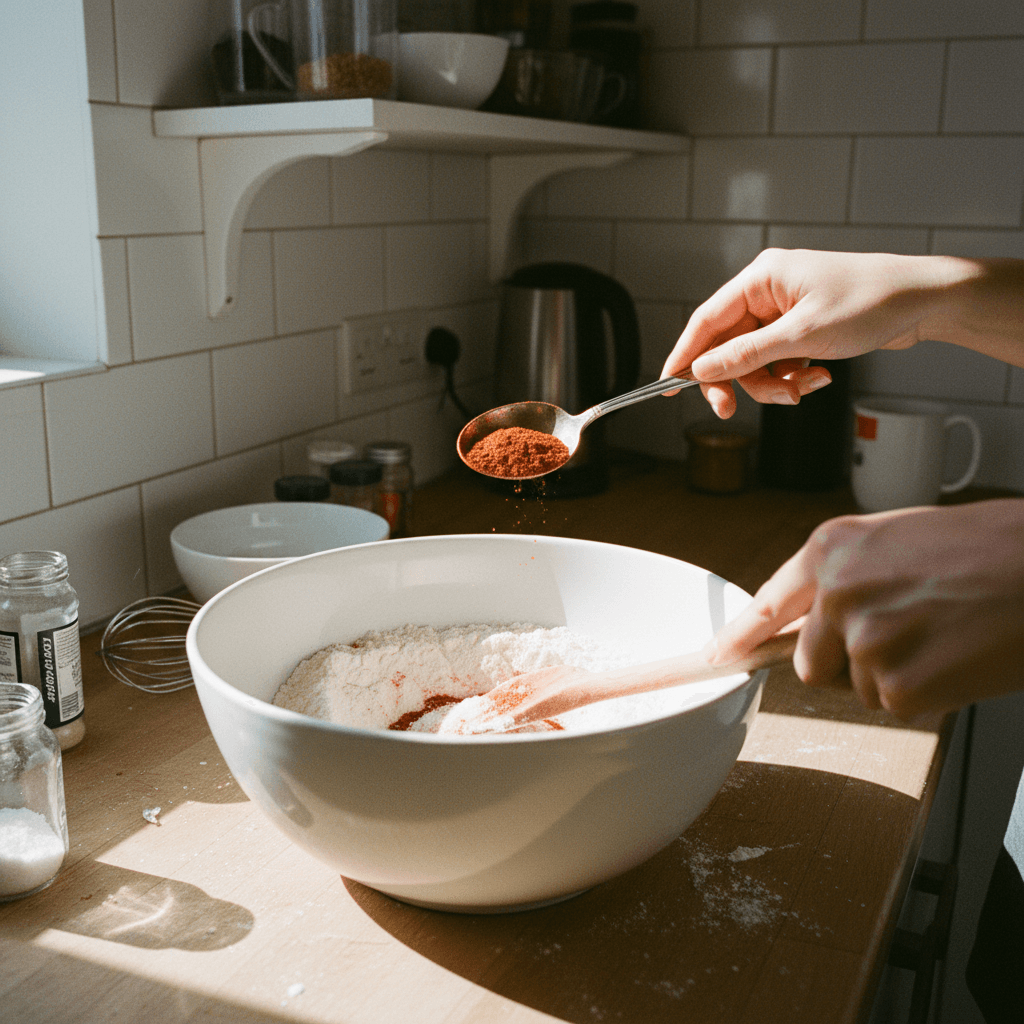
- 6
Pour the collected aromatized fat from the cooked filling into the flour mixture. Add cold butter to complete the 180 g of total fat.
⏱️ 2 min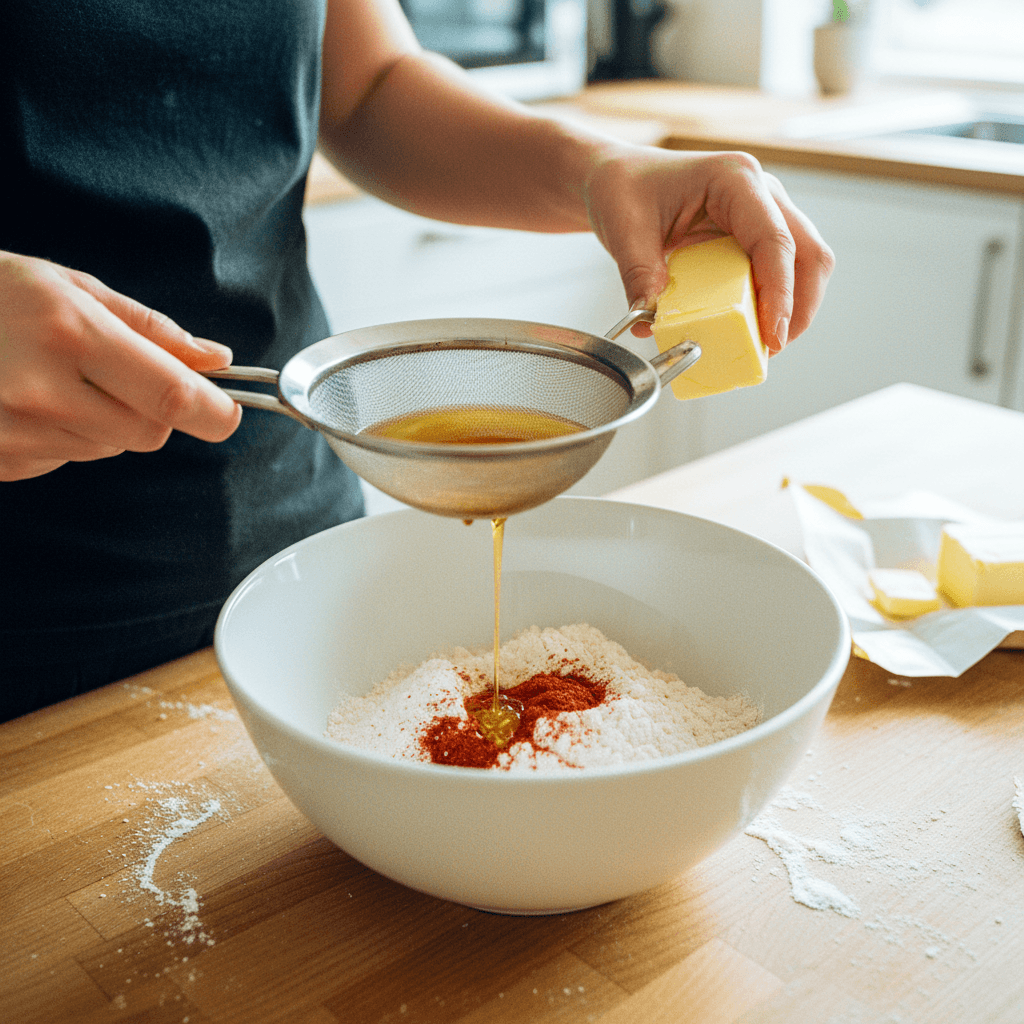
- 7
Using your hands, rub the fat and butter into the flour until it forms a sandy, crumbly texture. This technique is called "Masa Gramada."
⏱️ 5 min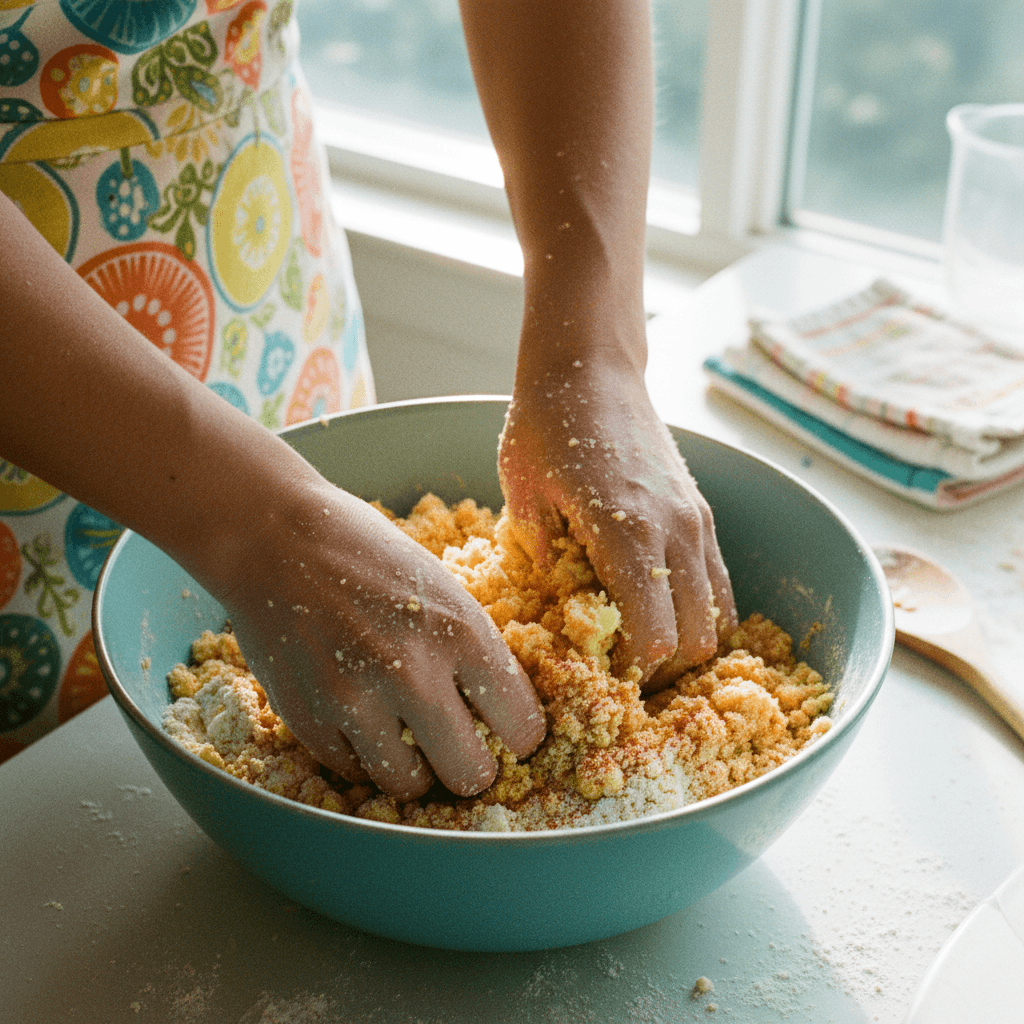
- 8
Add 100 g of white wine and 80 g of water to the sandy mixture. Mix and knead the ingredients by hand until a cohesive dough forms. Do not overmix.
⏱️ 5 min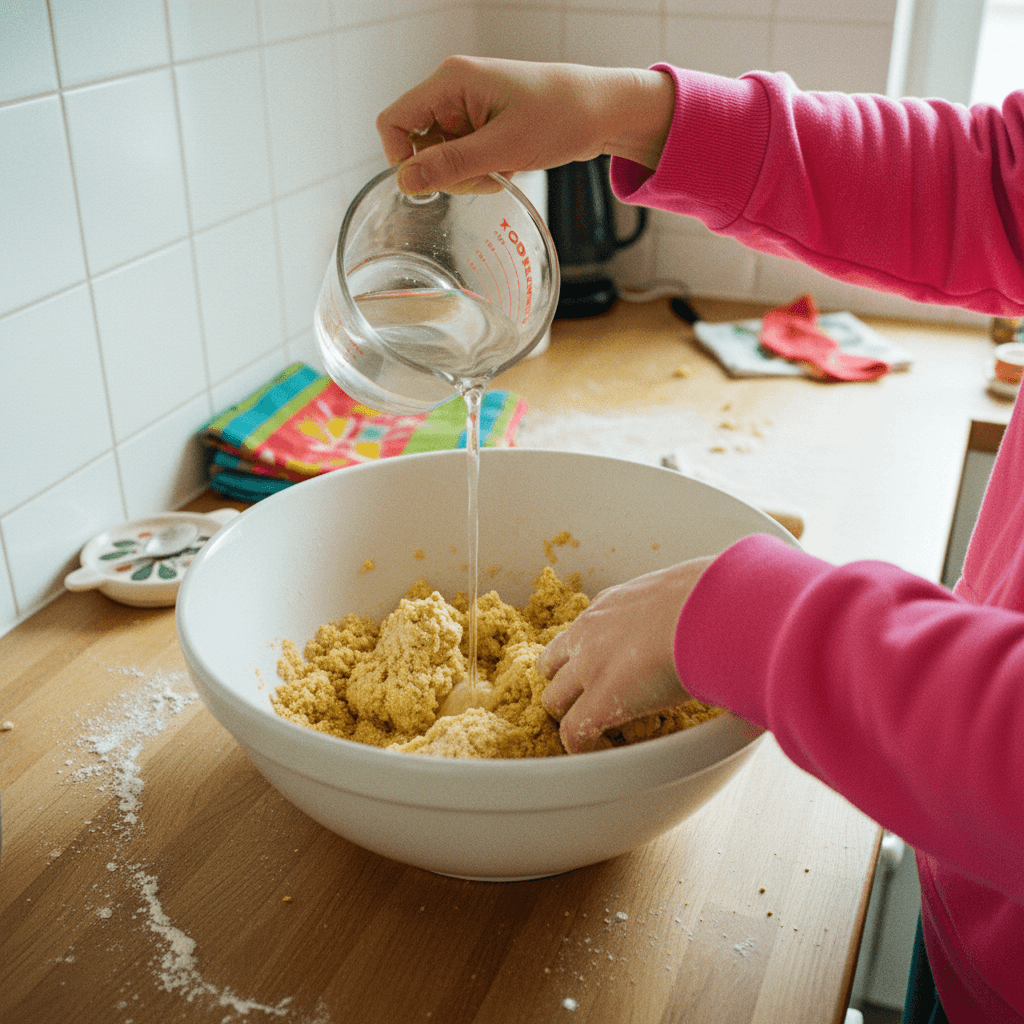
- 9
Wrap the dough tightly in plastic wrap and refrigerate for at least 30 minutes. For best results, rest it for 24 hours to allow the flour to hydrate better and make it easier to roll out.
⏱️ 5 min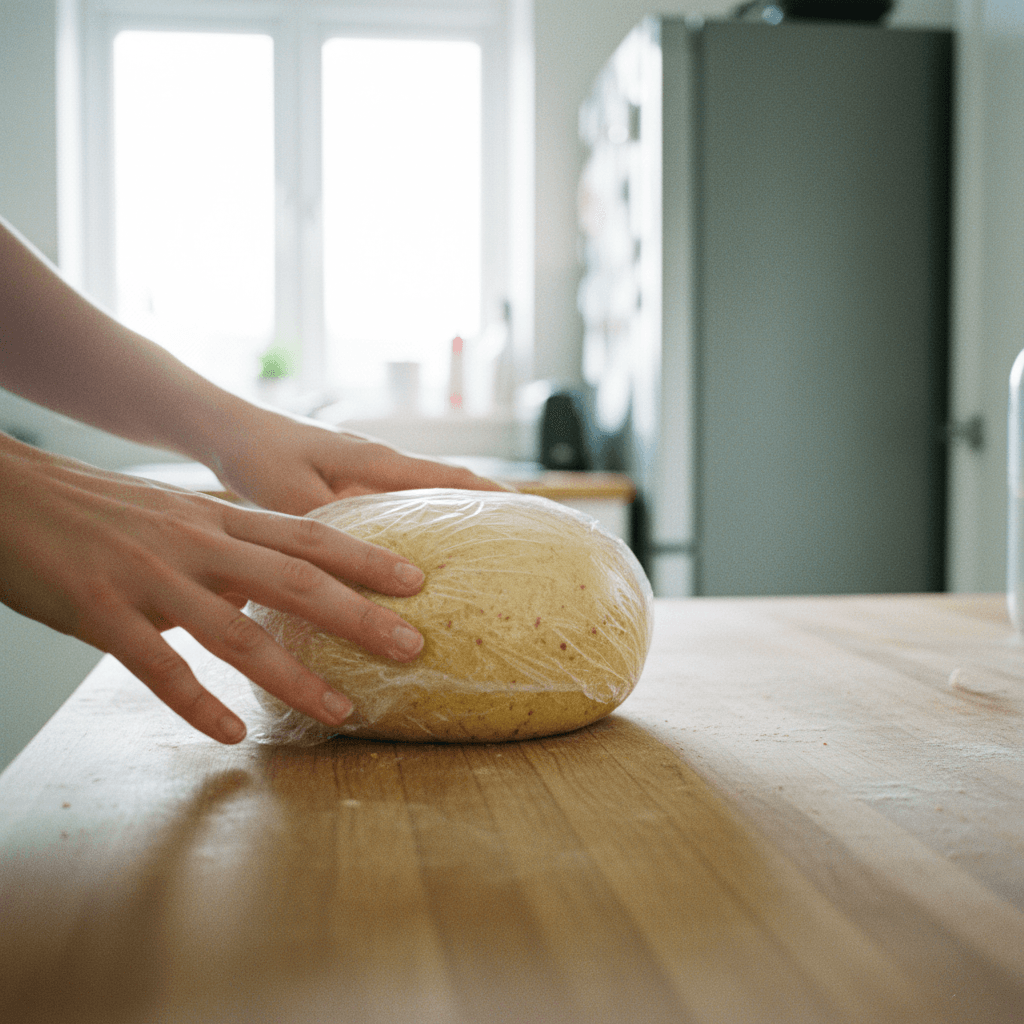
- 10
Once the dough has rested, take it out of the fridge. Divide the dough into two portions (for the top and bottom of the empanada).
⏱️ 2 min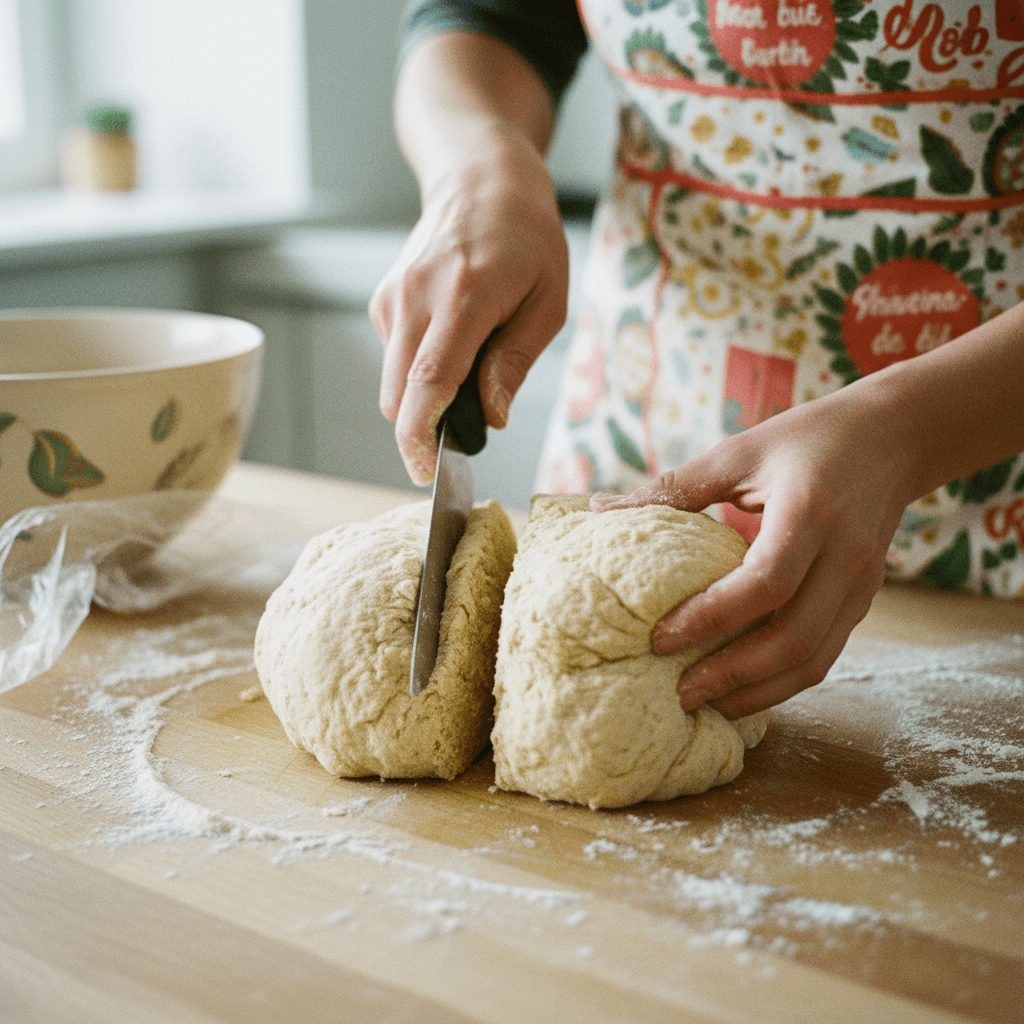
- 11
Lightly flour a clean surface (like a countertop or cutting board). Roll out one portion of the dough thinly using a rolling pin. Place the rolled-out dough onto a piece of parchment paper.
⏱️ 5 min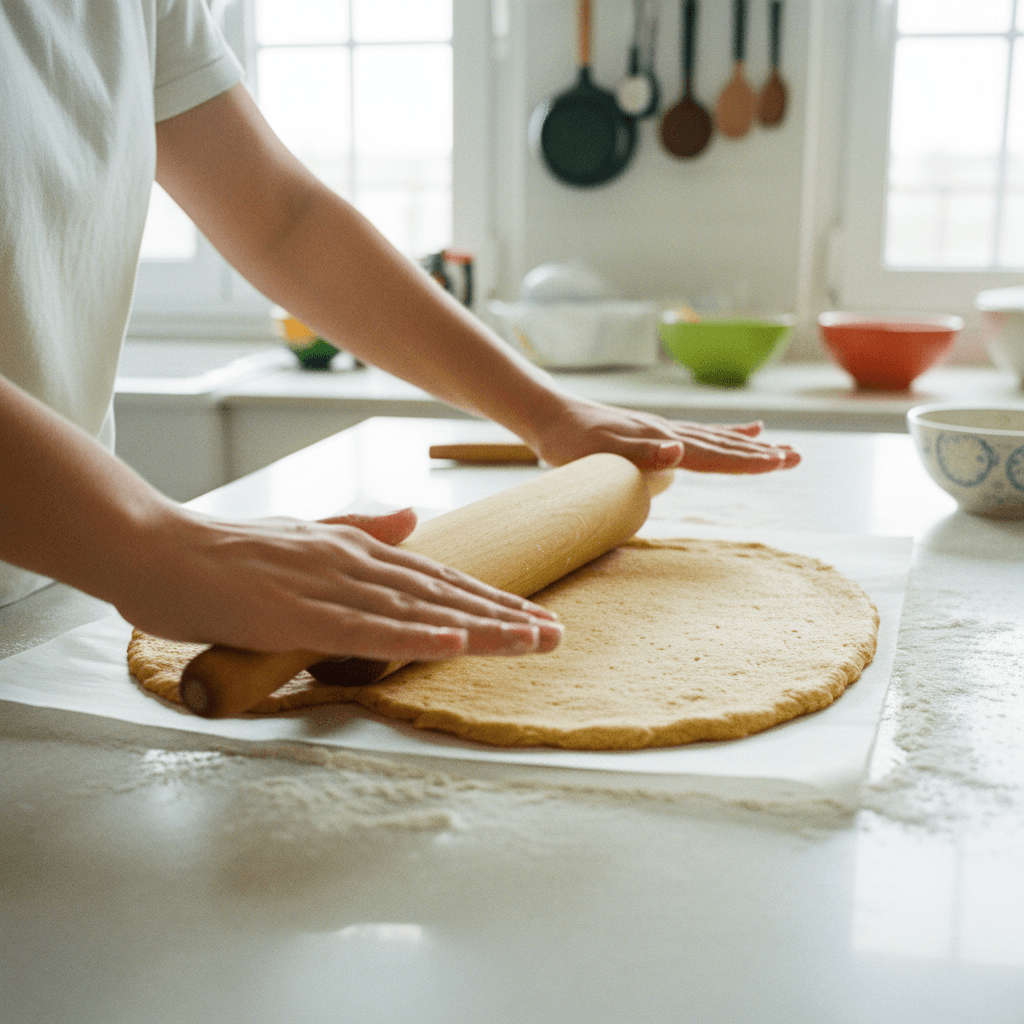
- 12
In a separate bowl, combine the strained caramelized vegetables with two drained small cans of tuna in olive oil and 4-5 piquillo peppers. Mix well.
⏱️ 3 min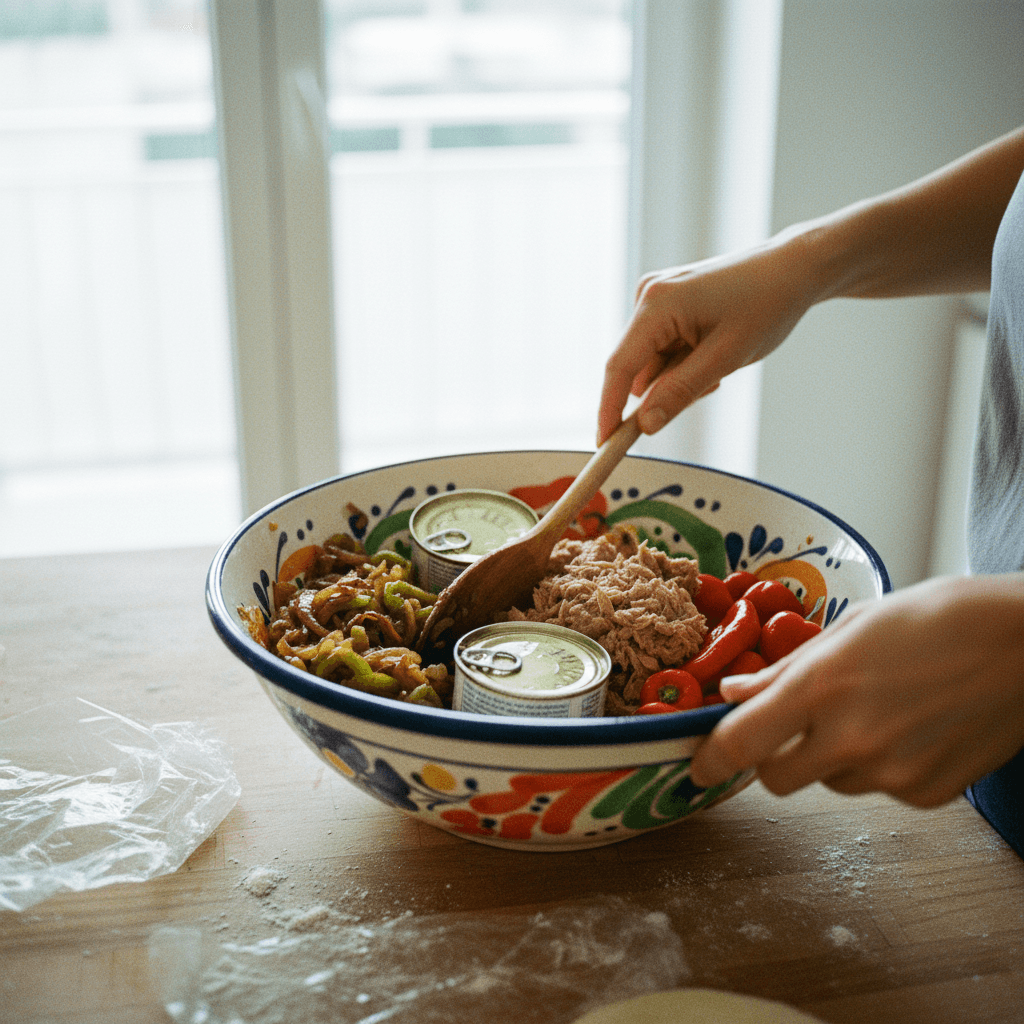
- 13
Spread the filling evenly over the bottom dough, leaving a border of about 1 inch around the edges. Prick the bottom dough with a fork to prevent it from puffing up in the oven.
⏱️ 3 min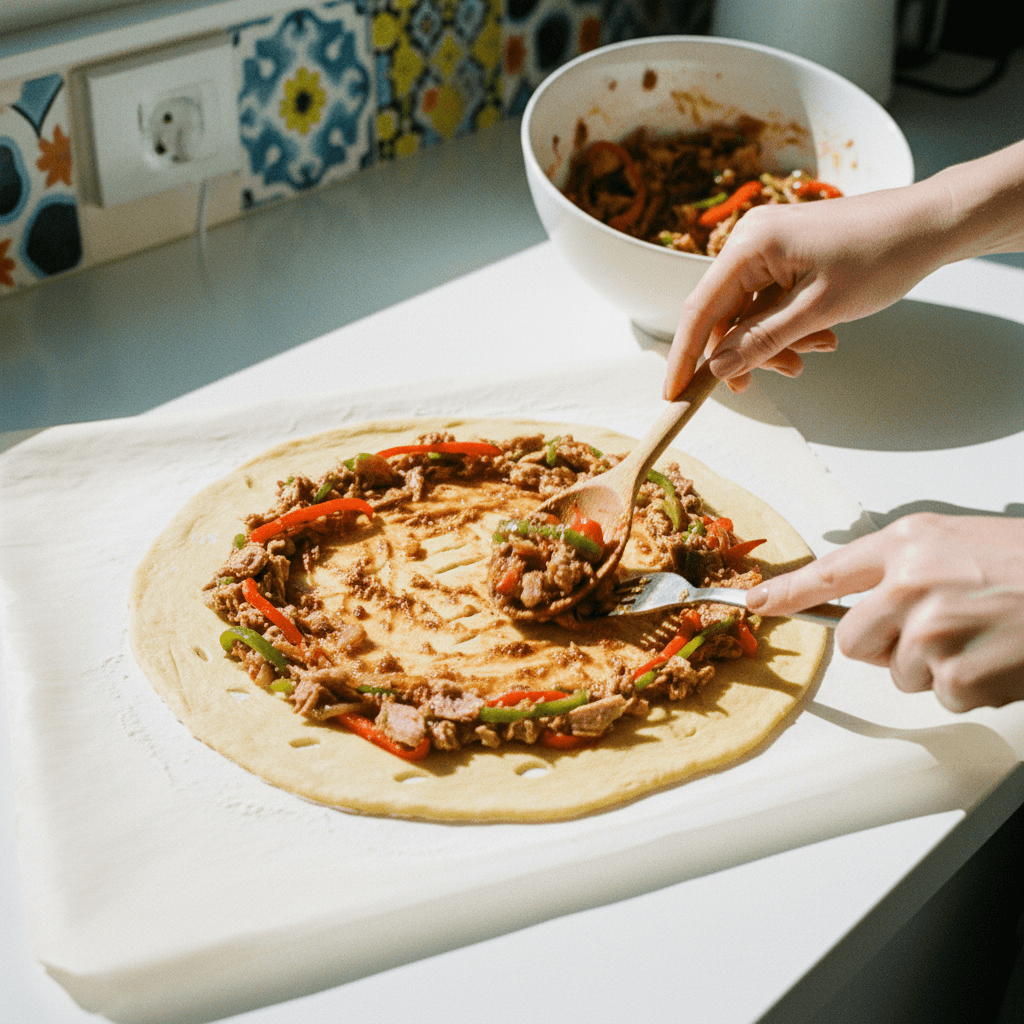
- 14
Roll out the second portion of dough thinly. Carefully place the second rolled-out dough sheet over the filling.
⏱️ 5 min
- 15
Seal the edges of the empanada by folding and crimping them together. You can use a fork to press and seal the edges if a braided edge is too complex.
⏱️ 5 min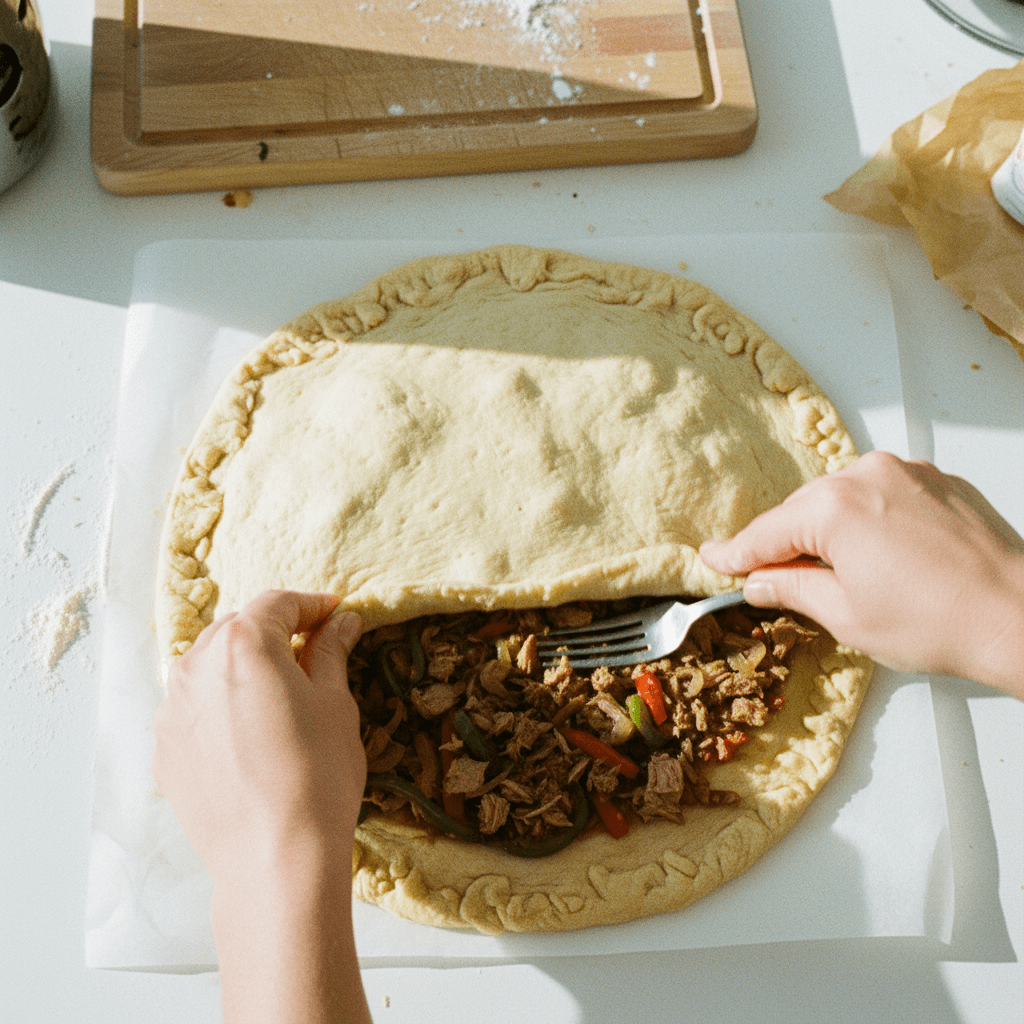
- 16
Using kitchen scissors, cut several small slits across the top surface of the empanada to allow steam to escape during baking.
⏱️ 1 min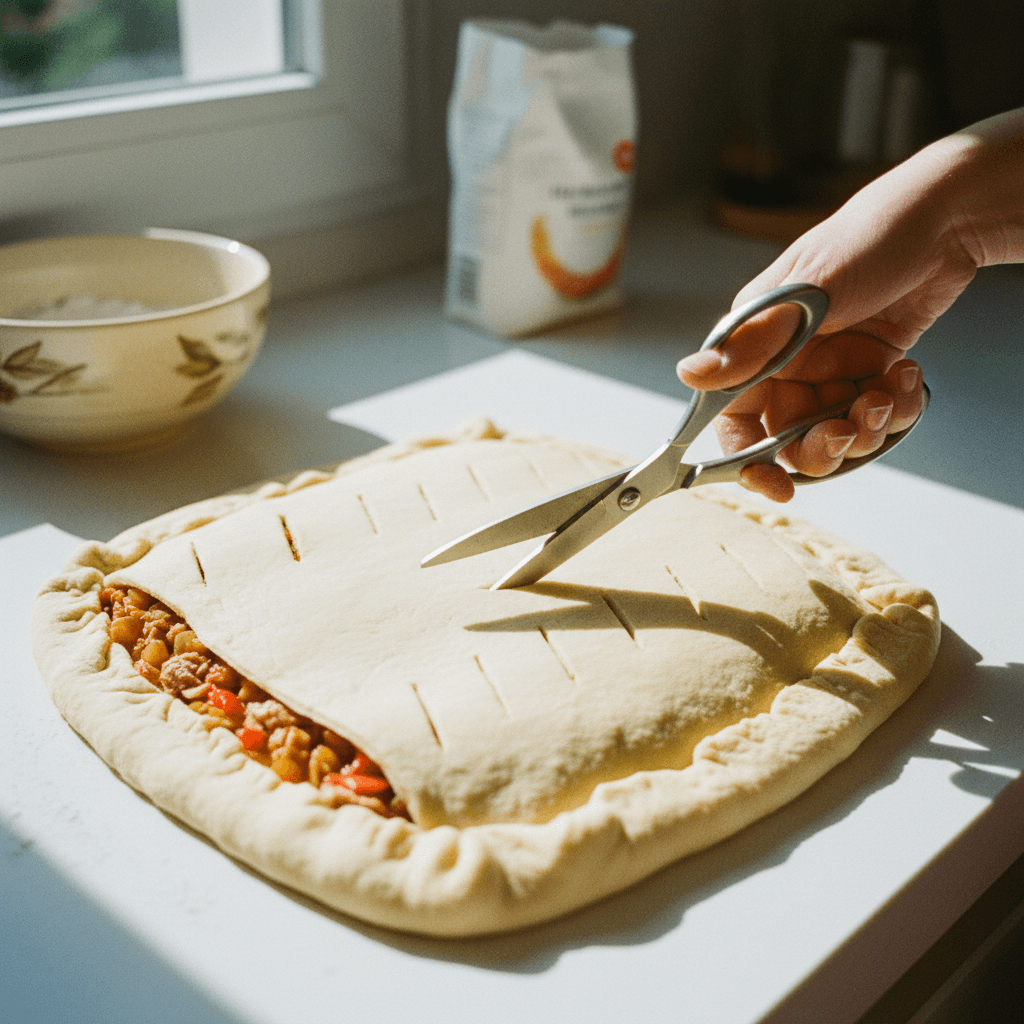
- 17
In a small bowl, whisk the remaining egg to create an egg wash. Brush the entire top surface of the empanada with the egg wash.
⏱️ 2 min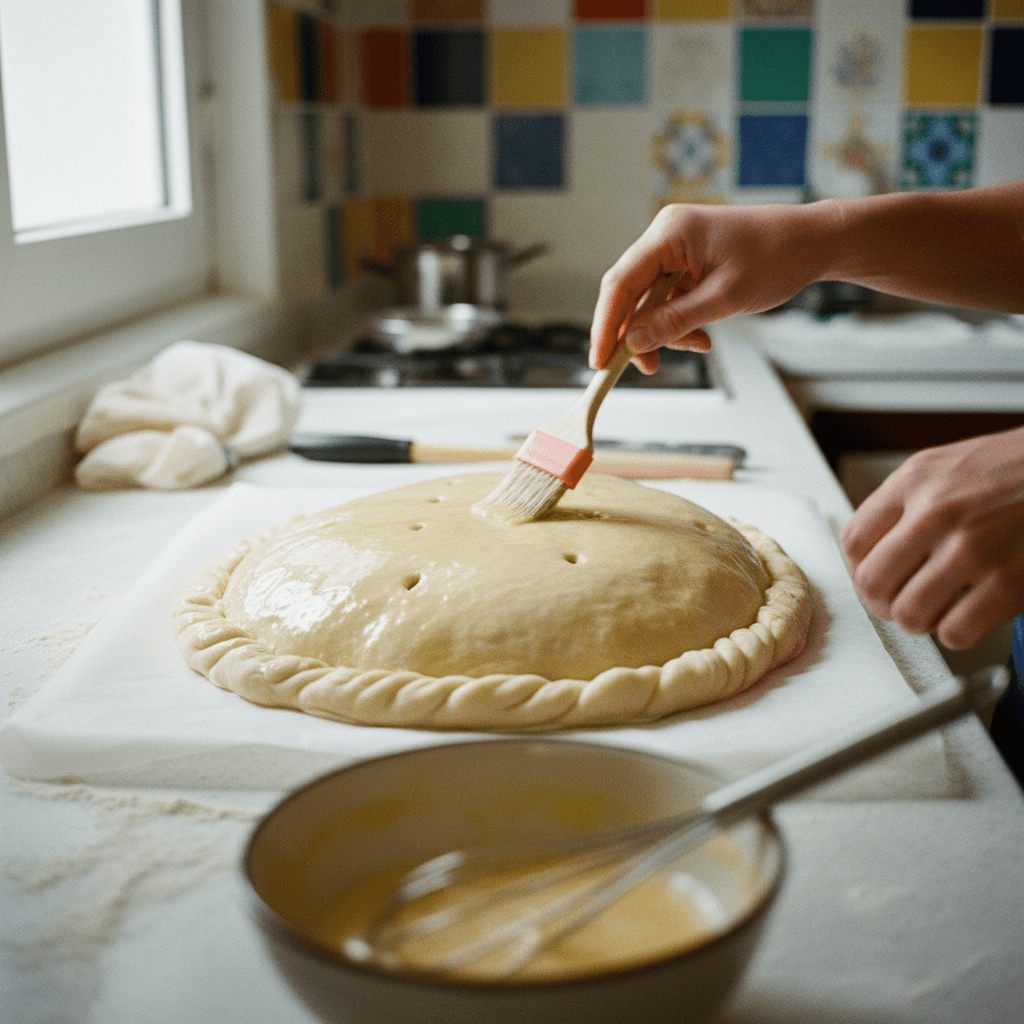
- 18
Preheat your oven to 190°C. Place the empanada (on its parchment paper) onto a baking sheet.
⏱️ 10 min•🌡️ 190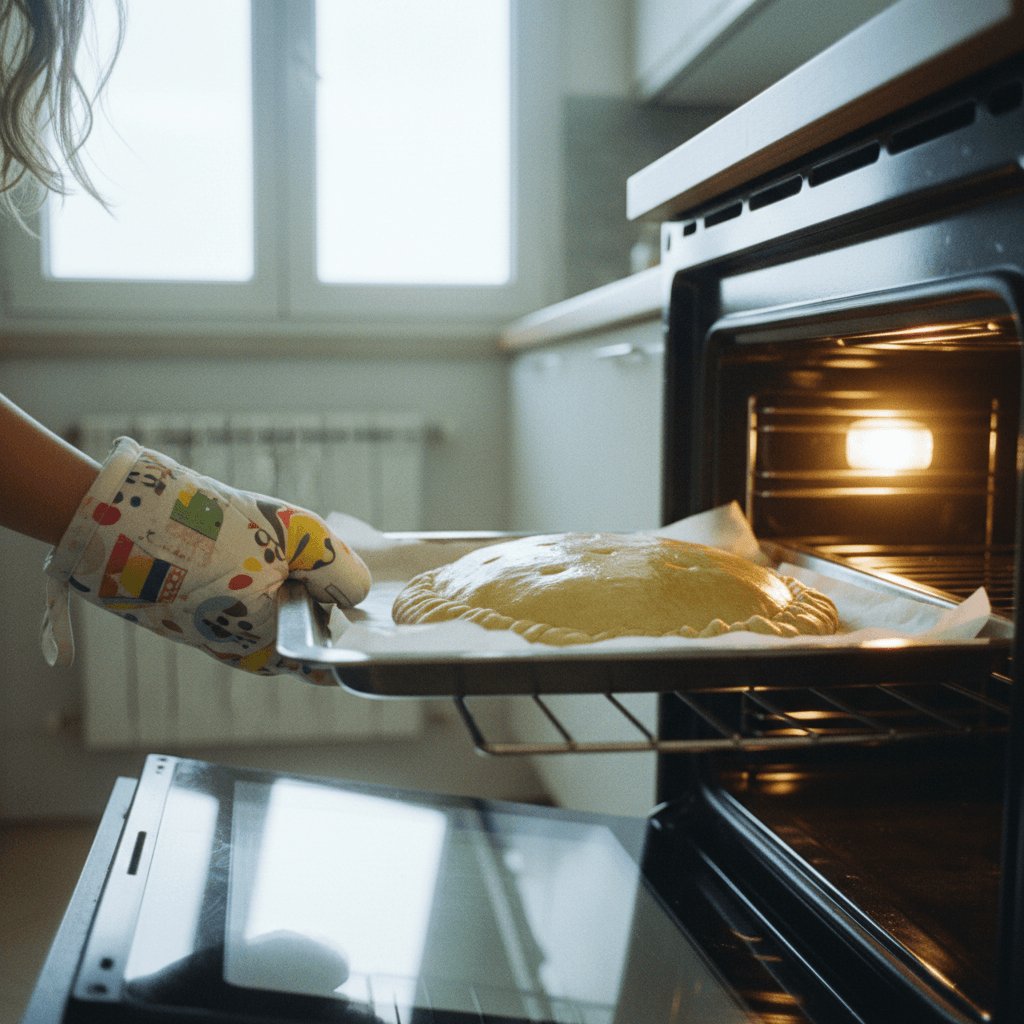
- 19
Bake at 190°C for approximately 30-45 minutes, with no ventilation, until it achieves a nice golden-brown tan.
⏱️ 45 min•🌡️ 190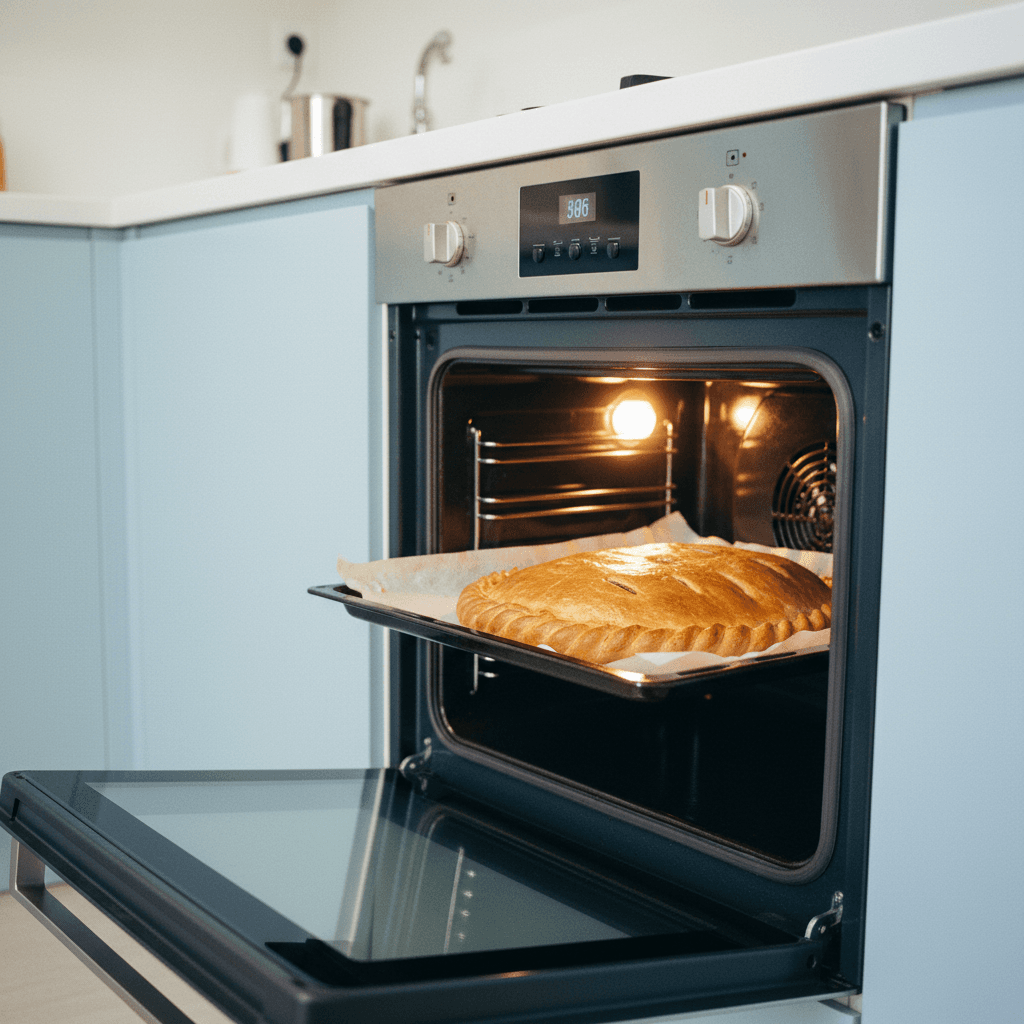
- 20
Once baked, remove the empanada from the oven. Let it cool slightly before cutting into individual portions. Serve warm.
⏱️ 10 min
Kitchen Tools
Galician Empanada (Masa Gramada)
For the Dough
- 600 g pastry flour, start with 500g, add more if needed until not sticky
- 100 g white wine
- 80 g water
- 180 g fat, rendered from filling, completed with cold butter
- 6 g salt
- 1 egg, for egg wash
- 1 tablespoon smoked paprika
For the Filling (for one empanada)
- 600 g white onion, diced
- 250 g green bell pepper, diced
- 90 g extra virgin olive oil
- 1 bay leaf
- 3 g salt
- 2 cans tuna in olive oil, small, drained
- 4 piquillo peppers, to 5
Instructions
- 1
Pour 90 g of extra virgin olive oil into a pan on the stove over medium heat.
⏱️ 1 min - 2
Add 600 g of diced white onion and 250 g of diced green bell pepper to the pan. Add 3 g of salt and 1 bay leaf.
⏱️ 5 min - 3
Cook the vegetables, stirring occasionally, until they are deeply caramelized and tender. This can take 20-30 minutes.
⏱️ 25 min - 4
Once caramelized, transfer the cooked vegetables to a strainer placed over a bowl to separate the fat from the vegetables. Collect all the rendered fat; this will be used for the dough.
⏱️ 5 min - 5
In a large bowl, combine 600-700 g of pastry flour (start with 500g and add more if needed until the dough is not sticky) and 6 g of salt. Add 1 tablespoon of smoked paprika to the flour mixture and mix well.
⏱️ 5 min - 6
Pour the collected aromatized fat from the cooked filling into the flour mixture. Add cold butter to complete the 180 g of total fat.
⏱️ 2 min - 7
Using your hands, rub the fat and butter into the flour until it forms a sandy, crumbly texture. This technique is called "Masa Gramada."
⏱️ 5 min - 8
Add 100 g of white wine and 80 g of water to the sandy mixture. Mix and knead the ingredients by hand until a cohesive dough forms. Do not overmix.
⏱️ 5 min - 9
Wrap the dough tightly in plastic wrap and refrigerate for at least 30 minutes. For best results, rest it for 24 hours to allow the flour to hydrate better and make it easier to roll out.
⏱️ 5 min - 10
Once the dough has rested, take it out of the fridge. Divide the dough into two portions (for the top and bottom of the empanada).
⏱️ 2 min - 11
Lightly flour a clean surface (like a countertop or cutting board). Roll out one portion of the dough thinly using a rolling pin. Place the rolled-out dough onto a piece of parchment paper.
⏱️ 5 min - 12
In a separate bowl, combine the strained caramelized vegetables with two drained small cans of tuna in olive oil and 4-5 piquillo peppers. Mix well.
⏱️ 3 min - 13
Spread the filling evenly over the bottom dough, leaving a border of about 1 inch around the edges. Prick the bottom dough with a fork to prevent it from puffing up in the oven.
⏱️ 3 min - 14
Roll out the second portion of dough thinly. Carefully place the second rolled-out dough sheet over the filling.
⏱️ 5 min - 15
Seal the edges of the empanada by folding and crimping them together. You can use a fork to press and seal the edges if a braided edge is too complex.
⏱️ 5 min - 16
Using kitchen scissors, cut several small slits across the top surface of the empanada to allow steam to escape during baking.
⏱️ 1 min - 17
In a small bowl, whisk the remaining egg to create an egg wash. Brush the entire top surface of the empanada with the egg wash.
⏱️ 2 min - 18
Preheat your oven to 190°C. Place the empanada (on its parchment paper) onto a baking sheet.
⏱️ 10 min•🌡️ 190 - 19
Bake at 190°C for approximately 30-45 minutes, with no ventilation, until it achieves a nice golden-brown tan.
⏱️ 45 min•🌡️ 190 - 20
Once baked, remove the empanada from the oven. Let it cool slightly before cutting into individual portions. Serve warm.
⏱️ 10 min