Butterscotch Tart
Butterscotch Tart
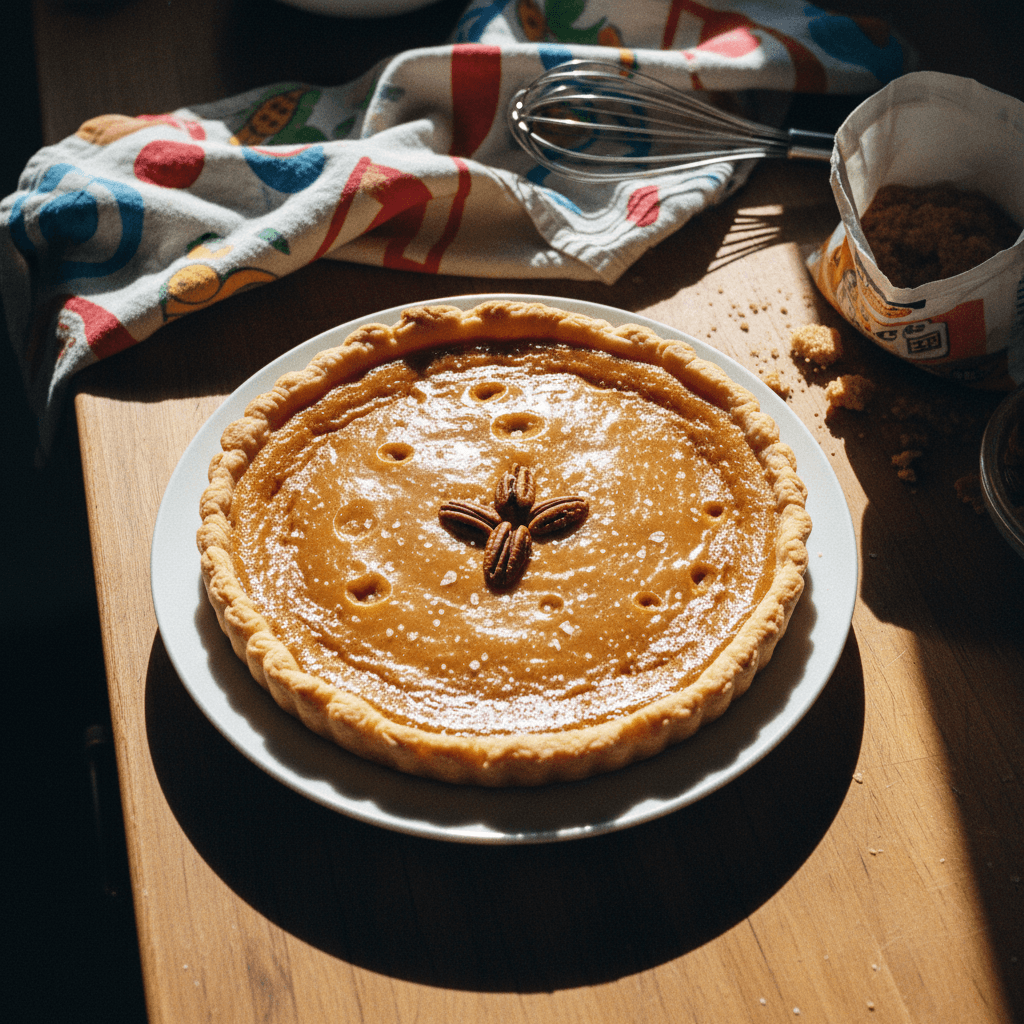
Ingredients
For the Pastry
- 175 g plain flour
- 100 g unsalted butter, cold
- 1 tablespoon icing sugar
- 1 egg yolk
- 15 ml cold water
For the Filling
- 65 g plain flour
- 150 ml milk
- 250 g unsalted butter
- 250 g light brown sugar
Instructions
- 1
Add the plain flour and icing sugar to a large bowl and mix together.
⏱️ 1 min
- 2
Add the cold unsalted butter and, using your fingertips, rub it together with the dry ingredients to form breadcrumbs.
⏱️ 5 min
- 3
Add the egg yolk and cold water. Mix with your hands or a spatula to bring the pastry together into a dough that leaves the sides clean. Knead it a few times in the bowl.
⏱️ 3 min
- 4
Wrap the pastry in cling film and place it in the fridge to chill.
⏱️ 2 min
- 5
Grease a 23 cm loose bottom tart tin.
⏱️ 1 min
- 6
On a floured surface, roll out the chilled pastry to a diameter of about 28-30 cm and a thickness of 5 mm.
⏱️ 5 min
- 7
Use the rolling pin to carefully lift the pastry and place it into the prepared tart tin.
⏱️ 2 min
- 8
Tuck the pastry into the edges without stretching it. Repair any tears with a small piece of pastry. Trim the excess pastry from the edges.
⏱️ 3 min
- 9
Prick the bottom of the pastry case with a fork. Line the pastry with baking paper and fill with baking beans.
⏱️ 2 min
- 10
Blind bake the pastry in a preheated oven.
⏱️ 15 min•🌡️ 200
- 11
Remove the baking beans and baking paper. Re-bake for a further 5 minutes, covering with foil if the sides are browning too quickly. The bottom should be baked through when done.
⏱️ 5 min•🌡️ 200
- 12
Set the baked pastry case aside to cool completely.
⏱️ 10 min
- 13
Mix half of the milk with the plain flour in a bowl until you have a fine paste. If there are any lumps, pass the mixture through a sieve.
⏱️ 3 min
- 14
In a pan, heat the remaining milk and unsalted butter together until the butter melts.
⏱️ 3 min
- 15
Gradually stir in the light brown sugar on a medium heat, continuously stirring until the sugar is completely dissolved.
⏱️ 5 min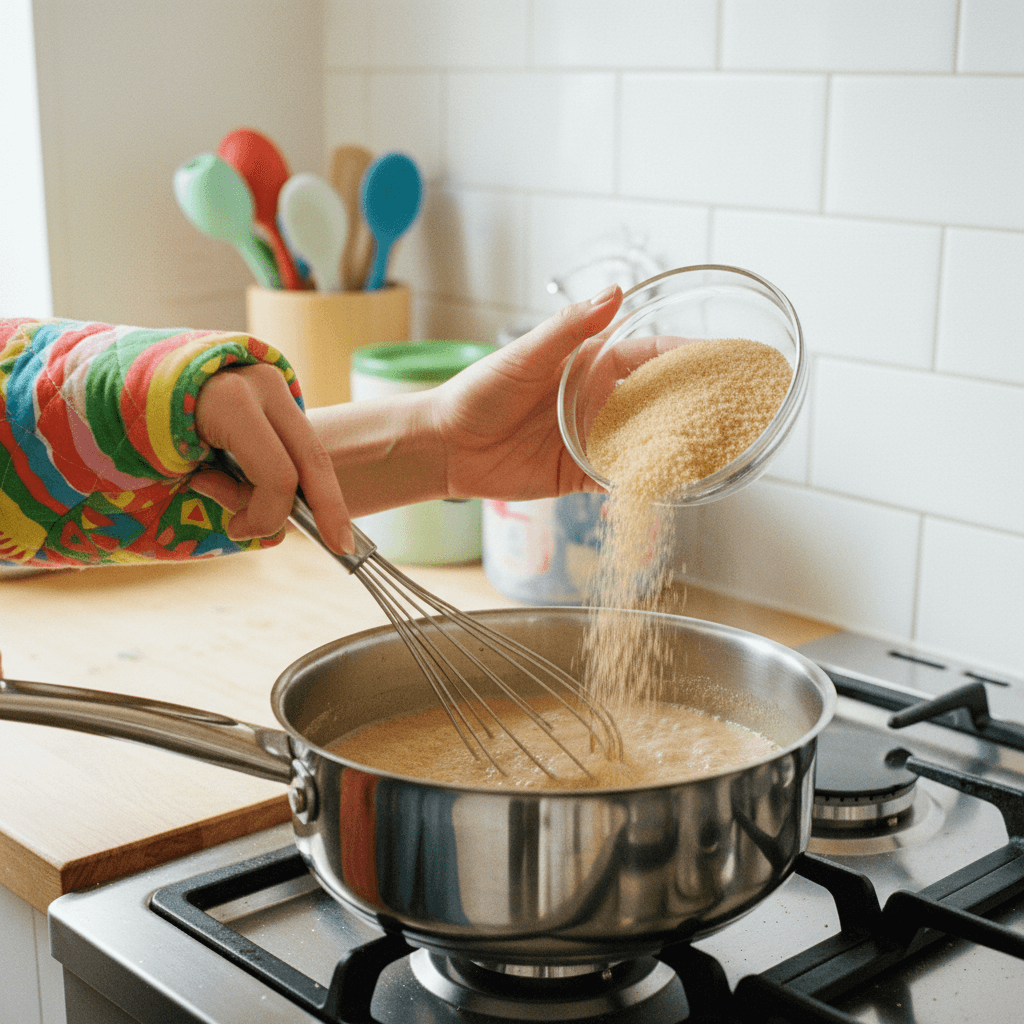
- 16
Maintain a low-medium heat and gradually add the flour paste, stirring constantly. Continue stirring until the mixture thickens. If any lumps form, sieve them out.
⏱️ 10 min
- 17
Once the filling is ready, pour it straight into the cooled pastry case and allow it to cool at room temperature before placing it in the fridge to set.
⏱️ 5 min
- 18
Chill the tart in the fridge for at least 4 hours to set, or preferably overnight for best results.
⏱️ 240 min
Kitchen Tools
Butterscotch Tart
For the Pastry
- 175 g plain flour
- 100 g unsalted butter, cold
- 1 tablespoon icing sugar
- 1 egg yolk
- 15 ml cold water
For the Filling
- 65 g plain flour
- 150 ml milk
- 250 g unsalted butter
- 250 g light brown sugar
Instructions
- 1
Add the plain flour and icing sugar to a large bowl and mix together.
⏱️ 1 min - 2
Add the cold unsalted butter and, using your fingertips, rub it together with the dry ingredients to form breadcrumbs.
⏱️ 5 min - 3
Add the egg yolk and cold water. Mix with your hands or a spatula to bring the pastry together into a dough that leaves the sides clean. Knead it a few times in the bowl.
⏱️ 3 min - 4
Wrap the pastry in cling film and place it in the fridge to chill.
⏱️ 2 min - 5
Grease a 23 cm loose bottom tart tin.
⏱️ 1 min - 6
On a floured surface, roll out the chilled pastry to a diameter of about 28-30 cm and a thickness of 5 mm.
⏱️ 5 min - 7
Use the rolling pin to carefully lift the pastry and place it into the prepared tart tin.
⏱️ 2 min - 8
Tuck the pastry into the edges without stretching it. Repair any tears with a small piece of pastry. Trim the excess pastry from the edges.
⏱️ 3 min - 9
Prick the bottom of the pastry case with a fork. Line the pastry with baking paper and fill with baking beans.
⏱️ 2 min - 10
Blind bake the pastry in a preheated oven.
⏱️ 15 min•🌡️ 200 - 11
Remove the baking beans and baking paper. Re-bake for a further 5 minutes, covering with foil if the sides are browning too quickly. The bottom should be baked through when done.
⏱️ 5 min•🌡️ 200 - 12
Set the baked pastry case aside to cool completely.
⏱️ 10 min - 13
Mix half of the milk with the plain flour in a bowl until you have a fine paste. If there are any lumps, pass the mixture through a sieve.
⏱️ 3 min - 14
In a pan, heat the remaining milk and unsalted butter together until the butter melts.
⏱️ 3 min - 15
Gradually stir in the light brown sugar on a medium heat, continuously stirring until the sugar is completely dissolved.
⏱️ 5 min - 16
Maintain a low-medium heat and gradually add the flour paste, stirring constantly. Continue stirring until the mixture thickens. If any lumps form, sieve them out.
⏱️ 10 min - 17
Once the filling is ready, pour it straight into the cooled pastry case and allow it to cool at room temperature before placing it in the fridge to set.
⏱️ 5 min - 18
Chill the tart in the fridge for at least 4 hours to set, or preferably overnight for best results.
⏱️ 240 min