Pan-Seared Ribeye Steak with Garlic Herb Butter
Pan-Seared Ribeye Steak with Garlic Herb Butter

Ingredients
- 2 ribeye steaks, about 1 1/2 inches thick
- as needed salt, for seasoning
- as needed black pepper, freshly ground, for seasoning
- 2 tablespoons avocado oil
- 1/3 cup unsalted butter
- 4 garlic cloves, whole, lightly smashed
- 3 thyme sprigs, or rosemary sprigs
Instructions
- 1
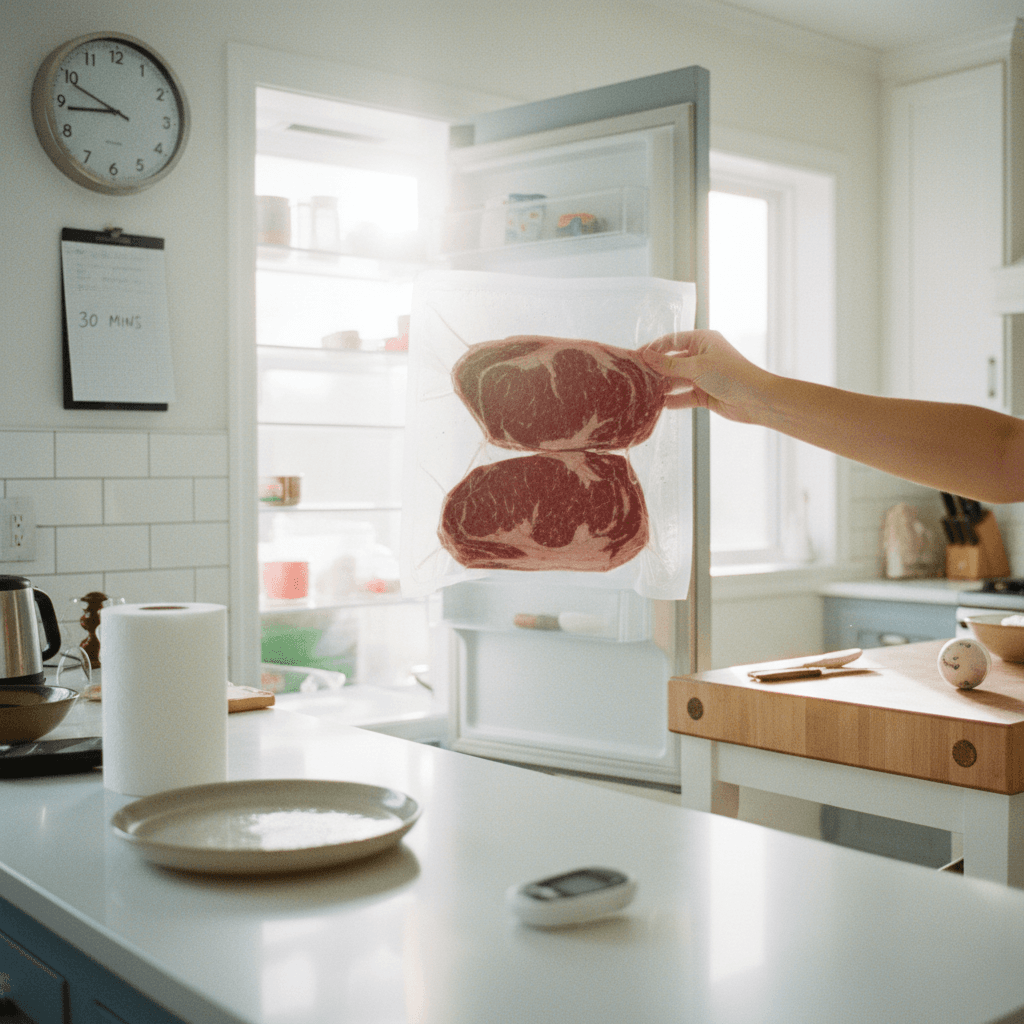
Remove the ribeye steaks from the refrigerator 30 minutes before cooking to allow them to come closer to room temperature. This promotes more even cooking.
- 2
Pat the steaks thoroughly dry on all sides with paper towels. This is crucial for achieving a good sear.
⏱️ 2 min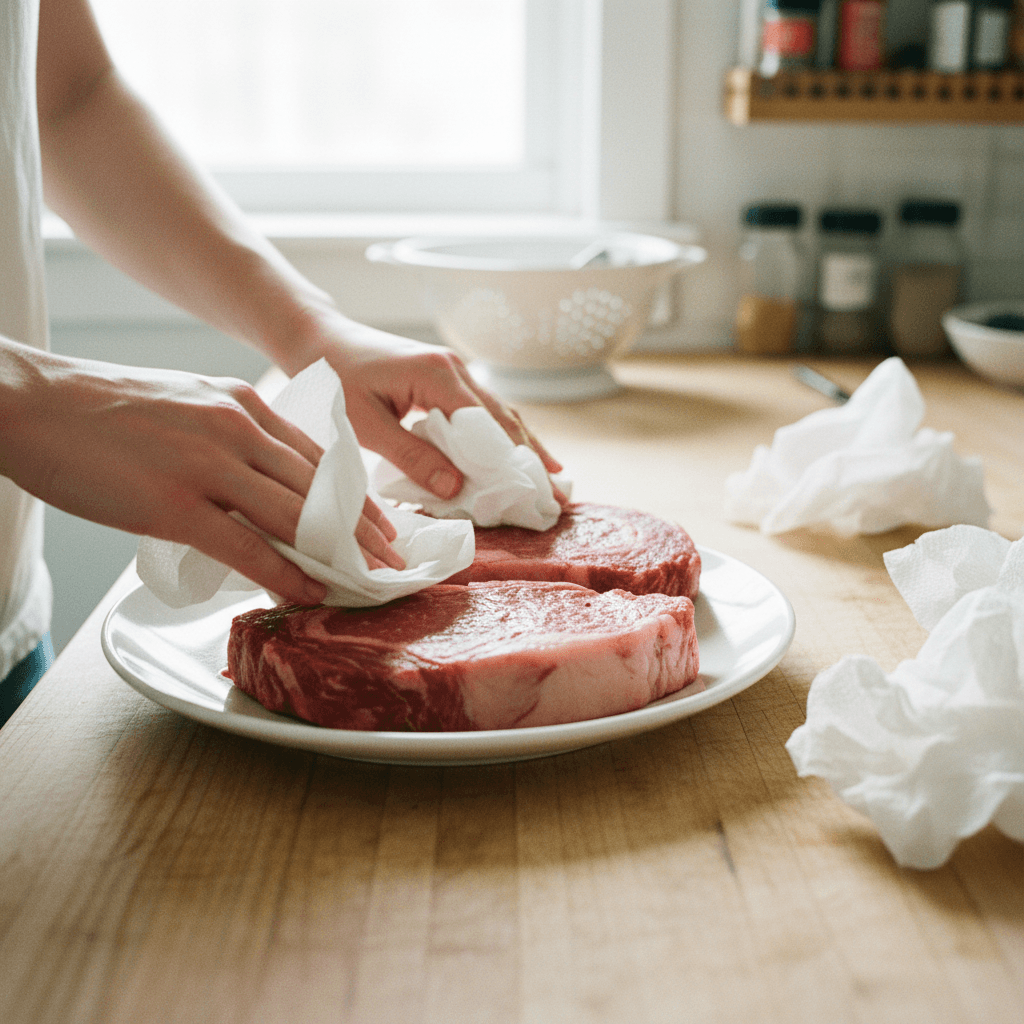
- 3
Heavily season the steaks on all sides with salt and freshly ground black pepper.
⏱️ 2 min
- 4
Heat a heavy-bottomed pan (such as cast iron, stainless steel, or hex-clad) over high heat until very hot.
⏱️ 3 min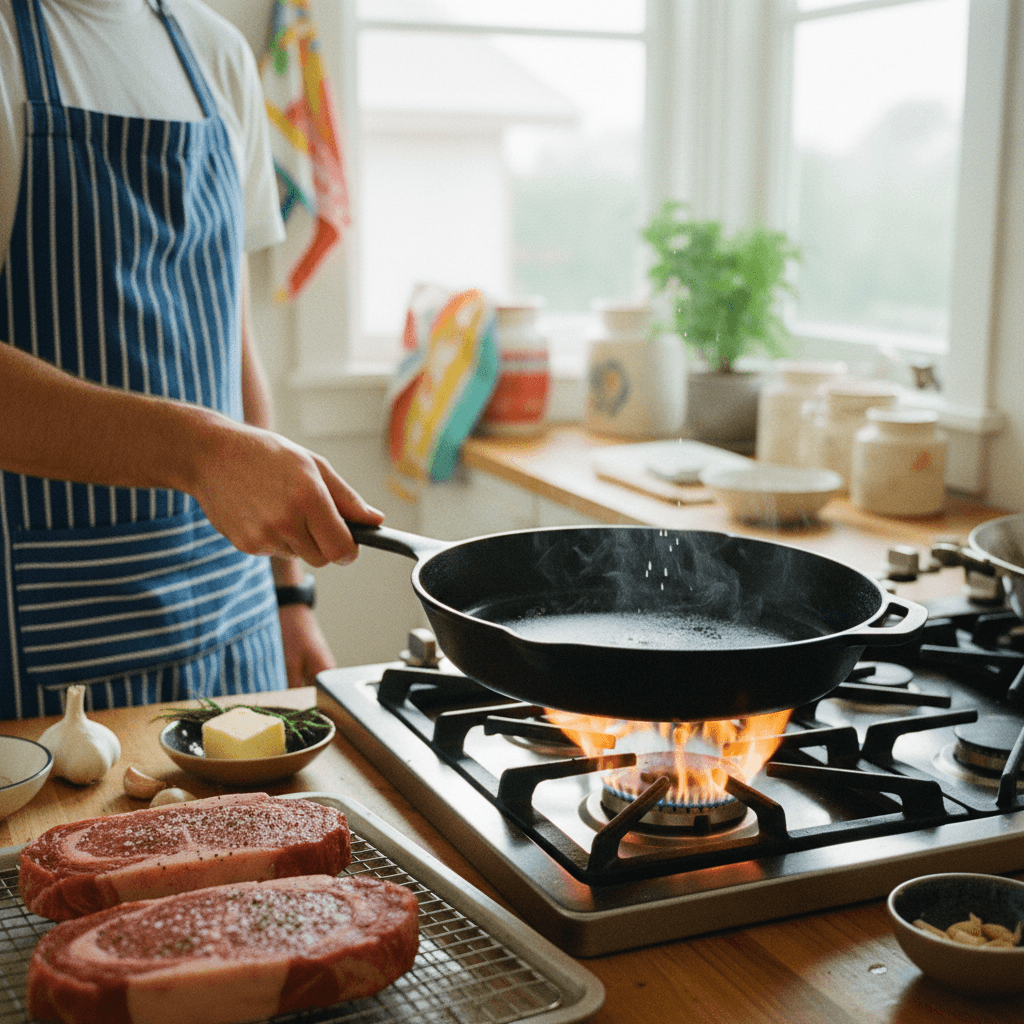
- 5
Add the 2 tablespoons of avocado oil to the hot pan. Allow the oil to heat until it just begins to smoke.
⏱️ 1 min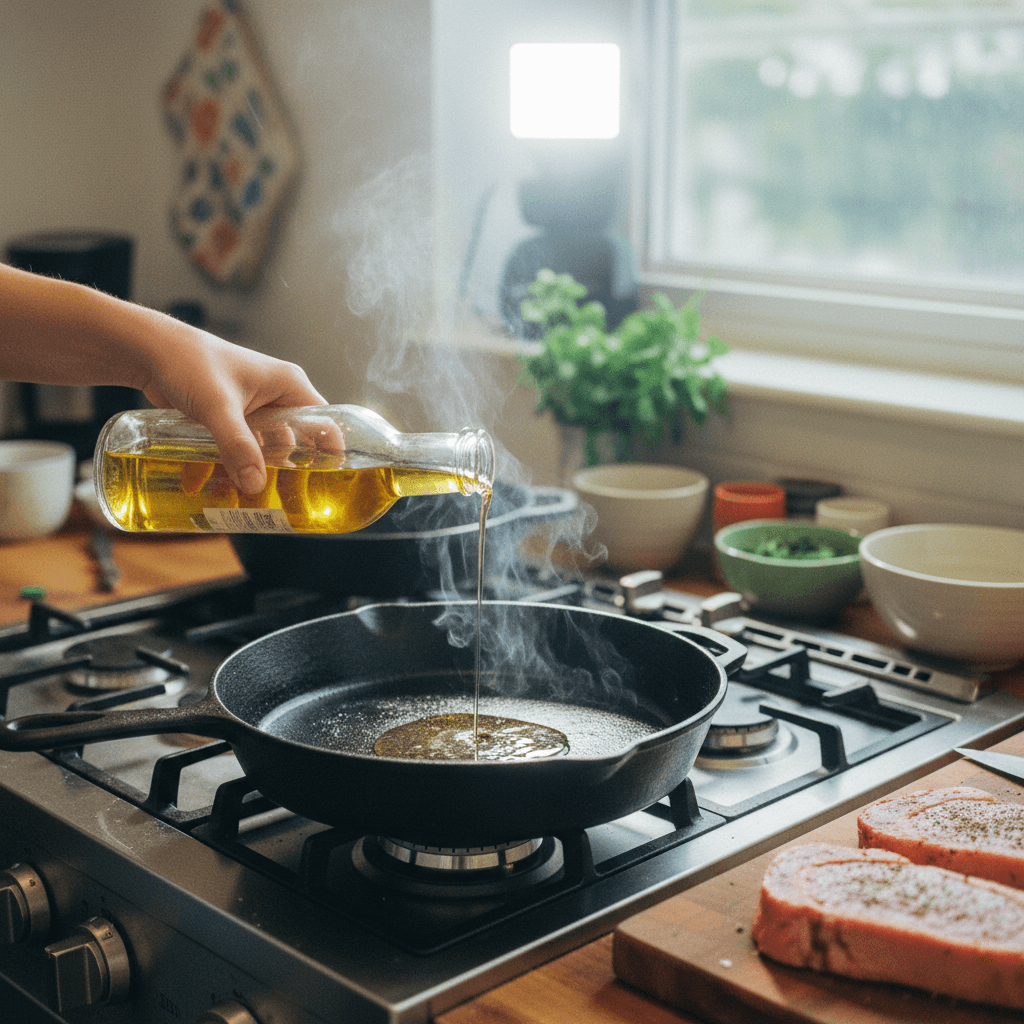
- 6
Carefully place the steaks in the pan, searing the fat cap first if your steaks have one, until rendered and golden brown.
⏱️ 1 min
- 7
Lay the steaks flat in the pan, away from you, and press down firmly with your hand or a spatula for 10-15 seconds to ensure maximum contact with the hot surface and develop a beautiful crust.
⏱️ 1 min
- 8
Sear the first side for 2-3 minutes, depending on the thickness of your steaks and your desired level of doneness. Flip and sear the second side for another 2-3 minutes. Use a meat thermometer to check the internal temperature; remove the steaks from the pan once they reach 120°F.
⏱️ 6 min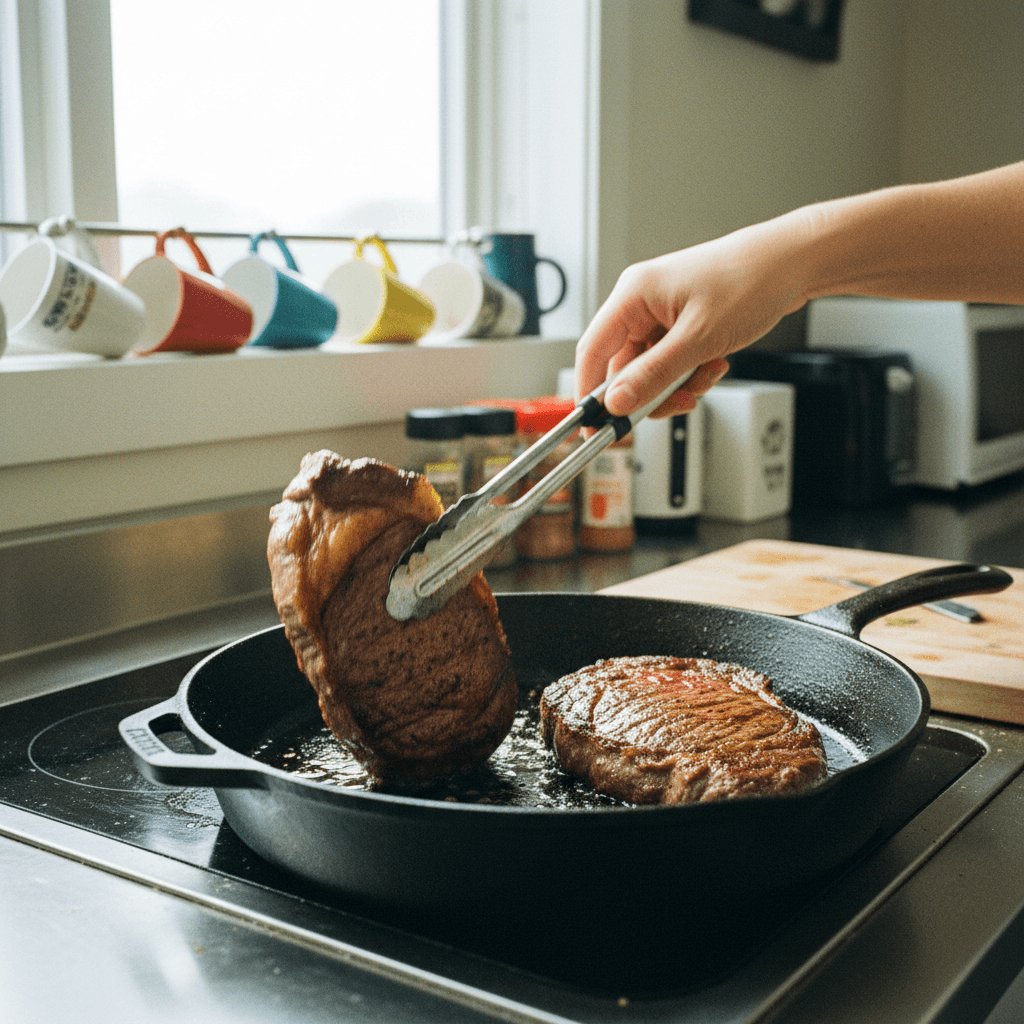
- 9
Remove the steaks from the pan and set aside. Carefully pour out any excess grease from the pan.
⏱️ 1 min
- 10
Reduce the heat to medium-low and add the 1/3 cup of unsalted butter to the pan. Allow the butter to melt and foam.
⏱️ 1 min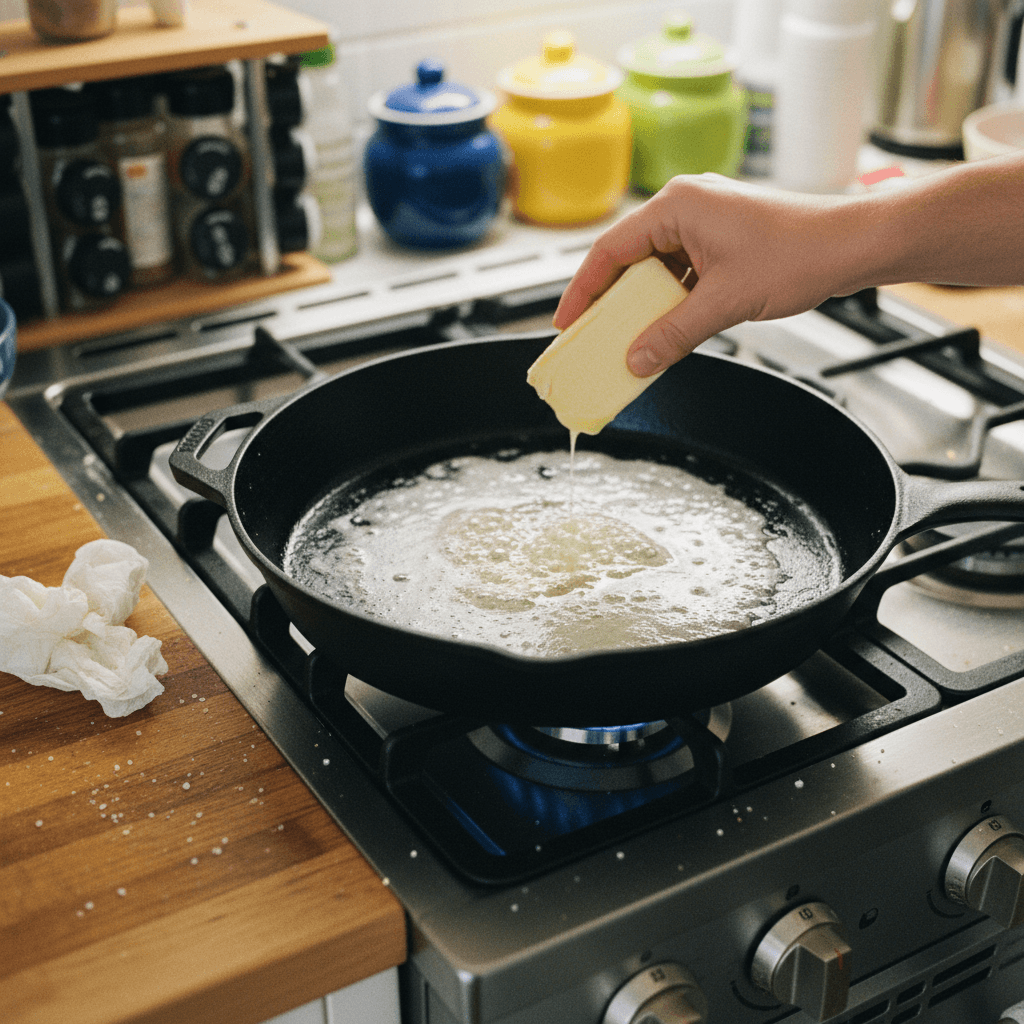
- 11
Once the butter is foaming, return the steaks to the pan. Add the whole garlic cloves and thyme or rosemary sprigs.
⏱️ 1 min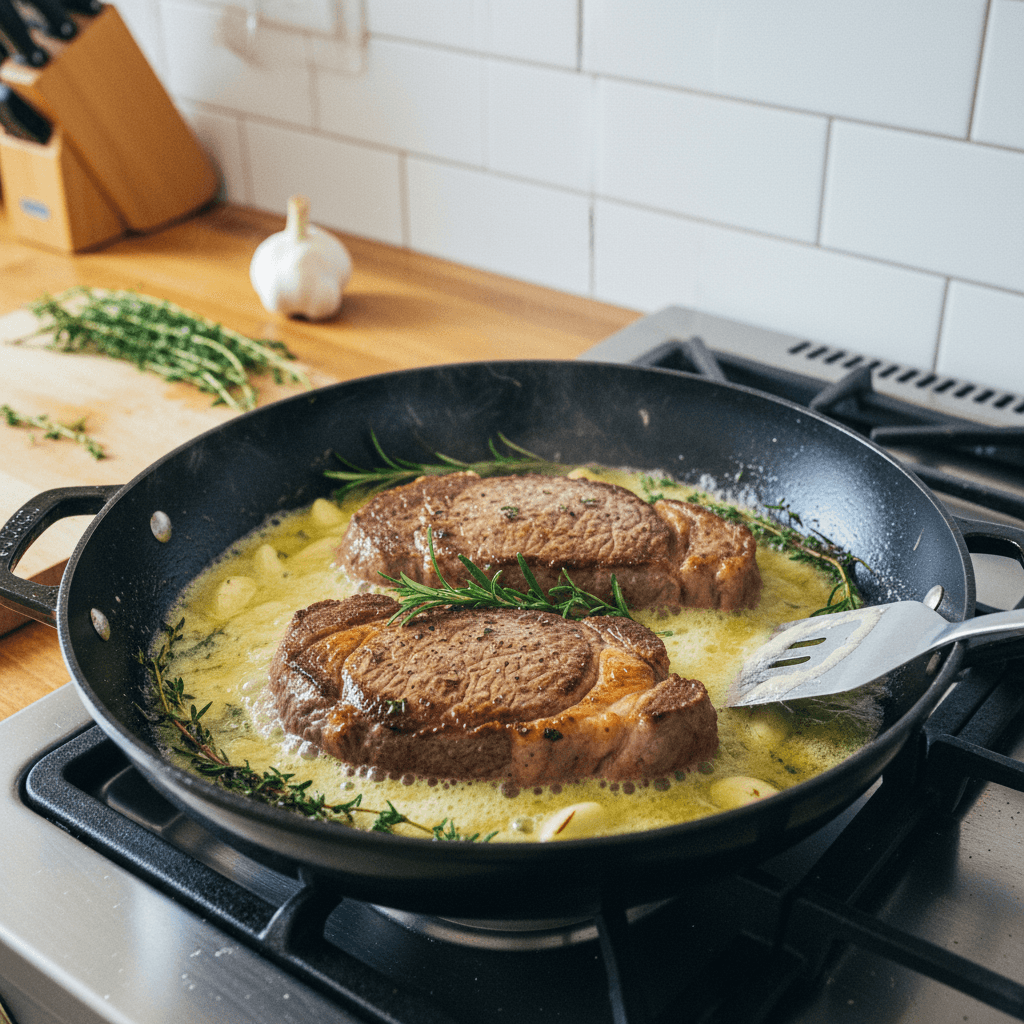
- 12
Slightly tilt the pan and, using a spoon, constantly baste the steaks with the foaming butter and aromatics, flipping every 30 seconds, until the steaks reach an internal temperature of 135-140°F for medium-rare to medium doneness. (Pull at 135°F for medium-rare).
⏱️ 4 min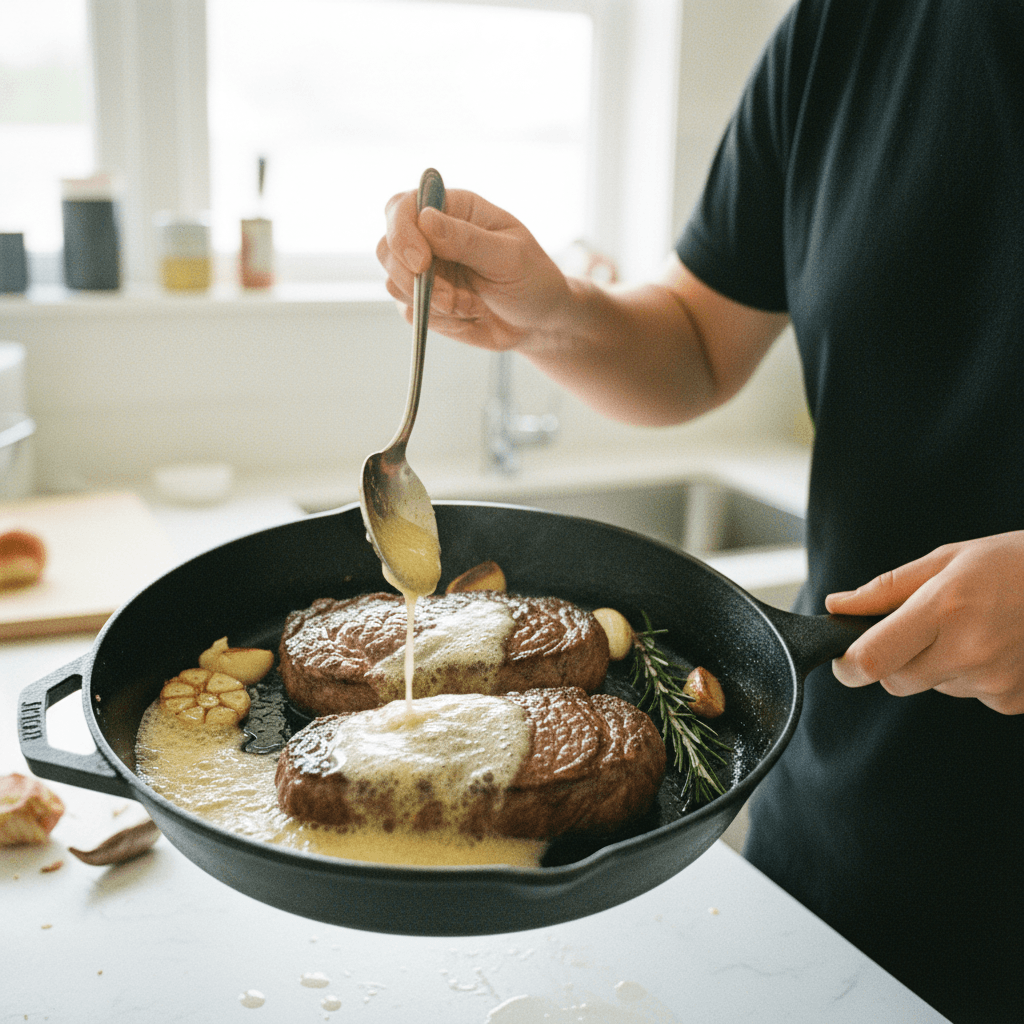
- 13
Transfer the cooked steaks to a cutting board and let them rest for half the time they cooked (approximately 5-7 minutes). This allows the juices to redistribute, resulting in a more tender and flavorful steak.

- 14
Slice the rested steaks against the grain and serve immediately, optionally on a bed of mashed potatoes and sprinkled with a pinch of additional salt.
⏱️ 2 min
Kitchen Tools
Nutrition Facts (per serving)
Pan-Seared Ribeye Steak with Garlic Herb Butter
- 2 ribeye steaks, about 1 1/2 inches thick
- as needed salt, for seasoning
- as needed black pepper, freshly ground, for seasoning
- 2 tablespoons avocado oil
- 1/3 cup unsalted butter
- 4 garlic cloves, whole, lightly smashed
- 3 thyme sprigs, or rosemary sprigs
Instructions
- 1
Remove the ribeye steaks from the refrigerator 30 minutes before cooking to allow them to come closer to room temperature. This promotes more even cooking.
- 2
Pat the steaks thoroughly dry on all sides with paper towels. This is crucial for achieving a good sear.
⏱️ 2 min - 3
Heavily season the steaks on all sides with salt and freshly ground black pepper.
⏱️ 2 min - 4
Heat a heavy-bottomed pan (such as cast iron, stainless steel, or hex-clad) over high heat until very hot.
⏱️ 3 min - 5
Add the 2 tablespoons of avocado oil to the hot pan. Allow the oil to heat until it just begins to smoke.
⏱️ 1 min - 6
Carefully place the steaks in the pan, searing the fat cap first if your steaks have one, until rendered and golden brown.
⏱️ 1 min - 7
Lay the steaks flat in the pan, away from you, and press down firmly with your hand or a spatula for 10-15 seconds to ensure maximum contact with the hot surface and develop a beautiful crust.
⏱️ 1 min - 8
Sear the first side for 2-3 minutes, depending on the thickness of your steaks and your desired level of doneness. Flip and sear the second side for another 2-3 minutes. Use a meat thermometer to check the internal temperature; remove the steaks from the pan once they reach 120°F.
⏱️ 6 min - 9
Remove the steaks from the pan and set aside. Carefully pour out any excess grease from the pan.
⏱️ 1 min - 10
Reduce the heat to medium-low and add the 1/3 cup of unsalted butter to the pan. Allow the butter to melt and foam.
⏱️ 1 min - 11
Once the butter is foaming, return the steaks to the pan. Add the whole garlic cloves and thyme or rosemary sprigs.
⏱️ 1 min - 12
Slightly tilt the pan and, using a spoon, constantly baste the steaks with the foaming butter and aromatics, flipping every 30 seconds, until the steaks reach an internal temperature of 135-140°F for medium-rare to medium doneness. (Pull at 135°F for medium-rare).
⏱️ 4 min - 13
Transfer the cooked steaks to a cutting board and let them rest for half the time they cooked (approximately 5-7 minutes). This allows the juices to redistribute, resulting in a more tender and flavorful steak.
- 14
Slice the rested steaks against the grain and serve immediately, optionally on a bed of mashed potatoes and sprinkled with a pinch of additional salt.
⏱️ 2 min