Homemade Chickpea Tofu
Homemade Chickpea Tofu
Ingredients
- 250 g dried chickpeas, soaked overnight
- 1 L water, plus more for soaking
Instructions
- 1
Drain the soaked chickpeas and rinse them thoroughly. Combine the drained chickpeas with 1 liter of fresh water in a high-speed blender.
⏱️ 2 min
- 2
Blend the chickpeas and water until a very smooth, creamy chickpea milk is formed. This may take 2-3 minutes, pausing to scrape down the sides if necessary.
⏱️ 3 min
- 3
Line a large bowl with a nut milk bag or several layers of cheesecloth. Pour the blended chickpea mixture into the bag/cheesecloth. Gather the edges and squeeze firmly to extract all the chickpea milk, leaving the pulp behind. Discard the pulp.
⏱️ 5 min
- 4
Allow the separated chickpea milk to sit undisturbed in the large bowl for at least 1 hour. This crucial step allows the starches to settle to the bottom, leaving a protein-rich liquid on top.
⏱️ 60 min
- 5
Carefully pour the top, protein-rich layer of the chickpea milk into a medium pot, being careful not to disturb or transfer the settled starches from the bottom of the bowl.
⏱️ 2 min
- 6
Heat the protein-rich chickpea milk in the pot over medium-high heat. Bring it to a rolling boil, stirring occasionally to prevent scorching.
⏱️ 5 min
- 7
Once boiling, reduce the heat to low and simmer gently for 10 minutes. During this time, the milk will naturally coagulate and form curds without any added coagulant.
⏱️ 10 min
- 8
Line a tofu press with cheesecloth. Using a slotted spoon, carefully scoop the formed chickpea curds from the pot into the prepared tofu press.
⏱️ 3 min
- 9
Fold the excess cheesecloth over the curds. Place the lid on the tofu press and apply pressure to press out the remaining excess liquid. Press for at least 30 minutes for firm tofu, or longer for extra-firm.
⏱️ 30 min
- 10
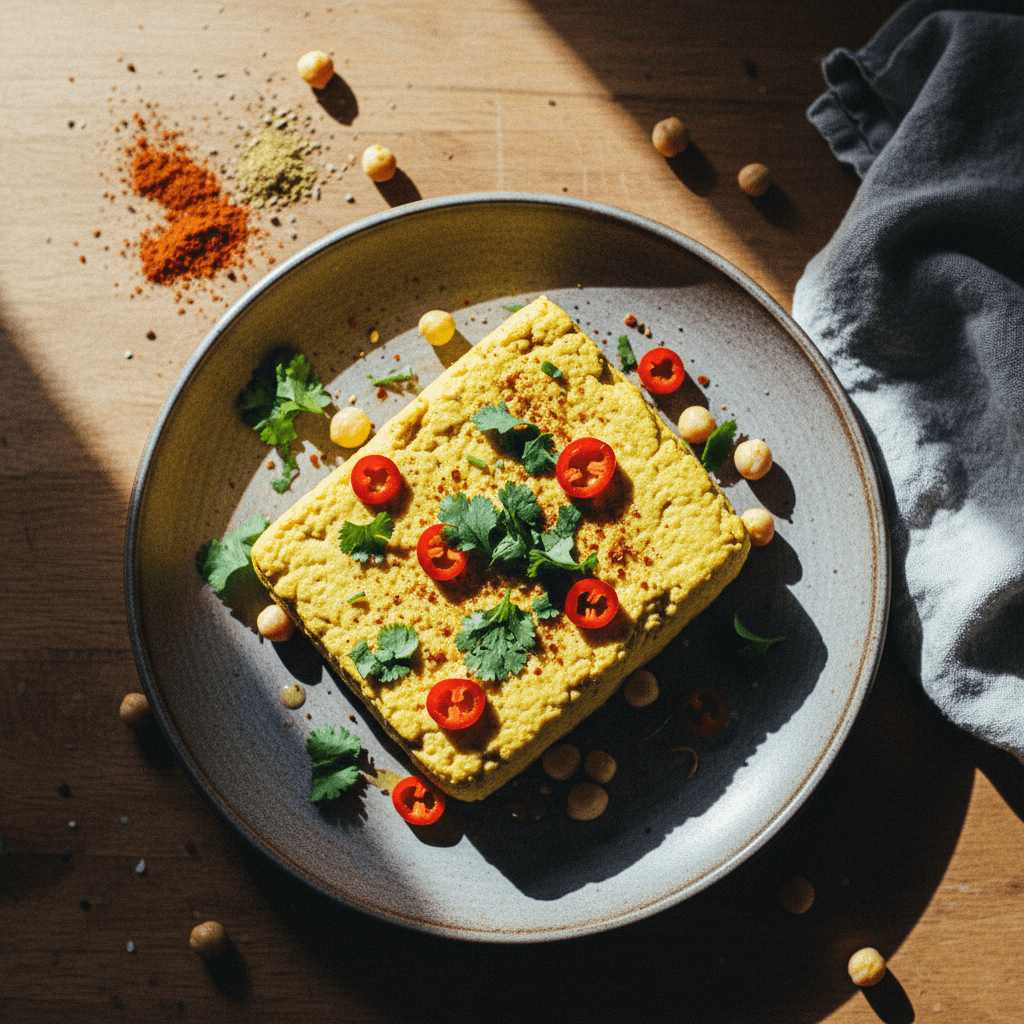
Remove the pressed chickpea tofu from the press. It is now ready to be used in your favorite recipes, offering a perfect bouncy texture similar to traditional soy tofu.

Kitchen Tools
Nutrition Facts (per serving)
Homemade Chickpea Tofu
- 250 g dried chickpeas, soaked overnight
- 1 L water, plus more for soaking
Instructions
- 1
Drain the soaked chickpeas and rinse them thoroughly. Combine the drained chickpeas with 1 liter of fresh water in a high-speed blender.
⏱️ 2 min - 2
Blend the chickpeas and water until a very smooth, creamy chickpea milk is formed. This may take 2-3 minutes, pausing to scrape down the sides if necessary.
⏱️ 3 min - 3
Line a large bowl with a nut milk bag or several layers of cheesecloth. Pour the blended chickpea mixture into the bag/cheesecloth. Gather the edges and squeeze firmly to extract all the chickpea milk, leaving the pulp behind. Discard the pulp.
⏱️ 5 min - 4
Allow the separated chickpea milk to sit undisturbed in the large bowl for at least 1 hour. This crucial step allows the starches to settle to the bottom, leaving a protein-rich liquid on top.
⏱️ 60 min - 5
Carefully pour the top, protein-rich layer of the chickpea milk into a medium pot, being careful not to disturb or transfer the settled starches from the bottom of the bowl.
⏱️ 2 min - 6
Heat the protein-rich chickpea milk in the pot over medium-high heat. Bring it to a rolling boil, stirring occasionally to prevent scorching.
⏱️ 5 min - 7
Once boiling, reduce the heat to low and simmer gently for 10 minutes. During this time, the milk will naturally coagulate and form curds without any added coagulant.
⏱️ 10 min - 8
Line a tofu press with cheesecloth. Using a slotted spoon, carefully scoop the formed chickpea curds from the pot into the prepared tofu press.
⏱️ 3 min - 9
Fold the excess cheesecloth over the curds. Place the lid on the tofu press and apply pressure to press out the remaining excess liquid. Press for at least 30 minutes for firm tofu, or longer for extra-firm.
⏱️ 30 min - 10
Remove the pressed chickpea tofu from the press. It is now ready to be used in your favorite recipes, offering a perfect bouncy texture similar to traditional soy tofu.