Moo Ping (Thai Grilled Pork with Sticky Rice)
Moo Ping (Thai Grilled Pork with Sticky Rice)

Ingredients
For the Moo Ping (Thai Grilled Pork)
- 1 kg pork scotch fillet, sliced 1 cm thick
- 4 garlic, cloves
- 2-3 coriander roots/stems
- 1/2 teaspoon white pepper
- 1 tablespoon fish sauce
- 1 tablespoon soy sauce
- 1 tablespoon oyster sauce
- 2 tablespoons sugar
- 1 teaspoon salt
- 1 teaspoon chicken bouillon
- 50 ml coconut milk
- 1 tablespoon oil
For the Steamed Thai Sticky Rice
- 400 g Thai glutinous/sticky rice, soaked in water for at least 4–5 hours
Instructions
- 1
In a large bowl, combine the sliced pork scotch fillet with white pepper, fish sauce, soy sauce, oyster sauce, sugar, salt, chicken bouillon, coconut milk, and oil. Mix well.
⏱️ 5 min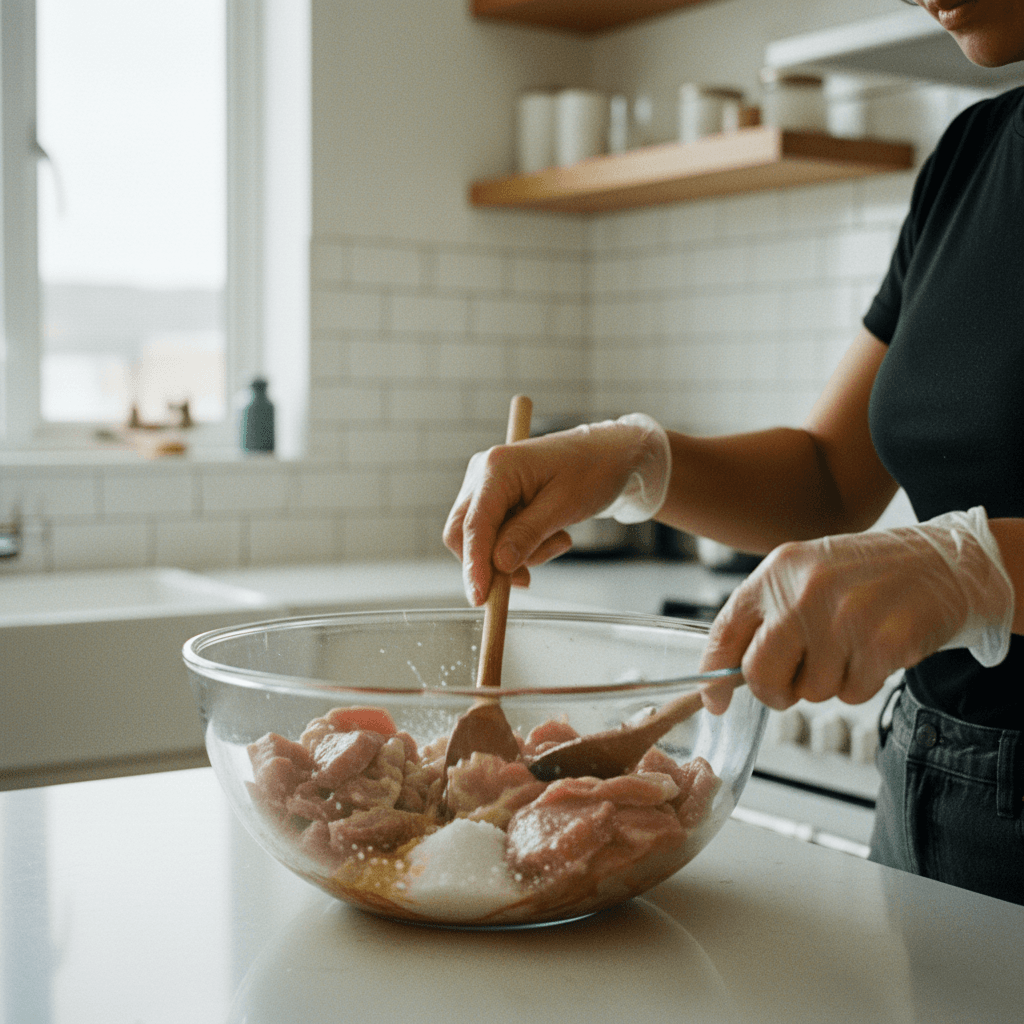
- 2
Using a mortar and pestle, pound the garlic cloves until finely crushed. Separately, pound the coriander roots/stems until a paste forms. Add both the pounded garlic and coriander roots to the pork mixture.
⏱️ 5 min
- 3
Massage the marinade thoroughly into the pork, ensuring every piece is well coated. Cover the bowl and refrigerate for at least 4 hours, or preferably overnight, to allow the flavors to meld.
⏱️ 5 min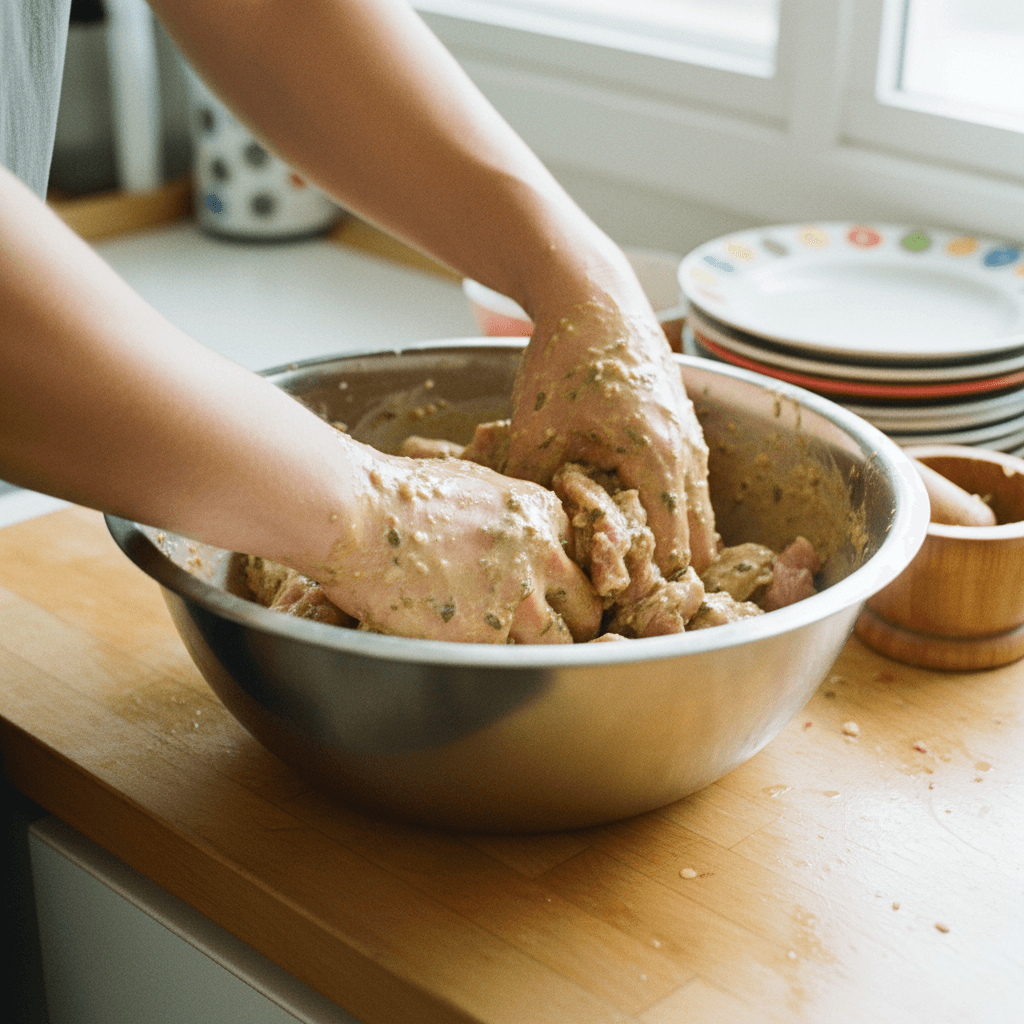
- 4
While the pork is cooking (or just before), rinse the pre-soaked sticky rice thoroughly under cold water until the water runs clear, then drain well.
⏱️ 5 min
- 5
Set up your steaming apparatus for the sticky rice. Place an oil splatter screen (or a traditional steamer basket) over a pan or pot of hot simmering water, ensuring the water does not touch the screen. Spread the rinsed sticky rice evenly over the screen.
⏱️ 2 min
- 6
Cover the rice with a lid and steam for approximately 20 minutes. Halfway through the steaming process (around 10 minutes), carefully fluff and turn the rice to ensure even cooking.
⏱️ 20 min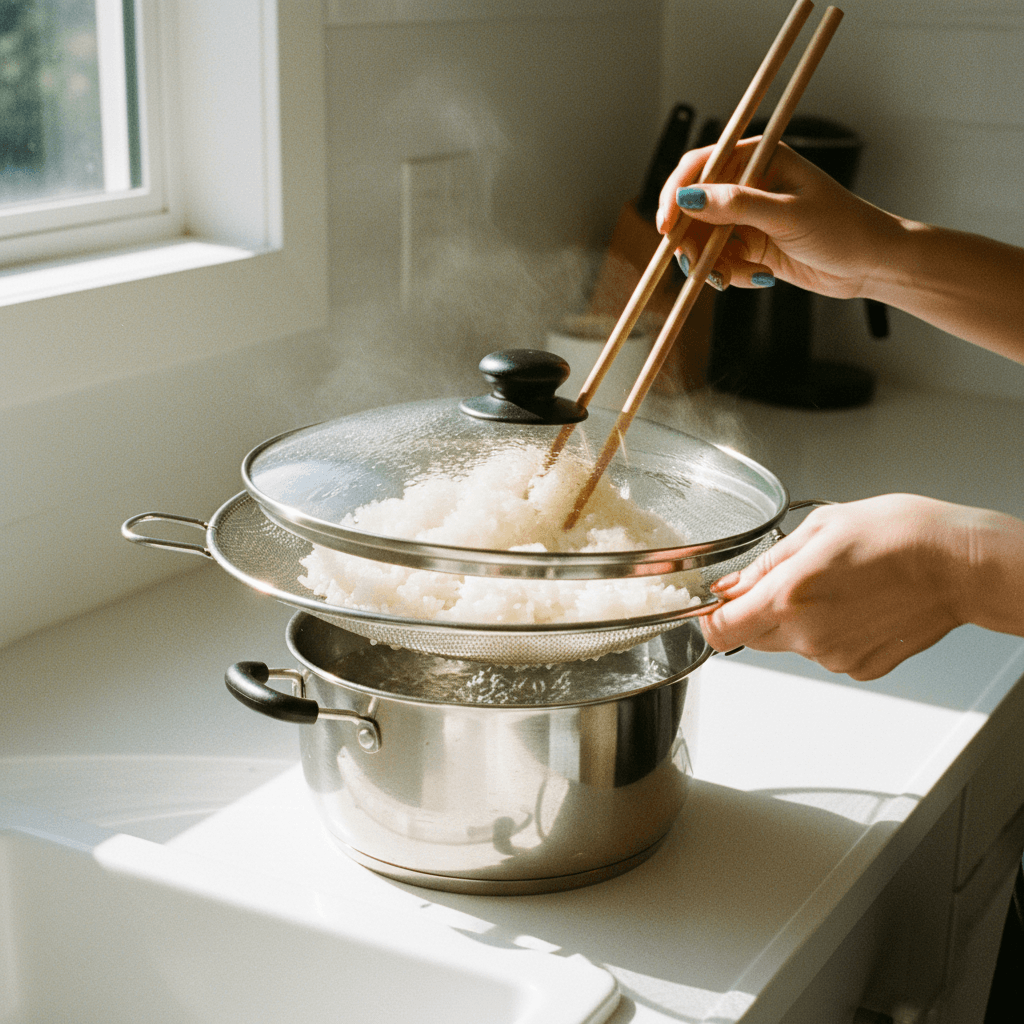
- 7
While the rice is steaming, heat a grill pan or frying pan over medium-high heat. Once hot, add the marinated pork in batches, being careful not to overcrowd the pan. This ensures proper caramelization and even cooking.
⏱️ 2 min
- 8
Cook the pork for approximately 2-3 minutes per side, depending on its thickness, until it is nicely caramelized and cooked through. Repeat with remaining batches of pork.
⏱️ 10 min
- 9
Check the sticky rice: it should be soft, chewy, and slightly translucent with no hard center. The grains should be on the drier side, which is characteristic of Thai sticky rice. Serve the Moo Ping immediately with the freshly steamed sticky rice.
⏱️ 1 min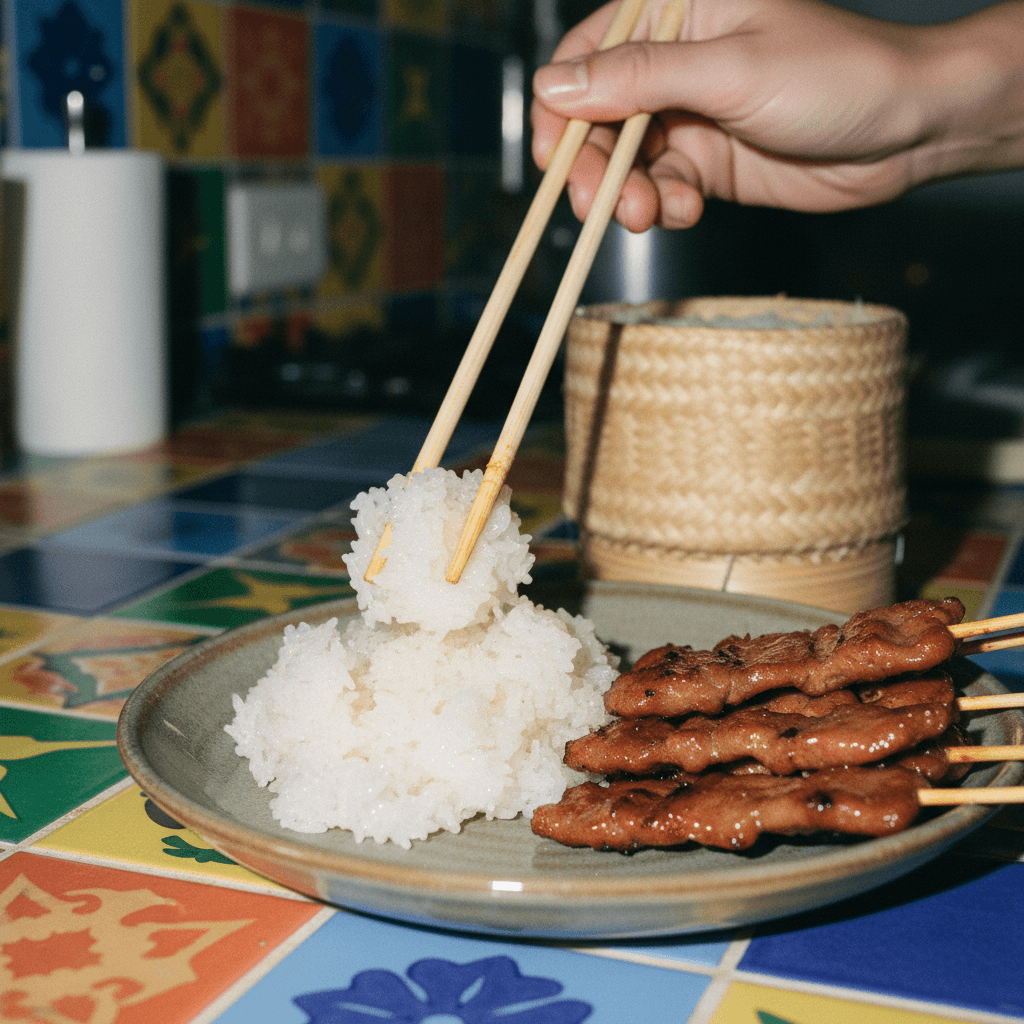
Kitchen Tools
Nutrition Facts (per serving)
Moo Ping (Thai Grilled Pork with Sticky Rice)
For the Moo Ping (Thai Grilled Pork)
- 1 kg pork scotch fillet, sliced 1 cm thick
- 4 garlic, cloves
- 2-3 coriander roots/stems
- 1/2 teaspoon white pepper
- 1 tablespoon fish sauce
- 1 tablespoon soy sauce
- 1 tablespoon oyster sauce
- 2 tablespoons sugar
- 1 teaspoon salt
- 1 teaspoon chicken bouillon
- 50 ml coconut milk
- 1 tablespoon oil
For the Steamed Thai Sticky Rice
- 400 g Thai glutinous/sticky rice, soaked in water for at least 4–5 hours
Instructions
- 1
In a large bowl, combine the sliced pork scotch fillet with white pepper, fish sauce, soy sauce, oyster sauce, sugar, salt, chicken bouillon, coconut milk, and oil. Mix well.
⏱️ 5 min - 2
Using a mortar and pestle, pound the garlic cloves until finely crushed. Separately, pound the coriander roots/stems until a paste forms. Add both the pounded garlic and coriander roots to the pork mixture.
⏱️ 5 min - 3
Massage the marinade thoroughly into the pork, ensuring every piece is well coated. Cover the bowl and refrigerate for at least 4 hours, or preferably overnight, to allow the flavors to meld.
⏱️ 5 min - 4
While the pork is cooking (or just before), rinse the pre-soaked sticky rice thoroughly under cold water until the water runs clear, then drain well.
⏱️ 5 min - 5
Set up your steaming apparatus for the sticky rice. Place an oil splatter screen (or a traditional steamer basket) over a pan or pot of hot simmering water, ensuring the water does not touch the screen. Spread the rinsed sticky rice evenly over the screen.
⏱️ 2 min - 6
Cover the rice with a lid and steam for approximately 20 minutes. Halfway through the steaming process (around 10 minutes), carefully fluff and turn the rice to ensure even cooking.
⏱️ 20 min - 7
While the rice is steaming, heat a grill pan or frying pan over medium-high heat. Once hot, add the marinated pork in batches, being careful not to overcrowd the pan. This ensures proper caramelization and even cooking.
⏱️ 2 min - 8
Cook the pork for approximately 2-3 minutes per side, depending on its thickness, until it is nicely caramelized and cooked through. Repeat with remaining batches of pork.
⏱️ 10 min - 9
Check the sticky rice: it should be soft, chewy, and slightly translucent with no hard center. The grains should be on the drier side, which is characteristic of Thai sticky rice. Serve the Moo Ping immediately with the freshly steamed sticky rice.
⏱️ 1 min