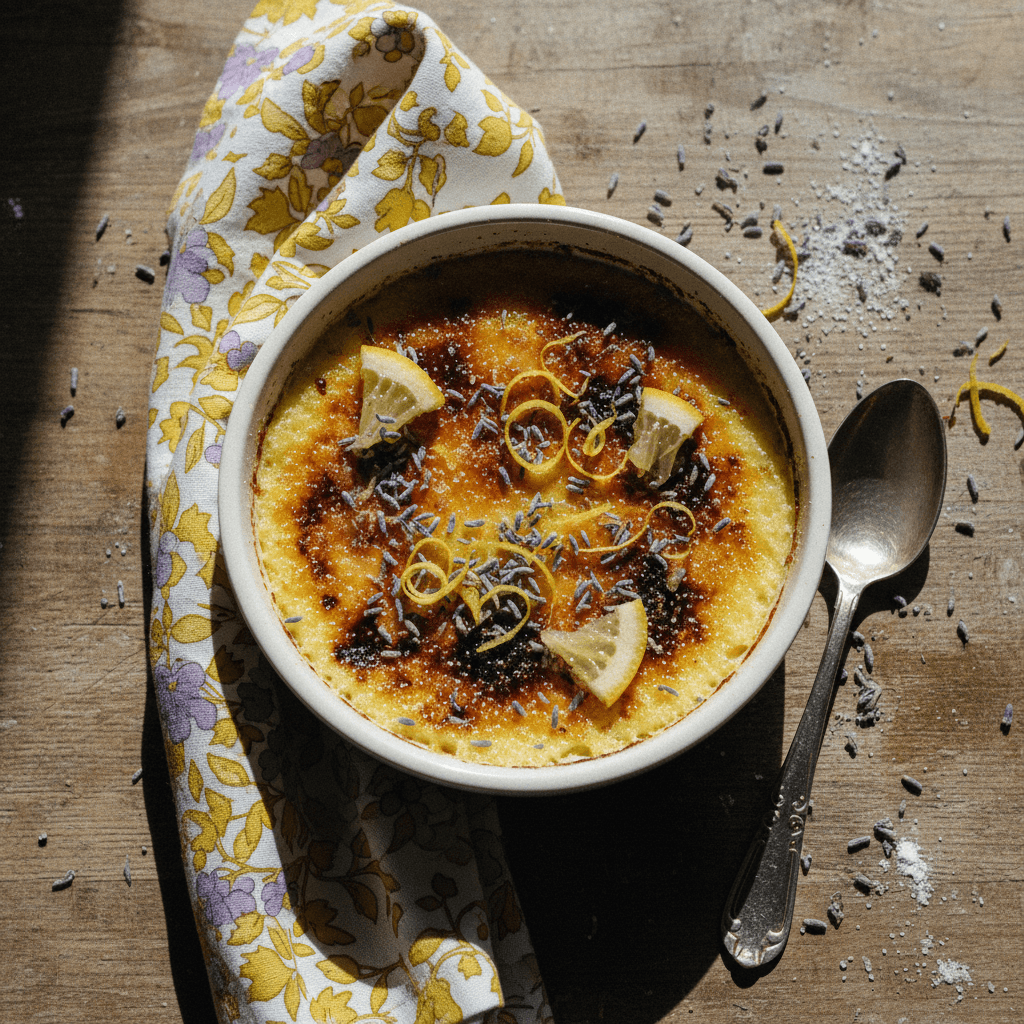
Lemon Lavender Crème Brûlée
Lemon Lavender Crème Brûlée
Ingredients
For the Lemon Lavender Custard
- 2 cups heavy cream
- 1/2 cup granulated sugar
- 6 egg yolks, large
- 1 tablespoon lemon zest, finely grated, from 1 large lemon
- 1 1/2 teaspoons culinary lavender, dried
- 1 teaspoon vanilla extract, high-quality
- 1/8 teaspoon salt, fine sea salt
For the Caramelized Topping
- 1/4 cup granulated sugar, for brûlée topping
For Garnish
- 4 fresh lavender sprigs
- 4 lemon twists
Instructions
- 1
Preheat your oven to 325°F (160°C). Prepare a large roasting pan with a kitchen towel placed at the bottom to prevent ramekins from sliding. Arrange four 4-ounce ramekins within the roasting pan.
⏱️ 5 min•🌡️ 325 - 2
In a medium saucepan, combine the heavy cream, 1/2 cup granulated sugar, lemon zest, and dried culinary lavender. Heat over medium-low heat, stirring occasionally, until the sugar is fully dissolved and the mixture is hot but not boiling. Remove from heat immediately once small bubbles appear around the edges. Cover and let steep for 15 minutes to allow the lavender and lemon flavors to infuse.
⏱️ 20 min
- 3
While the cream mixture steeps, in a separate medium bowl, whisk the egg yolks with the vanilla extract and fine sea salt until just combined and slightly pale. Do not over-whisk, as incorporating too much air can lead to a foamy custard.
⏱️ 3 min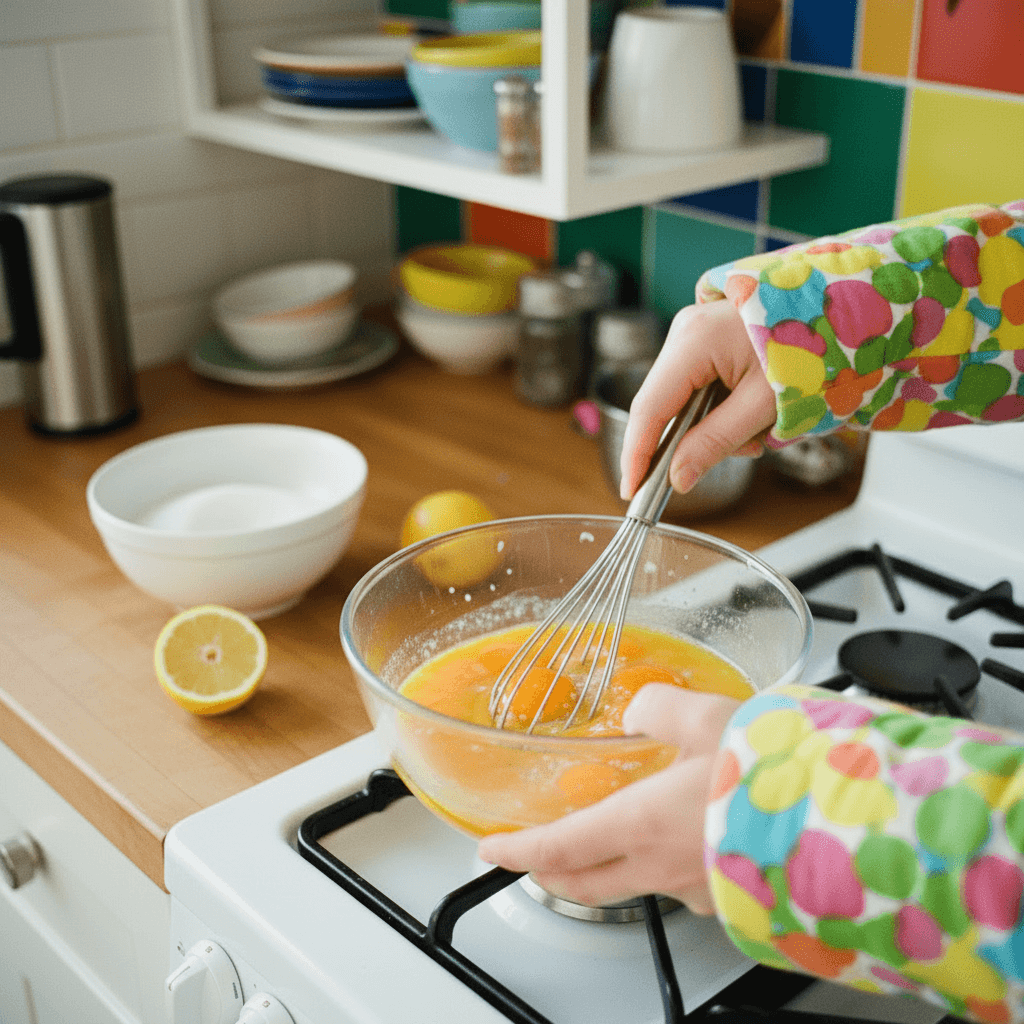
- 4
After steeping, strain the cream mixture through a fine-mesh sieve into a clean bowl, pressing gently on the solids to extract all flavor. Discard the strained lavender and lemon zest. This step ensures a silky-smooth custard texture.
⏱️ 2 min
- 5
Slowly temper the egg yolks: gradually pour about 1/2 cup of the warm cream mixture into the whisked egg yolks, whisking constantly to prevent the eggs from scrambling. Once incorporated, slowly pour the tempered egg yolk mixture back into the remaining warm cream, whisking continuously until thoroughly combined.
⏱️ 5 min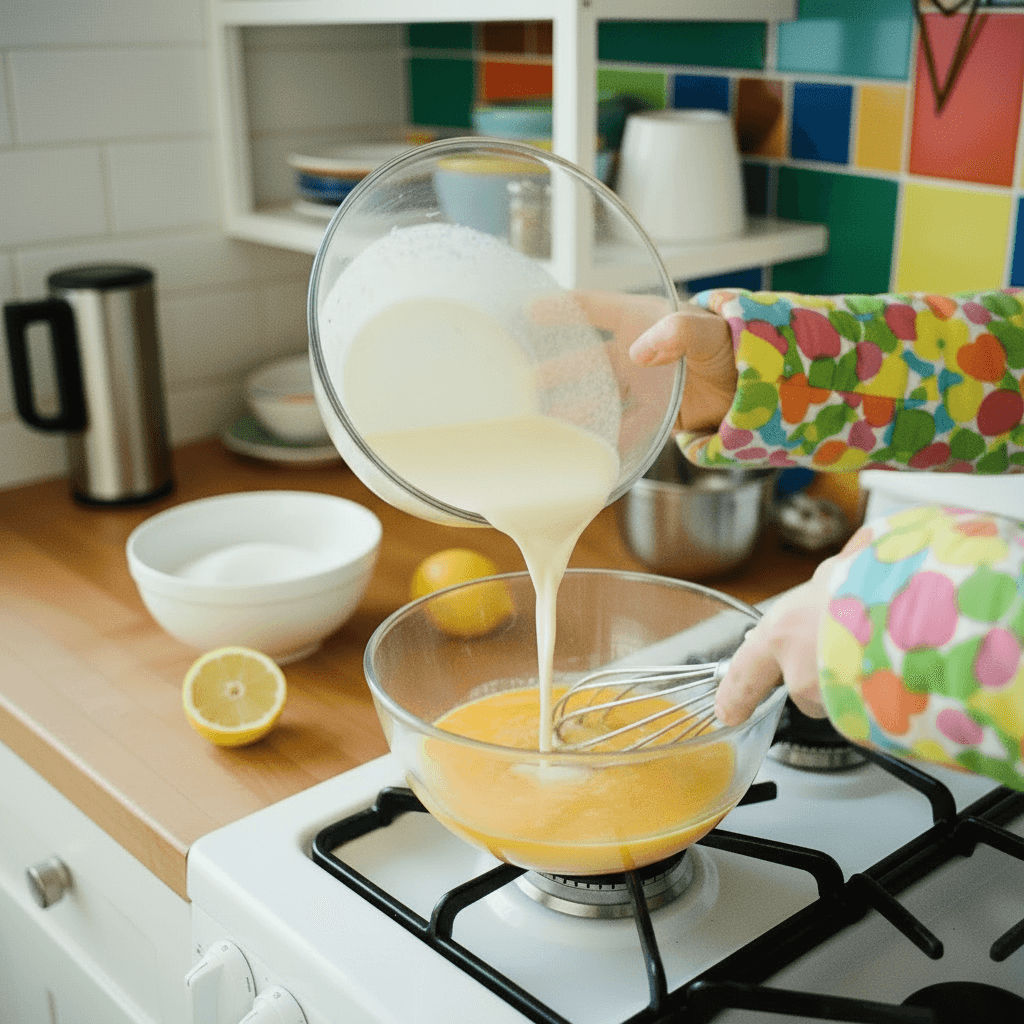
- 6
Carefully pour the custard mixture evenly into the prepared ramekins. Place the roasting pan with the ramekins into the preheated oven. Pour hot water into the roasting pan until it reaches about halfway up the sides of the ramekins. This water bath (bain-marie) ensures gentle, even cooking and prevents the custard from cracking.
⏱️ 5 min•🌡️ 325
- 7
Bake for 30-40 minutes, or until the edges of the custards are set but the centers still have a slight jiggle when gently shaken. The internal temperature should reach 170-175°F (77-79°C). Carefully remove the roasting pan from the oven. Using tongs, remove the ramekins from the water bath and place them on a wire rack to cool completely at room temperature.
⏱️ 40 min•🌡️ 325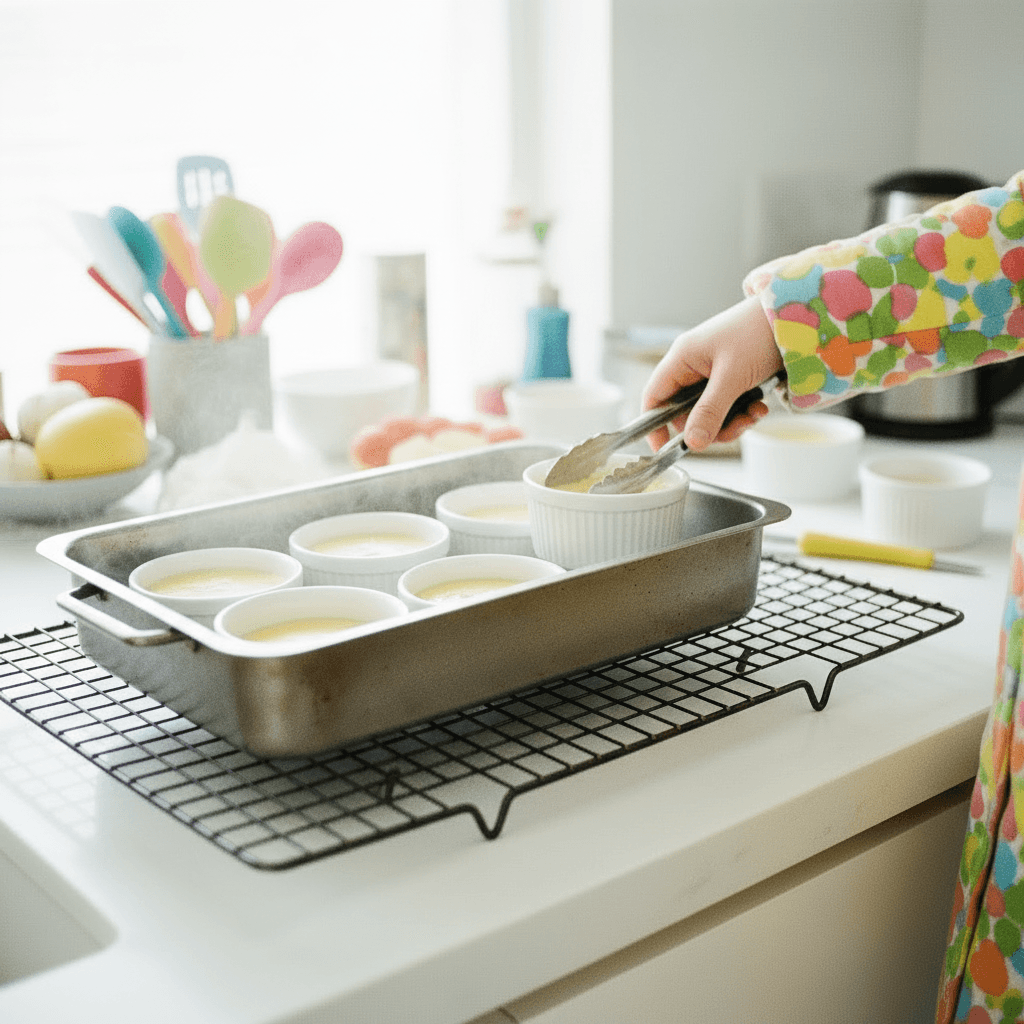
- 8
Once cooled, cover each ramekin tightly with plastic wrap and refrigerate for at least 4 hours, or preferably overnight, to allow the custards to fully set and chill.
⏱️ 240 min
- 9
Just before serving, uncover the chilled crème brûlées. Sprinkle about 1 tablespoon of granulated sugar evenly over the top of each custard. Using a kitchen torch, caramelize the sugar until it forms a deep amber, crisp crust. Move the torch continuously to prevent burning. Alternatively, you can place the ramekins under a preheated broiler for 1-2 minutes, watching carefully to prevent burning.
⏱️ 3 min
- 10
Allow the caramelized sugar to cool and harden for 1-2 minutes. Garnish each crème brûlée with a fresh lavender sprig and a lemon twist for an elegant presentation. Serve immediately to enjoy the contrast of the warm, crisp topping and the cold, creamy custard.
⏱️ 2 min
Kitchen Tools
Nutrition Facts (per serving)
Lemon Lavender Crème Brûlée
For the Lemon Lavender Custard
- 2 cups heavy cream
- 1/2 cup granulated sugar
- 6 egg yolks, large
- 1 tablespoon lemon zest, finely grated, from 1 large lemon
- 1 1/2 teaspoons culinary lavender, dried
- 1 teaspoon vanilla extract, high-quality
- 1/8 teaspoon salt, fine sea salt
For the Caramelized Topping
- 1/4 cup granulated sugar, for brûlée topping
For Garnish
- 4 fresh lavender sprigs
- 4 lemon twists
Instructions
- 1
Preheat your oven to 325°F (160°C). Prepare a large roasting pan with a kitchen towel placed at the bottom to prevent ramekins from sliding. Arrange four 4-ounce ramekins within the roasting pan.
⏱️ 5 min•🌡️ 325 - 2
In a medium saucepan, combine the heavy cream, 1/2 cup granulated sugar, lemon zest, and dried culinary lavender. Heat over medium-low heat, stirring occasionally, until the sugar is fully dissolved and the mixture is hot but not boiling. Remove from heat immediately once small bubbles appear around the edges. Cover and let steep for 15 minutes to allow the lavender and lemon flavors to infuse.
⏱️ 20 min - 3
While the cream mixture steeps, in a separate medium bowl, whisk the egg yolks with the vanilla extract and fine sea salt until just combined and slightly pale. Do not over-whisk, as incorporating too much air can lead to a foamy custard.
⏱️ 3 min - 4
After steeping, strain the cream mixture through a fine-mesh sieve into a clean bowl, pressing gently on the solids to extract all flavor. Discard the strained lavender and lemon zest. This step ensures a silky-smooth custard texture.
⏱️ 2 min - 5
Slowly temper the egg yolks: gradually pour about 1/2 cup of the warm cream mixture into the whisked egg yolks, whisking constantly to prevent the eggs from scrambling. Once incorporated, slowly pour the tempered egg yolk mixture back into the remaining warm cream, whisking continuously until thoroughly combined.
⏱️ 5 min - 6
Carefully pour the custard mixture evenly into the prepared ramekins. Place the roasting pan with the ramekins into the preheated oven. Pour hot water into the roasting pan until it reaches about halfway up the sides of the ramekins. This water bath (bain-marie) ensures gentle, even cooking and prevents the custard from cracking.
⏱️ 5 min•🌡️ 325 - 7
Bake for 30-40 minutes, or until the edges of the custards are set but the centers still have a slight jiggle when gently shaken. The internal temperature should reach 170-175°F (77-79°C). Carefully remove the roasting pan from the oven. Using tongs, remove the ramekins from the water bath and place them on a wire rack to cool completely at room temperature.
⏱️ 40 min•🌡️ 325 - 8
Once cooled, cover each ramekin tightly with plastic wrap and refrigerate for at least 4 hours, or preferably overnight, to allow the custards to fully set and chill.
⏱️ 240 min - 9
Just before serving, uncover the chilled crème brûlées. Sprinkle about 1 tablespoon of granulated sugar evenly over the top of each custard. Using a kitchen torch, caramelize the sugar until it forms a deep amber, crisp crust. Move the torch continuously to prevent burning. Alternatively, you can place the ramekins under a preheated broiler for 1-2 minutes, watching carefully to prevent burning.
⏱️ 3 min - 10
Allow the caramelized sugar to cool and harden for 1-2 minutes. Garnish each crème brûlée with a fresh lavender sprig and a lemon twist for an elegant presentation. Serve immediately to enjoy the contrast of the warm, crisp topping and the cold, creamy custard.
⏱️ 2 min